



Miami Gardens, Miami — A Cheat Sheet for Buyers, Visitors, & the Curious

Amit Bhuta
I use non-traditional marketing to inspire the most motivated buyers to pay the max for Miami luxury homes...
I use non-traditional marketing to inspire the most motivated buyers to pay the max for Miami luxury homes...
On some weekends, more than 60,000 people from all over the world show up in Miami Gardens.
They pour into Hard Rock Stadium for an NFL game, the Miami Open, or to watch their favorite driver compete during the Formula 1 Miami Grand Prix as global media broadcasts the race across dozens of countries.
Then they leave, returning the city to more than 100,000 residents whose daily lives revolve around neighborhood streets, schools, parks, and one of the largest residential communities in north Miami-Dade County.
Located between Miami and Fort Lauderdale with direct access to I-95, Florida’s Turnpike, and the Palmetto Expressway, Miami Gardens is a city built from long-established communities such as Carol City, Norland, Scott Lake, and Lake Lucerne — places that existed long before the stadium brought global attention to the area.
Yes, Miami Gardens is far more than an event destination.
It is a full municipality with its own neighborhoods, schools, parks, and local economy that powers through every day of the year, long after the crowds from major events have gone home.
This guide will explain exactly why.
What it’s actually like to live in Miami Gardens, how home prices compare with the rest of Miami-Dade County, and why Hard Rock Stadium plays such an outsized role in the city’s identity — all of it and more.
Here's what you need to know about living in, visiting, and understanding Miami Gardens.
-topaz-upscale-2.1x.jpeg?w=1140)
LIVING IN MIAMI GARDENS
Is Miami Gardens a good place to live?
Miami Gardens works well for people who want more space, more residential stability, and a more neighborhood-driven lifestyle than many of Miami-Dade’s denser coastal markets.
It is a full-service city with its own government, police department, parks system, and large residential base rather than a tourism-centered destination.
One of its biggest advantages is location.
Residents can live in a largely suburban setting while staying connected to major employment and activity centers in Miami-Dade and Broward through I-95, Florida’s Turnpike, SR 826, and regional transit connections near Golden Glades.
What neighborhoods make up Miami Gardens?
Miami Gardens has several long-established communities that were previously unincorporated areas before the city was incorporated in 2003.
These include Andover, Bunche Park, Carol City, Lake Lucerne, Norland, Opa-locka North, and Scott Lake.
In everyday conversation, many residents still refer to these names because they carry a strong local identity.
That matters in real estate and lifestyle terms, since one part of Miami Gardens may feel more suburban, more commercial, or more event-driven than another.
Is Miami Gardens growing or redeveloping?
Miami Gardens has experienced steady reinvestment and redevelopment in recent years, particularly around the Hard Rock Stadium district and along major corridors such as Miami Gardens Drive and NW 27th Avenue.
City leadership has promoted commercial improvements, infrastructure upgrades, and development projects that strengthen the local economy and support neighborhood services.
While the city remains primarily residential, these investments are gradually reshaping certain corridors by encouraging new businesses, entertainment venues, and commercial activity.
What are home prices in Miami Gardens?
Miami Gardens is more affordable than many waterfront or luxury-driven parts of South Florida, but it is no longer a low-cost housing market by national standards.
Realtor.com currently shows a median listing home price of about $500,000 in the local market, with median asking rents generally in the upper-$2,000 range.
In practical terms, that means buyers will find notably affordable single-family home prices below Miami Beach or luxury enclaves in cities like Doral, yet high enough that affordability remains a real issue for first-time buyers.
Are there single-family homes and apartments in Miami Gardens?
Yes. Miami Gardens has a strong supply of single-family homes, duplexes, townhomes, and rental apartments spread across its residential neighborhoods.
That housing mix is one reason the city appeals to households looking for more space than they might find in condo-heavy parts of the county.
The city is not defined by high-rise living.
Its housing identity is tied far more to detached homes, modest residential blocks, and neighborhood-scale housing stock than to coastal towers.
Is Miami Gardens safe?
Miami Gardens has its own police department and public safety structure, which means policing is handled at the city level rather than through the City of Miami.
As with most large municipalities, safety varies by block, corridor, and activity level.
Areas near major event venues or high-traffic commercial corridors can feel very different from quieter interior residential streets.
For buyers, the most useful approach is to evaluate specific areas, drive around them at different times of day, and compare their atmosphere rather than treating the entire city as a uniform experience.
What schools serve families living in Miami Gardens?
Families in Miami Gardens are served by Miami-Dade County Public Schools, with public options inside or closely tied to the city, including Miami Carol City Senior High School, Miami Norland Senior High School, Lake Stevens Middle School, Miami Gardens Elementary School, North Glade Elementary School, and North County K-8 Center.
The city also has charter and private options in and around its boundaries, giving families more than one educational pathway depending on grade level and academic goals.
For more information about the private and public schools in the area, visit Best Schools in Miami Gardens.
What is commuting like from Miami Gardens?
Commuting is one of Miami Gardens’ strongest practical advantages.
The city sits near I-95, Florida’s Turnpike, and SR 826, and the official city profile also notes access to both the Florida East Coast Railway corridor and the South Florida Tri-Rail system.
That location places residents within commuting distance of Downtown Miami, Aventura, Fort Lauderdale, and several employment clusters across northern Miami-Dade County.
Golden Glades is also a major multimodal connection point for buses, park-and-ride services, and Tri-Rail access.
Do most Miami Gardens residents work inside the city or commute elsewhere?
Many Miami Gardens residents commute outside the city for work.
Because the city sits between Miami and Fort Lauderdale and is connected by multiple highways, it is partly a residential base for people employed across the broader South Florida region.
Workers frequently commute to employment centers in Downtown Miami, Aventura, Fort Lauderdale, and nearby logistics, retail, and commercial districts.
What is the cost of living in Miami Gardens?
The cost of living in Miami Gardens is lower than in Miami Beach and many luxury coastal neighborhoods, but housing and transportation still represent major household expenses.
With median home listings around $500,000 and rents around $2,500 to $2,700, the city is no longer the bargain market it once was.
Residents may save money compared with higher-cost coastal areas, but total monthly costs can still rise quickly once mortgage payments, insurance, commuting, and maintenance are factored in.
What are property taxes like in Miami Gardens?
Property taxes in Miami Gardens are based on assessed value and the millage rates adopted by local taxing authorities in Miami-Dade County.
The Miami-Dade Property Appraiser provides a tax estimator for planning purposes, and homesteaded owners may qualify for benefits such as the Florida homestead exemption and the Save Our Homes cap.
For buyers, that means the tax bill depends not only on the property’s value but also on whether the home is owner-occupied and whether exemptions apply.
What types of jobs are located in and around Miami Gardens?
Miami Gardens benefits from both local employment and regional access.
Within the city, economic activity is tied to municipal government, schools, retail corridors, logistics, entertainment venues, and commercial businesses connected to Hard Rock Stadium and Calder-related development.
Because of its central location between Miami and Fort Lauderdale, many residents also commute out of the city for work while using Miami Gardens as a residential base.
How many people live in Miami Gardens?
The city’s official profile lists Miami Gardens at approximately 105,457 residents.
That makes it one of the largest municipalities in Miami-Dade County and gives it a scale that feels very different from a small suburb or narrowly defined neighborhood.
Is Miami Gardens prone to flooding or hurricanes?
Yes. Although Miami Gardens is inland compared with barrier-island cities, the city notes that flooding can still occur from heavy rainfall, hurricanes, and overwhelmed drainage systems.
Buyers and homeowners should review FEMA flood maps, elevation data, and insurance requirements for individual properties rather than assuming inland automatically means no flood exposure.
Do homeowners in Miami Gardens need flood insurance?
Because Miami Gardens has flood-prone areas, some homeowners may be required by their lender to carry flood insurance, especially if the property falls within a higher-risk FEMA flood zone.
Even properties outside the highest-risk zones can still experience flooding, which is why buyers often review flood maps, lender requirements, and insurance quotes during due diligence.
The city also provides flood-risk assessment resources and elevation certificate information, both of which can help owners and buyers understand a property’s flood exposure and obtain a more accurate flood insurance quote.
Does Miami Gardens allow short-term rentals?
Short-term rentals in Miami Gardens are regulated rather than ignored.
The city requires short-term rental registration, which does not replace state lodging rules or other permitting requirements.
Investors considering rental properties should confirm zoning, licensing requirements, and city registration rules before purchasing.
-topaz-upscale-2.1x.jpg?w=1140)
VISITING MIAMI GARDENS
What is Miami Gardens known for?
Miami Gardens is best known as the home of Hard Rock Stadium, one of South Florida’s largest and most visible sports and entertainment venues.
The stadium hosts Miami Dolphins games, University of Miami football, the Miami Open tennis tournament, Formula 1’s Miami Grand Prix, the Orange Bowl, and major concerts.
The city is also known culturally for Jazz in the Gardens, a major music festival celebrating R&B, soul, and Caribbean influences.
What are the best things to do in Miami Gardens?
Visitors typically come to Miami Gardens for sports, entertainment events, and community recreation.
Hard Rock Stadium is the biggest attraction, but other popular destinations include Topgolf Miami Gardens, Calder Casino, and the Betty T. Ferguson Recreational Complex.
Festivals, concerts, and community events also bring visitors to the city throughout the year.
For a typical day in Miami Gardens, visit Top 5 Things to Do in Miami Gardens.
Is Miami Gardens family-friendly for visitors?
Yes. Although many visitors come for sports or entertainment events, Miami Gardens also offers family-friendly attractions, such as parks, recreation complexes, and community programs.
Facilities like the Betty T. Ferguson Recreational Complex offer sports fields, aquatic centers, and walking areas that appeal to families.
Where are the best places to eat in Miami Gardens?
Miami Gardens has a strong neighborhood food scene shaped by Caribbean cuisine, soul food traditions, Latin American cooking, and everyday local restaurants.
Dining options are spread across major corridors, including Miami Gardens Drive, NW 27th Avenue, and NW 183rd Street, rather than concentrated in a single tourism district.
For some of the best dining spots in Miami Gardens, check out Top 5 Places to Eat in Miami Gardens.
Is there shopping in Miami Gardens?
Yes, though the city is not primarily known for large regional shopping malls.
Retail activity is concentrated along major commercial corridors such as U.S. 441 and areas near the Palmetto Expressway.
These corridors support everyday retail, auto sales, furniture stores, and service businesses that serve residents.
The Top 5 Shopping Spots in Miami Gardens feature the best retail options in and around the area.
Is Miami Gardens close to the beaches?
Miami Gardens is not located directly on the coast, but several Atlantic beaches are reachable within a short drive.
Sunny Isles Beach, Hallandale Beach, and Hollywood Beach are generally about 20 to 30 minutes away, depending on traffic.
That proximity allows residents to live in a suburban inland environment while still accessing coastal destinations relatively easily.
What parks and recreation spots are in Miami Gardens?
Miami Gardens maintains a large parks and recreation network.
Major facilities include Betty T. Ferguson Recreational Complex, Andover Park, Norwood Park and Pool, Rolling Oaks Park, and Bunche Park Pool.
These facilities support sports leagues, youth programs, swimming, and neighborhood recreation.
Meanwhile, Dog-Friendly Parks in Miami Gardens provides a list of parks that allow dogs in the area.
Why is Hard Rock Stadium such a big part of Miami Gardens?
Hard Rock Stadium is the city’s most visible landmark and one of the most important event venues in South Florida.
The stadium hosts NFL games, college football, international tennis tournaments, Formula 1 races, and major concerts.
These events bring national and international attention to Miami Gardens and contribute significantly to the local economy.
Is Miami Gardens walkable, and what public transit options are available?
Miami Gardens is more car-oriented than dense urban neighborhoods closer to downtown Miami.
Most residents rely on driving for daily travel.
However, transit connections exist through the Miami Gardens Express trolley, Miami-Dade Metrobus routes, Tri-Rail, and major bus connections at the Golden Glades Interchange.
Is parking difficult in Miami Gardens?
Parking is usually manageable on typical days.
However, major events at Hard Rock Stadium or nearby venues can create heavy traffic and parking demand in surrounding areas.
Visitors attending large events should plan for event traffic and designated parking zones.
How far is Miami Gardens from the airport?
Miami Gardens is about 16 miles from Miami International Airport and roughly 18 miles from Fort Lauderdale–Hollywood International Airport.
Its location between the two major airports makes it convenient for both regional travel and visitors arriving from outside South Florida.
-topaz-upscale-2.1x.jpeg?w=1140)
UNDERSTANDING MIAMI GARDENS
Where is Miami Gardens located?
Miami Gardens is located in north-central Miami-Dade County, roughly midway between the cities of Miami and Fort Lauderdale.
Its location near major highways helps explain why the city functions as a regional transportation connector.
What ZIP codes serve Miami Gardens?
Miami Gardens is primarily served by the ZIP codes 33014, 33054, 33055, and 33056.
Some addresses associated with nearby areas or bordering communities may also use ZIP codes tied to neighboring municipalities, which is common in larger Miami-Dade County cities.
Because ZIP codes are created by the U.S. Postal Service rather than city governments, they do not always align perfectly with municipal boundaries.
What cities border Miami Gardens?
Miami Gardens borders several municipalities and unincorporated areas in northern Miami-Dade County.
Nearby cities include Miami Lakes, Opa-locka, North Miami Beach, and Miramar, along with unincorporated areas near the Golden Glades Interchange.
How big is Miami Gardens?
Miami Gardens covers approximately 20 square miles according to official city data.
That size allows the city to contain multiple neighborhoods, major transportation corridors, and substantial park space.
Is Miami Gardens a city or a neighborhood?
Miami Gardens is an incorporated city, not simply a neighborhood.
It officially incorporated on May 13, 2003, becoming the 33rd municipality in Miami-Dade County.
Who governs Miami Gardens?
Miami Gardens operates under a Mayor-Council-Manager system of government.
The city council includes the mayor and six council members who oversee local policy decisions.
When was Miami Gardens incorporated?
Miami Gardens was incorporated on May 13, 2003.
The city formed from previously unincorporated communities that had long existed in northern Miami-Dade County.
What is the difference between Miami and Miami Gardens?
Miami and Miami Gardens are separate cities with different governments and boundaries.
Miami is the large mainland core city to the south, while Miami Gardens is an independent municipality in northern Miami-Dade County.
Why is Miami Gardens important in Miami-Dade County?
Miami Gardens plays an important regional role due to its size, transportation access, cultural significance, and major event venues.
It is one of the largest municipalities in the county and home to Hard Rock Stadium, which hosts globally recognized sporting and entertainment events.
What drives Miami Gardens’ economy?
Miami Gardens’ economy is driven by a combination of municipal services, retail corridors, transportation access, and large event venues.
Hard Rock Stadium, the U.S. 441 commercial corridor, Calder-related development, and local government services all contribute to economic activity.
What makes Miami Gardens culturally distinct?
Miami Gardens is widely recognized as the largest predominantly African American municipality in Florida.
The city also has a strong Caribbean cultural presence that influences music, cuisine, festivals, and local community life.
Events such as Jazz in the Gardens highlight cultural identity and draw visitors from across the region.

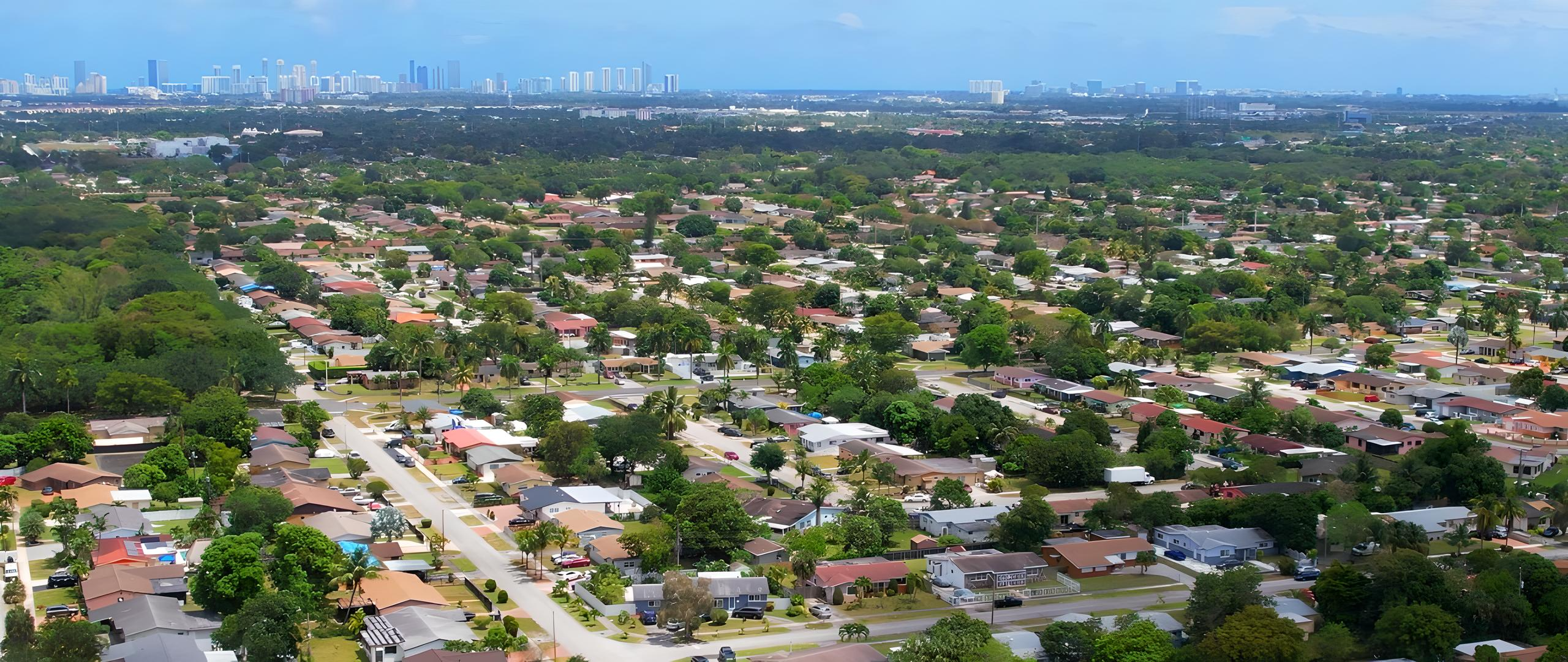%20(25)-fotor-20240529124222.png)
Miami Gardens, Miami, Florida - EVERYTHING You Want to Know
Congratulations on unlocking a virtual journey to the BEST of Miami Gardens! You're n...
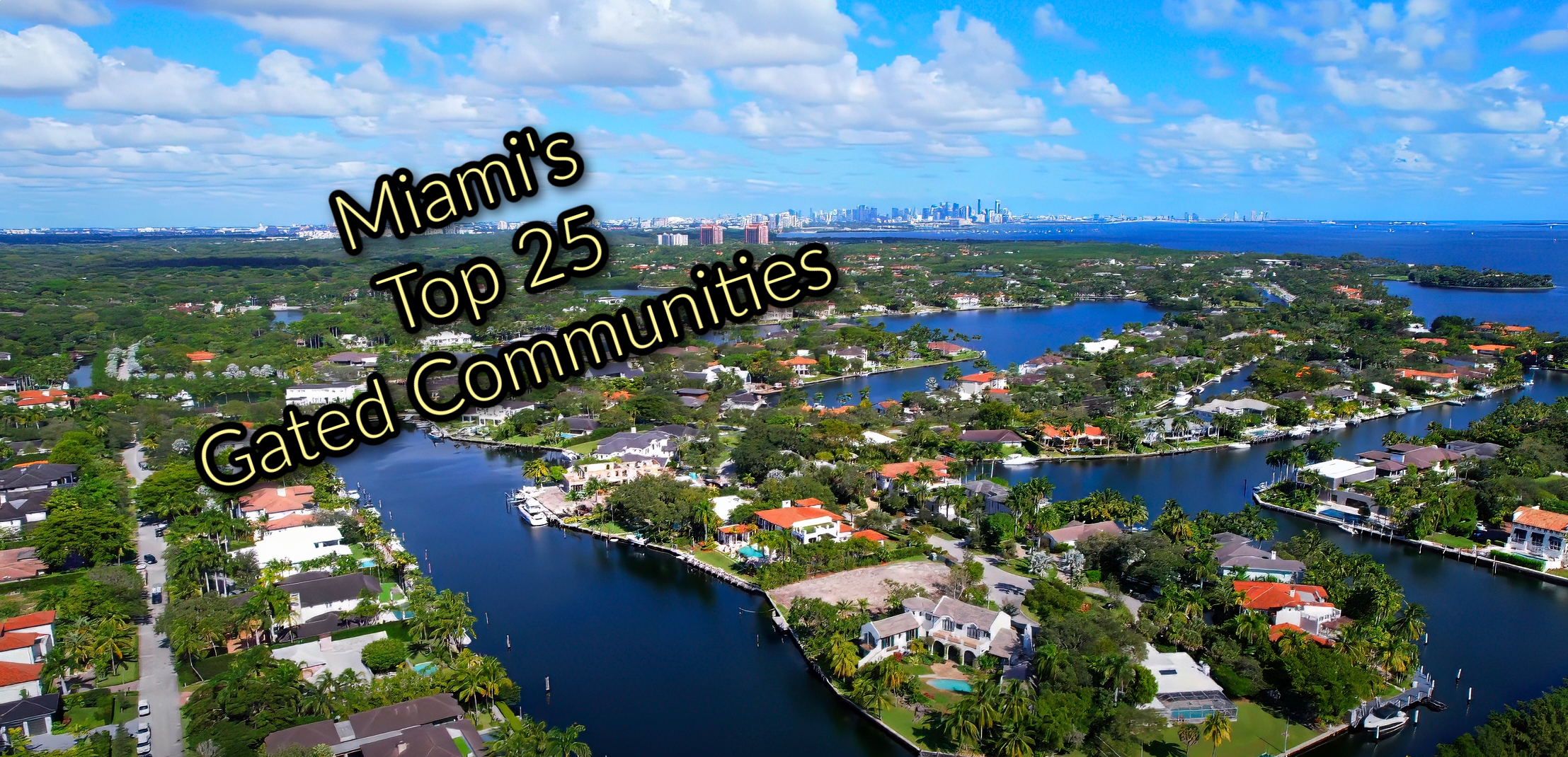.png)
The Ultimate Guide to Miami-Dade's Top 25 Gated Communities for Single-Family Homes
Discover Miami's top gated communities in this essential guide for luxury home buyers...

Miami's BEST Restaurants in EVERY Neighborhood
Check out the absolute BEST restaurants in every neighborhood of Miami, including the best...
Selling Your Home?
Who are we?
We are the ALL IN Miami Group out of Miami.
We are Colombian, Filipino, Cuban, German, Japanese, French, Indian, Syrian, and American.
We are Christian, Hindu, and Jewish.
We are many, but we are one.
We sell luxury homes in Miami, Florida.
Although some of our clients are celebrities, athletes, and people you read about online, we also help young adults find their first place to rent when they are ready to live on their own.
First-time buyers?
All the time!
No matter what your situation or price range is, we feel truly blessed and honored to play such a big part in your life.