



Who Lives in Overtown? (It's Not Who You Think!)

Amit Bhuta
I use non-traditional marketing to inspire the most motivated buyers to pay the max for Miami luxury homes...
I use non-traditional marketing to inspire the most motivated buyers to pay the max for Miami luxury homes...
In Miami, people will gladly spend $4 million to live “near Overtown,” yet suddenly turn into urban safety consultants the moment someone mentions actually living in Overtown itself.
Yes, the neighborhood sits directly beside Downtown, Brickell, Wynwood, and some of the fastest-developing parts of South Florida, but public perception still treats it like a completely separate world emotionally, socially, and economically.
In fact, the second Overtown enters a conversation, there is a very good chance the discussion will spiral into crime, homelessness, redevelopment, public housing, displacement, and gentrification before anybody even finishes ordering their appetizer.
So why are buyers still intentionally choosing this version of city living?
Let these groups explain the why.
Here are the five types of buyers you’ll meet in Overtown.
 (33).png?w=1140)
1) The “I’m Not Driving to Kendall for Happiness” Residents
Sometimes, the suburban version of Miami starts feeling more emotionally time-consuming than peaceful to buyers, especially those in their late 20s through early 40s who genuinely enjoy dense city living and cannot imagine voluntarily spending half their life trapped between brake lights just to access basic entertainment, restaurants, concerts, sporting events, or human activity after 8 PM.
Now, thanks to Overtown, they enjoy proximity to urban energy without fully surrendering themselves to the hyper-luxury performance culture surrounding parts of Brickell and Downtown.
This group often targets newer apartment buildings, modern condos, adaptive-reuse lofts, or smaller townhome-style developments close to transit lines, nightlife corridors, and employment centers.
Most work in creative industries, tech, hospitality, healthcare, media, nightlife, or remote jobs that still benefit from its short distance from the urban core.
They want walkability.
They want convenience.
They want to casually decide at 8:30 PM to grab food, attend an event, meet friends, or catch a game without mentally preparing for a forty-five-minute commute back to civilization afterward.
And while these buyers understand Overtown’s complexities, they also tend to see city living differently from suburban-minded Miami residents.
To them, a neighborhood having texture, contradictions, visible history, and actual street life is emotionally more real than perfectly landscaped sameness.
This buyer also usually possesses a high tolerance for unpredictability.
If you are willingly choosing urban Miami over master-planned suburbia, there is already a strong chance you accepted chaos as part of the lifestyle contract years ago.
 (34).png?w=1140)
2) The Block-by-Block Legacy Keepers
Long before luxury towers started creeping closer and developers began discussing Overtown with sudden enthusiasm, there were already families building entire histories along its streets.
This buyer category is deeply tied to Overtown’s identity as the historic heart of Black Miami, and many residents in this group view ownership through an emotional lens just as much as a financial one.
These buyers, often in their late 30s through 70s, include longtime residents, returning family members, preservation-minded professionals, church-connected households, or people whose relationship to the neighborhood predates Miami’s newest redevelopment cycle entirely.
A lot of them intentionally seek older single-family homes, inherited family properties, duplexes, modest historic homes, or long-held lots because the goal is not simply acquiring real estate.
The goal is to maintain continuity.
For many residents, Overtown is tied to memory, survival, culture, and community in ways outsiders rarely understand properly.
Some families still remember how highway construction physically disrupted the neighborhood decades ago.
Others watched as generations of residents were pushed out while the surrounding parts of Miami became wealthier.
That history changes how people experience redevelopment emotionally.
These buyers are not blindly anti-growth, but they are aware of how quickly cultural identity can disappear once a neighborhood becomes profitable enough for outsiders to call it “underrated.”
Truthfully, there is something powerful about residents who continue investing in a community long before the public decides it is fashionable to care about it.
 (35).png?w=1140)
3) The “Brickell Adjacent, Wallet Intact” Crowd
Some buyers want urban-core access without paying $4,200 a month to hear somebody revving a Lamborghini outside at 1 AM, so even with all the rumors floating around, they eventually start looking at Overtown.
Usually between their late 20s and mid-40s, these residents are financially strategic, location-aware, and increasingly skeptical of how much people are paying for the performance version of luxury city living nearby.
They still want proximity to Brickell, Downtown, Wynwood, and the urban core, but they are far less emotionally attached to prestige branding than many Miami residents.
This group often searches for newer condos, modern apartment developments, mixed-use projects, or smaller residences offering quick access to Metrorail stations, offices, nightlife, and entertainment districts without requiring luxury-tower income levels.
They are professionals who work in finance, healthcare, law, hospitality, tech, government, or corporate roles close to Downtown.
Then, some are simply realistic enough to recognize that paying slightly less for a shorter commute can improve daily life more than having an infinity pool named “The Sky Deck Experience.”
And unlike buyers chasing rose quartz countertops and floor-to-ceiling windows with skyline views, this group accepts that Overtown still feels transitional in many places, and doesn't let it automatically scare them away.
If anything, some almost prefer neighborhoods that still feel unfinished because the environment feels more connected to the city.
 (36).png?w=1140)
4) The Future Screenshot Investors
While most people walk through Overtown, fixated on what the neighborhood currently is, the Future Screenshot Investors imagine what the neighborhood could look like in ten years, then annoyingly screenshot development maps at 2 AM as if they're decoding state secrets.
Usually between their early 30s and 50s, these buyers are future-oriented and tend to follow redevelopment announcements, zoning conversations, transit expansions, and investment patterns with frightening levels of attention.
They are often investors, small developers, financially aggressive professionals, or longtime Miami residents who have already watched places like Wynwood, Edgewater, Little River, and Allapattah evolve dramatically over time.
Now they are trying to identify where the next leverage opportunity exists before consensus forms around it.
This buyer category gravitates toward duplexes, older multifamily properties, vacant lots, mixed-use buildings, fixer-uppers, or properties sitting near transit corridors and redevelopment activity.
They are usually far less intimidated by rough public perception because they understand that real estate markets often change socially long after they change financially.
That said, the smarter buyers in this category also understand Overtown is not some simplistic “next hot neighborhood” storyline.
The area carries real cultural history, displacement concerns, and political complexity that make redevelopment conversations much heavier than trendy investment podcasts usually acknowledge.
Still, this group remains convinced that Overtown’s location alone makes ignoring it strategically difficult.
 (37).png?w=1140)
5) The “My Commute Is 11 Minutes, and I’d Like to Keep It That Way” Professionals
Overtown is not an ideological statement or an investment thesis, at least not to this particular group of buyers.
To them, it's one of the few places in Miami where daily logistics still make sense.
They're often between their late 20s and late 50s and work in hospitals, government offices, Downtown corporations, universities, legal firms, transportation sectors, event venues, or industries requiring frequent movement across the urban core.
And after their emotional stability has deteriorated due to years of Miami traffic, proximity starts becoming incredibly attractive.
They usually prioritize condos, apartments, townhomes, or smaller residences with quick highway access, transit connectivity, and short commutes over oversized homes or suburban quietness.
They want efficiency more than spectacle.
They want to leave work and arrive home before questioning every life decision that led them onto I-95 at rush hour.
Most of them also tend to structure life very differently from suburban households.
Their routines revolve around movement, flexibility, convenience, and urban access instead of maximizing square footage or backyard space.
They understand that time itself will become a luxury in Miami, and Overtown’s location gives some of that time back.
SO… WHO IS OVERTOWN REALLY FOR?
Those who want their city to feel like a city
Overtown fits buyers who are emotionally comfortable with complexity.
This is a must because this neighborhood does not offer the simplified version of Miami that many people are used to shopping for.
Here, living means existing in a part of the city where luxury development, public transit, cultural history, visible inequality, nightlife traffic, long-term residents, political tension, and rapid reinvention all collide within a relatively small geographic space.
Some people find that exhausting immediately.
Others find it deeply energizing.
The buyers who connect with Overtown are usually not looking for a luxurious type of isolation from reality.
They are looking for proximity, movement, history, energy, and a stronger sense of urban life than many master-planned neighborhoods can realistically provide.
They genuinely enjoy being near the center of everything.
They like hearing the city around them.
They like being able to reach Downtown, Brickell, Wynwood, the Health District, museums, concerts, games, and restaurants without mentally prepping for an interstate pilgrimage.
And unlike buyers who treat neighborhoods like lifestyle accessories, many Overtown residents are more interested in how a place feels structurally connected to Miami itself.
There is also a very strong “I can think for myself” energy among many buyers in Overtown because they know that living in this side of Miami means ignoring a huge amount of outside commentary, public hesitation, inherited fear, and unsolicited opinions from people who still think every neighborhood should either resemble a luxury brochure or a suburban cul-de-sac to qualify as livable.
They are buyers who understand that cities are not supposed to feel emotionally frictionless all the time.
In fact, for some residents, Overtown's visible contradictions are exactly what make it feel alive.
WHO MIGHT NOT LOVE IT?
Buyers who need predictability to feel at peace
Overtown can feel emotionally overwhelming for people who prefer environments with clear visual order, consistent social energy, and obvious neighborhood identity.
This is not a part of Miami where everything blends neatly into the same aesthetic experience from block to block.
One street may feel heavily residential and historically grounded, while another sits directly beside major redevelopment projects, transit infrastructure, nightlife spillover, vacant lots, or visible signs of economic disparity.
For some buyers, that layered reality feels intellectually interesting, yet others see it as the root of constant tension in the background of daily life.
This neighborhood may also frustrate residents who expect luxury developments to create their emotional comfort.
Despite all the growth nearby, Overtown still carries visible reminders of the inequalities and displacement that shaped its history for decades.
The contrast can feel sharp at times, especially when million-dollar buildings rise beside communities that experienced years of disinvestment long before redevelopment became profitable.
Buyers who prioritize quietness, suburban pacing, highly controlled environments, or curated neighborhood aesthetics will probably struggle in Overtown.
So will residents who need universal social approval surrounding where they live.
Overtown still triggers strong reactions in Miami conversations, and not everybody enjoys constantly explaining why they chose a neighborhood other people only understand through headlines and assumptions.
You must have a fairly high tolerance for contradiction, and not everyone wants that much complexity attached to their home environment.
THE PART THAT MATTERS
Why Overtown works for the people who choose it
Many residents see Overtown as an honest neighborhood, and that distinction becomes surprisingly important once buyers grow tired of Miami constantly selling polished fantasy versions of urban living.
While some parts of the city feel engineered primarily for branding campaigns and luxury marketing brochures, Overtown is still deeply connected to the machinery of Miami itself.
Here, people work, commute, build businesses, protect cultural institutions, debate redevelopment, and actively fight over what its future should look like.
That constant movement gives Overtown a less manufactured energy than many newer urban developments surrounding it.
And although the neighborhood’s imperfections remain highly visible, many of the buyers who stay appreciate that the area still feels emotionally authentic instead of overly curated for public consumption.
These residents also value how physically connected Overtown is to the rest of urban Miami, as they can access Downtown, Brickell, Wynwood, major highways, rail systems, hospitals, universities, government centers, entertainment venues, and employment hubs with a level of convenience many suburban residents do not experience daily.
But beyond the logistical advantages, Overtown also attracts buyers who want neighborhoods to carry meaning instead of just aesthetic consistency.
The area still holds visible traces of Miami’s cultural history, political tension, resilience, and transformation in ways that many heavily redeveloped neighborhoods no longer do.
And while those layers may intimidate buyers who want easy narratives and perfectly packaged versions of city living, they often attract residents who crave a deeper, more complicated relationship with Miami itself.
%20(40).png)
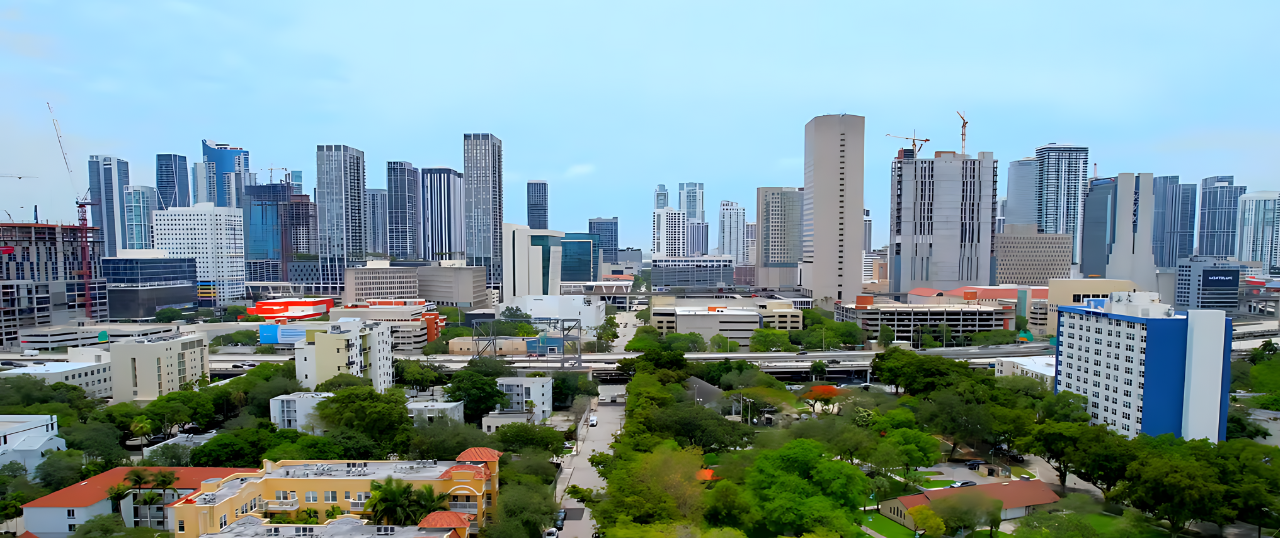
Overtown, Miami, Florida - EVERYTHING You Want to Know
Jump at this rare chance to solve the charming puzzle that is Historic Overtown. By, the e...
.png)
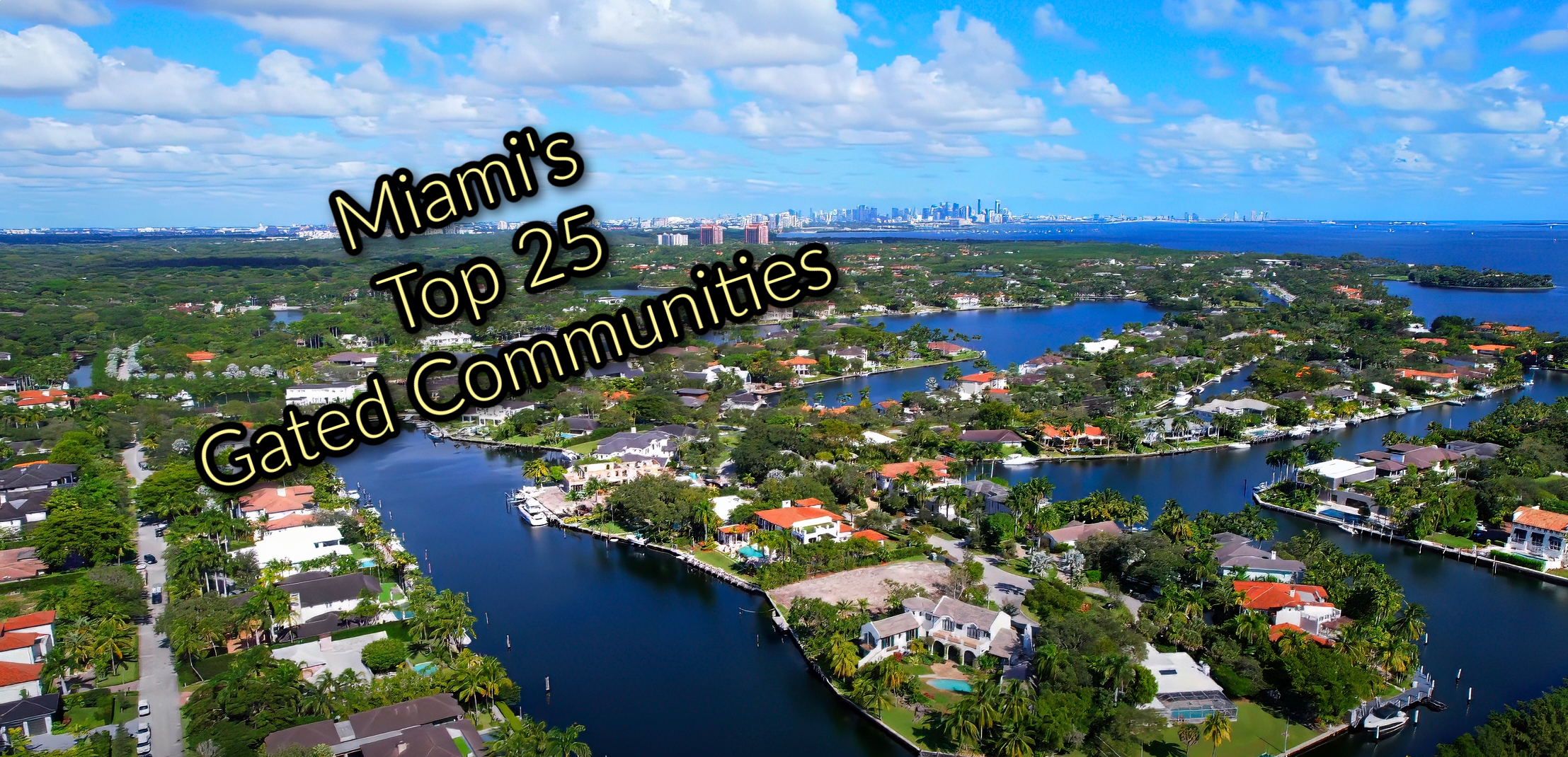
The Ultimate Guide to Miami-Dade's Top 25 Gated Communities for Single-Family Homes
Discover Miami's top gated communities in this essential guide for luxury home buyers...

Miami's BEST Restaurants in EVERY Neighborhood
Check out the absolute BEST restaurants in every neighborhood of Miami, including the best...
Selling Your Home?
Who are we?
We are the ALL IN Miami Group out of Miami.
We are Colombian, Filipino, Cuban, German, Japanese, French, Indian, Syrian, and American.
We are Christian, Hindu, and Jewish.
We are many, but we are one.
We sell luxury homes in Miami, Florida.
Although some of our clients are celebrities, athletes, and people you read about online, we also help young adults find their first place to rent when they are ready to live on their own.
First-time buyers?
All the time!
No matter what your situation or price range is, we feel truly blessed and honored to play such a big part in your life.