



Coral Gables, Miami — A Cheat Sheet for Buyers, Visitors, & the Curious

Amit Bhuta
I use non-traditional marketing to inspire the most motivated buyers to pay the max for Miami luxury homes...
I use non-traditional marketing to inspire the most motivated buyers to pay the max for Miami luxury homes...
Coral Gables is one of Miami’s most established communities — founded early in the city’s history and still shaping its future.
Built on Mediterranean Revival architecture, shaded boulevards, and city planning that earned it the name “The City Beautiful,” Coral Gables has preserved its heritage while continuously evolving through new luxury construction, zoning updates, and shifting market demand.
And as it balances legacy with growth, the questions surrounding Coral Gables never fade — they multiply.
Pricing, property taxes, strict building regulations, flood zones, schools, walkability, and why it stands out to neighboring markets are constantly searched, debated, and sometimes misunderstood.
So, we've gathered and selected the most relevant questions about Coral Gables into one in-depth guide.
Here's what you need to know about living in, visiting, and understanding Coral Gables.
-topaz-upscale-2.1x.jpeg?w=1140)
LIVING IN CORAL GABLES
What is the average home price in Coral Gables?
Single-family homes in Coral Gables generally range from approximately $1.4 million to $6 million, with waterfront estates along the Gables Waterway, Tahiti Beach, and sections near Old Cutler Road frequently exceeding $10 million and in some cases surpassing $20 million depending on lot size and direct bay access.
Condo residences typically begin in the mid-$600,000s and can exceed $3 million in newer luxury buildings along Ponce de Leon Boulevard and near Miracle Mile.
Pricing in Coral Gables varies by architectural character, waterfront exposure, and specific neighborhood section within the municipality.
What is the cost of living in Coral Gables?
The cost of living in Coral Gables is higher than the average in Miami-Dade County, primarily due to elevated home values and corresponding property taxes.
Grocery and utility expenses are comparable to the rest of Miami, but housing, insurance premiums, private school tuition, landscaping upkeep, and renovation compliance contribute to higher overall household spending.
Assessing affordability in Coral Gables involves examining both the purchase price and the long-term annual ownership costs.
Is Coral Gables safe?
Coral Gables has its own municipal police department, which allows structured patrol coverage and city-wide code enforcement.
Residential streets within interior sections such as Old Gables and areas west of Granada Boulevard often feel quieter than commercial corridors near Miracle Mile or US-1.
As with any municipality, safety can vary by exact block and proximity to major traffic routes.
What schools serve Coral Gables?
Public schools serving the area include Coral Gables Preparatory Academy for elementary and middle grades and Coral Gables Senior High School for secondary education.
Private schools within or near the city include Gulliver Preparatory School, Riviera Day School, St. Theresa Catholic School, and Carrollton School of the Sacred Heart.
The University of Miami is also located within Coral Gables and influences both housing demand and neighborhood activity.
However, school zoning boundaries vary by address, so buyers typically confirm eligibility directly with Miami-Dade County Public Schools before purchase.
You may also check Best Schools in Coral Gables to know more about your options.
What are property taxes like in Coral Gables?
Miami-Dade County assessments determine property taxes in Coral Gables and generally equate to approximately two percent of assessed value, although annual millage rates may fluctuate.
Since property values in Coral Gables often exceed those of neighboring municipalities, total annual tax obligations can be significant.
Homestead exemptions may reduce taxable value for primary residents who qualify.
Does Coral Gables have HOA requirements?
Most single-family homes in Coral Gables are directly under municipal regulations rather than private homeowner associations.
The city enforces architectural standards, zoning setbacks, and landscaping guidelines through official departments and its Architectural Review Board.
However, specific gated communities such as Gables Estates, Cocoplum, Snapper Creek Lakes, Journey’s End, and Tahiti Beach are under separate HOAs with additional annual assessments.
Condo buildings throughout the city also have individual association fees and rules.
Why are building regulations in Coral Gables so strict?
Coral Gables was established in the 1920s as a master-planned Mediterranean-style city.
To preserve architectural cohesion, the municipality maintains a Board of Architects that reviews exterior renovations, demolitions, and new construction.
Elements such as façade materials, rooflines, windows, garage placement, fencing, and setbacks are often subject to the municipality's approval.
These regulations help maintain aesthetic continuity and long-term property standards throughout the city.
What types of homes are available in Coral Gables?
Housing options in Coral Gables range from historic Mediterranean Revival residences in Old Gables to modern estate homes near Old Cutler Road and the Gables Waterway.
Waterfront properties offer canal access to Biscayne Bay, while condo developments are concentrated along Ponce de Leon Boulevard, Alhambra Circle, and the commercial district near Miracle Mile.
In Coral Gables, interior lot sizes typically range from approximately 5,000 to 8,000 square feet, while estate and waterfront parcels may range from 15,000 to over 30,000 square feet, depending on location.
Does Coral Gables flood?
Flood exposure varies by elevation and proximity to waterways, such as the Gables Waterway, Snapper Creek Canal, and Biscayne Bay.
Properties located along canal systems or the bayfront may fall within FEMA-designated flood zones requiring flood insurance.
Meanwhile, interior neighborhoods farther from water corridors often sit at higher elevations and may carry different flood classifications.
Buyers typically review flood maps, elevation certificates, and projected insurance premiums as part of due diligence.
Is Coral Gables walkable?
Walkability depends on location within the city.
The downtown core along Miracle Mile, Giralda Plaza, and Ponce de Leon Boulevard offers pedestrian access to restaurants, offices, and retail.
Residential neighborhoods farther west or south are more car-oriented but typically remain within a short drive of commercial corridors and parks.
Are short-term rentals allowed in Coral Gables?
Short-term rental regulations in Coral Gables are restrictive.
Many residential zoning classifications prohibit transient rentals.
On the other hand, condo associations and gated communities may enforce additional minimum lease periods or approval requirements.
Investors considering rental strategies should verify current municipal ordinances and building-specific bylaws before purchase.
Is Coral Gables a good long-term real estate investment?
Coral Gables has historically demonstrated steady long-term value retention supported by controlled development, limited vacant land, architectural oversight, and proximity to Downtown Miami, Brickell, Coconut Grove, and Miami International Airport.
Strict municipal regulation and limited large-scale redevelopment opportunities help maintain long-term supply discipline and market stability.
How does Coral Gables compare to Coconut Grove?
Coral Gables is an incorporated municipality with structured zoning and Mediterranean Revival identity, while Coconut Grove offers a more organic layout with denser tree canopy and bayfront parks.
While both markets command premium pricing, Coral Gables emphasizes formal planning and architectural uniformity, whereas the Grove blends historic charm with contemporary redevelopment.
How does Coral Gables compare to Brickell?
Brickell centers around high-rise condo living and a lively, financial district atmosphere.
Coral Gables emphasizes single-family homes, estate parcels, and regulated low-rise development.
Buyers seeking vertical urban living often gravitate toward Brickell, while those prioritizing land, space, and controlled residential character frequently choose Coral Gables.
How does Coral Gables compare to South Miami?
South Miami offers a smaller, village-oriented environment with fewer architectural restrictions and generally lower price thresholds.
Coral Gables is known for broader boulevards, stronger municipal code enforcement, and higher average home values.
Although both attract families, Coral Gables carries more historic preservation oversight.
-topaz-upscale-2.1x.jpeg?w=1140)
VISITING CORAL GABLES
What is Coral Gables known for?
Coral Gables is known for its Mediterranean Revival architecture, landscaped avenues, Miracle Mile shopping district, the historic Biltmore Hotel, and the Venetian Pool.
The city's nickname, "The City Beautiful," reflects its early 20th-century urban planning and an inspired European design.
What are the top things to do in Coral Gables?
Popular attractions in Coral Gables include the Venetian Pool, Fairchild Tropical Botanic Garden, dining along Miracle Mile or Giralda Plaza, exploring Matheson Hammock Park near Biscayne Bay, and visiting the Biltmore Hotel.
The University of Miami campus also hosts cultural and sporting events throughout the year.
Learn more at Top 5 Things to Do in Coral Gables.
Is Miracle Mile worth visiting?
Miracle Mile is the commercial heart of Coral Gables, offering a mix of restaurants, boutiques, bridal shops, art galleries, and seasonal street activations.
Nearby Giralda Plaza also provides pedestrian-friendly dining space and outdoor seating.
Can you visit the Biltmore Hotel?
Yes, the historic Biltmore Hotel is open to visitors for dining, spa services, golf, and event hosting.
Guided history tours are occasionally available, highlighting the site’s 1920s origins and architectural significance.
Are there parks and waterfront areas in Coral Gables?
Coral Gables offers several parks and green spaces, like Matheson Hammock Park, Salvadore Park, and the waterfront Gables Waterway corridor.
The Venetian Pool, carved from a coral rock quarry, also remains one of the city’s most distinctive recreational landmarks.
Are there hotels in Coral Gables?
Hotels in Coral Gables include the Biltmore Hotel, Thesis Hotel Miami, and boutique properties positioned along downtown commercial corridors.
For more information on the best hotels in Coral Gables, visit Top 5 Hotels in Coral Gables.
How far is Coral Gables from Miami International Airport?
Coral Gables is approximately 4 to 6 miles from Miami International Airport, and the drive typically takes 10 to 15 minutes, depending on traffic conditions.
How far is Coral Gables from Downtown Miami and Brickell?
Coral Gables is approximately 7 to 9 miles from Downtown Miami and Brickell, with typical driving times from 15 to 20 minutes under normal traffic.
-topaz-upscale-2.1x.jpeg?w=1140)
UNDERSTANDING CORAL GABLES
Is Coral Gables its own city?
Yes. Coral Gables is an incorporated municipality within Miami-Dade County, operating its own city government, police department, zoning authority, and code enforcement.
Why is Coral Gables called “The City Beautiful”?
The nickname originates from its master-planned development in the 1920s, when founder George Merrick envisioned a Mediterranean-inspired city with landscaped boulevards and cohesive architectural design.
Who founded Coral Gables?
George Merrick developed Coral Gables during South Florida’s land boom era in the early 20th century.
When was Coral Gables built?
Major development in Coral Gables began in the early 1920s, with continued expansion through subsequent decades while preserving its foundational architectural principles.
What neighborhoods make up Coral Gables?
Notable areas include Old Gables, the waterfront corridor along the Gables Waterway, gated communities such as Gables Estates and Cocoplum, the Miracle Mile commercial district, and residential areas near the University of Miami.
What ZIP codes are in Coral Gables?
Primary ZIP codes associated with Coral Gables include 33134 and 33146, with portions of 33133 overlapping depending on municipal boundaries.
Is Coral Gables considered part of Miami?
While Coral Gables borders the City of Miami geographically, it functions as an independent incorporated city within Miami-Dade County.
What is the University of Miami’s impact on Coral Gables?
The University of Miami contributes to Coral Gables’ housing demand, commercial activity, employment, and cultural programming.
Residential areas surrounding the campus often experience rental demand and academic-related activity.
How has Coral Gables evolved in recent years?
In recent years, Coral Gables has seen luxury condominium development near commercial corridors, continued modernization of older estate properties, and sustained enforcement of preservation guidelines.
Despite redevelopment activity, architectural consistency and municipal oversight continue as its defining characteristics.
-topaz-upscale-2.1x.jpeg?w=1140)
%20(2).png)
Coral Gables, Miami, Florida - EVERYTHING You Want to Know
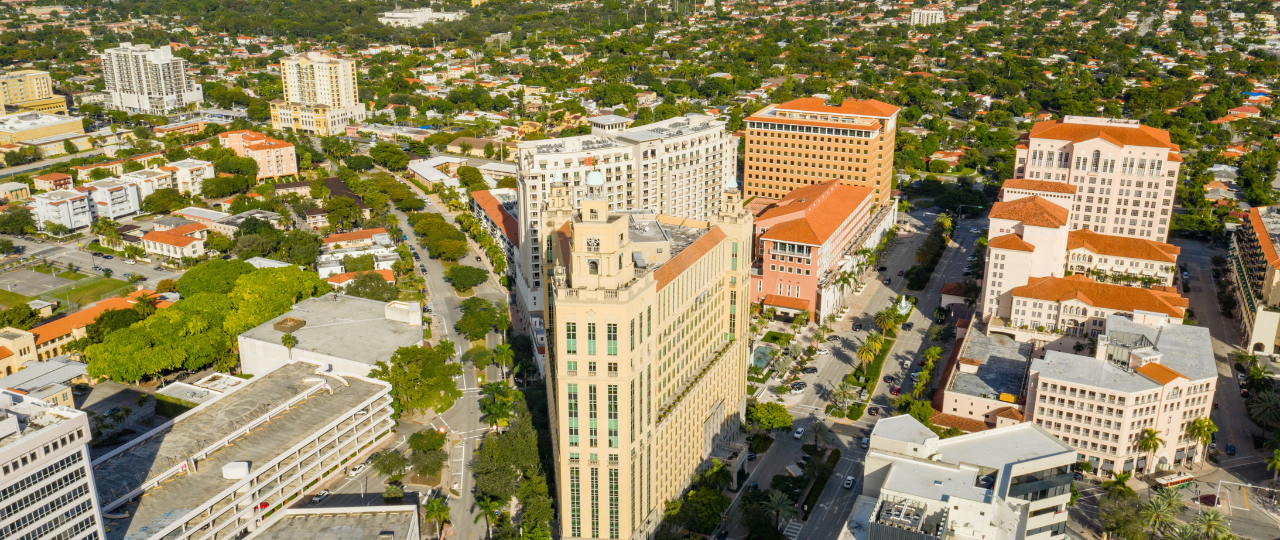
Come and join us for a virtual Coral Gables adventure that leaves no stone unturned, offer...
.png)
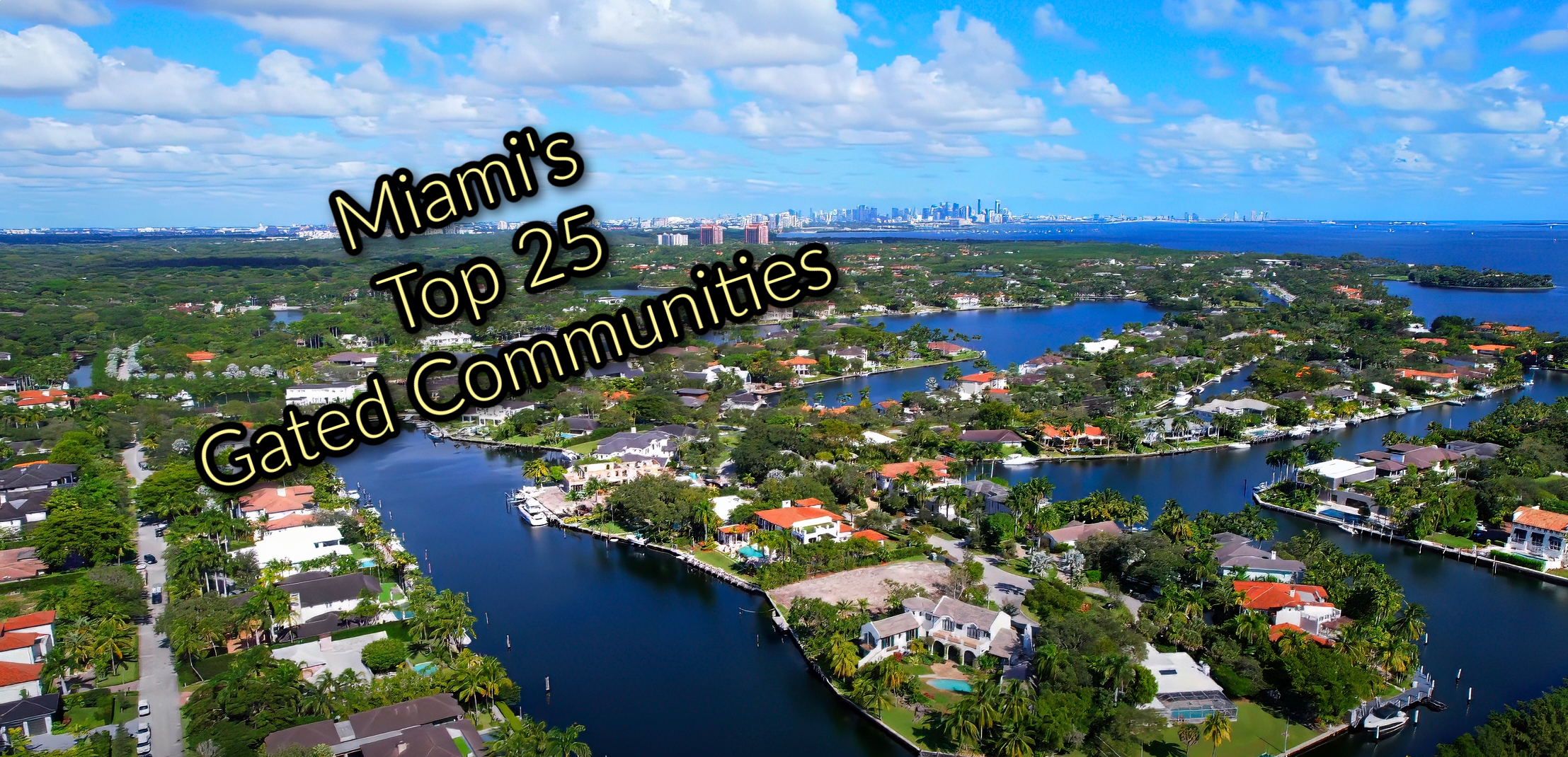
The Ultimate Guide to Miami-Dade's Top 25 Gated Communities for Single-Family Homes
Discover Miami's top gated communities in this essential guide for luxury home buyers...

Miami's BEST Restaurants in EVERY Neighborhood
Check out the absolute BEST restaurants in every neighborhood of Miami, including the best...
Selling Your Home?
Who are we?
We are the ALL IN Miami Group out of Miami.
We are Colombian, Filipino, Cuban, German, Japanese, French, Indian, Syrian, and American.
We are Christian, Hindu, and Jewish.
We are many, but we are one.
We sell luxury homes in Miami, Florida.
Although some of our clients are celebrities, athletes, and people you read about online, we also help young adults find their first place to rent when they are ready to live on their own.
First-time buyers?
All the time!
No matter what your situation or price range is, we feel truly blessed and honored to play such a big part in your life.