



What Nobody Tells You About Living in West Kendall

Amit Bhuta
I use non-traditional marketing to inspire the most motivated buyers to pay the max for Miami luxury homes...
I use non-traditional marketing to inspire the most motivated buyers to pay the max for Miami luxury homes...
In a world where cul-de-sacs reign supreme, and Publix is basically a religion, West Kendall promises the ultimate American suburban dream.
Picture top-rated schools, tree-lined streets, and a Chick-fil-A drive-thru line so long it could have its own zip code.
Every listing photo, every real estate agent, every well-meaning relative will tell you this is as good as the 'burb life gets.
But somewhere between the manicured lawns and the community Facebook groups, a different story starts to unfold, involving mysterious HOA rules, invisible house numbers, and traffic patterns designed by someone who's hated joy since Day 1.
You're looking at West Kendall's director's cut, deleted scenes included, coming soon to a moving truck near you.
Here are seven things nobody tells you about living in West Kendall.
.png?w=1140)
1) West Kendall Isn't Actually a City — It's a Government Technicality With Great PR
On paper, West Kendall has the population, personality, traffic, and territorial confidence of a city, but it never received the minor administrative detail known as a city charter.
Miami-Dade formally recognizes Area 11: West Kendall through a Community Council that serves an unincorporated territory, giving residents a local government forum without producing a mayor, municipal seal, or West Kendall City Hall.
Zoning hearings, development decisions, and many public services therefore pass through Miami-Dade County structures rather than a government belonging exclusively to West Kendall.
The geographical answer is equally slippery because county planning studies, ZIP code research, community-council maps, and past incorporation proposals have all drawn West Kendall differently.
The Census Bureau also recognizes Kendall West as a specific census-designated place, even though locals see West Kendall as a much broader collection of communities, which adds confusion.
A resident can describe the same home as being in Miami, West Kendall, and a named subdivision without attempting to deceive anyone before breakfast.
For buyers, the neighborhood name is useful for conversation, but the exact address, folio, zoning district, county commission district, and community rules determine who governs the property and what can happen around it.
 (1).png?w=1140)
2) Everyone Works Somewhere Else, Which Explains a Lot About 7 A.M.
By seven in the morning, Kendall Drive has already formed a committee, rejected several motions, and decided that nobody will reach the Turnpike without demonstrating patience.
A 2019 FIU analysis, using largely 2017 data, estimated that only 4% of employed West Kendall residents both lived and worked within the study area, while the community experienced a daily net outflow of roughly 85,850 workers.
Those figures are historical rather than a live traffic count, but they reveal the structural problem: West Kendall has far more working residents than nearby jobs to employ them.
The Miami-Dade Transportation Planning Organization continues to recognize the Kendall Corridor as heavily congested and highly traveled, while current planning efforts seek to transform its predominantly suburban, automobile-oriented character into a more multimodal one.
Not everyone works somewhere else, but enough people head toward employment centers beyond the area each morning that the title is emotionally accurate, even when the statistic requires an asterisk.
Living on a peaceful interior street does not exempt anyone, because many subdivisions feed through one or two exits before residents can join the larger arterial-road procession.
A buyer should test the commute on a real weekday at the hour it will be driven, because a route that looks harmless on Sunday afternoon may become a feature-length production on Tuesday morning.
 (2).png?w=1140)
3) Say "West Kendall" to a Local, and They'll Immediately Ask Which Community
“West Kendall” narrows the location about as efficiently as saying, “Somewhere past the Turnpike near a lake.”
County planning records describe a mix of detached houses, townhomes, cluster housing, garden apartments, and mid-rise condominiums rather than a uniform residential product.
Many developments were designed as separate residential tracts with internal lakes, curving roads, perimeter walls, and only one or two connections to the surrounding street system.
That means two properties separated by a few blocks can offer completely different parking arrangements, housing density, recreational amenities, gate procedures, association obligations, and guest-access rituals.
Development covenants and condominium associations are widespread enough that the county has identified them as a major influence on how easily properties and surrounding land uses can change.
One community may offer buyers a large detached house and quiet streets, while another provides newer townhomes, sidewalks, shared amenities, and a monthly payment that has remarkable punctuality.
The question is not whether someone likes West Kendall in general, but whether they like the exact community, its governing documents, its exits, and the stretch of arterial road waiting immediately outside it.
 (3).png?w=1140)
4) You Will Never Walk Anywhere, and You Will Be Fine With That Eventually
The pharmacy may be visible from the opposite corner, but reaching it on foot can require the route-planning instincts of an expedition leader.
West Kendall’s commercial development has historically concentrated in strip shopping centers at major arterial intersections, while residential tracts often turn inward behind lakes, walls, and curving streets.
As a result, a destination can be geographically close yet practically separated by a six-lane road, a canal, a parking field, or a subdivision wall that has no interest in your shortcut.
County planners have described the resulting circulation as convoluted for pedestrians and drivers, which is a creative way of saying that the coffee shop is nearby but you are taking the car.
The compensation is suburban convenience: groceries, restaurants, pharmacies, medical offices, and routine services are distributed through numerous commercial centers, so most errands do not require a ceremonial journey into central Miami.
However, the arrangement becomes more restrictive for teenagers, older relatives, and anyone who cannot drive, since proximity does not automatically create independence when safe direct connections are missing.
Anyone seeking café-lined sidewalks and spontaneous evening wandering may resent the layout, while someone who considers air-conditioning, easy trunk access, and abundant errands a respectable lifestyle package may adapt with suspicious speed.
 (4).png?w=1140)
5) It's Family-Run, Spanish-Spoken, and Fully Suburban
Dinner plans in West Kendall can involve three generations, two languages, six opinions, and one person insisting that everyone could have eaten at home.
FIU’s 2019 community study, drawing on 2017 Census estimates across seven ZIP codes, reported that family households represented 82 percent of West Kendall households and that Latino residents made up 81.2 percent of the population.
While those numbers should be read as a historical demographic snapshot rather than a current head count, the broader family-centered and heavily Latino character remains central to how the area developed.
Spanish is woven naturally into everyday transactions, neighborhood businesses, family conversations, school pickups, medical appointments, and the moment someone’s mother decides the restaurant staff needs clearer instructions.
The suburban design reinforces family logistics through larger residential communities, shopping centers, schools, parks, healthcare facilities, and enough parking to accommodate relatives who said they would only visit for an hour.
Multigenerational households and extended-family networks can make the area socially connected even when its streets and subdivisions are physically separated.
West Kendall is not culturally identical from one community to another, but buyers should expect family routines and Latino influence to shape daily life far more visibly than nightlife districts, tourist traffic, or beach culture ever will.
 (5).png?w=1140)
6) You're Not Near the Ocean, But Your House Can Still Flood Like It Is
The Atlantic can mind its own business, and West Kendall can still end up with water where the welcome mat was supposed to be.
Typically, Miami-Dade flood designations are determined by the specific property, and county maps identify flood hazards throughout inland and coastal portions.
Heavy rainfall can cause problems because Miami-Dade lies close to sea level, has a shallow underground water supply, and relies on an interconnected system of canals, lakes, ponds, wetlands, and drainage infrastructure.
That matters in West Kendall since lakes and canals are not decorative blue decorations in aerial photographs but working parts of the surrounding water-management landscape.
Even a property shown in a moderate- or low-risk Zone X has not received a written guarantee from the universe, and Miami-Dade notes that flood claims also occur outside the highest-risk zones.
An elevation certificate can show how high a structure was built relative to the applicable flood elevation, while insurance requirements and premiums depend on the property, mortgage, policy, and official designation.
Before buying, review the flood map, elevation information, drainage history, insurance estimate, and surrounding street after a major downpour, because sunshine during the showing is not legally binding.
 (6).png?w=1140)
7) That Empty Lot Has Plans You Don't Know About
A vacant parcel in Miami-Dade is the real estate equivalent of an unopened group chat, which means silence should never be mistaken for a lack of activity.
West Kendall developed next to the Urban Development Boundary, which the county uses to distinguish land intended for urban development from land planned for agriculture, environmental protection, or other nonurban uses.
Historic county planning documents show that portions of the boundary shifted westward as development expanded, while land between the urbanized area and Krome Avenue has repeatedly appeared in long-range growth discussions.
Vacant does not mean preserved, public, permanently agricultural, or thoughtfully reserved so one particular homeowner can continue enjoying the sunset.
A parcel’s future depends on its land-use designation, zoning, ownership, environmental constraints, infrastructure, restrictive covenants, and any applications that may seek permission for something different.
The western edge can therefore change through new housing, commercial development, institutional projects, road improvements, or proposals that spend several years moving through hearings while nearby residents learn more about planning law than they ever requested.
Anyone buying near open land should inspect county land-use and zoning maps, search for pending applications, and ask what is legally possible rather than accepting “nothing is planned” as though the empty lot pinky-swore and personally signed that statement.
WHO GETS THE MOST OUT OF LIVING IN WEST KENDALL?
People who want daily life close, practical, and mostly air-conditioned
In West Kendall, convenience matters more than having an exciting answer to the question, “What is within walking distance?”
Its supermarkets, restaurants, pharmacies, schools, parks, medical offices, and everyday services are spread across the area, so most routine needs can be handled without driving halfway across Miami.
The catch is that “nearby” usually means a short drive, not a pleasant stroll beneath shady trees with an iced coffee in hand.
West Kendall rewards anyone who enjoys having a house, a driveway, some breathing room, and enough trunk space to complete several errands in one organized sweep.
It makes sense for households whose calendars revolve around school pickups, sports practices, doctor visits, grocery runs, and relatives appearing with very little warning.
Spanish fits naturally into daily life in West Kendall, whether the conversation is at a bakery counter, inside a medical office, or across three generations during dinner.
The area’s strong suburban rhythm can be comforting because the surroundings feel familiar, useful, and built around routines rather than tourists or nightlife.
Different communities offer different versions of that setup, from condos and townhomes to detached houses with lakes, gates, clubhouses, and association rules thick enough to qualify as light reading.
West Kendall also suits people who would rather have several dependable neighborhood restaurants nearby than dress up and cross the county every time nobody wants to cook.
Plenty is happening, but most of it is designed to support ordinary life rather than turn every Tuesday evening into an event.
For anyone who sees peace, parking, family convenience, and a good Cuban bakery as legitimate quality-of-life features, West Kendall is a done-and-dusted assignment.
WHO MAY WANT TO KEEP LOOKING?
Anyone who needs walkability, easy commuting, or an untouchable view
West Kendall becomes a harder sell when you want to step outside, wander two blocks, and accidentally discover a charming little café.
The area was built around roads, shopping centers, separate subdivisions, and the assumption that most adults would arrive with car keys.
Even destinations that appear close on a map may sit beyond a wide intersection, a canal, a wall, or a street network determined to turn a simple walk into a personal challenge.
The commute can be equally unforgiving when work, school, or frequent appointments are located far to the east.
Needless to say, Kendall Drive and the surrounding arterial roads do not care that someone left early, packed snacks, or began the morning with excellent intentions.
West Kendall may also frustrate anyone who wants a clear neighborhood center because it operates more like a collection of communities connected by major roads than one tidy town gathered around a main street.
A house beside an empty parcel can offer a peaceful view today without promising the same view after zoning applications, public hearings, and several large construction vehicles.
Flood risk also requires more homework than the inland location might suggest, especially near canals, lakes, low-lying streets, or areas with a history of poor drainage.
Association rules can add another layer, since two similar-looking homes may come with very different fees, parking restrictions, approval processes, and opinions about what color a front door is allowed to be.
Anyone who dislikes checking maps, governing documents, commute times, flood information, and development plans may find that West Kendall demands more research than its relaxed suburban appearance suggests.
West Kendall is not hiding these tradeoffs, but it does assume people will read the fine print before falling in love with the rustic patio.
AN HONEST TAKEAWAY
What living in West Kendall really comes down to
West Kendall is Miami without the postcard glam.
There are no beachfront mornings, glamorous hotel lobbies, or tourists blocking the sidewalk while trying to snap something that residents stopped noticing years ago.
Instead, West Kendall offers a huge, busy, family-centered stretch of suburbia where daily life runs on school schedules, shopping-center errands, Spanish conversations, and carefully timed departures.
Its greatest strength is that it can accommodate most of a household’s routine within the general area, even when reaching each stop requires getting back into the car.
Its biggest weakness is that leaving the area at the wrong hour can turn a normal trip into a long discussion between a driver and the navigation app.
The name “West Kendall” creates the illusion of a unified place, but the experience varies by subdivision, nearest arterial road, school zone, association, flood conditions, and distance from the Turnpike.
That variety is why choosing the exact pocket matters far more than deciding whether West Kendall sounds good in general.
The area can feel calm and organized inside a residential community while the road just beyond the entrance is conducting its daily traffic experiment.
It can feel established and settled while an empty parcel nearby awaits its next land-use proposal.
West Kendall does not offer effortless urban charm, but it offers space, convenience, cultural familiarity, and a version of suburban Miami that many households can use every single day.
Living in this community ultimately comes down to accepting that the car is part of the household, the commute deserves a rehearsal, and the right community can make the entire arrangement work surprisingly well.
%20(74)-topaz-enhance-4x.jpg)
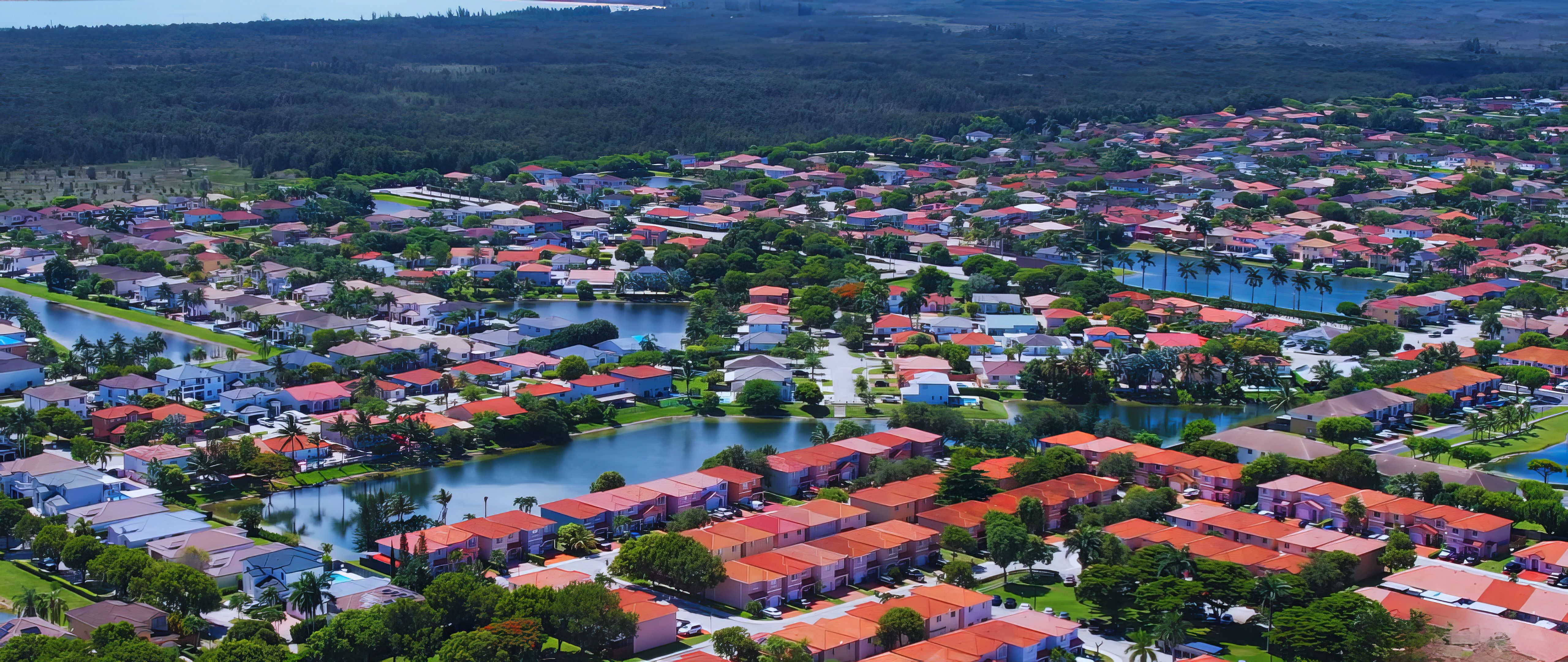
West Kendall, Miami, Florida - EVERYTHING You Want to Know
Grab your coziest blanket and a cup of your favorite drink to prepare for a virtual tour o...
.png)
The Ultimate Guide to Miami-Dade's Top 25 Gated Communities for Single-Family Homes
Discover Miami's top gated communities in this essential guide for luxury home buyers...


Miami's BEST Restaurants in EVERY Neighborhood
Check out the absolute BEST restaurants in every neighborhood of Miami, including the best...
Selling Your Home?
Who are we?
We are the ALL IN Miami Group out of Miami.
We are Colombian, Filipino, Cuban, German, Japanese, French, Indian, Syrian, and American.
We are Christian, Hindu, and Jewish.
We are many, but we are one.
We sell luxury homes in Miami, Florida.
Although some of our clients are celebrities, athletes, and people you read about online, we also help young adults find their first place to rent when they are ready to live on their own.
First-time buyers?
All the time!
No matter what your situation or price range is, we feel truly blessed and honored to play such a big part in your life.