



What Nobody Tells You About Living in Little Havana

Amit Bhuta
I use non-traditional marketing to inspire the most motivated buyers to pay the max for Miami luxury homes...
I use non-traditional marketing to inspire the most motivated buyers to pay the max for Miami luxury homes...
Little Havana is as close as it gets to planning a trip to Cuba without the passport stamp.
The murals, the salsa, the rooster statues, and the smell of fresh cigars drifting out of open doorways — this colorful neighborhood screams "authentic" from every angle, proving that what you see on a postcard and what you get in real life can feel like they're basically the same photo.
It's no wonder people fall hard and fast for Little Havana, sometimes before they've spent a single night there past 9 pm.
But here's a spoiler alert: the neighborhood after the tour buses leave tells a slightly different story.
And once the dominoes get put away for the night, that story gets a lot more interesting.
Here are seven things nobody tells you about living in Little Havana.
 (23).png?w=1140)
1) Cafecito, Dominoes, and Abuela's Rules, All Year Round
Little Havana does not save its culture for special occasions, because nobody here is waiting for a ribbon-cutting ceremony to pour a cafecito.
The neighborhood runs on Spanish conversations, bakery lines, cigar smoke, family routines, old-school opinions, music drifting from storefronts, and the sacred knowledge that someone’s abuela is probably right even when she is yelling from across the room.
But while this is the part visitors notice first, residents understand it differently.
For people who live in Little Havana, culture is not just a weekend performance.
It is the background music of daily life, except sometimes it's very loud and someone is arguing about dominoes with the seriousness of a Supreme Court case.
Little Havana’s Cuban identity is not frozen in the past either.
It keeps moving through new generations, new arrivals, longtime families, small businesses, food counters, churches, barbershops, and neighbors who know exactly where to get the best pastelito and will defend that answer in public.
That is what gives the neighborhood its pull.
It has personality without begging for attention.
It has rhythm without needing a DJ.
It has rules without ever posting them on a sign.
You learn those rules by watching, listening, waiting your turn, greeting people properly, and understanding that a tiny coffee can somehow contain enough emotional force to restart an entire adult.
Living in Little Havana means culture is not something you go out to find.
It is already outside, talking loudly, smelling delicious, and possibly telling you that you parked wrong.
 (24).png?w=1140)
2) There's a Whole Neighborhood Behind That One Famous Street
Calle Ocho may be the name people know, but Little Havana is not one long souvenir aisle with better coffee.
The famous strip deserves attention because it has murals, music, roosters, restaurants, cigar shops, the Walk of Fame, the crowds, and enough photo opportunities to make a phone battery surrender by lunch.
But residents do not live inside a travel guide.
Beyond the tourist stretch, Little Havana has quieter residential blocks, older apartments, small homes, schools, churches, corner stores, laundromats, and the less glamorous but very important places where regular life happens.
A visitor may remember the painted roosters, but a resident knows which block floods after heavy rain, where parking gets impossible, which bakery line moves fast, and which neighbor knows everybody’s business with frightening accuracy.
The public version of Little Havana is centered on Calle Ocho, but the lived version spreads far beyond it.
That is where the neighborhood becomes less of a landmark and more of a place.
There are errands, routines, rent notices, school pickups, grocery bags, quiet mornings, noisy evenings, and all the ordinary details that never make it into the brochure because nobody wants to advertise “excellent access to laundry and mild parking stress.”
Calle Ocho is the front door everyone photographs.
The rest of Little Havana is the house people keep forgetting to enter.
 (25).png?w=1140)
3) Domino Park Has More Drama Than Most Living Rooms
Domino Park may be small, but it has the emotional range of a telenovela season finale.
Officially, it is Máximo Gómez Park, a well-known gathering spot on Calle Ocho where older locals play dominoes, talk, compete, watch, react, and remind everyone that sitting down does not mean the energy level has dropped.
Unofficially, it is a neighborhood theater with tables.
The game pieces hit the table, conversations rise, eyebrows move, and suddenly a quiet afternoon has tension, strategy, commentary, and at least one person who looks personally betrayed by a tile.
In other words, Domino Park is more than a tourist spot.
It is not only a place visitors stop to watch “local flavor” before moving on to lunch.
It is a social ritual.
It gives older residents a place to gather, be seen, compete, argue, joke, and keep a familiar rhythm in a neighborhood that keeps changing around them.
A park does not need to be huge to carry meaning.
Sometimes it only needs shade, tables, regulars, rules, and enough side-eye to keep the whole block accountable.
For residents, this is part of Little Havana’s public living room.
For visitors, it may look charming.
For the players, it is serious business, and everyone else should respect the court.
 (26).png?w=1140)
4) Your Meal Plan Never Stood a Chance
Living in Little Havana with a strict meal plan requires either heroic discipline or a very boring route home.
The neighborhood is not subtle about food.
It puts cafecito windows, Cuban bakeries, ventanitas, ice cream shops, sandwich counters, restaurants, and pastry cases directly in your path like it is testing your character for sport.
You may leave the house with responsible intentions, but then see someone ordering croquetas and smell the addictive scent of coffee, or a guava pastelito appears in your line of vision, and suddenly your meal plan is lying face down on Calle Ocho asking for privacy.
That is part of the joy of living in Little Havana.
Food is not only fuel but social currency, memory, comfort, routine, temptation, and sometimes the reason a quick walk turns into a full snack-based negotiation with yourself.
The neighborhood’s food scene is not only Cuban either.
Little Havana has grown into a wider Latin dining landscape, with classic Cuban staples sitting alongside newer restaurants, bakeries, dessert spots, and places that bring different parts of Miami’s immigrant table into the same conversation.
That variety is exciting, but it also changes daily life.
Living near a food destination means visitors, lines, delivery drivers, smells, late cravings, weekend crowds, and the constant moral challenge of pretending you are “just getting coffee.”
Little Havana feeds people well.
It also has no respect for your spreadsheet.
 (27).png?w=1140)
5) These Buildings Have History and a Few Unsolved Mysteries
Little Havana’s older buildings can be beautiful, but they do not always explain themselves.
The neighborhood has bungalows, apartment buildings, walk-ups, small commercial spaces, and older structures that help give it the texture people love.
They also sometimes come with floors that creak with confidence, windows that have opinions, and plumbing that sounds like it remembers the Cold War.
Historic character can be charming, but it can also mean maintenance questions, renovation needs, insurance concerns, landlord decisions, and the occasional mystery noise that makes everyone pause mid-sentence.
Here, preservation and affordability can get complicated.
People want Little Havana to keep its soul, but the soul is often housed in buildings that need care, money, and protection from being demolished, over-renovated, or priced beyond the people who helped make the neighborhood what it is.
And this is not a small issue since older housing stock is part of the neighborhood’s identity, but it is also where many residents experience rent pressure and uncertainty.
A cute façade does not automatically mean an easy living situation.
A historic building can hold memory and a very questionable air-conditioning setup at the same time.
Little Havana’s architecture tells stories.
Some of them are beautiful, and some of them should probably be inspected before you sign anything.
 (29).png?w=1140)
6) Centrally Located, Spiritually Tested
Little Havana has a location that looks excellent on a map and humbles people in real life.
It sits near Downtown Miami, Brickell, Coral Gables, major roads, cultural spots, work centers, restaurants, and enough nearby activity to make it seem like everything should be easy.
Then traffic arrives with a clipboard and begins its daily performance review.
Living in this part of the city can be convenient, but it is not always smooth.
The same central location that makes Little Havana appealing also brings congestion, event crowds, delivery trucks, tourists, commuters, rideshares, and drivers who circle for parking with the haunted expression of people reconsidering their life choices.
Parking can become a neighborhood sport, except nobody wins and the trophy is a suspiciously narrow space near a curb.
That is the daily catch — you are close to a lot, but close does not always mean calm.
A short trip can stretch.
A simple errand can collect side quests.
A dinner plan can require parking strategy, emotional maturity, and possibly a backup pair of shoes.
Little Havana gives residents access to the city’s core without placing them inside Brickell’s glass-tower universe.
It's a major advantage, but Miami always sends an invoice, and around here, it often arrives in the form of honking, circling, and personal growth you never wanted.
 (28).png?w=1140)
7) Everybody Wants the Soul, Nobody Reads the Care Instructions
Little Havana has the one thing developers, tourists, restaurants, politicians, preservationists, and branding teams all love to talk about.
It has soul.
The problem is that soul is not a decorative feature you can preserve by painting a rooster on the wall and calling the job complete.
Little Havana’s soul comes from people, language, memory, food, music, small businesses, older buildings, public rituals, immigrant history, and daily life that was not created for someone else’s content calendar.
Here, change needs more care than a standard “upgraded neighborhood” storyline.
Investment can help.
Better housing can help.
Cleaner streets, safer sidewalks, stronger small businesses, and restored buildings can all help.
But improvement becomes dangerous when it treats the existing community like background scenery.
The fear is not that Little Havana will change.
It has always changed.
The fear is that it will be transformed into a version of itself that visitors recognize instantly and longtime residents can no longer afford.
That is how a neighborhood becomes a costume of its own culture.
It keeps the colors, the food, the music, and the signs, but slowly loses the people who gave those things meaning.
Little Havana does not need to be frozen in time.
It needs to be cared for carefully enough that the next chapter still sounds like the neighborhood, not a sales pitch wearing a guayabera.
WHO GETS THE MOST OUT OF LIVING IN LITTLE HAVANA?
People who like their neighborhood loud, warm, and a little nosy in a friendly way
Little Havana doesn't do quiet mornings; the smell of cafecito hits the sidewalk before most people even finish their first cup at home, and that smell pretty much sets the tone for everything else.
Spanish carries through these streets the way English does everywhere else: easy, natural, and not the least bit performative, which makes the whole neighborhood feel less like a destination and more like someone's actual life.
That same energy spills into the music too, drifting out of cars, kitchens, and corner bars like it pays rent on this side of town, filling in the gaps between conversations on every block.
Head a few streets over, and you'll find where a lot of that conversation actually happens: Domino Park, packed daily with regulars who've been showing up for decades, swapping stories and slamming tiles with the same energy every single time.
Right around the corner from that energy is the neighborhood's other obsession: food, with ventanitas on practically every block serving pastelitos and croquetas that make sticking to a diet feel like a personal attack.
All of that life happens inside buildings that have their own stories too, bungalows and low-rise apartments carrying decades of history in their walls, the kind of charm you can't fake with new construction.
That history goes back further than most people realize, all the way to Cuban families who built this place from nothing after leaving everything behind in the early 1960s.
In fact, you can still feel that history walking down the street today, in murals of Celia Cruz, in cigar shops still rolling by hand, in conversations that drift easily between Spanish and English mid-sentence without anyone thinking twice about it.
And on top of all that culture and history, Little Havana happens to sit close to basically everything: Brickell, Downtown, Coral Gables, all just a short drive away, which makes the neighborhood as practical as it is full of personality, and not everyone can handle it without feeling overwhelmed.
WHO MAY WANT TO KEEP LOOKING?
Anyone who needs total quiet and a guaranteed parking spot
Calle Ocho draws crowds nearly every day, and that energy comes with a trade-off: tour buses, festival traffic, and sidewalks packed shoulder to shoulder during peak hours.
That same popularity turns parking into its own daily puzzle, especially near the busiest blocks, where circling the same street twice becomes a normal part of life in Little Havana.
Once you actually find a spot and settle into one of the neighborhood's older buildings, a different set of surprises shows up, which may include creaky pipes, sudden repairs, and the occasional mystery noise nobody can quite explain.
Those same buildings sit on increasingly valuable land, which means rent has been climbing as more people discover the neighborhood, putting pressure on longtime residents who built this place from scratch.
That pressure isn't just coming from new residents either; investors have taken notice too, with new condo projects popping up where rental buildings used to stand, changing the math for anyone trying to settle in long term.
Part of that investment interest ties back to something most people never think about, such as Little Havana's higher elevation, which has made it appealing to people moving away from flooding closer to the coast.
Put all of that together, and you get real tension between protecting what makes this neighborhood special and the outside money eager to cash in on it.
For anyone who'd rather avoid that kind of uncertainty, or who simply can't handle a little honking on the way home, Little Havana might end up feeling more exhausting than charming.
AN HONEST TAKEAWAY
What living in Little Havana really comes down to
Little Havana isn't trying to be anything but loud, warm, and completely unbothered by outside opinions, and that's exactly what makes it work.
That confidence didn't come out of nowhere either; it was built over decades by Cuban exiles who turned a quiet neighborhood into the cultural capital of an entire diaspora.
You can still feel that history in how the neighborhood actually runs; its culture isn't packaged for visitors but simply how the block functions, complete with cafecito windows, Spanish conversations, and dominoes clicking well past sunset.
Most people only know one piece of that block, though, since Calle Ocho gets all the attention while the real neighborhood stretches far beyond that one famous street, into quieter blocks most tourists never see.
Wander those quieter blocks long enough, and the food alone could justify moving here, though fair warning, your meal plan probably won't survive the bakery on the corner.
Getting around to enjoy all of it is its own adventure, since parking and traffic come standard with the deal; a central location means convenience on paper and patience in practice.
That same convenience is part of why the neighborhood is changing fast; rising rents and new development are reshaping entire blocks, and that shift comes with real anxiety about what gets lost along the way.
Even the old buildings caught in the middle of that change carry their charm and quirks in equal measure, the kind that make a place feel lived-in instead of staged.
Put it all together, and what you get is a neighborhood that earned its reputation through resilience.
And if you decide to live in Little Havana, you'll become part of that story too, honking, parking struggles, and all, while doing your part to help keep its soul intact.
%20(23).png)
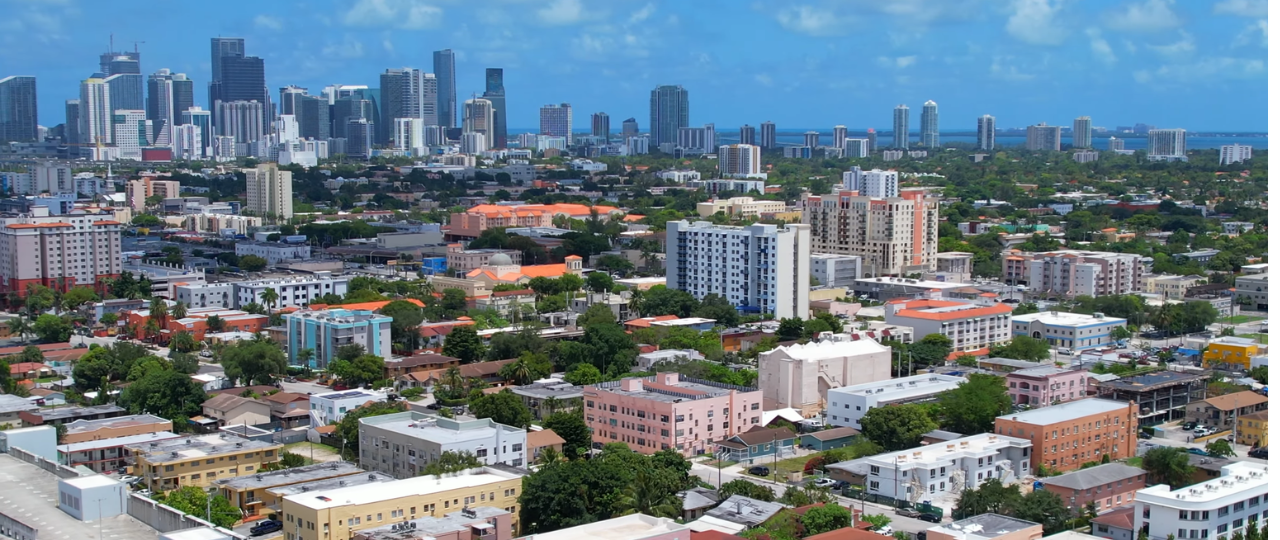
Little Havana, Miami, Florida - EVERYTHING You Want to Know
Drop everything you're doing and hop on this virtual escapade across Little Havana�...
.png)
The Ultimate Guide to Miami-Dade's Top 25 Gated Communities for Single-Family Homes
Discover Miami's top gated communities in this essential guide for luxury home buyers...

Miami's BEST Restaurants in EVERY Neighborhood
Check out the absolute BEST restaurants in every neighborhood of Miami, including the best...
Selling Your Home?
Who are we?
We are the ALL IN Miami Group out of Miami.
We are Colombian, Filipino, Cuban, German, Japanese, French, Indian, Syrian, and American.
We are Christian, Hindu, and Jewish.
We are many, but we are one.
We sell luxury homes in Miami, Florida.
Although some of our clients are celebrities, athletes, and people you read about online, we also help young adults find their first place to rent when they are ready to live on their own.
First-time buyers?
All the time!
No matter what your situation or price range is, we feel truly blessed and honored to play such a big part in your life.