



What Nobody Tells You About Living in Little River

Amit Bhuta
I use non-traditional marketing to inspire the most motivated buyers to pay the max for Miami luxury homes...
I use non-traditional marketing to inspire the most motivated buyers to pay the max for Miami luxury homes...
Every few years, Miami finds a new neighborhood to call "the next Wynwood," and right now that crown belongs to Little River.
Here, galleries are moving in, warehouses are getting second lives as restaurants and studios, and there's real hype building around streets that previously only hosted cargo trains and shuttered buildings.
And yes, if you're asking, that hype is legit, and not something real estate agents made up to get a few units off their backs, as you can tell from Little River's fast-growing art scene and legitimately superb food halls.
But "the next big thing" always comes with growing pains nobody puts on the flyer, and we're not holding back so you know when you should.
Here are five things nobody tells you about living in Little River.
 (31).png?w=1140)
1) Industrial Chic Wasn't Planned; It Just Happened
Little River did not sit down with a branding agency and say, “Let us become gritty but photogenic.”
The neighborhood had warehouses, service shops, wide streets, railroad edges, older commercial buildings, and enough rustic texture to make creative people start whispering the dangerous phrase, “This place has potential.”
Then the galleries came.
Then the restaurants came.
Then the design spaces, studios, plant shops, and people who know how to describe concrete floors as “authentic” arrived with tote bags and surprisingly strong opinions about natural wine.
That is the charm and the irony of Little River.
Its cool factor does not come from being perfectly arranged, but from the fact that it isn't.
The industrial bones are part of the appeal, but they are also part of daily life.
You may get a great meal near a loading zone.
You may pass a gallery, a mechanic, a warehouse, and a stylish café before your parking patience has fully dissolved.
Little River’s personality is not neatly packaged in the usual Miami way.
It is rough-edged, creative, practical, and still a little dusty around the corners.
That is what makes it interesting.
It also means the neighborhood is not pretending to be effortless.
Its coolness came from reuse, not reinvention by committee.
 (32).png?w=1140)
2) Same Zip Code Energy, Completely Different Personality
Little River often gets looped in with nearby neighborhoods, but it does not move through Miami the same way.
It sits close to Little Haiti, the Upper Eastside, the MiMo corridor, and other areas people love to lump together when speaking quickly or trying to sound market-savvy.
But Little River has its own texture.
It is less about cultural landmarks than Little Haiti, less put-together than some nearby corridors, less mural-saturated than Wynwood, and more industrial than people expect when they hear about the restaurants and galleries.
That distinction matters because Miami loves blurring neighborhood identities once real estate is involved.
Suddenly everything is “near Wynwood,” “by Design District,” “minutes from Midtown,” or “part of an emerging creative corridor,” which is usually code for “we are hoping you do not ask too many boundary questions.”
Little River deserves better than being described only by what it is beside.
It has its own working past, its own commercial rhythm, its own creative migration, and its own tension between grit and hype.
Living in this corner means understanding that proximity does not equal personality.
Two neighborhoods can share nearby roads and still have entirely different moods before lunch.
Little River may borrow attention from surrounding areas, but it is not just someone else’s side entrance.
It has its own front door, even if a delivery truck is parked in front of it.
 (33).png?w=1140)
3) Construction Boots Are Already on the Ground
Little River’s future is not sitting unattended in a folder somewhere.
It is already walking around in steel-toed boots.
Major redevelopment plans tied to the Little River District have brought big promises into the conversation, including affordable and workforce housing, retail, green space, jobs, transit access, and a scale of change that does not exactly cower in a corner.
For a neighborhood that has long carried industrial buildings and working spaces, that is a major shift.
This is not just one storefront becoming a café with excellent tile, but planning that changes how a place moves, looks, works, and gets priced.
The hopeful side brings more housing, better infrastructure, transit access, green spaces, and jobs.
A neighborhood should not have to remain underinvested to keep its personality intact.
But large plans also bring large questions.
Who benefits first?
Who gets included early?
Who is asked to be patient while the renderings look very confident?
Who gets the new amenities, and who gets the construction noise?
That is why Little River’s redevelopment story needs more than applause or panic.
It needs attention.
A project can promise affordability, opportunity, and connection, but daily life will be shaped by how those promises land on real blocks with real people and real businesses.
The boots are already on the ground.
Now the neighborhood gets to find out whether they came to build with it or march over it.
 (34).png?w=1140)
4) Affordable for Whom, Exactly?
Affordable housing sounds simple until Miami reminds everyone where they are.
Then the word “affordable” starts stretching like a cheap waistband after Nochebuena.
In Little River, the promise of affordable and workforce housing is one of the biggest parts of the redevelopment conversation.
That matters because the area is not only attracting artists, restaurants, developers, investors, and people who say “up-and-coming” like they are announcing a weather event.
It is also part of a city where housing costs have pushed many working people into impossible financial depths.
So yes, affordability should be celebrated.
But the follow-up question is unavoidable.
Affordable for whom, exactly?
Affordable for current residents?
Affordable for workers who already support the area?
Affordable for artists and small-business employees?
Affordable compared with Brickell, which is not exactly a heroic benchmark?
That question changes everything.
Because if affordability exists mostly on paper, in press releases, or at income levels that miss the people already most vulnerable, then the word starts doing public relations instead of public service.
Little River needs housing that is not just technically affordable.
It needs housing that keeps the neighborhood from becoming a creative district staffed by people who can no longer live anywhere near it.
That is the difference between a promise and a protection.
Miami has enough fancy words.
Little River needs the math to make sense.
 (35).png?w=1140)
5) The Secret's Out, and So Is the Old Rent
Little River used to have the advantage of being interesting without everybody making a speech about it.
That window is closing.
The neighborhood has been praised for its creative energy, restaurants, galleries, industrial feel, and not-yet-overproduced character, which is exactly the kind of attention that makes rent start acting brand new.
The problem with being called “cool” is that the compliment often brings a bill.
Artists arrive because the space is flexible.
Restaurants arrive because the neighborhood has texture.
Visitors arrive because the restaurants and art spaces make it "trip-worthy."
Developers arrive because visitors and restaurants arrived.
Then someone who has been there for years gets a rent notice and suddenly the word “revitalization” needs to leave the room.
That is the cycle people worry about in Little River.
Nobody wants a neighborhood to be ignored forever.
But attention in Miami rarely travels alone.
It brings speculation, branding, higher expectations, higher costs, and the fear that the very businesses and people who made a place appealing will be the first ones squeezed out.
That is why Little River’s next chapter feels exciting and nerve-racking at the same time.
The secret is out, and maybe that was inevitable.
The real question is whether the neighborhood can grow without becoming a cleaner, pricier version of the thing people claimed to love.
Little River’s charm was never that it looked finished.
It was that it still had room to become something without losing itself.
WHO GETS THE MOST OUT OF LIVING IN LITTLE RIVER?
Those who like their neighborhoods a little unfinished and a lot interesting
Little River wears its industrial past like a badge instead of trying to hide it; its warehouses turn into galleries, and old rooftops now host restaurants in the place of pigeons.
That mix gives the area a creative energy you can actually feel walking down the block where half the storefronts look like they're mid-renovation, and somehow that's part of the charm.
Art shows up everywhere, not in museums, but in a "turn a corner, and there's a mural you didn't expect" kind of way.
The Citadel food hall captures that same spirit, a former industrial space now packed with vendors, music, and people who showed up for one quick bite and stayed for three hours.
Mid-century homes line a lot of the residential streets, with good bones and a little personality baked into every crooked doorframe.
Mature trees shade those same blocks, which sounds small until you're walking home in August and suddenly very grateful for it.
Getting around is easy too; Interstate 95 sits close by, and the neighborhood connects quickly to Wynwood, the Design District, and downtown without feeling like you're stuck in the middle of either one.
Compared to those flashier neighbors, prices still feel reasonable, all things considered, which makes Little River a rare combination of creative energy and actual affordability in this part of Miami.
WHO MAY WANT TO KEEP LOOKING?
Anyone who needs a readily packaged neighborhood from day one
Little River is currently in the middle of a massive transformation, which means construction, scaffolding, and shifting storefronts are just part of daily scenery right now.
A multibillion-dollar redevelopment plan is already underway, bringing thousands of new housing units, retail space, and even transit upgrades, which sounds great on paper but means years of active construction in real life.
Big-name investors have taken serious notice too, buying up entire blocks of property with plans still being finalized, leaving a lot of uncertainty over what comes next.
That uncertainty extends straight to the people who already live here, since promises about affordable housing tend to raise an obvious question: affordable for who, exactly, once the new buildings go up.
Small, independent businesses are starting to feel pressure too, as rising interest in the area pushes property values up faster than most long-running shops can keep pace.
Traffic adds its own headache, since a few major roads cut straight through the neighborhood, bringing noise and congestion that doesn't quite match Little River's otherwise laid-back reputation.
Flood insurance is worth a second look as well; certain pockets of the neighborhood fall into FEMA flood zones, and those rates have been climbing right along with everything else.
Put all of that together, and Little River becomes more like a long-term construction project you'd be living inside of.
AN HONEST TAKEAWAY
What living in Little River really comes down to
Little River is, right now, a neighborhood caught between what it used to be and what it's quickly becoming.
The industrial roots are still visible everywhere, in the warehouses, the railroad tracks, the unpolished edges that give the area its personality.
Layered on top of that is a genuine creative wave of galleries, restaurants, and small businesses moving in and bringing real energy along.
And you can bet that the energy hasn't gone unnoticed, with a massive redevelopment plan already in motion, backed by serious money and big ambitions for what this neighborhood could become.
While the promise sounds good on the surface- more housing, more retail, better transit- promises like that always raise the same question about who actually gets to benefit once it's all built.
Small businesses and longtime residents are watching closely, caught between excitement over the investment and real worry about being priced out of the very neighborhood they helped build a reputation for.
Traffic, flood zones, and ongoing construction add their own daily friction, reminders that this transformation is still very much a work in progress.
What Little River offers right now isn't a finished product; it's a front-row seat to a neighborhood actively deciding what kind of place it wants to be.
Living in this corner means experiencing that uncertainty firsthand, the good and the messy parts both, while the rest of Miami watches to see how the story turns out.
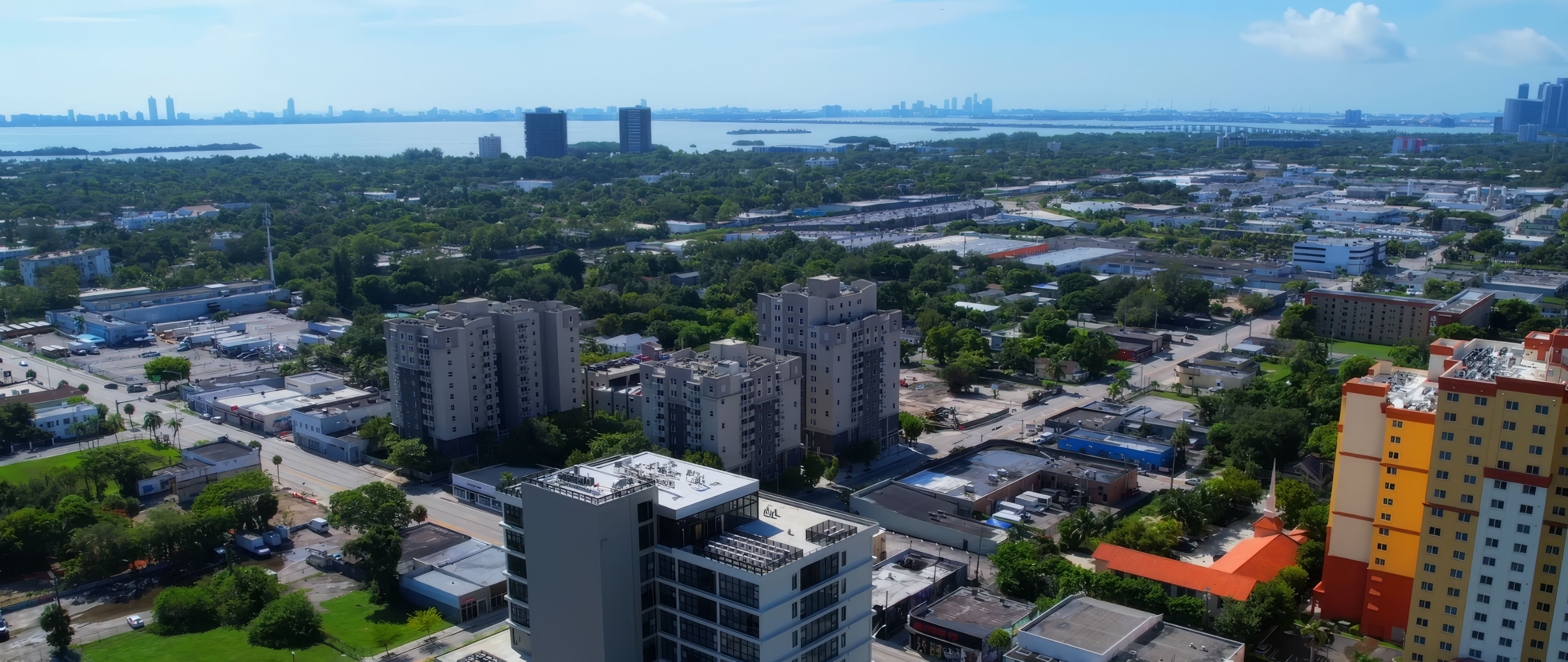
Little River, Miami, Florida - EVERYTHING You Want to Know
As Little River transforms before our eyes, we'll give you a grand tour of its nooks ...
.png)
The Ultimate Guide to Miami-Dade's Top 25 Gated Communities for Single-Family Homes
Discover Miami's top gated communities in this essential guide for luxury home buyers...


Miami's BEST Restaurants in EVERY Neighborhood
Check out the absolute BEST restaurants in every neighborhood of Miami, including the best...
Selling Your Home?
Who are we?
We are the ALL IN Miami Group out of Miami.
We are Colombian, Filipino, Cuban, German, Japanese, French, Indian, Syrian, and American.
We are Christian, Hindu, and Jewish.
We are many, but we are one.
We sell luxury homes in Miami, Florida.
Although some of our clients are celebrities, athletes, and people you read about online, we also help young adults find their first place to rent when they are ready to live on their own.
First-time buyers?
All the time!
No matter what your situation or price range is, we feel truly blessed and honored to play such a big part in your life.