



What Nobody Tells You About Living in Liberty Square

Amit Bhuta
I use non-traditional marketing to inspire the most motivated buyers to pay the max for Miami luxury homes...
I use non-traditional marketing to inspire the most motivated buyers to pay the max for Miami luxury homes...
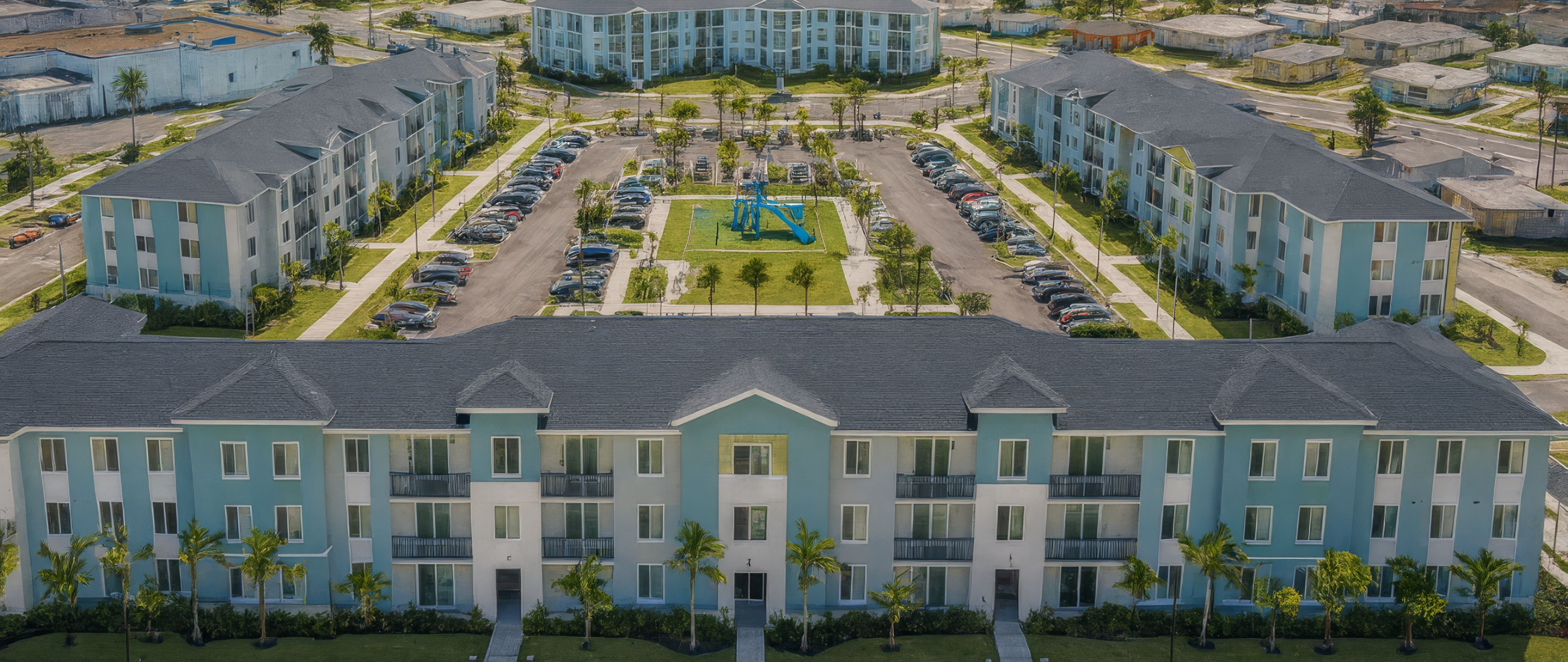
If you've seen the "before and after" photos of Liberty Square floating around online, you already know it has the makings of the story everyone loves to tell.
A rundown public housing complex transformed into a modern mixed-income community, complete with real amenities and real hope attached — Liberty Square is a fairytale redevelopment story that makes for a great headline.
Mind you, a lot of it genuinely holds up in real life, which is rare for a story this dramatic.
The new buildings are there, the infrastructure upgrades are there, and so is the deeper investment in what this neighborhood could become, instead of what it used to be.
And yes, even people who lived through the "before" will admit the optimism is earned.
The thing is, the "after" picture is still being painted, brushstroke by brushstroke, and nobody's talking about what it's like to live inside a photo that isn't finished yet.
Oh, but we will.
Here are six things nobody tells you about living in Liberty Square.
 (8).png?w=1140)
1) It's Built in the '30s and Still Making Headlines
Liberty Square has been around long enough to deserve both a historic marker and a strong cup of coffee.
Built in the 1930s, it was not just another housing development with a neat grid and fresh paint.
It was created during a time when Black Miamians were pushed into overcrowded areas like Overtown, and Liberty Square became one of the places tied to the city’s larger story of segregation, migration, and survival.
That is why living around Liberty Square is not the same as living near a random old apartment complex with “character” and plumbing that makes mysterious noises.
Here, the history has weight.
It is in the layout, the memory, the name, and how people still talk about what Liberty Square represented before it became a redevelopment case study.
For some, it was once a source of pride and stability.
For others, it became a symbol of how public housing can be neglected until the land becomes interesting to people with renderings, consultants, and very clean shoes.
Liberty Square is old enough to have lived many lives, and Miami keeps finding new ways to argue about what the next one should be.
So yes, it is historic.
But this is not subtle, museum-glass history.
This is history that still has meetings, headlines, documentaries, construction fences, and people asking whether the future remembered to respect the past.
 (9).png?w=1140)
2) This Glow-Up Has an Official Name and a Budget
Some neighborhood changes happen slowly, like a house getting painted, a corner store changing owners, or someone finally removing the mystery couch from the sidewalk.
Liberty Square’s transformation is not that subtle.
This one has an official name, a public initiative, some government jargon, redevelopment phases, and budget numbers that make regular people blink twice before reading them again.
Miami-Dade’s Liberty City Rising initiative placed Liberty Square at the center of a major revitalization effort to replace aging public housing and bring in new investment.
On paper, that sounds like the glow-up Liberty Square was owed decades ago.
Better housing matters.
Safer buildings matter.
A neighborhood should not have to prove its cultural importance before people decide residents deserve decent living conditions.
But when progress arrives wearing a hard hat and carrying a master plan, daily life can start to feel more like living inside a project update.
There are phases, promises, timelines, construction zones, temporary moves, new buildings, and a lot of official words doing push-ups in public documents.
The hopeful version is easy to understand.
The old Liberty Square needed serious attention, and investment was not optional.
The harder version will be, too, if you have ever watched Miami “improve” something until the original people start wondering where they fit in the brochure.
This is not a small touch-up.
This is a full neighborhood rewrite, and residents are allowed to read the fine print.
 (10).png?w=1140)
3) Rebuilding a Neighborhood Is Easier Than Rebuilding Trust
Concrete can be poured faster than trust can be repaired.
New buildings can rise floor by floor, but confidence does not follow the same construction schedule.
Residents do not see Liberty Square's redevelopment only as architecture.
They look at it through memory, rent, relocation, paperwork, promises, rumors, family logistics, and the very reasonable fear that “temporary” can become a suspiciously permanent word.
A developer may see phases.
A resident may deem it as uncertainty with a moving date.
A county official may see progress.
A grandmother may see the block where her family history is being packed into boxes.
The emotional part of Liberty Square’s redevelopment is bigger than the buildings themselves.
People want better housing, but they also want to know whether better housing includes them.
They want upgrades, but not the version where the neighborhood gets prepped for someone else’s arrival.
They want safety, dignity, and opportunity, but not a disappearing act performed with a ribbon-cutting ceremony in the background.
This conversation is touchy, and honestly, it should be.
Trust is not built by saying “community” fifteen times in a press release.
Trust is built when people can see who benefits, who returns, who gets protected, and who gets treated like an inconvenience for asking too many practical questions.
Liberty Square’s buildings may be changing in public view.
The trust part is happening more quietly, and it is harder work.
 (11).png?w=1140)
4) As It Turns Out, Elevation Is the New Luxury Amenity
Only Miami could turn being slightly higher above sea level into a luxury feature.
In most places, people brag about a pool, a view, or a kitchen island big enough to host a small trial.
In Miami, higher ground has become part of the real estate royalties, and Liberty Square found itself inside that conversation whether residents asked for the invitation or not.
Liberty Square sits inland, away from the most vulnerable coastal areas, which matters in a city where sea-level rise is no longer some distant science-class topic.
It is part of how developers, planners, investors, and anxious homeowners think about the future.
That is also where climate gentrification enters the story.
The same land that was overlooked, underinvested in, and associated with public housing can suddenly become more attractive when people start worrying about water.
For Liberty Square residents, the issue is not simply that the land has value.
The issue is that the value becomes obvious to outsiders at the exact moment longtime communities may become more vulnerable.
That is why elevation is not just a technical detail in Liberty Square.
It is a social, economic, and emotional one.
A few extra feet above sea level can change how a neighborhood gets discussed, priced, planned, and pursued.
Liberty Square may not have moved, but the market’s attention did.
 (12).png?w=1140)
5) The Real Renovation Is Happening on the Porches
The buildings may get the renderings, but the porches tell you more.
That is where Liberty Square becomes more than a redevelopment site, more than a documentary subject, and more than a phrase in a public housing report.
Porches are where people notice who passed by, who has not been seen lately, who needs help, who is growing up too fast, and who is pretending not to hear advice they absolutely need.
They are part living room, part lookout point, part neighborhood news desk, and part unofficial committee meeting.
No consultant invented it, and no ribbon-cutting ceremony can take credit for it.
It's the community layer outsiders often skip because it does not fit neatly into the dramatic version of the story.
Liberty Square has been discussed in terms of policy, poverty, construction, climate, crime, and change, but its daily life is not just made of big themes.
It also involves greetings, routines, kids, elders, shared warnings, old stories, small favors, and people who know the difference between a stranger passing through and someone who belongs.
This social fabric matters because buildings can be replaced more easily than relationships.
A unit can be renovated.
A block’s memory is harder to rebuild.
If Liberty Square has a real renovation story, it is not only about what is being torn down or built up.
It is also about whether the people who gave the place its life are still there to recognize one another when the dust clears.
 (13).png?w=1140)
6) The Headlines Got a Head Start, But the Truth's Catching Up
Liberty Square’s reputation has never been shy, which is what is expected when a place becomes a symbol.
People stop seeing the regular life and start seeing the headline version.
They see public housing.
They see redevelopment.
They see climate gentrification.
They see poverty, controversy, documentaries, and big public debates.
And while some of those topics are real and deserve attention, they are not the whole story.
Nobody should pretend Liberty Square’s challenges are imaginary, because that would be insulting in a different outfit.
But it is just as lazy to describe the place only through damage, danger, or displacement.
People live here.
They raise children here.
They remember birthdays, argue over parking, carry groceries, sit outside, watch the block, attend meetings, and try to make ordinary life work while outsiders keep turning the place into a lesson.
Liberty Square is not only a warning about what happens when public housing, redevelopment, race, and climate pressure collide.
It is also a community with memory, humor, fatigue, pride, suspicion, and people who know the story is more complicated than the version strangers repeat.
The headlines got there early.
The truth is taking longer because it has more to say.
WHO GETS THE MOST OUT OF LIVING IN LIBERTY SQUARE?
Those drawn to watching change happen in real time
Liberty Square is in the middle of one of the most ambitious redevelopment efforts in Miami-Dade, and that momentum is visible on nearly every block right now.
New buildings are going up alongside real infrastructure upgrades, which means the neighborhood itself is shifting in real time rather than sitting finished and static.
Every few months brings a new amenity, a new completed phase, or a new program, and that pace gives Liberty Square a sense of forward motion that many older, settled neighborhoods simply don't have.
Underneath all that construction, though, sits a community that never actually left, with roots stretching back generations, allowing Liberty Square a depth that brand-new developments elsewhere in Miami haven't earned yet.
The neighborhood manages to layer fresh investment over decades of lived history, which makes it feel less like a blank slate and more like a place actively rewriting its own story.
Affordability has held up too, even as the buildings around it get nicer, and this balance is part of what sets Liberty Square apart from gentrification stories playing out elsewhere in the county.
The redevelopment itself was designed around mixed-income housing, so diversity isn't an afterthought but built directly into the neighborhood's structure.
That combination- history, momentum, and intentional design- gives Liberty Square a kind of energy that's hard to find anywhere else in Miami-Dade right now.
WHO MAY WANT TO KEEP LOOKING?
Anyone who wants a fully finished product, with nothing left to imagine or wait on
Liberty Square is still actively unfolding, which means a lot of what makes it promising on paper also makes it unpredictable in practice.
Construction timelines shift, phases roll out in stages, and the neighborhood can look noticeably different from one year to the next, which keeps it from feeling fully settled.
But there's a bigger question that hovers over the whole project: who actually gets to return and benefit from the investment, and who gets priced or pushed out along the way?
This tension is still playing out.
In fact, that underlying friction, a future still being negotiated rather than settled, runs through the neighborhood in ways that go beyond just construction noise.
Liberty Square's higher elevation has also made it into a flashpoint for climate gentrification conversations, where rising sea levels elsewhere in Miami are quietly pushing investment toward higher ground like this.
That dynamic adds a layer of complexity to the neighborhood's current moment, tying its renewed appeal to climate risk calculations happening somewhere else on the map.
Liberty Square also continues to draw heavy outside attention, through documentaries, headlines, and policy reports, often before anyone bothers to understand what daily life there actually looks like.
All of that makes Liberty Square a neighborhood still actively negotiating its own identity, rather than one that's already settled into a finished version of itself.
AN HONEST TAKEAWAY
What living in Liberty Square really comes down to
Liberty Square is, at its core, a neighborhood in the middle of becoming something, and that in-between state shapes nearly everything else about it.
Its history runs deep, stretching back to the 1930s, which means the redevelopment happening now isn't erasing the past so much as building directly on top of it, layer by layer.
That history is part of why the current investment carries so much weight, because this isn't just new construction for its own sake; it's an attempt to right decades of disinvestment in a community that never stopped functioning as one.
The optimism surrounding that effort is real, and so is the uncertainty that comes with large-scale change, especially around who ultimately gets to stay and benefit from what's being built.
Climate gentrification adds another layer to that uncertainty, tying Liberty Square's future to forces well beyond the neighborhood's control, such as elevation maps and flood projections happening blocks away.
Through all of it, the community itself remains the throughline, the porches, the long-term neighbors, the relationships that existed long before any redevelopment plan had a name attached to it.
Outside attention, whether from documentaries or headlines, tends to flatten all that nuance into a single storyline, when the reality on the ground is far more layered.
What Liberty Square offers isn't a finished success story or a cautionary tale; it's a neighborhood actively writing its next chapter in real time, with real stakes attached to how that story ends.
Living in this community means existing in that process, not just observing it from a headline or a photo, which is part of what makes Liberty Square such an unusual case study in Miami-Dade redevelopment.
Liberty Square, Miami, Florida - EVERYTHING You Want to Know
Line up your favorite snacks, get comfy in your favorite spot, and pour yourself a drink y...
.png)
The Ultimate Guide to Miami-Dade's Top 25 Gated Communities for Single-Family Homes
Discover Miami's top gated communities in this essential guide for luxury home buyers...

Miami's BEST Restaurants in EVERY Neighborhood
Check out the absolute BEST restaurants in every neighborhood of Miami, including the best...
Selling Your Home?
Who are we?
We are the ALL IN Miami Group out of Miami.
We are Colombian, Filipino, Cuban, German, Japanese, French, Indian, Syrian, and American.
We are Christian, Hindu, and Jewish.
We are many, but we are one.
We sell luxury homes in Miami, Florida.
Although some of our clients are celebrities, athletes, and people you read about online, we also help young adults find their first place to rent when they are ready to live on their own.
First-time buyers?
All the time!
No matter what your situation or price range is, we feel truly blessed and honored to play such a big part in your life.