



What Nobody Tells You About Living in Biscayne Park

Amit Bhuta
I use non-traditional marketing to inspire the most motivated buyers to pay the max for Miami luxury homes...
I use non-traditional marketing to inspire the most motivated buyers to pay the max for Miami luxury homes...
When people say they want a Miami neighborhood without the velvet ropes, cranes, and valet stands, they end up describing something that oddly sounds a lot like Biscayne Park.
It has (real) trees that make the sidewalks cooler, streets prettier, and drivers slow down because they might offend the neighborhood by rushing.
Then, Biscayne Park follows it up with a small-village name, the bird sanctuary label, the older homes, the green medians, the peaceful residential streets, and the house-and-yard setup that makes buyers think they found the unofficial Garden of Eden in Miami.
And with a location this close to Biscayne Boulevard, Miami Shores, North Miami, Bal Harbour, and the rest of the daily action, too?
You get a slower residential pocket without disappearing from the map.
You get charm without the glossy performance.
You get a neighborhood where the trees do half the marketing before a listing agent even opens the door.
Yes, Biscayne Park is the exact copy of that little town you once saw in a travel brochure.
But the reality is, it's not just cute streets, old trees, and houses behaving nicely behind hedges.
Here are seven things nobody tells you about living in Biscayne Park.
 (66).png?w=1140)
1) The Village Is Cute Until You Realize Cute Has Eyes Everywhere
A place this small does not need a neighborhood app to know what is happening.
Biscayne Park has that village atmosphere people love because it feels calmer, more personal, and more human than many parts of Miami.
The streets feel residential.
The homes have yards.
The trees make the neighborhood feel settled.
The pace is slower, which makes people think they have found the Miami version of a deep breath.
A small village can make daily life feel more connected because the same streets, parks, sidewalks, and familiar houses become part of your routine.
You may notice the same dog walkers.
You may start recognizing which neighbor is serious about lawn care.
You may learn which corner always has someone doing yard work with the focus of a person training for the Olympics.
It feels warm and neighborly, but it can also feel more visible than some buyers expect.
Biscayne Park is not a place where you disappear into a huge, anonymous subdivision and become a rumor with a mailbox.
The village scale means people notice changes — a renovation, a new fence, and a car parked in a different spot.
That does not mean the neighborhood feels nosy in a bad way.
It means the smallness is real.
And for people who want total anonymity, it may feel like the village has excellent eyesight.
Biscayne Park works best when buyers understand that “quiet” does not always mean “invisible.”
Sometimes quiet just means everyone heard the garbage truck, and nobody needs to discuss it because they already did yesterday.
 (67).png?w=1140)
2) The Tree Canopy Is Doing Great PR and Zero Yard Work
Biscayne Park’s trees deserve their own marketing department.
They make the streets prettier, soften the heat, frame the homes, and give the village that green, old-Miami mood people immediately notice.
They are a huge part of why the neighborhood feels different from busier, harder-edged parts of Miami.
The shade, canopy, and landscaped medians matter.
Together, they help Biscayne Park feel less like a place built for passing through and more like a place meant to be lived in slowly.
Listings do not always explain that mature landscaping is not a decorative filter someone added for photos.
It is alive.
It grows.
It drops leaves.
It lifts roots.
It needs trimming.
It may have opinions during storm season.
The same trees that make the neighborhood beautiful can also become part of a homeowner’s maintenance rhythm.
You may need to think about gutters, driveways, sidewalks, fences, rooflines, irrigation, yard cleanup, and how much shade is helping or hurting the grass.
This is not a reason to avoid Biscayne Park, but a reason to buy into the lifestyle with realistic expectations.
A leafy neighborhood is not low-effort just because it looks peaceful.
The green look takes work.
It also takes a homeowner who does not act surprised when nature behaves like nature instead of a staged accessory.
A good tree canopy can change how a neighborhood feels every single day.
It gives Biscayne Park texture, comfort, and a sense of age that newer communities often try to fake with three tiny palms and a hopeful brochure.
Just remember that the trees may sell the dream, but they will not be out there raking after themselves.
They are beautiful, but they are not interns.
 (69).png?w=1140)
3) The Old Houses Have Soul, Stories, and Possibly a Light Switch Nobody Understands
Some homes in Biscayne Park have the kind of personality that newer houses try to buy with expensive tile and dramatic lighting.
You see the older layouts, the original details, the odd little corners, the mature landscaping, and the lived-in charm, and the house starts making a case for itself before anyone mentions square footage.
Biscayne Park does not feel like a neighborhood where every home was designed by the same committee on the same Tuesday afternoon.
There is variation.
There is history.
Some homes feel warm, practical, quirky, renovated, untouched, expanded, polished, or still waiting for someone brave enough to open every closet with confidence.
This house-by-house variety keeps the neighborhood interesting.
It also makes due diligence important.
An older home can have charm and still need a serious discussion about the roof.
It can have great bones and still ask why nobody has discussed the electrical panel since 1987.
It can look adorable from the street while preparing an inspection report with several chapters and a surprise ending.
Buyers need to look past the feeling and study the condition.
Renovation quality matters.
Permits matter.
Layout matters.
Insurance matters.
Plumbing, electrical, roofing, drainage, windows, and additions all deserve attention.
The best Biscayne Park homes often combine older character with smart updates.
Those are the homes that feel special without asking the buyer to become a part-time project manager by the end of the first month.
The mistake is assuming “charming” means simple.
Sometimes charming means the house has lived a life and kept receipts.
This means the buyer should bring curiosity, patience, and an inspector who enjoys solving mysteries.
 (68).png?w=1140)
4) The Bird Sanctuary Comes With Birds, Bugs, and Nature Being Nature
Biscayne Park’s bird sanctuary identity is one of those details that sounds almost too wholesome for Miami.
It gives the village a softer public image.
It suggests trees, green space, wildlife, quieter mornings, and a neighborhood where birds seem to have seniority.
This natural setting helps Biscayne Park feel calmer and more grounded than many nearby areas.
The greenery and wildlife make the neighborhood feel alive in a way that goes beyond curb appeal.
You are not just buying a house near landscaping.
You're in a place where outdoor life has a stronger presence.
Morning walks can feel more peaceful.
Yards can feel more private.
The streets can feel less harsh because the natural surroundings soften the whole village.
The funny part is that nature does not know it is supposed to stay charming for marketing purposes.
You notice that birds make noise, bugs exist, mosquitoes do not care about your closing date, leaves fall, and rain changes yards.
Wildlife may also treat your outdoor space as part of its regular route.
A bird sanctuary is beautiful, but it is not a silent botanical museum where everything behaves for company.
That reality may be perfect for buyers who like greenery, shade, animals, and a more natural neighborhood rhythm.
It may be less ideal for someone who wants the outdoors to look pretty while staying completely out of their business.
Biscayne Park’s nature is part of its lifestyle.
It adds softness, character, and daily beauty, but also brings the small inconveniences that come with living somewhere greener and less sterile.
The birds are not added as a luxury amenity.
They were already here, and they know the meeting schedule.
 (70).png?w=1140)
5) The House Hunt Gets Narrow Before Your Dream List Is Done Talking
Biscayne Park is mostly a single-family-home village, which is great news until a buyer wants lots of housing options.
Here's the deal: This is not the place where every search includes condos, townhomes, new developments, small starter units, and twenty backup plans.
The village has a more specific housing identity, and it's part of why people like it.
Biscayne Park feels residential because it is residential.
You come for houses, yards, trees, quiet streets, and a less vertical way of living.
The problem is that a focused housing stock can feel tight.
Inventory can be limited.
Updated homes may move quickly.
Renovation projects may require more money, patience, or imagination than expected.
Homes that check every box can be harder to find because the neighborhood is small and the properties vary so much.
A buyer may want an updated older home with charm, a larger lot, no major repairs, a great layout, a strong insurance profile, a peaceful street, and a price that does not make their lender blink twice.
That buyer may also want a unicorn that already has weekend plans.
Biscayne Park asks people to prioritize.
Do you want the bigger lot or the more updated house?
Do you want an old character or fewer repairs?
Do you want a quieter street or the best access point?
Do you want move-in ready or more value-add potential?
Those choices become more important when the menu is not huge.
This makes the search more intentional.
Biscayne Park rewards buyers who understand what matters most before they start falling in love with every tree-lined photo.
The village may be charming, but it is not endlessly stocked.
Your dream list can speak first.
The inventory may speak louder.
 (71).png?w=1140)
6) The Quiet Streets Borrow Their Errands From Louder Neighbors
Biscayne Park feels residential because it does not try to be a commercial hub.
You are not living above rows of restaurants, bars, shops, or constant foot traffic, since the neighborhood is designed more around homes than around staying out until someone suggests one last drink with dangerous confidence.
This means daily life inside Biscayne Park can feel more separated from the busier rhythm around it.
You get the house, the yard, the trees, and the sense that the neighborhood is not trying to entertain strangers all day.
The tradeoff is that many practical needs live outside the village.
For errands, dining, coffee, shopping, services, schools, and bigger daily routines, residents often look toward nearby areas like Miami Shores, North Miami, Biscayne Boulevard, Bal Harbour, Surfside, and other surrounding pockets.
That can work well because the location is convenient, and Biscayne Park’s charm depends partly on not having everything inside Biscayne Park.
The village gives you the quiet.
The neighbors around it provide many of the stops.
That balance is useful for people who want to be calm at home and have access nearby.
It may feel less exciting for buyers who want a walk-out-the-door commercial district with cafés, restaurants, boutiques, and errands stacked close together.
Biscayne Park is more of a home base than a lifestyle district.
You leave for the buzz and come back for the quiet.
That can be a great arrangement once you understand that the peaceful streets are not missing the action by accident.
They are letting someone else host.
 (72).png?w=1140)
7) The Little Village Energy Comes With a Grown-Up Price Tag
Biscayne Park can look modest in the best way.
It does not lead with flash, scream luxury from every corner, or try to impress people with guard gates, towers, or a row of homes that all look like they were designed for the same influencer’s beige era.
This low-key energy can make buyers assume the pricing will feel equally gentle.
It will not.
The village may feel calm and old-fashioned, but the market does not price by volume level.
Buyers are paying for single-family homes, land, trees, location, character, and proximity to Miami Shores, North Miami, Biscayne Boulevard, Bal Harbour, Surfside, and the broader Miami lifestyle.
They are also paying for the fact that there are only so many homes in a small village.
Limited supply has a way of keeping things interesting, which is a polite way of saying the price tag may not care that the street looks peaceful.
Renovated homes can command serious attention.
Larger lots can push expectations higher.
Homes with great updates, strong curb appeal, better layouts, or fewer immediate repair needs can stand out quickly.
Even properties that need work may not feel cheap if the land, location, and neighborhood appeal are doing the heavy lifting.
Biscayne Park may feel quieter and less showy than other Miami neighborhoods, but that does not automatically make it a bargain.
The charm has value.
The village identity has value.
The house-and-yard lifestyle has value.
The trees have apparently hired representation.
However, it does not mean Biscayne Park is overpriced for everyone.
It means the pricing should be read through the lens of scarcity, location, and lifestyle, not just the neighborhood’s calm personality.
The little village's energy is real.
The adult price tag is also very much awake.
WHO GETS THE MOST OUT OF LIVING IN BISCAYNE PARK?
Someone whose dream Miami day ends under a tree instead of under a valet umbrella
A Biscayne Park buyer is not usually after Miami clout.
They are more interested in the version where the street has shade, the house has a yard, and nobody is trying to charge twenty-eight dollars to park near dinner.
It's because Biscayne Park gives daily life a softer landing.
It has the small-village rhythm, the older homes, the mature trees, the green medians, and the residential streets that make the neighborhood feel more lived-in than staged.
It suits someone who sees value in quiet that does not feel empty.
The neighborhood gives you space to breathe without sending you too far from the places that keep life practical.
Miami Shores, North Miami, Biscayne Boulevard, Bal Harbour, Surfside, and nearby everyday stops are all close enough to matter, which is important because nobody wants their peaceful neighborhood to come with a scavenger hunt for groceries.
Biscayne Park also rewards people who like homes with individuality.
This is not the best place for someone who wants every house to look like it came from the same real estate printer.
Its charm comes from variation.
Some homes feel classic.
Some feel quirky.
Some feel updated.
Some look ready for a buyer with imagination, a budget, and a very calm contractor.
That mix works well for buyers who want a house with a story instead of one that still smells like a sales office.
The outdoor setting is also a major part of the lifestyle.
The trees, birds, yards, and greenery are not side characters.
They shape how the village feels every day.
A buyer who enjoys morning walks, shaded streets, garden projects, outdoor space, and a neighborhood that shies away from attention will understand Biscayne Park faster than someone looking for constant entertainment.
This is a good match for people who want Miami to feel more grounded — not boring or isolated, just less exhausting.
The right buyer will not see the slower pace as a missing feature.
They will see it as the reason they came.
WHO MAY WANT TO KEEP LOOKING?
Anyone who needs their neighborhood to come with a full menu, fresh paint, and zero yard drama
The wrong match for Biscayne Park usually reveals itself the moment someone asks where the nearest scene is.
This is not a neighborhood built around restaurants, boutiques, nightlife, luxury towers, amenity decks, or a steady stream of things happening outside the front door.
Biscayne Park is mostly residential, and it takes that job seriously.
The village gives you houses, yards, trees, medians, birds, and a quieter setting.
It does not hand you a full commercial district wrapped around your block.
That can feel peaceful to one buyer and too sleepy to another.
Someone who wants cafés, shops, fitness studios, and dinner options within a quick stroll may find the village too understated.
Biscayne Park keeps its home quiet, then expects the surrounding areas to handle much of the activity.
That setup works well when you want calm first and convenience nearby.
It won't when you want the neighborhood itself to be the plan.
The housing stock can also frustrate buyers who want everything updated, simple, and easy to compare.
Older homes bring character, but they can also bring inspection reports that read like the house is confessing after years of silence.
A buyer who wants fresh construction, predictable layouts, modern systems, perfect finishes, and no mystery repairs may have to search carefully or expand the map.
Biscayne Park does have updated homes, but the village is not a giant showroom of move-in-ready options.
Yard maintenance is another reality.
The greenery is beautiful, but it is not decorative wallpaper.
Trees drop leaves.
Roots move.
Grass needs care.
Mosquitoes attend meetings without being invited.
Storm prep matters.
A buyer who loves the look of a leafy neighborhood but wants zero outdoor responsibility may find the relationship a little one-sided.
Biscayne Park is also not ideal for someone seeking a variety of housing.
The village is mainly a single-family-home market, so buyers looking for condos, townhomes, or lower-maintenance ownership may run out of options quickly.
The search can become very specific very fast.
Biscayne Park is not a busy lifestyle district, a brand-new subdivision, or a maintenance-free community.
Anyone who needs that may be happier somewhere louder, newer, denser, or more polished.
AN HONEST TAKEAWAY
What living in Biscayne Park really comes down to
The best way to understand Biscayne Park is to stop asking what it performs and start asking what it protects.
It protects shade, space, quiet streets, older-home character, and the feeling that Miami can still have a front yard.
It is not trying to dazzle buyers with flash, turn every corner into a scene, or prove anything with valet stands, glass towers, or a restaurant list long enough to require categories.
Biscayne Park’s appeal shows up in the trees.
It shows up in the medians.
It shows up in the yards, the birds, the older homes, and the slower residential pace.
The tradeoff is that this charm comes with real life attached.
The homes need careful review.
The yards need care.
The inventory can be narrow.
The errands often live just outside the village.
The pricing may feel more grown-up than the low-key mood suggests.
Nothing about Biscayne Park is pretending to be frictionless.
That is why the fit matters.
A buyer who wants convenience stacked directly outside the door may not find enough buzz in this neighborhood.
A buyer who wants every home to be newly polished and easy to compare may get tired of the house-by-house puzzle.
A buyer who likes the trees but not the cleanup may need to have a very honest conversation with themselves before falling for a shaded street.
For the right person, though, those tradeoffs are not dealbreakers.
They are part of the texture.
Biscayne Park gives you a greener, calmer, more residential version of Miami without pushing you into the middle of nowhere.
It gives you a home base with personality.
It gives you a neighborhood that remembers how to be a neighborhood.
It gives you a place where the trees do not care about trends, the birds have tenure, and the houses have enough individuality to keep things interesting.
It is not a perfect little Garden of Eden.
It is a small, leafy village with charm, maintenance, quirks, limited supply, and a strong sense of place.
For buyers who want Miami to feel calmer, older, greener, and more personal at the end of the day, it's where they want to start and end their journey.
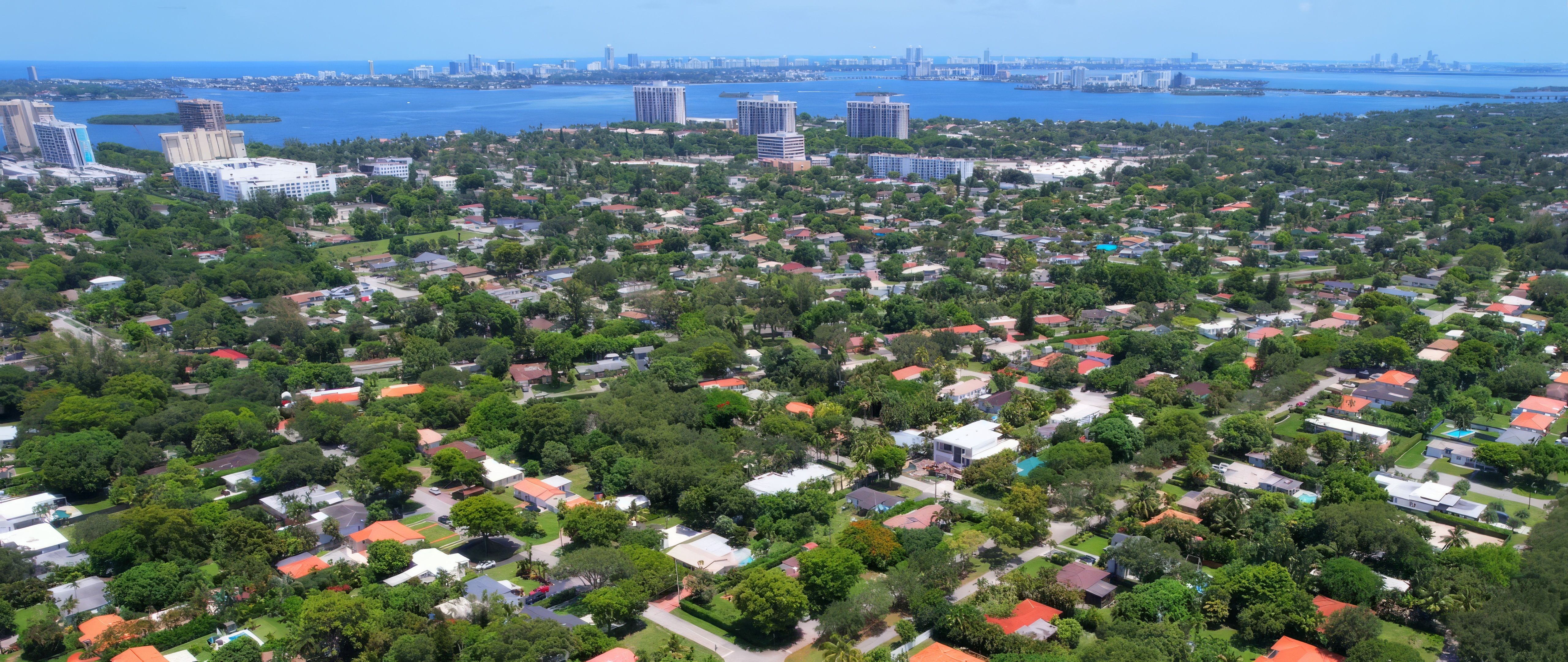-topaz-upscale-4x-2.jpeg)
Biscayne Park, Miami, Florida - EVERYTHING You Want to Know
Welcome to your unofficial walkthrough — a peek into Biscayne Park's pulse,...
.png)
The Ultimate Guide to Miami-Dade's Top 25 Gated Communities for Single-Family Homes
Discover Miami's top gated communities in this essential guide for luxury home buyers...

Miami's BEST Restaurants in EVERY Neighborhood
Check out the absolute BEST restaurants in every neighborhood of Miami, including the best...
Selling Your Home?
Who are we?
We are the ALL IN Miami Group out of Miami.
We are Colombian, Filipino, Cuban, German, Japanese, French, Indian, Syrian, and American.
We are Christian, Hindu, and Jewish.
We are many, but we are one.
We sell luxury homes in Miami, Florida.
Although some of our clients are celebrities, athletes, and people you read about online, we also help young adults find their first place to rent when they are ready to live on their own.
First-time buyers?
All the time!
No matter what your situation or price range is, we feel truly blessed and honored to play such a big part in your life.