



West Miami, Miami — A Cheat Sheet for Buyers, Visitors, & the Curious

Amit Bhuta
I use non-traditional marketing to inspire the most motivated buyers to pay the max for Miami luxury homes...
I use non-traditional marketing to inspire the most motivated buyers to pay the max for Miami luxury homes...
Pick a random point near the best parts of Miami without putting yourself in the middle of everything, and you’ll land somewhere in West Miami.
Airport? Minutes away.
Coral Gables dining? Right next door.
Downtown commute? Manageable.
It’s easy to drive along SW 8th Street and not even realize you’ve crossed into an entirely different, self-run city—one that delivers location, simplicity, and a surprisingly structured residential setup.
And if you’ve been hearing the name but can’t quite put a face to it, this guide will introduce you to West Miami—how it compares, what it offers, and whether it actually fits your lifestyle, from home prices and cost of living to safety, schools, and zoning rules.
Here's what you need to know about living in, visiting, and understanding West Miami.
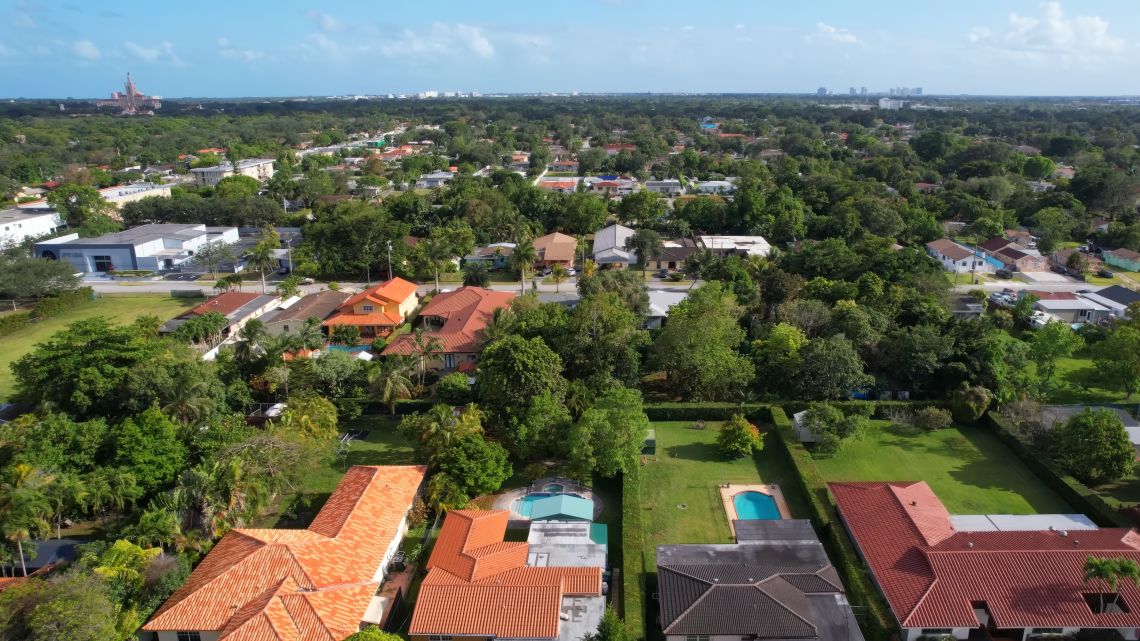
LIVING IN WEST MIAMI
Is West Miami a good place to live?
West Miami is considered a strong residential option for buyers who want a central location with a quieter, more controlled environment than surrounding neighborhoods.
The city spans approximately 0.7 square miles, creating a compact, community-oriented setting where most streets are residential, and traffic is noticeably lighter than nearby arterial corridors.
Its position between Coral Gables, Flagami, and Westchester allows residents to reach major dining, shopping, and employment areas within 5 to 15 minutes.
This combination of accessibility, stability, and scale makes it especially appealing to families, long-term homeowners, and buyers prioritizing convenience without dense urban development.
Is West Miami safe?
West Miami is generally considered safer than many nearby unincorporated areas due to its small size, localized governance, and consistent residential layout.
The city operates its own police department, which focuses exclusively on a limited geographic area, allowing faster response times and visible patrol presence.
Because West Miami has minimal commercial concentration and no nightlife districts, crime trends are typically more residential and lower in volume compared to nearby high-traffic corridors.
The perception of safety is also reinforced by long-term residents, stable homeownership patterns, and its active code enforcement.
How expensive is it to live in West Miami?
Home prices in West Miami typically fall into three tiers depending on condition, size, and upgrades.
Entry-level homes or fixer-uppers usually range from approximately $500,000 to $600,000, often reflecting older interiors or smaller layouts.
Mid-range homes that are partially updated or moderately sized typically range between $650,000 and $850,000.
Fully renovated or expanded homes with modern finishes and larger footprints commonly range from $900,000 to over $1 million.
Rental prices reflect the same demand, with single-family homes leasing between $2,800 and $4,500 per month, while efficiencies or duplex units may range from $1,200 to $2,000 depending on size and condition.
What is the cost of living in West Miami?
The cost of living in West Miami is above the national average but generally lower than nearby areas such as Coral Gables.
Housing represents the largest expense, but daily costs such as groceries, transportation, and dining are in line with broader Miami-Dade County pricing.
Utilities for a standard single-family home typically range between $150 and $300 per month, depending on usage and season.
Overall, West Miami offers a mid-to-upper cost profile in Miami, driven primarily by its central location and limited housing inventory.
How much are utilities and insurance in West Miami?
Electricity costs through Florida Power & Light typically range from approximately $120 to $250 per month, depending on home size and air conditioning usage.
Water, sewer, and garbage services may add another $50 to $120 per month, depending on household size.
Homeowners insurance in West Miami can vary widely, often ranging from $3,000 to $7,000 or more annually, depending on the age of the home, roof condition, and coverage level.
Flood insurance for properties in higher-risk zones may range from approximately $500 to $2,000 or more per year, depending on elevation and FEMA classification.
What are property taxes like in West Miami?
Property taxes in West Miami generally follow Miami-Dade County rates, typically ranging between approximately 1.8% to 2.2% of the assessed property value.
For a home valued at $700,000, annual property taxes may range between $12,000 and $15,000, depending on exemptions such as homestead status.
Compared to Coral Gables, West Miami taxes are often slightly lower due to differences in municipal assessments and property values.
Buyers should always verify current tax rolls and exemptions, as reassessment may occur after purchase.
What types of homes are in West Miami?
West Miami is primarily composed of single-family homes originally built between the 1940s and 1960s, many of which have been renovated, expanded, or rebuilt over time.
Original homes were often between 800 and 1,200 square feet, but many have been extended to 1,400 to 1,800 square feet or more.
Lot sizes typically range from 4,500 to 7,500 square feet, with rectangular layouts and modest yard space.
Duplex properties exist in designated zones, but large apartment complexes and high-rise developments are not part of the city’s structure.
Are duplexes or efficiencies allowed in West Miami?
Duplexes are permitted in specific zoning districts, but they must meet strict requirements related to lot size, setbacks, and parking.
Efficiency units or additional dwellings cannot be added freely and require proper permitting through the city.
West Miami enforces zoning regulations more strictly than many surrounding areas, including requirements for off-street parking and code compliance.
Unauthorized conversions can result in fines, violations, or required removal, making it essential for buyers to confirm zoning before purchasing.
Can you do Airbnb or short-term rentals in West Miami?
Short-term rentals such as Airbnb are heavily restricted and typically not allowed in most residential zones without proper licensing and compliance with city regulations.
West Miami prioritizes long-term residential use, and enforcement is more active than in more lenient areas in Miami-Dade County.
Investors seeking to generate short-term rental income should verify current ordinances, as violations can lead to penalties and enforcement actions.
Is West Miami in a flood zone?
West Miami includes areas classified under FEMA flood zones, primarily Zone X (low risk) and some portions of Zone AE (higher risk).
Homes located in Zone AE may require flood insurance depending on lender requirements, while Zone X properties typically do not require it but may still carry optional coverage.
Flood insurance costs can range from approximately $500 to $2,000 or more annually, depending on elevation, structure type, and risk classification.
Many older homes may not have elevation certificates readily available, which can affect insurance pricing and underwriting.
Flood risk varies by specific property, so buyers should review FEMA maps and obtain property-specific documentation when necessary.
Are there HOAs in West Miami?
Most properties in West Miami do not have homeowners' associations, as the area is largely composed of individual single-family homes.
This means there are generally no monthly HOA fees or private community restrictions.
However, city zoning regulations and code enforcement rules are actively enforced and function as the primary regulatory layer.
Is parking easy in West Miami?
Parking in West Miami is generally manageable, but varies by street width and household density.
Most homes have driveways, but street parking can become limited on narrower residential streets, especially in areas with multi-generational households.
The city enforces parking rules such as prohibiting vehicles from blocking sidewalks or parking on grass, which helps maintain neighborhood order but can limit overflow parking.
Is West Miami walkable?
West Miami has moderate walkability due to its compact grid layout and residential density.
Residents can walk to nearby essentials, such as small grocery stores, pharmacies, and local restaurants, particularly near SW 8th Street.
However, it is not designed for a fully car-free lifestyle, as major retail centers, employment hubs, and larger services require driving.
Is West Miami noisy or busy?
West Miami is generally quiet within interior residential streets where traffic is limited and primarily local.
Areas closer to SW 8th Street (Tamiami Trail) and Coral Way experience higher traffic flow and noise due to commercial activity and commuter routes.
This creates a clear distinction between quieter interior blocks and busier perimeter roads.
Is West Miami good for families?
West Miami is well-suited for families due to its residential focus, limited nightlife, and structured environment.
The small city footprint, combined with access to nearby schools and parks, supports a predictable and manageable daily routine.
Long-term residents and multi-generational households contribute to neighborhood stability.
Is West Miami a good place to raise a family?
West Miami is considered a practical choice for raising a family due to its balance of safety, accessibility, and residential consistency.
Families benefit from proximity to schools within 5 to 15 minutes, relatively quiet streets away from major corridors, and short commute times to employment centers.
The city’s strict zoning and enforcement also contribute to a more predictable living environment compared to less regulated areas.
What are the best schools near West Miami?
West Miami is served by a mix of public and private schools within a short driving radius.
Elementary options include Sylvania Heights Elementary School and Henry M. Flagler Elementary School, both located approximately 5 to 10 minutes away.
West Miami Middle School serves the immediate area for middle school education.
High school students typically attend South Miami Senior High School or other nearby public schools, depending on zoning.
Private school options within 10 to 15 minutes include St. Brendan Catholic School and Christopher Columbus High School, both well-established in the area.
Many families evaluate both public zoning and private enrollment when selecting schools.
For more information, visit Best Schools in West Miami.
What is the commute like from West Miami?
West Miami offers strong connectivity through major roads such as SW 8th Street (Tamiami Trail), Coral Way, and the Palmetto Expressway (SR 826).
Miami International Airport is approximately 10 to 15 minutes away.
Downtown Miami and Brickell are typically reachable within 15 to 25 minutes, depending on the time of day and traffic patterns.
This central positioning makes it convenient for residents working across multiple areas of Miami-Dade County.
-topaz-upscale-2.1x.jpeg?w=1140)
VISITING WEST MIAMI
What is West Miami known for?
West Miami is known for being a small, independent city within Miami-Dade County with a predominantly residential character.
It maintains its own government, police department, and zoning system, distinguishing it from surrounding unincorporated neighborhoods.
The area also reflects strong Cuban-American cultural influence through its local businesses and community identity.
What can you do in West Miami?
Activities in West Miami focus on local parks, casual dining, and neighborhood-level recreation.
Cooper Park serves as a central green space with playgrounds, open areas, and seating for residents.
For broader entertainment, nearby destinations such as Coral Gables, Little Havana, and Miracle Mile offer expanded options within a 10 to 15-minute drive.
For a typical day in West Miami, check out Top 5 Things to Do in West Miami.
Are there parks in West Miami?
West Miami has several small parks designed for community use.
Cooper Park is the most recognized, offering green space, recreational areas, and seating.
Additional neighborhood parks provide playgrounds and open areas for casual outdoor activities.
For parks that allow dogs, visit Dog-Friendly Parks Near West Miami.
Where do people eat in West Miami?
Dining in West Miami is heavily influenced by Cuban and Latin cuisine.
SW 8th Street (Tamiami Trail) serves as the main corridor for restaurants, bakeries, and cafes offering items such as Cuban sandwiches, croquetas, and cafecito.
For a broader range of dining experiences, residents often visit Coral Gables and nearby neighborhoods within a short drive.
Top 5 Places to Eat in West Miami names some of the best restaurants in the area.
Where do residents shop in West Miami?
Residents rely on nearby retail corridors and larger shopping centers for daily and extended needs.
Local errands can be handled along SW 8th Street and Coral Way, where small markets and convenience stores are located.
For larger shopping trips, residents commonly visit the Mall of the Americas, Miracle Marketplace, and Coral Gables retail areas, all within approximately 10 to 15 minutes.
Check out Top 5 Shopping Spots Near West Miami for more details.
Is West Miami a tourist destination?
West Miami is not considered a tourist destination due to its primarily residential layout and lack of major attractions or hotels.
It functions as a local community rather than a visitor-focused area.
Its central location still allows easy access to major destinations such as Little Havana, Coral Gables, and Downtown Miami.
-topaz-upscale-2.1x.jpeg?w=1140)
UNDERSTANDING WEST MIAMI
Is West Miami its own city?
West Miami is an incorporated municipality within Miami-Dade County and operates independently from the City of Miami.
It has its own mayor, city commission, police department, and municipal regulations.
This independence directly affects zoning enforcement, permitting, and local services.
How big is West Miami?
West Miami covers approximately 0.7 square miles, making it one of the smaller municipalities in Miami-Dade County.
Its compact size allows residents to travel across the entire city in just a few minutes.
What are the boundaries of West Miami?
West Miami is generally bounded by SW 8th Street (Tamiami Trail) to the north, SW 24th Street (Coral Way) to the south, SW 57th Avenue (Red Road) to the east, and SW 62nd Avenue to the west.
This places it between Coral Gables and Westchester in a central Miami location.
Who governs West Miami?
West Miami is governed by a mayor and a city commission that handles municipal decisions.
The city operates its own police department and local services.
This structure allows for direct oversight of zoning, permitting, and enforcement.
How does West Miami compare to Westchester?
West Miami is smaller, more regulated, and more uniform in residential structure compared to Westchester.
Westchester is larger and unincorporated, offering more flexibility but also greater variation in housing and infrastructure.
West Miami provides a more controlled and consistent environment.
How does West Miami compare to Coral Gables?
West Miami is more affordable and less restrictive in architectural standards than Coral Gables.
Coral Gables features larger homes, higher-end developments, and stricter design regulations, with prices often exceeding $1 million to $3 million.
West Miami offers a more accessible alternative while maintaining proximity to those amenities.
What is the population of West Miami?
West Miami has an estimated population of approximately 7,000 residents.
Despite its small size, the residential layout maintains a neighborhood-oriented environment.
What is the demographic profile of West Miami?
West Miami has a predominantly Hispanic population with a strong Cuban-American presence.
Many residents are long-term homeowners or part of multi-generational households.
Spanish is widely spoken alongside English in daily interactions.
Is West Miami a good place to invest in real estate?
West Miami offers investment potential due to its limited housing inventory, central location, and steady demand.
Property values are supported by proximity to Coral Gables, Miami International Airport, and major employment centers.
Strict zoning regulations limit high-density or informal rental strategies, making it more suitable for long-term appreciation rather than aggressive redevelopment.
Why do people choose West Miami over nearby neighborhoods?
People choose West Miami for its combination of location, residential stability, and manageable scale.
It provides access to major Miami hubs without the congestion or density found in larger cities.
The structured zoning and consistent housing patterns appeal to buyers seeking predictability and long-term value.
-topaz-upscale-2.1x.jpeg?w=1140)
%20(71).png)
West Miami, Miami, Florida - EVERYTHING You Want to Know
Prepare to be dazzled as we untangle the charming twists and turns of West Miami! We promi...
.png)
The Ultimate Guide to Miami-Dade's Top 25 Gated Communities for Single-Family Homes
Discover Miami's top gated communities in this essential guide for luxury home buyers...


Miami's BEST Restaurants in EVERY Neighborhood
Check out the absolute BEST restaurants in every neighborhood of Miami, including the best...
Selling Your Home?
Who are we?
We are the ALL IN Miami Group out of Miami.
We are Colombian, Filipino, Cuban, German, Japanese, French, Indian, Syrian, and American.
We are Christian, Hindu, and Jewish.
We are many, but we are one.
We sell luxury homes in Miami, Florida.
Although some of our clients are celebrities, athletes, and people you read about online, we also help young adults find their first place to rent when they are ready to live on their own.
First-time buyers?
All the time!
No matter what your situation or price range is, we feel truly blessed and honored to play such a big part in your life.