



Little Havana, Miami — A Cheat Sheet for Buyers, Visitors, & the Curious

Amit Bhuta
I use non-traditional marketing to inspire the most motivated buyers to pay the max for Miami luxury homes...
I use non-traditional marketing to inspire the most motivated buyers to pay the max for Miami luxury homes...
For decades, Little Havana has been a postcard version of Cuban culture in Miami.
This guide will prove that there is far more to it than what meets the eye.
Known as the cultural heart of Cuban Miami, Little Havana is as closely tied to Miami’s identity as some of the city’s most recognizable communities.
Located just west of Downtown Miami, the neighborhood is anchored by Calle Ocho, also known as SW 8th Street, a corridor with Cuban cafés, cigar shops, music venues, art galleries, and community landmarks such as Domino Park and the Tower Theater.
While it is one of Miami’s most famous cultural destinations, Little Havana is also a dense residential neighborhood with apartments, schools, parks, and long-established local businesses that support its thousands of residents.
Now that it sits at the center of Miami’s economic and cultural landscape, many people are beginning to ask what it would be like to live in this culture-driven urban community.
What are the housing options? What kind of lifestyle does the neighborhood offer? Are there large numbers of tourists each day? Is the community open to different cultures?
Here's what you need to know about living in, visiting, and understanding Little Havana.
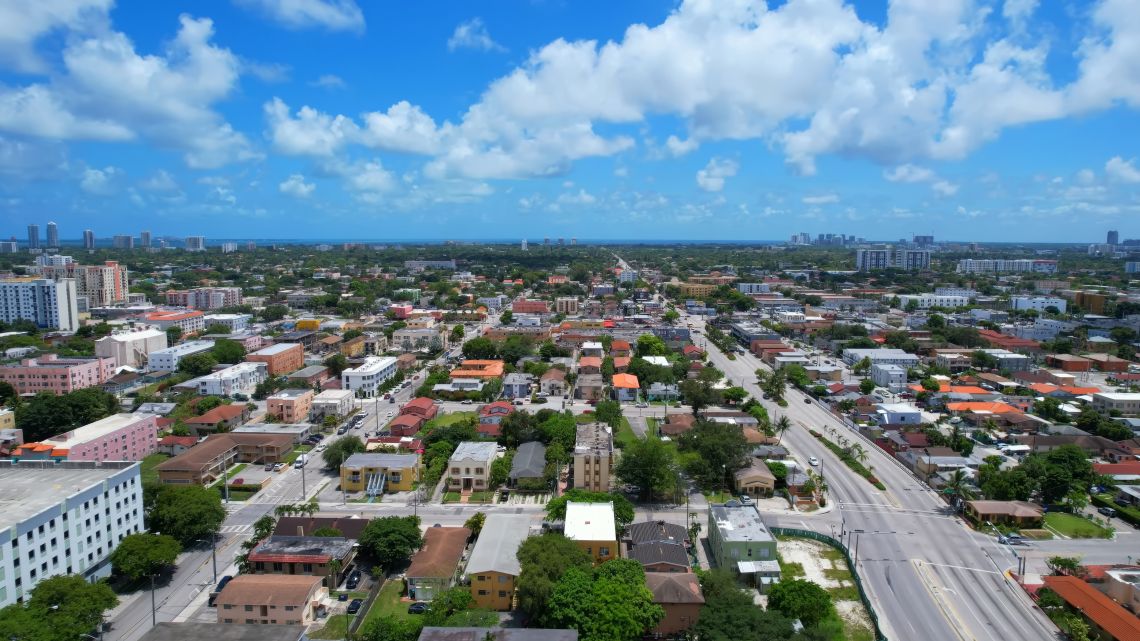
LIVING IN LITTLE HAVANA
Where is Little Havana located in Miami?
Little Havana is located immediately west of Downtown Miami in the central part of the City of Miami.
It is commonly described as running from the Miami River and Flagler Street area on the north to Coral Way on the south, with Interstate 95 shaping the eastern edge and roughly SW 27th Avenue marking the western side.
That location places Little Havana within minutes of Downtown Miami, Brickell, the Civic Center, and Health District, and several other major employment and cultural areas.
Is Little Havana part of the City of Miami?
Yes. Little Havana is an official neighborhood within the City of Miami and is not a separate city or municipality.
That means zoning, land use, local police services, planning decisions, and neighborhood administration fall under the City of Miami, and countywide systems such as Miami-Dade Transit and Miami-Dade County Public Schools also serve the area.
What is Little Havana known for?
Little Havana is best known as the cultural center of Cuban Miami.
The neighborhood is famous for Calle Ocho, Cuban restaurants and bakeries, ventanitas serving cafecito, cigar shops, music venues, public art, domino games, and festivals that celebrate Cuban and broader Latin American heritage.
Landmarks such as Domino Park, the Tower Theater, the Little Havana Walk of Fame, and the Cuban Memorial Boulevard help give the neighborhood a local identity that is instantly recognizable across Miami.
What is the population of Little Havana?
Little Havana is home to roughly 70,000 to 75,000 residents, depending on how the neighborhood boundaries are measured.
It has historically been one of the largest Cuban-American communities in the United States.
Today, the population also includes residents from Nicaragua, Honduras, Colombia, Venezuela, and other parts of Latin America.
Spanish is widely spoken throughout the neighborhood alongside English, and that bilingual character remains one of the area’s defining features.
What languages are spoken in Little Havana?
Spanish is the dominant language in Little Havana and is widely used in homes, restaurants, markets, and everyday conversation.
English is also commonly spoken, especially by younger residents and in businesses that serve both locals and visitors.
The neighborhood’s bilingual environment reflects the broader cultural influence of Cuban and Latin American communities throughout Miami.
Is Little Havana a good place to live?
Little Havana is home to a diverse mix of longtime residents, Cuban-American families, newer Latin American immigrants, young professionals, students, and renters working in nearby parts of Miami.
Its proximity to Downtown Miami, Brickell, the Health District, and Miami International Airport makes it attractive to people who want to live close to the city’s core rather than in outer suburbs.
Because of this mix, the neighborhood includes both long-established households and newer residents drawn by its central location and cultural character.
Who typically lives in Little Havana?
Little Havana can be a strong fit for residents who want a central location, cultural character, and easier access to major parts of Miami than many suburban neighborhoods can offer.
Living in Little Havana places residents within a short drive of Downtown Miami, Brickell, the Miami River corridor, the Health District, and the airport, making it especially appealing to workers who want to stay close to the city’s core.
The neighborhood also has a more local, street-level feel than many high-rise districts, with small businesses, older residential blocks, and a strong sense of daily neighborhood life.
The trade-off is that Little Havana is a dense urban neighborhood, so traffic, noise, building age, and block-to-block variation matter more here than they would in a newer master-planned community.
Is Little Havana safe?
Safety in Little Havana is heavily dependent on the block, surrounding uses, and time of day.
Some residential streets feel quieter and more established, while busy commercial stretches along SW 8th Street and nearby corridors naturally see more foot traffic, nightlife activity, and visitor movement.
Buyers and renters should evaluate specific addresses, visit at different times, and pay close attention to lighting, street activity, and nearby property conditions before making a decision.
What types of homes are available in Little Havana?
Little Havana has a mixed housing stock rather than a single dominant product type.
The neighborhood includes older single-family homes, duplexes, triplexes, small multifamily buildings, older condominium units, and apartment properties spread across residential blocks and busier corridors.
Many buildings date back several decades, which gives the area architectural variety but also means conditions can vary widely from property to property.
Newer infill development and renovated residential projects have also become more common as demand for centrally located housing has increased.
How much do homes cost in Little Havana?
Home prices in Little Havana vary widely based on lot size, building type, condition, and redevelopment potential.
Smaller condos and older units can fall into lower price brackets, while single-family homes and well-located multifamily properties often list much higher.
As a practical range, many listings in Little Havana are typically somewhere between the upper $300,000s and the mid-$700,000s, with renovated homes, larger lots, or redevelopment parcels sometimes pushing beyond that range.
Is Little Havana affordable for first-time buyers?
Little Havana has historically been more attainable than neighborhoods such as Brickell, Coconut Grove, or the Design District, but affordability has tightened over time.
First-time buyers may still find entry points in older condos, smaller homes, or properties that need updates, but the neighborhood is no longer a clear bargain by Miami standards.
For many buyers, Little Havana now feels more like a central-location compromise market than an easy starter neighborhood.
Is Little Havana a good real estate investment?
Little Havana continues to attract real estate interest due to its location near Downtown Miami, Brickell, the Health District, and the Miami River.
That central positioning supports long-term demand from both residents and renters, especially for properties with strong access to major employment centers.
At the same time, investment performance depends heavily on zoning, property condition, tenant profile, and block-level redevelopment trends, so buyers should judge each property on its own merits rather than assume uniform upside across the neighborhood.
Are there apartments or condos in Little Havana?
Yes. Little Havana has a large supply of apartments and older condo-style units compared with many nearby single-family-heavy neighborhoods.
The rental stock ranges from modest older walk-up buildings to larger multifamily properties and scattered renovated units near major corridors.
Typical asking rents can range from roughly the low $1,000s for smaller older units to around $3,000 or more for larger or updated apartments, depending on size, condition, and location.
Are there good schools near Little Havana?
Families in Little Havana are served by Miami-Dade County Public Schools.
Schools associated with the area or nearby include Riverside Elementary School, Shenandoah Elementary School, Citrus Grove Middle School, and Miami Senior High School.
Depending on the exact address and grade level, families may also consider magnet programs, charter options, and private schools in surrounding neighborhoods, such as Shenandoah, The Roads, and the Health District area.
For more information, visit Best Schools in Little Havana.
Are there parks or outdoor spaces in Little Havana?
Yes. Little Havana includes several public spaces that serve both recreational and community functions.
Maximo Gomez Park, better known as Domino Park, is one of the neighborhood’s most recognizable gathering places.
Sewell Park along the Miami River adds green space and walking areas, while nearby parks such as Henderson Park and Riverside Park provide additional outdoor options for families and residents.
Meanwhile, pet owners can check out Dog-Friendly Parks in Little Havana for a list of parks that allow dogs.
Is Little Havana walkable or transit-friendly?
Little Havana is one of Miami's more walkable urban neighborhoods, especially around Calle Ocho, Flagler Street, and other commercial corridors lined with restaurants, markets, cafés, pharmacies, and neighborhood services.
Many residents can accomplish daily errands on foot more easily than in more suburban parts of Miami-Dade County.
The area is also served by multiple Miami-Dade Transit bus routes, which help connect residents to Downtown, Brickell, Government Center, and the Civic Center area.
Even so, many households still rely on cars for broader regional commuting because Miami’s transit network remains limited compared with larger transit-oriented cities.
What is the commute like from Little Havana?
Little Havana’s central location gives it one of the strongest commute advantages among Miami neighborhoods outside the high-rise core.
Downtown Miami and Brickell are usually less than 10 to 15 minutes away in normal traffic, while the Health District, Jackson Memorial Hospital area, and Miami River corridor are also close by.
Major roads such as SW 8th Street, Coral Way, NW 7th Street, and I-95 help connect the neighborhood to the rest of the city, though rush-hour congestion can still be significant.
How close is Little Havana to Downtown Miami, Brickell, and Miami International Airport?
Little Havana sits only a few miles west of Downtown Miami and Brickell, which is one reason it remains so attractive to commuters, renters, and investors.
Much of the neighborhood is about 2 to 4 miles from Downtown Miami and Brickell, depending on the exact starting point.
Miami International Airport is also relatively close, typically around 5 to 7 miles away, and many trips there take about 15 to 20 minutes in normal traffic.
Does Little Havana have homeowners’ associations?
Little Havana is not dominated by large HOA-driven communities.
Some condo buildings and smaller residential complexes have associations that manage maintenance, insurance, or common areas, but many properties in the neighborhood do not operate under a traditional HOA structure.
That makes it important for buyers to verify building rules and monthly fees on a property-by-property basis rather than assume a neighborhood-wide pattern.
-topaz-upscale-2.1x.jpeg?w=1140)
VISITING LITTLE HAVANA
Is Little Havana worth visiting?
Yes. Little Havana, Miami, is one of the city’s most visited cultural neighborhoods and one of the clearest places to experience the city’s Cuban and Latin American identity outside the beach and nightlife circuits.
Visitors come for food, music, art, coffee, cigars, and the sense of street life that makes the neighborhood feel very different from resort-oriented parts of Miami.
What is Calle Ocho?
Calle Ocho is the Spanish name for SW 8th Street, the corridor most closely associated with Little Havana.
It is the neighborhood’s best-known cultural spine, lined with restaurants, bakeries, cigar shops, galleries, murals, souvenir stores, and event spaces.
For many visitors, Calle Ocho is the first stop because it brings together many of the neighborhood’s signature sights, sounds, and flavors in one stretch.
What does Calle Ocho mean?
Calle Ocho means “Eighth Street” in Spanish and refers to SW 8th Street, the main corridor running through Little Havana.
The name became widely associated with the neighborhood because the street developed into the center of Cuban restaurants, cafés, cultural venues, and community life.
Today, the phrase Calle Ocho is often used interchangeably with Little Havana’s cultural district, even though the neighborhood itself extends beyond that single street.
What is the Little Haiti Cultural Complex?
The Little Haiti Cultural Complex is a major cultural institution located at 212 NE 59th Terrace in Miami.
The facility includes a theater, art gallery, community classrooms, and outdoor spaces for performances, exhibitions, and cultural festivals that celebrate Haitian and Afro-Caribbean heritage.
What can you do in Little Havana?
A typical visit to Little Havana centers on food, coffee, music, people-watching, and cultural landmarks.
Visitors often walk along Calle Ocho, stop for cafecito at a ventanita, watch domino games at Maximo Gomez Park, browse cigar shops, and explore local galleries or performance spaces.
The neighborhood also rewards slower visits, since some of its appeal comes from simply spending time in the cafés, plazas, and sidewalks where everyday social life unfolds.
For a typical day in Little Havana, check out Top 5 Things to Do in Little Havana.
What is Domino Park in Little Havana?
Domino Park is one of Little Havana’s most famous landmarks and a symbol of the community's Cuban identity.
Its official name is Maximo Gomez Park, and it sits along Calle Ocho near SW 15th Avenue.
The park is best known for daily domino games, regular gatherings of longtime residents, and the social atmosphere that has made it a signature stop for visitors exploring the neighborhood.
What is the Tower Theater?
The Tower Theater is a historic cultural landmark on Calle Ocho.
It opened in the 1920s and became especially significant as a place where Spanish-language and subtitled films helped Miami’s growing Cuban exile community.
Even beyond its cinema history, the theater remains one of the neighborhood’s most recognizable architectural and cultural symbols.
What is the Little Havana Walk of Fame?
The Little Havana Walk of Fame is a sidewalk attraction along Calle Ocho that honors major Latin American and Hispanic cultural figures.
Its stars recognize artists, musicians, actors, and public figures with ties to Latin culture and entertainment.
For visitors, it adds another layer of neighborhood identity by tying Little Havana to a broader Latin cultural legacy beyond Miami.
What is the Cuban Memorial Boulevard?
The Cuban Memorial Boulevard is a historically and politically significant area centered along SW 13th Avenue.
It includes memorials and monuments connected to Cuban history, exile memory, and anti-communist political symbolism.
This part of Little Havana highlights how the neighborhood is not only about food and festivals, but also about migration, identity, and the political history of the Cuban diaspora.
Are there good restaurants in Little Havana?
Yes. Little Havana is one of Miami’s best-known neighborhoods for Cuban food and broader Latin American cuisine.
Restaurants, cafeterias, and bakeries throughout the area serve staples such as Cuban sandwiches, ropa vieja, vaca frita, croquetas, pastelitos, empanadas, and strong espresso drinks.
The neighborhood’s appeal lies not just in one famous restaurant, but in how many small local spots contribute to the overall food culture.
For the best restaurants in Little Havana, visit Top 5 Places to Eat in Little Havana.
What is a ventanita in Little Havana?
A ventanita is a walk-up coffee window found at many Cuban cafés and bakeries throughout Little Havana.
These small service windows allow customers to order cafecito, cortaditos, café con leche, pastries, and sandwiches without entering the restaurant.
Beyond convenience, the ventanita is a social institution in Cuban Miami, where neighbors gather to talk, exchange news, and pause for coffee throughout the day.
Where can you get Cuban coffee in Little Havana?
Cuban coffee is available throughout Little Havana, especially along Calle Ocho and surrounding commercial streets where ventanitas serve cafecito, coladas, cortaditos, and café con leche.
For many visitors, grabbing coffee from a walk-up window is among the most recognizable experiences in Little Havana.
The appeal is cultural as much as culinary, since the ventanita is also a social institution where conversation and neighborhood life unfold throughout the day.
Check out the Top 5 Coffee Shops in Little Havana for some of the most popular places to get coffee in the area.
What is Ball & Chain in Little Havana?
Ball & Chain is one of Little Havana’s best-known nightlife and live-music venues.
Located on Calle Ocho, it is associated with jazz, Latin music, dancing, and the broader cultural identity of Little Havana, including its nightlife.
Its popularity reflects how Little Havana is not only a daytime cultural district but also a community with a strong evening entertainment presence.
When is the best time to visit Little Havana?
Many visitors spend between one and three hours exploring Little Havana, especially if they focus on Calle Ocho and the surrounding cultural landmarks.
A short visit may include walking Calle Ocho, seeing Domino Park, grabbing Cuban coffee, and browsing nearby shops.
Longer visits often include dining at local restaurants, exploring galleries, and cultural events or music venues.
How long should you spend in Little Havana?
Little Havana can be visited year-round, but weekends often feel the most active and visually lively.
That is when visitors are more likely to encounter busier sidewalks, live music, stronger restaurant energy, and a fuller version of the neighborhood atmosphere many people are hoping to experience.
Early evenings are often especially popular for people who want a blend of walking, dining, and nightlife.
What is Viernes Culturales?
Viernes Culturales, or Cultural Fridays, is a recurring arts and culture event associated with Little Havana.
It typically brings together art, music, vendors, food, and community activity along the Calle Ocho corridor.
For visitors seeking a more programmed version of the neighborhood rather than a casual self-guided visit, it is one of the most recognizable recurring cultural events.
What is the Calle Ocho Festival?
The Calle Ocho Festival is one of the most famous cultural events associated with Little Havana and a major part of Carnaval Miami.
It is widely known as one of the largest Latin music street festivals in the country, drawing large crowds for live performances, food, dancing, and celebration.
The festival reinforces Little Havana’s role as one of Miami's most visible centers of Latin culture.
Is parking easy in Little Havana?
Parking in Little Havana is usually easier than in Brickell, South Beach, or some of Miami’s denser entertainment districts, although it can still be challenging near the busiest parts of Calle Ocho during peak hours or major events.
Street parking is available in many areas, and some businesses or venues have nearby lots, though availability varies considerably by time and destination.
Visitors planning festivals or weekend evenings should expect busier parking than they would on a weekday daytime visit.
-topaz-upscale-2.1x.jpeg?w=1140)
UNDERSTANDING LITTLE HAVANA
Why is it called Little Havana?
The name Little Havana reflects the neighborhood’s historic connection to Cuban immigrants who settled in Miami in large numbers during the twentieth century.
As Cuban families opened businesses, built churches, created social clubs, and established a visible cultural presence, the area became known as a Miami version of Havana in memory and identity.
When did Cubans begin settling in Little Havana?
Little Havana became especially associated with Cuban settlement after the Cuban Revolution in 1959.
Large groups of Cuban exiles arrived in Miami in the 1960s and helped transform the neighborhood into a center of exile life, entrepreneurship, and political organizing.
Over time, that identity deepened through restaurants, schools, churches, media, businesses, and cultural institutions that reinforced the neighborhood’s role in Cuban Miami.
What role does Little Havana play in Miami’s Cuban community?
Little Havana remains one of the most symbolically important neighborhoods in Miami’s Cuban-American story.
It functions as a cultural touchstone tied to language, politics, religion, memories of migration, music, and food.
Even though Cuban families now live throughout Miami-Dade County, Little Havana still carries outsized significance as the neighborhood most closely identified with the city’s Cuban heritage.
Is Little Havana the same as Calle Ocho?
Not exactly. Calle Ocho refers specifically to SW 8th Street, the neighborhood’s most famous corridor.
Little Havana is the broader neighborhood surrounding that street and includes residential blocks, side streets, parks, schools, businesses, and other corridors beyond Calle Ocho itself.
What neighborhoods surround Little Havana?
Little Havana is bordered by several central Miami neighborhoods and districts.
Depending on the exact edge you are discussing, nearby areas include Downtown Miami, Brickell, Shenandoah, The Roads, Allapattah, the Health District, and sections of the Miami River corridor.
That positioning helps explain why Little Havana feels so connected to the city’s broader movement of workers, visitors, students, and residents.
Is Little Havana gentrifying?
Little Havana has faced increasing redevelopment pressure as Miami’s urban core expands and nearby neighborhoods become more expensive.
Rising rents, investor attention, renovated properties, and growing tourism have all contributed to concerns about affordability and neighborhood change.
At the same time, Little Havana remains a deeply rooted cultural neighborhood, so discussions about change here are often tied to preservation as much as real estate economics.
How is Little Havana changing today?
Little Havana is changing through a mix of reinvestment, tourism growth, building renovation, and shifting demographics.
Newer businesses and residential upgrades have appeared in parts of the neighborhood, while longtime institutions continue to define its public identity.
The result is a neighborhood that still feels historic and local, but one that is also under clear pressure from Miami’s broader growth patterns.
Why is Little Havana so important to Miami?
Little Havana matters because it captures several of the biggest themes in Miami’s history all at once.
It is a story about immigration, exile, entrepreneurship, bilingual culture, political identity, and the transformation of Miami into a major Latin American city.
For many people, understanding Little Havana means understanding how Miami became what it is.
What is the bottom line on Little Havana today?
Little Havana is one of Miami’s most culturally important neighborhoods and one of its most recognizable places for both residents and visitors.
It offers a level of identity, street life, and historical depth that few neighborhoods in the city can match.
At the same time, it is a central urban neighborhood dealing with the same pressures affecting much of Miami, including rising costs, redevelopment, and the challenge of preserving local character as the city continues to grow.
-topaz-upscale-2.1x.jpeg?w=1140)
%20(23).png)
Little Havana, Miami, Florida - EVERYTHING You Want to Know
Drop everything you're doing and hop on this virtual escapade across Little Havana�...
.png)
The Ultimate Guide to Miami-Dade's Top 25 Gated Communities for Single-Family Homes
Discover Miami's top gated communities in this essential guide for luxury home buyers...
Miami's BEST Restaurants in EVERY Neighborhood
Check out the absolute BEST restaurants in every neighborhood of Miami, including the best...
Selling Your Home?
Who are we?
We are the ALL IN Miami Group out of Miami.
We are Colombian, Filipino, Cuban, German, Japanese, French, Indian, Syrian, and American.
We are Christian, Hindu, and Jewish.
We are many, but we are one.
We sell luxury homes in Miami, Florida.
Although some of our clients are celebrities, athletes, and people you read about online, we also help young adults find their first place to rent when they are ready to live on their own.
First-time buyers?
All the time!
No matter what your situation or price range is, we feel truly blessed and honored to play such a big part in your life.