



Horse Country, Miami — A Cheat Sheet for Buyers, Visitors, & the Curious

Amit Bhuta
I use non-traditional marketing to inspire the most motivated buyers to pay the max for Miami luxury homes...
I use non-traditional marketing to inspire the most motivated buyers to pay the max for Miami luxury homes...
Skyscrapers, beach traffic, and tightly packed suburbs dominate most of Miami-Dade County — except for Horse Country, a Miami equestrian community many people don’t even realize exists.
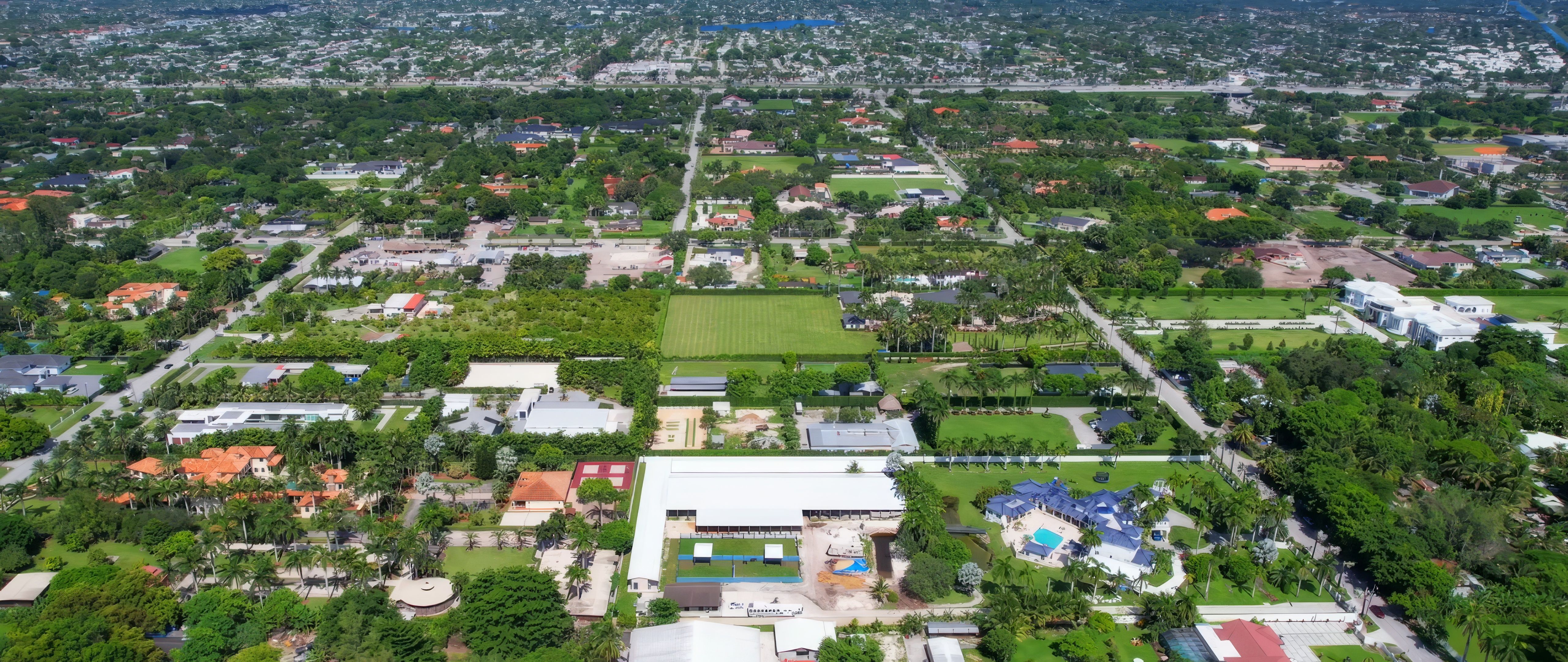
A few miles west of the city’s busiest corridors, this entirely different landscape unfolds, where wooden fences stretch across open fields, horses graze beneath old trees, and riders travel along quiet bridle paths instead of sidewalks.
Known as one of the last remaining rural enclaves within the metropolitan footprint, Horse Country Miami is a protected equestrian community in southwestern Miami-Dade County near Kendall that has preserved a rare combination of multi-acre estates, agricultural zoning protections, and horse-friendly infrastructure for decades.
These characteristics have allowed residents to maintain ranch-style properties and equestrian lifestyles inside one of Florida’s most densely populated regions.
Today, this guide delves deeper into its layers to answer questions about its large estate properties, equestrian lifestyle, zoning, and the rural atmosphere that continues to survive inside metropolitan Miami.
Here's what you need to know about living in, visiting, and understanding Horse Country.
-topaz-upscale-2.1x.jpeg?w=1140)
LIVING IN HORSE COUNTRY
Where is Horse Country located in Miami-Dade County?
Horse Country is located in the southwestern portion of Miami-Dade County, west of Kendall between Bird Road (SW 40th Street) and Kendall Drive (SW 88th Street).
The area covers several square miles of rural residential land centered around SW 122 Avenue and nearby roads, forming one of the last remaining equestrian landscapes within the Miami metropolitan area.
Despite being surrounded by suburban development, Horse Country maintains a distinctly rural atmosphere defined by open land, ranch-style estates, and a network of horse trails.
Is Horse Country part of Miami or unincorporated Miami-Dade?
Most of Horse Country is located within unincorporated Miami-Dade County, rather than inside a separate municipality.
This means zoning regulations, planning rules, and local services are administered by Miami-Dade County rather than a city government such as Miami, Coral Gables, or Kendall.
The unincorporated status has played a major role in preserving the district’s agricultural zoning and equestrian land uses.
What is Horse Country known for?
Horse Country is known for its equestrian lifestyle, large estate properties, and protected rural character inside Miami-Dade County.
The district is recognized for its horse farms, ranch-style homes, and extensive network of riding trails that allow residents to travel on horseback.
This unique environment has allowed Horse Country to maintain a rural identity despite being surrounded by one of the most urbanized regions in South Florida.
How expensive are homes in Horse Country in 2025?
Homes in Horse Country generally fall within the luxury real estate market of Miami-Dade County.
As of 2025, many properties range from approximately $1.3 million to over $4 million, depending on acreage, home size, equestrian facilities, and property upgrades.
Large estate properties with extensive land, stables, or custom residences can exceed these ranges, reflecting the limited supply of large parcels within the Miami metropolitan area.
What types of homes are common in Horse Country?
Horse Country primarily consists of single-family estate homes built on large parcels of land.
Architectural styles vary widely and include ranch-style houses, Mediterranean estates, contemporary luxury homes, and equestrian properties designed with stables, barns, and riding arenas.
Due to its large lot sizes, many homes include expansive driveways, paddocks, and landscaped grounds.
How large are lots in Horse Country?
Lots in Horse Country are significantly larger than those found in most Miami-Dade residential neighborhoods.
Many properties range from 1 acre to 5 acres or more, allowing space for horse facilities, riding areas, and extensive outdoor grounds.
These large parcels are one of the defining characteristics of Horse Country, distinguishing it from nearby suburban communities.
Are properties in Horse Country allowed to be subdivided?
Subdivision rules in Horse Country are limited by agricultural and estate-style zoning regulations that require large minimum lot sizes.
Because many parcels are already zoned for low-density residential or agricultural use, dividing properties into smaller lots is typically restricted unless zoning requirements and county regulations are met.
These land-use rules help maintain the district’s large estate parcels and prevent dense suburban development from replacing the equestrian landscape that defines Horse Country.
Can residents keep horses or livestock in Horse Country?
Yes. One of the defining features of Horse Country is that residents are allowed to keep horses on their properties.
Agricultural zoning regulations permit equestrian use, allowing homeowners to maintain horse stables, barns, and riding facilities on their land.
These zoning allowances are one of the main reasons the area developed into a prominent equestrian community.
What zoning rules apply in Horse Country?
Horse Country is governed by agricultural and estate-style zoning regulations designed to preserve the area’s rural and equestrian character.
These zoning rules regulate minimum lot sizes, permitted land uses, and the types of structures allowed on each property.
The zoning framework helps maintain low-density development while protecting equestrian activities and agricultural uses.
Are there flood risks in Horse Country?
Like many areas of Miami-Dade County, parts of Horse Country are located within flood zones identified by the Federal Emergency Management Agency (FEMA).
Because properties often include large acreage and agricultural land, flood zone designations can vary from one parcel to another depending on elevation, drainage conditions, and proximity to canals or low-lying areas.
Buyers purchasing homes with mortgages may be required to obtain flood insurance if the property falls in particular FEMA flood zones.
For this reason, buyers typically review flood maps, elevation data, and insurance requirements during the home purchasing process.
Is Horse Country considered a luxury neighborhood?
Horse Country is widely considered a luxury residential enclave within Miami-Dade County.
The combination of large acreage, custom estate homes, and equestrian amenities places many properties within the high-end segment of the local housing market.
Its rarity as a rural district inside metropolitan Miami also contributes to its exclusivity.
Is Horse Country a safe place to live?
Horse Country is primarily composed of large residential properties with low population density.
Law enforcement services are provided by the Miami-Dade Police Department, which oversees policing in unincorporated areas of the county.
The rural layout and limited commercial activity contribute to a quiet residential environment.
What schools serve Horse Country?
Students living in Horse Country are served by Miami-Dade County Public Schools, the largest public school district in Florida.
Nearby public schools commonly associated with the area include Southwest Miami Senior High School, Felix Varela Senior High School, Braddock Senior High School, Rockway Middle School, Howard D. McMillan Middle School, and elementary schools such as Blue Lakes Elementary School, Emerson Elementary School, and Bent Tree Elementary School.
Several private schools are also located within a short drive, including Christopher Columbus High School, St. Brendan High School, St. Brendan Catholic School, and Westwood Christian School, which serve students across the southwestern Miami-Dade region.
Since school attendance boundaries can change, families typically confirm school assignments through Miami-Dade County Public Schools when evaluating homes in Horse Country.
To know more about your options, visit Best Schools in Horse Country.
How far is Horse Country from Downtown Miami and Brickell?
Horse Country is located roughly 15 to 20 miles southwest of Downtown Miami and Brickell.
Driving times typically range from 25 to 45 minutes, depending on traffic conditions and the specific route used.
Major roadways such as the Palmetto Expressway (SR 826), Tamiami Trail (SW 8th Street), and Florida’s Turnpike provide access to central Miami.
-topaz-upscale-2.1x.jpeg?w=1140)
VISITING HORSE COUNTRY
Can visitors access Horse Country?
Yes. Horse Country is accessible through public roads running throughout the district.
Unlike gated residential communities, the area features open rural streets and agricultural properties.
Visitors often drive through the area to experience the distinctive equestrian landscape.
Are there equestrian trails in Horse Country?
Yes. Horse Country features an extensive network of bridle paths and equestrian trails that run throughout the community.
These trails allow riders to travel across the district on horseback while remaining separated from regular vehicle traffic along nearby roads.
Many properties connect directly to this trail system, allowing residents to ride between equestrian facilities, farms, and neighboring properties without leaving the area.
The interconnected trail network is one of the defining features that has helped Horse Country maintain its equestrian identity for decades.
Are there horse farms or riding facilities in Horse Country?
Yes. Horse Country includes numerous private horse farms, boarding facilities, and equestrian training centers throughout the district.
Notable equestrian venues in the area include facilities like Bar-B-Ranch, Sunshine Ranch Equestrian Center, and Miami Equestrian Center, along with many privately owned horse properties that maintain barns, paddocks, and riding arenas.
Many homes in Horse Country are specifically designed to support equestrian activities, allowing residents to keep horses on their land or access nearby boarding and training services.
The presence of these farms and riding facilities is central to the area’s identity as one of Miami-Dade County’s primary equestrian communities.
What parks or riding trails are near Horse Country?
Several parks and natural areas near Horse Country provide opportunities for outdoor recreation.
Nearby destinations include Tamiami Park, Tropical Park, and Kendall Indian Hammocks Park, which offer trails, open spaces, and recreational facilities.
These parks complement the district's equestrian landscape.
Pet owners can also check Dog-Friendly Parks Near Horse Country for a list of parks that allow dogs.
What attractions are near Horse Country?
Horse Country is located near several attractions in southwestern Miami-Dade County.
Shopping centers, restaurants, and entertainment options are available in nearby Kendall and Coral Gables, while parks and recreational spaces are scattered throughout the surrounding area.
This proximity allows residents and visitors to access urban amenities while remaining in a rural setting.
For a typical day in Horse Country, visit Top 5 Things to Do in Horse Country.
Where do residents shop or dine near Horse Country?
Residents typically visit nearby commercial areas in Kendall, Westchester, and Coral Gables for shopping and dining.
These districts offer grocery stores, retail centers, restaurants, and everyday services located within a short drive of Horse Country.
Top 5 Shopping Spots Near Horse Country and the Top 5 Places to Eat in Horse Country provide the best options for shopping and dining near Horse Country.
Is Horse Country close to Kendall or Coral Gables?
Yes. Horse Country sits just west of Kendall and within driving distance of Coral Gables.
Kendall’s shopping centers, grocery stores, and restaurants are typically 5 to 15 minutes away, while driving to Coral Gables generally takes about 20 to 30 minutes, depending on traffic conditions and the specific route.
This location allows residents to access shopping districts, restaurants, and professional services in nearby communities while maintaining a rural residential environment.
-topaz-upscale-2.1x.jpeg?w=1140)
UNDERSTANDING HORSE COUNTRY
How did Horse Country develop historically?
Horse Country was developed in the mid-20th century when large agricultural parcels in southwestern Miami-Dade County were subdivided into estate-sized properties.
These properties attracted residents interested in maintaining horses and rural lifestyles within proximity to the city.
Over time, the area evolved into a recognized equestrian district.
Why is Horse Country unique in Miami-Dade County?
Horse Country is unique because it preserves a rural equestrian environment within one of Florida's most densely populated counties.
Few other areas in Miami-Dade offer multi-acre residential properties where horses are commonly kept.
Why has Horse Country remained rural despite Miami’s growth?
Horse Country has remained largely rural because of long-standing zoning protections and community efforts to preserve the district’s equestrian character.
Local land-use regulations limit development density and maintain large minimum lot sizes, which prevents the type of subdivision development commonly seen in nearby suburban communities.
In addition, residents and local advocacy groups have historically supported policies that protect equestrian activities, horse trails, and agricultural uses, helping Horse Country maintain its rural atmosphere within the broader Miami metropolitan area.
Why is it called Horse Country?
The name “Horse Country” reflects the area's long-standing equestrian identity.
For decades, the district has been associated with horse farms, riding trails, and residents who maintain horses on their properties.
How does Horse Country compare to Kendall?
Kendall is a dense suburban community with residential subdivisions, commercial centers, and major roadways.
Horse Country, by contrast, consists of large estate properties and rural landscapes located just west of Kendall.
How does Horse Country compare to The Redlands?
Both Horse Country and The Redlands contain large agricultural properties and rural landscapes.
However, The Redlands is located farther south and is more heavily associated with commercial farming, while Horse Country focuses primarily on residential equestrian properties.
Why do buyers seek homes in Horse Country?
Buyers are often attracted to Horse Country for its large acreage properties and equestrian lifestyle.
The ability to own multiple acres of land within the Miami metropolitan area is rare.
What is the overall lifestyle in Horse Country?
Life in Horse Country revolves around space, privacy, and outdoor living.
Residents often maintain horses, enjoy riding trails, and live on large residential properties.
Is Horse Country expected to change or develop in the future?
Horse Country faces ongoing development pressures as Miami-Dade County continues to grow.
However, zoning regulations and community advocacy efforts have historically worked to preserve the district’s equestrian character.
-topaz-upscale-2.1x.jpeg?w=1140)
Horse Country, Miami, Florida - EVERYTHING You Want to Know
Grab a plate of freshly baked pastelitos (to get you in the right mood), sink into your fa...
.png)
The Ultimate Guide to Miami-Dade's Top 25 Gated Communities for Single-Family Homes
Discover Miami's top gated communities in this essential guide for luxury home buyers...


Miami's BEST Restaurants in EVERY Neighborhood
Check out the absolute BEST restaurants in every neighborhood of Miami, including the best...
Selling Your Home?
Who are we?
We are the ALL IN Miami Group out of Miami.
We are Colombian, Filipino, Cuban, German, Japanese, French, Indian, Syrian, and American.
We are Christian, Hindu, and Jewish.
We are many, but we are one.
We sell luxury homes in Miami, Florida.
Although some of our clients are celebrities, athletes, and people you read about online, we also help young adults find their first place to rent when they are ready to live on their own.
First-time buyers?
All the time!
No matter what your situation or price range is, we feel truly blessed and honored to play such a big part in your life.