



Who Lives in The Moorings? (It's Not Who You Think!)

Amit Bhuta
I use non-traditional marketing to inspire the most motivated buyers to pay the max for Miami luxury homes...
I use non-traditional marketing to inspire the most motivated buyers to pay the max for Miami luxury homes...
When a neighborhood is as private as The Moorings, you'll feel like you have to fill in the blanks yourself.
For its price tag, those blanks usually include very expensive homes, very quiet streets, very tall gates, and someone somewhere deciding that the mailbox also needs the architect's approval.
And yes, The Moorings does have the setting, the homes, and the Coconut Grove address that make people think they already get it.
But choosing to live in this gated corner isn't just about expensive scenery.
The Moorings offers certain buyers a version of Miami that's sheltered, historic, and personal without losing their connection to the city's comforts.
Are you dreaming of this life, too?
Watch these buyers convince you to move.
Here are the five types of buyers you’ll meet in The Moorings.
 (15).png?w=1140)
1) The “My Boat Has a Better Calendar Than I Do” Buyer
Before this buyer thinks about the foyer, the kitchen, or the guest suite, they are already thinking about the dock.
The “My Boat Has a Better Calendar Than I Do” Buyer is usually in their 40s to late 60s, and they see Biscayne Bay access as part of the home’s daily function, not a pretty background feature for listing photos.
They are likely to focus on waterfront or water-adjacent estates with dockage, outdoor entertaining areas, wide terraces, pool space, and a layout that makes moving from house to boat feel natural.
Their weekends may involve guests arriving for lunch, someone asking if they should take the boat instead of the car, and one person in the group pretending they understand marine weather better than they do.
This buyer is not impressed by water views alone — they want the water to be useful, within reach, and part of how the property lives.
For them, The Moorings makes sense because it offers Coconut Grove privacy with a direct access to the bay, which is very different from simply owning a large home that happens to photograph well at sunset.
 (16).png?w=1140)
2) The Patina Snob
The Patina Snob can spot a rushed renovation from across a courtyard, and they will absolutely have thoughts about it.
Usually in their 50s to 70s, this buyer is drawn to The Moorings because they care about old-Grove character in a way that goes beyond saying “charming” and moving on.
They want restored Mediterranean estates, original architectural details, courtyards, arched openings, mature canopies, older proportions, and homes that look as if they have lived several elegant lives before this one.
A brand-new mansion may have the square footage, but this buyer wants texture, history, and the small imperfections that make a home feel collected instead of assembled by committee.
They are not anti-luxury.
They are anti-soulless luxury, which is a very specific and expensive allergy.
The Moorings appeals to them because the neighborhood still carries the kind of architecture and landscape memory that cannot be ordered through a design package, no matter how confident the rendering looks.
 (17).png?w=1140)
3) The Please-No-Spotlight Buyer
Some buyers want privacy because it sounds nice.
This buyer needs privacy because attention already follows them around like an unpaid intern with bad boundaries.
The Please-No-Spotlight Buyer is often in their 40s to 70s, and they may be a high-profile executive, founder, public-facing professional, celebrity-adjacent figure, or family whose last name creates more curiosity than they enjoy.
They are likely to look for estates with deep setbacks, strong hedging, gated access, controlled sightlines, generous interior space, and outdoor areas that cannot be casually inspected from the street by someone pretending to admire trees.
For this buyer, the home has to protect daily life without turning into a cold or performative fortress.
They want arrival to feel smooth, guests to feel managed, staff access to make sense, and the outside world to stay outside without needing constant reminders.
The Moorings works for them because its small-enclave scale and the Grove canopy offer the ability to live beautifully without making every day feel public.
 (18).png?w=1140)
4) The Family Compound CEO
In this house, “space” does not mean an extra room with a sad treadmill and a stack of unopened Amazon boxes.
The Family Compound CEO is usually in their late 30s to early 60s, and they are buying for a household that has moving parts: children, relatives, guests, staff, pets, work calls, school schedules, dinner plans, and someone who always needs a charger.
They are likely to search for larger 5- to 7-bedroom estates with pools, lawns, guest suites, offices, staff or service areas, multiple living spaces, and the perfect number of parking spaces to host their family without turning the driveway into a strategy game.
This buyer wants Coconut Grove because it keeps them close to schools, parks, sailing, restaurants, culture, and the village atmosphere that makes the Grove more than a wealthy zip code with trees.
The Moorings gives them estate-level space without removing them from the neighborhood identity that made them want the Grove in the first place.
They are not buying a showpiece to admire from across the room.
They are buying a home that can handle birthday dinners, relatives staying too long, homework, pool towels, early meetings, and one child loudly announcing they forgot something five minutes after everyone got in the car.
 (19).png?w=1140)
5) The Trophy-But-Make-It-Discreet Collector
This buyer does not need the fanciest house in Miami, because it usually comes with too many people trying to look at it.
The Trophy-But-Make-It-Discreet Collector is usually in their 50s to 80s, and they think about The Moorings less as a purchase and more as a rare holding.
They may consider waterfront estates, historically significant homes, oversized lots, renovated properties with architectural pedigree, or even older estates with renovation potential if the lot position is too good to ignore.
This buyer understands that there are only so many homes in The Moorings, turnover is limited, and certain addresses cannot be replaced by building bigger elsewhere.
They may already own luxury property, so they are not impressed by a high price tag alone.
They are more interested in scarcity, land, privacy, Grove history, the proximity to the bay, and the long-term advantage of owning something that does not appear whenever the market gets bored.
For them, The Moorings is appealing because it is not merely expensive.
It is finite, and finite things tend to attract people who know exactly how rare a real opportunity looks before everyone else starts calling it obvious.
SO… WHO IS THE MOORINGS REALLY FOR?
Buyers who no longer look at luxury in the usual way
By the time a buyer seriously considers The Moorings, they are probably past the stage where marble, square footage, and a dramatic pool are enough to impress them.
They have seen plenty of expensive homes, and some of them were beautiful in the same way a hotel lobby is beautiful: polished, costly, and slightly afraid of human fingerprints.
The Moorings buyer is looking for something harder to stage.
They want the house to belong to its setting, the trees to feel older than the marketing copy, the bay to matter beyond the listing photos, and the privacy to feel natural instead of paranoid.
That is why the neighborhood attracts buyers with very specific priorities.
Boaters want the water to shape their lives, not sit there as a decorative blue rectangle.
Preservation-minded buyers want old-Grove character that does not look recreated by someone who searched “Mediterranean estate ideas” at midnight.
Privacy-driven buyers want fewer accidental audiences in their daily lives.
Family-compound buyers need a home that can carry children, relatives, guests, staff, work, hosting, and the chaos of one missing charger without losing its elegance.
Rare-asset buyers see the limited number of homes and understand that scarcity is not a marketing word in The Moorings.
It is the neighborhood’s entire bloodstream.
WHO MIGHT NOT LOVE IT?
Those who are hoping the address will perform for the room
If a buyer wants their home to announce itself before anyone reaches the door, The Moorings may feel almost frustrating.
The neighborhood does not give off that “please admire me from the curb” energy.
It holds back, and this restraint can confuse buyers who associate luxury with visibility, theatrical architecture, immediate drama, and the kind of entrance that makes guests rehearse compliments in the car.
They may prefer a newer, flashier, more visibly social pocket where the house does more public-facing work.
They may want glass walls, massive frontage, high-gloss interiors, constant activity, or a neighborhood where every arrival feels like a scene.
The Moorings is not built around that kind of validation.
Its best qualities are more private than photogenic: gates that reduce exposure, trees that soften the street, homes that sit with history, and lots that make daily life feel protected rather than displayed.
It may also feel too residential for buyers who want instant urban energy at the front door.
The Grove is close, but The Moorings itself is not trying to become a dinner district, a social corridor, or a place where people wander through for atmosphere.
A buyer who needs buzz may read the calm as emptiness.
A buyer who belongs in The Moorings embraces it.
THE PART THAT MATTERS
Why The Moorings works for the people who choose it
The trick with The Moorings is that no single feature carries the whole appeal.
The gate matters, but not by itself.
The bay matters, but not only as a view.
The older homes matter, but not because every buyer wants a museum piece.
The canopy matters, but not in a decorative “nice trees” way.
Together, those pieces create something difficult to buy separately and nearly impossible to assemble from scratch.
That is the reason The Moorings keeps making sense to the right buyer.
A dock feels more valuable when it is attached to a private Grove estate rather than a house that only has water access on paper.
A Mediterranean home feels more convincing when the surrounding streets, trees, and neighborhood history support the architecture instead of making it look like a costume.
Privacy feels more comfortable when it comes from the community structure, not from building a house that looks ready for a security documentary.
Family space feels more livable when the home can support real routines while still giving everyone room to disappear when they need a minute.
Scarcity feels more powerful when the community is small enough that replacement is not a casual option.
That is why The Moorings does not need to make the most complicated argument in Coconut Grove.
Its argument is subtle and more expensive to ignore: once buyers understand what is being protected, they realize the house is only part of what they are buying.
%20(25)-topaz-enhance-4x.jpeg)
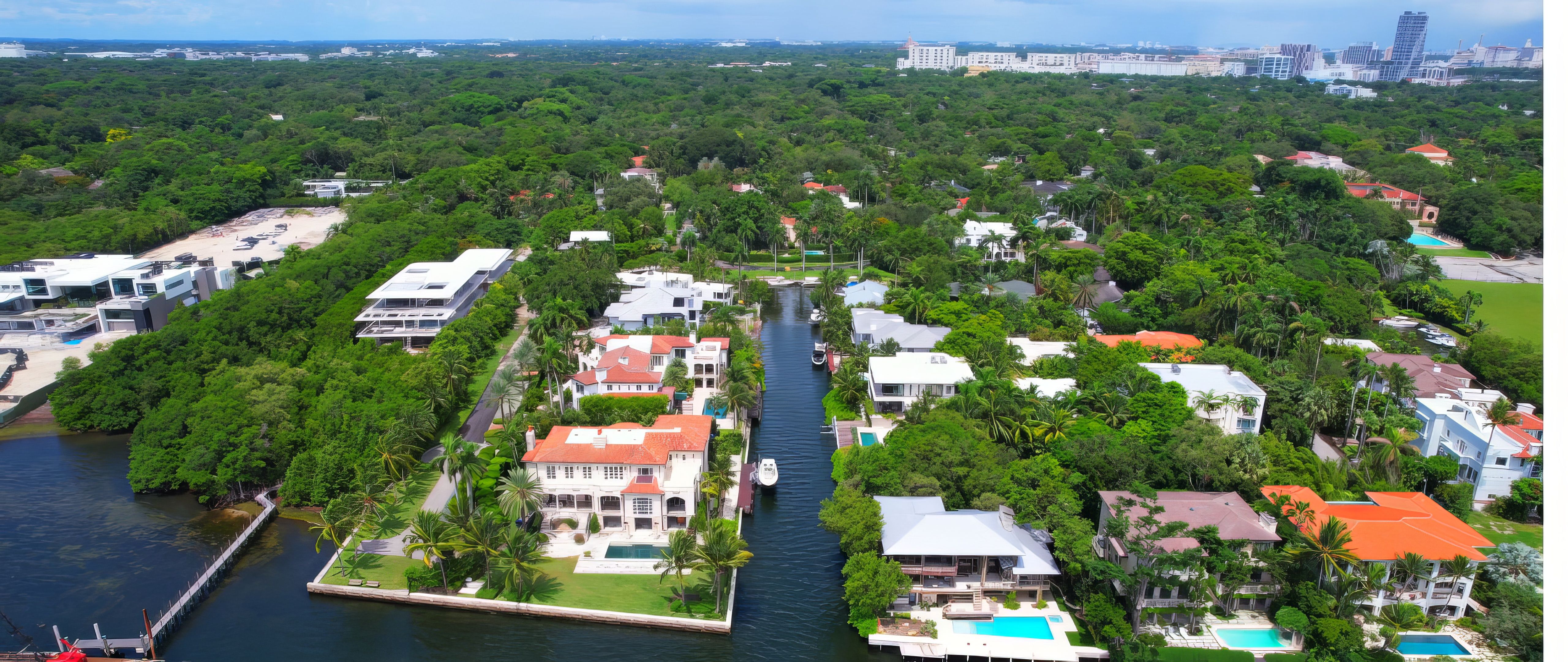
The Moorings, Miami, Florida - EVERYTHING You Want to Know
Whether you're longing for laid-back days or seeking hidden spots that amaze, let our...
.png)
The Ultimate Guide to Miami-Dade's Top 25 Gated Communities for Single-Family Homes
Discover Miami's top gated communities in this essential guide for luxury home buyers...


Miami's BEST Restaurants in EVERY Neighborhood
Check out the absolute BEST restaurants in every neighborhood of Miami, including the best...
Selling Your Home?
Who are we?
We are the ALL IN Miami Group out of Miami.
We are Colombian, Filipino, Cuban, German, Japanese, French, Indian, Syrian, and American.
We are Christian, Hindu, and Jewish.
We are many, but we are one.
We sell luxury homes in Miami, Florida.
Although some of our clients are celebrities, athletes, and people you read about online, we also help young adults find their first place to rent when they are ready to live on their own.
First-time buyers?
All the time!
No matter what your situation or price range is, we feel truly blessed and honored to play such a big part in your life.