



What Nobody Tells You About Living on Palm Island and Hibiscus Island

Amit Bhuta
I use non-traditional marketing to inspire the most motivated buyers to pay the max for Miami luxury homes...
I use non-traditional marketing to inspire the most motivated buyers to pay the max for Miami luxury homes...
Palm Island and Hibiscus Island sit so close to South Beach you can practically hear the bass, yet somehow they've mastered the art of pretending it doesn't exist.
Once you cross that guarded bridge, the noise just... stops, replaced by palm-lined streets, million-dollar yachts bobbing in private docks, and neighbors who've been on magazine covers more times than you've checked your email for the day.
And you know what? We're not surprised one bit.
Al Capone once called Palm Island home, which tells you about the neighborhood's talent for keeping up appearances, even while hiding a much juicier story.
Hibiscus Island, its quieter sibling, plays the same game with its serene bay views, boutique elegance, and just a tad of mystery to make you wonder what's really going on behind those hedges.
But a paradise built on a private bridge always has strings attached, and you're about to see where they lead.
Here are six things nobody tells you about living on Palm Island and Hibiscus Island.
 (1).png?w=1140)
1) Island Pricing Plays by Its Own Made-Up Rules
A normal home search begins with comparable sales, but Palm and Hibiscus Islands respond to that phrase with subtle amusement.
The market is small, the properties are highly individual, and a house across the street may be a terrible comparison despite sharing the same guarded entrance.
Palm Island’s current median listing price is approximately $23.5 million, while Hibiscus Island’s is above $21 million, yet those snapshots cover only a limited collection of wildly different homes.
One listing may offer open-bay views and substantial water frontage, while another provides an interior lot, an older structure, or a valuable excuse to call an architect immediately.
Lot width, dock potential, view direction, privacy, house condition, architectural pedigree, and redevelopment options can carry more weight than the neighborhood average.
Even the difference between waterfront and non-waterfront property can rearrange the price before anyone reaches the patio.
Sellers are not merely pricing bedrooms and square footage; they are considering scarcity, possibility, and that magical feeling of watching the Miami skyline sparkle behind the pool.
Buyers may run the numbers using recent sales, then discover that every useful comparison requires enough adjustments to qualify as a creative writing exercise.
Limited inventory also means waiting for the right property, which may take patience, while selling an unusual estate may require finding the one person whose wishlist matches its particular combination of view, design, and extravagance.
On Palm and Hibiscus Islands, the asking price is rarely the start of a simple equation because the island has already replaced the calculator with interpretive dance.
 (2).png?w=1140)
2) The Gate Keeps Out Strangers, Not Your Pool Guy's Truck
The guardhouse creates an impressive first impression, but Tuesday morning still belongs to people hauling ladders.
Palm and Hibiscus Islands may control road access, yet their private estates depend on a regular parade of pool technicians, gardeners, housekeepers, repair crews, delivery drivers, marine contractors, and guests whose names someone forgot to submit.
Everyone uses the same limited island road system, which becomes more noticeable when construction vehicles, service vans, and large gatherings arrive at the same time.
Miami Beach has addressed special events and contractor parking on Palm, Hibiscus, and Star Islands because their narrow streets can become congested and must remain usable by emergency vehicles.
The gate therefore adds control, not complete separation from the machinery required to keep luxury functioning.
Visitors may need clearance, deliveries may require coordination, and a forgotten guest list can turn a casual dinner invitation into a small diplomatic incident.
The location beside the MacArthur Causeway is convenient for reaching Miami and South Beach, but groceries, schools, restaurants, appointments, and nearly every commercial errand remain off-island.
That means privacy and convenience share the same entrance, then begin arguing over whose turn it is to use it.
Waterfront properties can also remain visible from the bay, so guarded roads do not place the entire home inside an invisible dome.
The islands offer meaningful security, but they cannot prevent the outside world from arriving with hedge clippers, dinner reservations, or a package requiring a signature.
 (3).png?w=1140)
3) Waterfront Living Comes With a Second Mortgage Called Maintenance
Biscayne Bay looks gorgeous in your snaps because seawalls have never learned how to appear in the family album.
Living at the water’s edge requires focus on parts of the property that separate the dream from several million gallons of saltwater.
Seawalls, docks, pilings, drainage, finished-floor elevation, flood history, generators, insurance, and salt exposure all deserve serious investigation before the view receives the final vote.
Miami Beach has invested in drainage upgrades, pump stations, concrete gutters, road reconstruction, and higher roadway elevations across Palm and Hibiscus Islands.
Those public projects show that water management on the islands is infrastructure, not merely a seasonal conversation about buying extra batteries.
The city can improve streets and stormwater systems, but each homeowner remains responsible for understanding how a particular parcel, seawall, dock, and finished floor interact with those systems.
A calm afternoon showing may reveal the sunset perfectly while offering no useful testimony about what happens during heavy rain, king tides, or wind-driven water.
Salt also has a long-term relationship with metal, mechanical equipment, exterior finishes, and anything else that hoped to age gracefully.
While none of this cancels the pleasure of stepping from the backyard onto a boat, it means that the water view will inevitably need engineering reports, specialized contractors, and bills impressive enough to deserve their own oceanfront seat.
 (4).png?w=1140)
4) Congratulations, You Now Manage a Small Corporation
The house may be designed for relaxation, but somebody still has to approve the vendor schedule.
A large detached estate can involve pools, landscaping, irrigation, climate systems, security equipment, generators, pest control, cleaning, smart-home technology, exterior lighting, and enough appliances to start forming departments.
Many island listings advertise expansive grounds, private docks, pools, and substantial living areas, which means the property operates on a scale far beyond ordinary lock-and-leave ownership.
One contractor fixes the gate while another services the air-conditioning, and neither one knows why the outdoor speakers have begun playing jazz at four in the morning.
Seasonal or part-time use does not help you avoid the workload because empty homes continuously run on systems, grow landscaping, attract humidity, and develop plumbing problems.
Some households handle the coordination personally, while others rely on property managers, household staff, or a trusted network of specialists.
Either approach requires oversight because luxury equipment is perfectly capable of failing at luxury prices.
This is separate from seawalls and flood planning; the issue is the ordinary weekly effort required to keep the residence clean, secure, cooled, trimmed, connected, and ready.
Condo owners may call one management desk, but an island homeowner may need several phone numbers and a spreadsheet with tabs.
Sure, the title says "homeowner," but the daily responsibilities suggest "chief executive officer" of Pools, Palms, and Things That Started Beeping Overnight.
 (5).png?w=1140)
5) The House Next Door Might Be a Construction Site for Three Years
Today’s flawless skyline view may come with the gentle background rhythm of concrete being cut next door.
Palm and Hibiscus Islands contain historic residences, extensively remodeled homes, contemporary estates, and properties purchased largely for what could replace them.
That architectural variety gives the islands visual interest, but it also keeps demolition, design review, rebuilding, and major renovation in regular circulation.
Miami Beach regulates single-family construction through permitting and design requirements, while island residents have supported stronger enforcement of contractor parking because building activity can spill beyond the property.
A neighboring project can bring trucks, crews, temporary fencing, dust, equipment, inspections, and the occasional reversing alarm that becomes your new morning birdcall.
Complex waterfront estates can also require specialized foundation, drainage, dock, landscape, and utility work, so ambitious timelines may encounter ambitious complications.
The finished result may raise the architectural standard of the street and look magnificent once every contractor has finally gone home.
Until then, the private island atmosphere may include a portable toilet positioned with confidence.
Buyers should therefore study nearby permits and planned projects instead of assuming the peaceful showing represents the next several years.
On islands where land is scarce and expectations are enormous, the house beside yours may be more of a long-running limited series.
 (6).png?w=1140)
6) Where's the Nightlife? There Isn't Any, Sorry.
Palm and Hibiscus Islands go quiet at night for the same reason people pay so much to live there.
Inside the gates, there is no restaurant row, cocktail lounge, boutique strip, or spontaneous sidewalk scene waiting to rescue an empty evening.
The islands provide residential streets and park space, while the commercial energy of South Beach, Downtown Miami, and Brickell remains close but firmly off-site.
Miami Beach also prohibits vacation rentals shorter than six months and one day in single-family homes, helping preserve a more residential pattern instead of a revolving collection of weekend guests.
Ordinary life is more likely to involve dog walks, boating, exercise, children at the park, contractors finishing for the day, and dinner served somewhere behind a hedge.
Social plans often happen inside private homes or begin with a drive over the causeway.
That arrangement suits Palm and Hibiscus because their entire appeal depends on offering distance from the crowds without placing residents far from them.
The celebrity reputation may suggest nightly glamour, but famous addresses also contain people looking for leftovers while wearing slippers.
Anyone expecting the islands themselves to provide entertainment will quickly learn that the main local attraction is having enough property to create it yourself.
The nightlife is not missing by accident; it was intentionally left outside the gate so everyone could sleep.
WHO GETS THE MOST OUT OF LIVING ON PALM ISLAND AND HIBISCUS ISLAND?
Those who want Miami across the water instead of outside the front door
On Palm Island and Hibiscus Island, the point of going home is to make Miami lower its voice.
The MacArthur Causeway keeps South Beach, Downtown, and the mainland close, but the guarded entrance creates a clear line between being near the action and living inside it.
Once past the gate, the islands trade storefronts and foot traffic for hedges, docks, pools, and streets where the loudest evening plan may be a boat returning before dinner.
The homes are expected to dominate much of the lifestyle, which explains the oversized kitchens, outdoor lounges, gyms, guest suites, and backyards designed to make leaving optional.
Palm and Hibiscus are especially convincing when entertaining at home sounds better than competing for a reservation and then surrendering the car to valet parking.
The water also becomes part of the routine rather than scenery reserved for special occasions.
A dock can turn a free afternoon into a boat ride, while the skyline provides enough drama without sending anyone an invitation.
The islands also suit a household that understands privacy on these islands means controlled access, not complete disappearance from contractors, marine traffic, or the occasional sightseeing boat.
Their calm has structure behind it, including security, property staff, maintenance schedules, and enough vendor coordination to keep several group chats permanently active.
That effort makes more sense when the goal is not effortless ownership, but a private Miami life built around the house, the bay, and a carefully managed front gate.
Palm and Hibiscus offer the rare pleasure of watching the city sparkle from a distance while having no obligation to participate.
WHO MAY WANT TO KEEP LOOKING?
Anyone who thought the guardhouse came with a concierge desk
Palm Island and Hibiscus Island become less dreamy the moment the word “private” is mistaken for “handled.”
The guard checks arrivals, but nobody at the entrance is scheduling the dock repair, supervising the roof inspection, or explaining why the landscape lighting has developed a dark and moody corner.
These are standalone estates, which means the property does not come with a building manager waiting downstairs to absorb every minor crisis.
The bay adds its own department, complete with seawalls, pilings, docks, salt exposure, drainage, flood research, and insurance concerns that rarely improve the lunch hour.
The islands also require leaving through the same entrance whenever the refrigerator is empty, dinner is elsewhere, or somebody needs toothpaste after ten.
There is no hidden row of cafés behind the palms and no neighborhood bar where everyone wanders over after dark.
A construction project nearby can also replace the expected island hush with trucks, crews, temporary fencing, and one reversing alarm determined to join the morning routine.
Privacy has limits as well, since a waterfront yard facing open water may be more visible than an interior home protected by layers of landscaping.
Even the housing search refuses to cooperate because one property may be valued for its architecture while another is priced for the house someone plans to demolish.
Palm and Hibiscus make poor companions for anyone who wants luxury to mean fewer decisions, fewer service calls, and no need to know what a seawall cap is.
The islands provide exclusivity, but they do not provide immunity from logistics, weather, construction, or a pool technician arriving exactly when guests do.
AN HONEST TAKEAWAY
What living on Palm Island or Hibiscus Island really comes down to
Palm Island and Hibiscus Island sell a powerful idea before anyone steps inside a house.
Miami is visible, the water is everywhere, and the gate suggests that ordinary city problems have been asked to remain on the causeway.
Some of them do.
The traffic noise fades, the nightlife moves off-site, and the city becomes a skyline rather than a neighbor borrowing the curb.
Other problems simply show themselves wearing uniforms, carrying toolboxes, or sending invoices with words like marine, structural, and custom-printed near the top.
It is the honest bargain of Palm Island and Hibiscus Island.
These islands offer privacy, space, boating access, and proximity to Miami in a combination that very few places can reproduce.
They also demand constant attention because the homes are large, the waterfront is exposed, the land is scarce, and every renovation seems capable of becoming a neighborhood event.
The famous address is almost beside the point once daily life settles into school runs, dog walks, dinner at home, and calls about equipment nobody remembers purchasing.
What makes the islands special is not endless glamour, but the ability to keep glamour nearby without letting it organize the entire day.
Living on Palm Island or Hibiscus Island comes down to accepting that paradise has a gate, a dock, a vendor list, and absolutely no intention of managing itself.
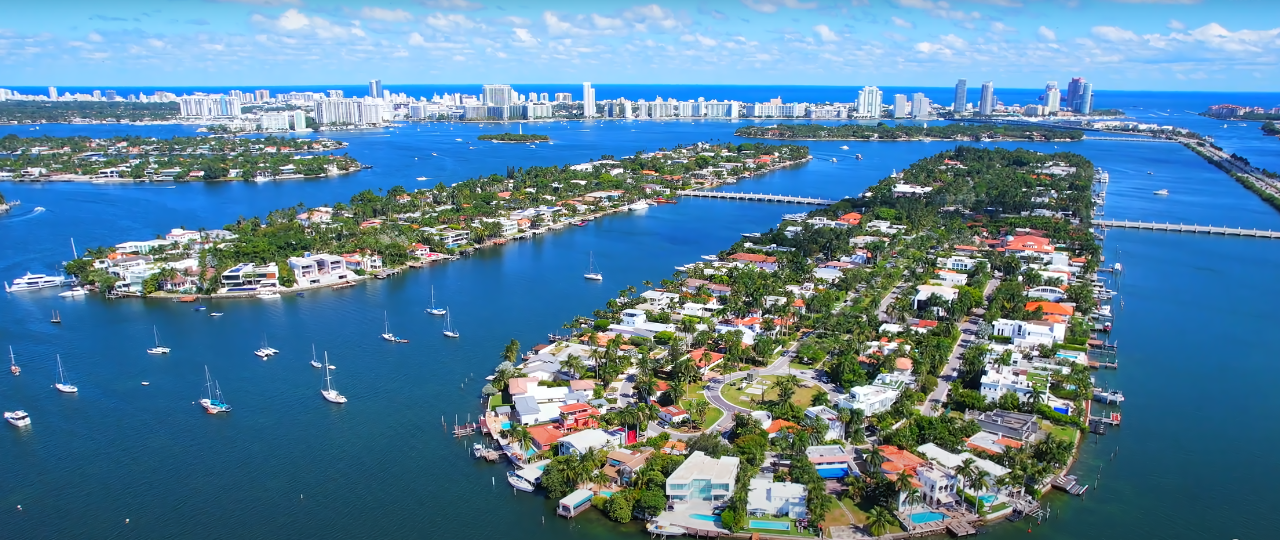%20(42).png)
Palm Island| Hibiscus Island, Miami, Florida - EVERYTHING You Want to Know
Join us for an exciting escapade across the nooks and crannies of the Palm and Hibiscus Is...
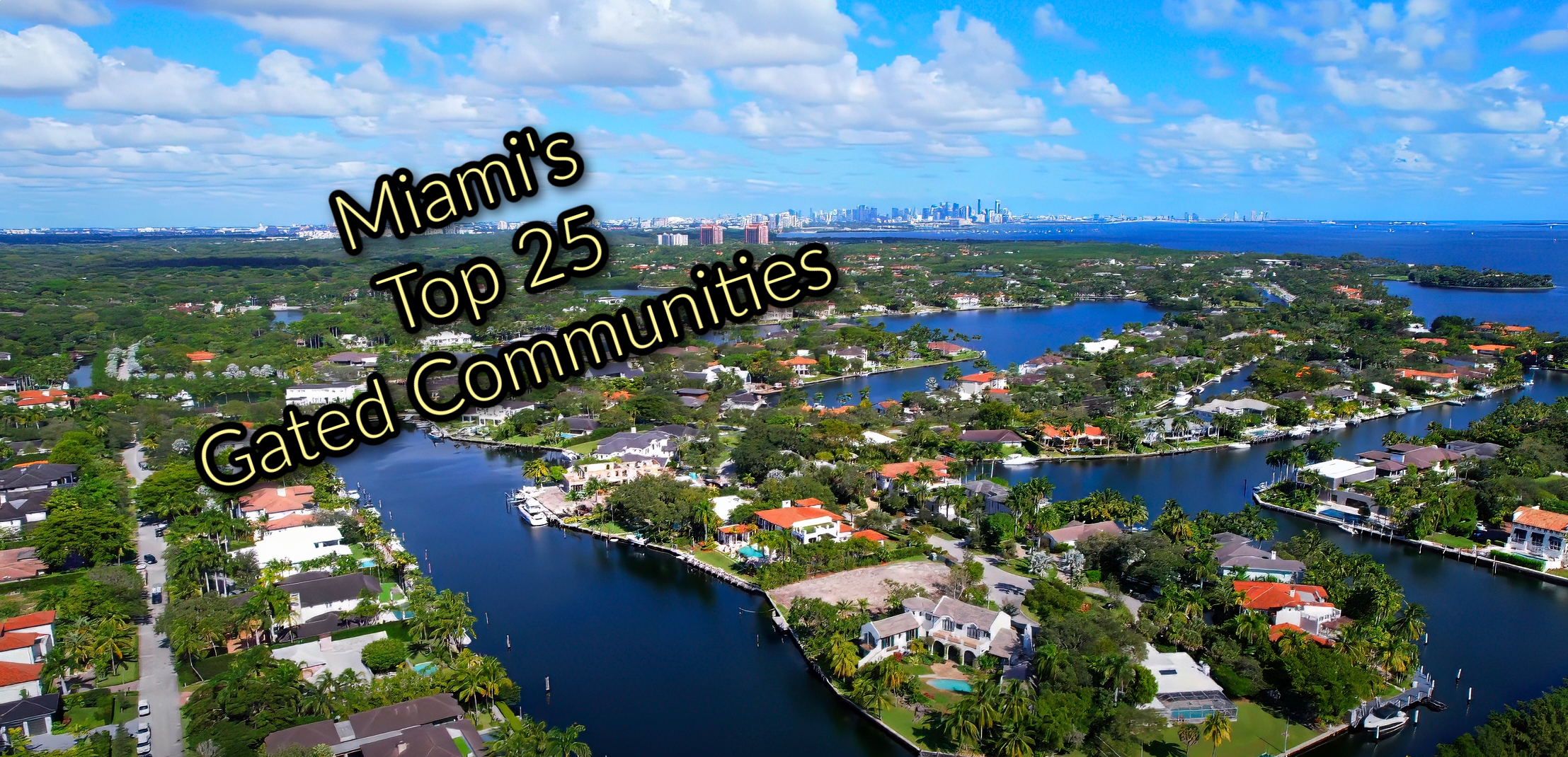.png)
The Ultimate Guide to Miami-Dade's Top 25 Gated Communities for Single-Family Homes
Discover Miami's top gated communities in this essential guide for luxury home buyers...


Miami's BEST Restaurants in EVERY Neighborhood
Check out the absolute BEST restaurants in every neighborhood of Miami, including the best...
Selling Your Home?
Who are we?
We are the ALL IN Miami Group out of Miami.
We are Colombian, Filipino, Cuban, German, Japanese, French, Indian, Syrian, and American.
We are Christian, Hindu, and Jewish.
We are many, but we are one.
We sell luxury homes in Miami, Florida.
Although some of our clients are celebrities, athletes, and people you read about online, we also help young adults find their first place to rent when they are ready to live on their own.
First-time buyers?
All the time!
No matter what your situation or price range is, we feel truly blessed and honored to play such a big part in your life.