



What Nobody Tells You About Living in Pinewood

Amit Bhuta
I use non-traditional marketing to inspire the most motivated buyers to pay the max for Miami luxury homes...
I use non-traditional marketing to inspire the most motivated buyers to pay the max for Miami luxury homes...
Pinewood doesn't have an HOA, and locals will tell you that's either the best or worst thing about the neighborhood depending on the day.
On the surface, this setup is a dream — no fines for a lawn that's more dirt than grass, no committee meetings about paint colors, and no one policing your RV in the driveway.
It's the portrait of total freedom where you can park what you want, paint it pink, let the chickens roam.
But freedom is a two-way street, and your neighbor's definition of "creative expression" might not match yours.
Yes, the same rule that lets you skip the fines also lets the guy three doors down build whatever he wants, whenever he wants.
And what do you know? The lack of an HOA is just the opening act — Pinewood's been hiding a whole show behind it.
Here are five things nobody tells you about living in Pinewood.
 (17).png?w=1140)
1) Pinewood's Prices Are Rising Faster Than Your Landlord's Excuses
“Affordable Miami” has become one of those phrases that requires several footnotes and a deep breath.
Yes, Pinewood still costs less than many of the city’s better-known neighborhoods, but the discount is no longer large enough to make the monthly payment look friendly.
Census estimates place the median owner-occupied home value at $372,400 and median gross rent at $1,532, while a current neighborhood guide puts the typical home price closer to $470,000.
Those figures use different methods and time periods, but neither supports the idea that Pinewood is waiting around with bargain houses and complimentary closing costs.
The pressure is sharper because the median household income is $59,410, and only 40.4% of homes are owner-occupied, leaving plenty of households renting as prices continue speaking in a tone reserved for neighborhoods with better brunch.
A modest bungalow may still be cheaper than something farther south or closer to the coast, but “cheaper than Miami” is not the same as comfortable.
The same older house can attract first-time buyers, investors, extended families, and anyone priced out of trendier ZIP codes, which is a crowded guest list for limited inventory.
Pinewood’s value is no longer a secret, and secrets gain confidence once real estate listings find them.
The neighborhood may remain one of the more practical doors into homeownership near central Miami, but the door now has a heavier price tag on the knob.
 (18).png?w=1140)
2) That 'Character' You Bought? It's Called 1952 Plumbing
A curved doorway and terrazzo floor can make an older Pinewood house very persuasive until the inspection begins asking impolite questions.
Much of the neighborhood consists of twentieth-century cottages, bungalows, ranch homes, duplexes, and later additions layered onto earlier structures.
Some have been thoughtfully updated, while others have received fresh paint and the architectural equivalent of changing the subject.
However, an attractive kitchen cannot confirm the age of the supply lines, electrical panel, roof deck, drainage pipes, or work hidden behind a converted room.
A rear bedroom may have started life as a porch, and the extra bathroom may possess fewer records than a person living under an alias.
While it doesn't make every older home a problem, as solid construction and careful renovation can produce an excellent house, it does mean that “renovated” should begin a conversation rather than end one.
Buyers need to distinguish between cosmetic upgrades and the expensive systems that determine whether the first rainy season becomes educational.
Insurance questions can add another layer when roofs, wiring, windows, or storm protection belong to an earlier chapter of Florida building standards.
Pinewood’s housing character is authentic nonetheless, but character occasionally arrives with a plumber who charges by the hour.
 (19).png?w=1140)
3) Highway Access is Great in Theory But Chaos in Practice
Pinewood sits beside I-95, which creates the comforting illusion that Miami has agreed to compromise.
Downtown lies less than ten miles away, and the highway offers direct connections toward the city, northern Miami-Dade, and Broward County.
That sounds excellent until several thousand other drivers remember they received the same brochure.
The Census Bureau reports a mean work commute of 31 minutes, which is long enough for a nearby destination to develop a full Anime arc.
Highway proximity helps distance but cannot anticipate crashes, bottlenecks, school traffic, roadwork, or a slowdown caused by everyone braking at once.
Local corridors can be equally demanding because groceries, schools, restaurants, healthcare, and daily errands do not line up neatly along a heroic route.
A five-mile trip may include an I-95 ramp, several traffic lights, one difficult turn, and a growing suspicion that walking would have built character.
Transit helps along major roads, but Pinewood’s residential blocks do not function like a rail-centered neighborhood where the car can retire peacefully.
The location is useful for households traveling in several directions, especially when schedules allow some flexibility.
Pinewood boasts quick access to the highway, but the highway decides when to ruin the rest of the arrangement.
 (20).png?w=1140)
4) Unincorporated Means Nobody's Really in Charge (Until Suddenly They Are)
Pinewood has a recognizable name, defined community boundaries, and absolutely no Pinewood City Hall waiting beside a fountain.
The neighborhood belongs to unincorporated Miami-Dade, so county departments handle many responsibilities that a small municipality would otherwise keep under one roof.
That can make ordinary questions feel like a scavenger hunt involving 311, zoning staff, permitting offices, code enforcement, public works, and whichever department answers first.
But the absence of a local mayor does not mean the property has escaped government supervision.
Every parcel receives a zoning classification that controls permitted uses, height, open space, setbacks, and other development conditions.
Miami-Dade’s Community Councils also make zoning and land-use decisions in unincorporated areas, while the County Commission handles certain hearings and appeals.
That arrangement can seem distant until someone wants to legalize an addition, change a property use, divide land, or challenge what is being proposed nearby.
Then the county becomes extremely real, complete with maps, records, deadlines, and a meeting agenda.
Pinewood may offer more flexibility than communities with stricter village-level design rules, but flexibility is not the same as a paperwork-free republic.
Nobody appears to be in charge until the exact moment a project begins, at which point several offices would like a word.
 (21).png?w=1140)
5) Everyone Knows Everyone, Which Is a Blessing and a Warning
A moving truck can enter Pinewood before breakfast, but newcomer status takes longer to unpack.
The neighborhood has the continuity of a place where households, relatives, churches, businesses, and familiar routines have been crossing paths for years.
Census estimates show that 87.4% of residents had remained in the same home from the previous year, with an average household size of 3.2 people.
Nearly half of residents are foreign-born, and 63.3% speak a language other than English at home, giving Pinewood a community life shaped by several cultures rather than one luxe neighborhood theme.
That can make the area warm, practical, and full of informal connections that no development company could reproduce with matching signage.
It can also mean that the block already knows which house throws the loud parties, who parks badly, and why nobody trusts the contractor with the red van.
Belonging usually grows through repeated encounters at local businesses, schools, parks, churches, front yards, and family gatherings rather than one dramatic welcome.
Pinewood is not waiting to be discovered because the people living there have been busy having lives.
Newcomers receive the strongest version of the neighborhood when they join with curiosity instead of treating it as an affordable blank canvas near I-95.
Sure, everyone may not literally know everyone.
Still, enough people know enough people to make good manners an excellent long-term investment.
WHO GETS THE MOST OUT OF LIVING IN PINEWOOD?
Those who care more about a useful neighborhood than an impressive neighborhood name
Pinewood makes more sense at ground level than it does in a glossy neighborhood guide.
Its strengths show up in modest homes, familiar businesses, busy family routines, and a location that keeps several parts of Miami within reach.
The neighborhood does not package daily life into a fancy lifestyle, which leaves more room for people to build one around their own households.
Backyard gatherings, church events, local food, school activities, and quick conversations across a fence carry more weight than a fashionable district logo.
Pinewood also offers housing with enough variety to suit families who need extra bedrooms, flexible layouts, or space shared across generations.
While older homes require careful inspection, they can provide personality and usable land without forcing every household into identical new construction.
Its cultural mix gives ordinary errands more flavor, especially along the commercial corridors where Caribbean and Latin American influences are part of the neighborhood rather than a marketing theme.
The county-run setup becomes manageable once the correct departments, zoning rules, and property records stop sounding like mysterious government folklore.
Pinewood works particularly well when convenience means being near highways, services, relatives, and established routines rather than walking to a rooftop bar.
The neighborhood rewards consistency as familiar faces become more welcoming after the fifth conversation than after the first introduction.
Pinewood offers its best version of home to anyone who values practical access, cultural depth, and community memory more than curated curb appeal.
WHO MAY WANT TO KEEP LOOKING?
Anyone who expects a lower profile to come with lower prices and fewer complications
Pinewood can disappoint you if you translate “less famous” into “cheap, simple, and waiting to be transformed.”
Its home prices have moved well beyond the era when a modest house near central Miami could be treated as an easy financial win.
The older housing stock also means a charming exterior may introduce roofing, plumbing, electrical, insurance, or permit questions before the furniture arrives.
A central location helps on paper, but I-95 and the surrounding corridors still decide whether a short trip remains short.
The neighborhood itself does not have a main street where dinner, entertainment, errands, and coffee are all within a few walkable blocks.
Pinewood’s county government structure can also test anyone who expects one local office to handle every question with a friendly nod.
Property research may involve zoning records, permit searches, code history, school assignments, and several webpages that appear to have personal grudges against clear navigation.
The established social fabric can require patience too, because trust is built through repeated presence rather than instant membership in every neighborhood circle.
Pinewood may seem unfinished to someone measuring it against newly branded communities with coordinated landscaping and carefully staged public spaces.
That interpretation misses the point, but it can still create a poor match for anyone who wants the neighborhood to be neatly arranged, predictable, and ready to perform.
Pinewood asks for realistic expectations, property homework, traffic patience, and respect for a community that did not begin when the listing appeared online.
AN HONEST TAKEAWAY
What living in Pinewood really comes down to
Pinewood does not offer the easiest story to summarize, which may be one of its most honest qualities.
It is more affordable than many Miami neighborhoods but not comfortably affordable for every household already living there.
It is close to major destinations without making the trip to those destinations consistently pleasant.
Its older homes can offer space and character while subtly storing several decades of repairs, additions, and decisions behind the walls.
The county governs the area from a distance, yet it can become remarkably attentive the moment a property project crosses the wrong line.
Pinewood’s strongest quality is not a park, a restaurant district, or an architectural style.
Its strength comes from the life already stitched through the neighborhood by families, small businesses, languages, churches, schools, and long-running relationships.
That history gives Pinewood warmth, but it also means the area cannot be treated as an empty canvas for someone else’s reinvention fantasy.
The neighborhood can be rough around the edges without being empty of value, and practical without being dull.
It offers access, familiarity, and cultural texture, although none of those come with matching street furniture or a public-relations campaign.
Living in Pinewood comes down to seeing the difference between a neighborhood that has not been curated for outsiders and one that has nothing worth noticing.
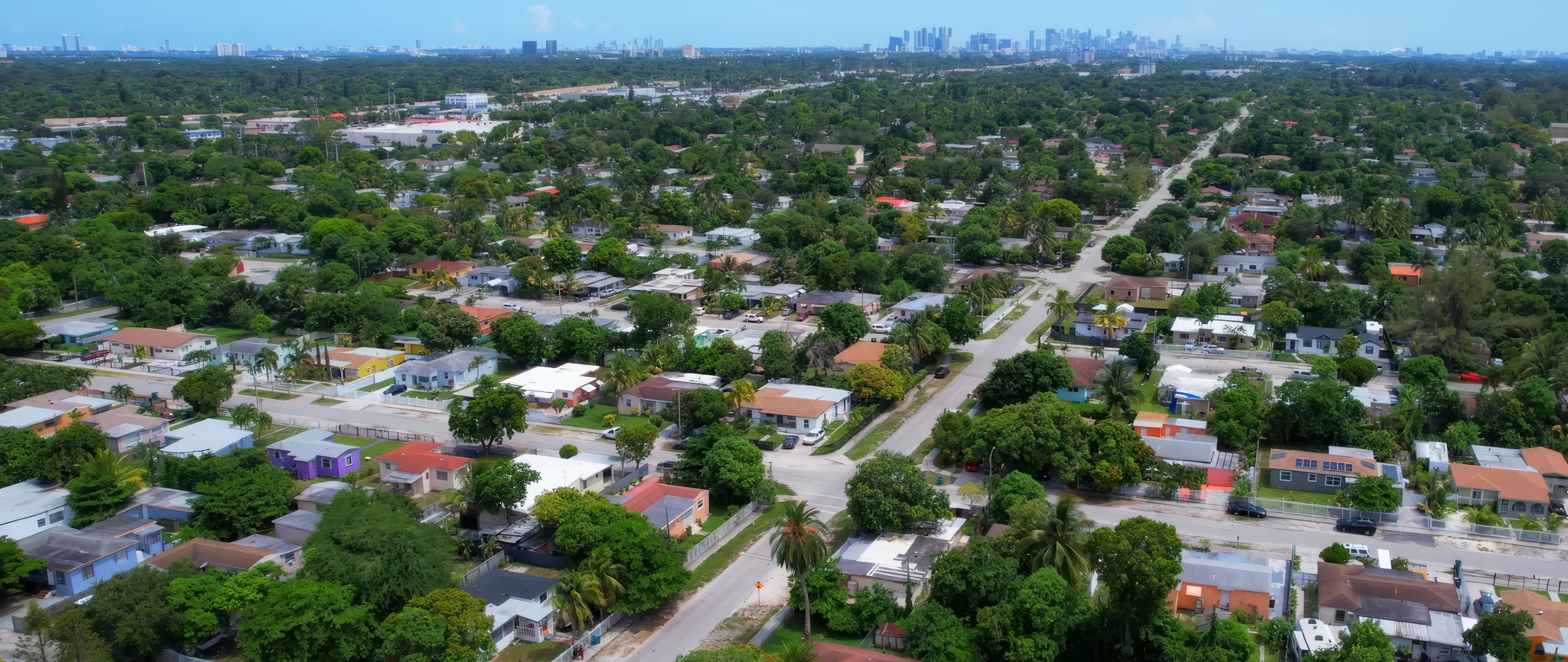-topaz-upscale-4x-3.jpeg)
Pinewood, Miami, Florida - EVERYTHING You Want to Know
Join us for a laid-back ride through everything that makes Pinewood unforgettable. This is...
.png)
The Ultimate Guide to Miami-Dade's Top 25 Gated Communities for Single-Family Homes
Discover Miami's top gated communities in this essential guide for luxury home buyers...


Miami's BEST Restaurants in EVERY Neighborhood
Check out the absolute BEST restaurants in every neighborhood of Miami, including the best...
Selling Your Home?
Who are we?
We are the ALL IN Miami Group out of Miami.
We are Colombian, Filipino, Cuban, German, Japanese, French, Indian, Syrian, and American.
We are Christian, Hindu, and Jewish.
We are many, but we are one.
We sell luxury homes in Miami, Florida.
Although some of our clients are celebrities, athletes, and people you read about online, we also help young adults find their first place to rent when they are ready to live on their own.
First-time buyers?
All the time!
No matter what your situation or price range is, we feel truly blessed and honored to play such a big part in your life.