



What Nobody Tells You About Living in Palmetto Estates

Amit Bhuta
I use non-traditional marketing to inspire the most motivated buyers to pay the max for Miami luxury homes...
I use non-traditional marketing to inspire the most motivated buyers to pay the max for Miami luxury homes...
You take the exit toward Palmetto Estates expecting suburbia, and suburbia is exactly what you get, paired with mid-century ranch homes, trimmed lawns, and enough palm trees to make your out-of-town cousins jealous.
No one can tell us that Palmetto Estates' vibe isn't instantly likable — the friendly waves, a nearby golf course, and proximity to Zoo Miami for a Tuesday whim.
You may even start mentally decorating a house you haven't even put an offer on yet, since everyone you've met has lived there for decades and speaks about the neighborhood like it's a friend group they've been in since college.
But then you start collecting little clues about the things everyone knows that you don't, which may include the same handyman van parked three streets over, or the neighbor who "just checks in" a little too often.
And by week two, "quiet suburb" starts feeling like a very specific code.
Here are six things nobody tells you about living in Palmetto Estates.
 (80).png?w=1140)
1) Do the Math Three Times and The Price Will Still Hurt
Palmetto Estates is often acknowledged as a sensible alternative after nearby home prices have frightened everyone into speaking in whispers.
It is more attainable than some of South Miami-Dade’s pricier communities, but that comparison does not magically turn the neighborhood into a bargain aisle.
The Census Bureau’s 2020–2024 estimates place the median owner-occupied home value at $445,900, median monthly costs for mortgaged owners at $2,336, and median gross rent at $1,948.
Those figures cover a multi-year period rather than today’s asking prices, yet they still make the larger point rather loudly.
A detached home, driveway, yard, extra bedrooms, and established residential setting remain valuable because everyone else noticed those features too.
The price may seem reasonable compared to Palmetto Bay, but considerably less charming when taxes, financing, and the down payment are considered.
Renters do not receive a secret discount code either, especially when the goal is enough space for a household rather than a modest room and a heroic storage system.
Palmetto Estates may offer more house for the money, but “more” and “cheap” have never been close friends.
The neighborhood makes the strongest financial case for someone comparing it with costlier nearby options, not someone searching for forgotten Miami prices from a happier decade.
You can check the calculator again, but it is unlikely to apologize.
 (81).png?w=1140)
2) History Repeats Itself, Especially in the Wiring
A renovated kitchen can dazzle with quartz counters and hide the electrical panel — and you wouldn't even notice.
Much of Palmetto Estates was developed during the 1960s and 1970s, and the neighborhood includes customized ranch homes that have accumulated decades of additions, upgrades, repairs, and personal decisions.
That history gives the homes character, larger layouts, mature lots, and fewer cookie-cutter streets.
It can also produce a house with a new roof, partly new plumbing, an enclosed patio with a mysterious origin story, and an unofficial extra bathroom.
Fresh paint proves that someone purchased fresh paint.
It does not confirm the age of the wiring, drainage lines, air-conditioning equipment, windows, roof deck, or work hidden behind the walls.
Miami-Dade provides online tools for researching permits, inspections, code compliance, occupancy records, and other property information, which makes address-level homework especially useful.
A thorough inspection should be paired with permit research rather than replaced by a confident seller pointing at stainless-steel appliances.
Older homes are not automatically troublesome, and updated homes are not automatically finished updating.
In Palmetto Estates, the prettiest room may sell the house, but the least photogenic systems decide how peaceful the first year becomes.
 (82).png?w=1140)
3) Local Roads Lead Everywhere, Except Where You Actually Wanted to Go
Palmetto Estates sits near enough to major roads that every destination looks encouraging on a map.
Then the map adds traffic.
Then, you're reminded that shopping, medical care, restaurants, schools, parks, and employment centers are reachable, but rarely in a tidy route that respects your afternoon.
The neighborhood’s residential streets connect with busy corridors, while larger trips commonly pull drivers toward U.S. 1, the Turnpike, or routes leading farther north.
The Census Bureau reports a mean journey to work of 34.4 minutes for Palmetto Estates workers, which is enough time to finish a podcast segment and begin questioning every earlier life choice.
Mileage can therefore give an overly cheerful impression of convenience.
A destination may be only a few miles away while several traffic lights, school-zone slowdowns, and a left turn designed by an enemy stand between you and it.
The location works well when daily errands remain mostly within South Miami-Dade, and schedules allow some flexibility.
It becomes less graceful when work, appointments, or social plans repeatedly require crossing large portions of the county.
Palmetto Estates connects to plenty of places, but it expects you to bring patience, fuel, and a backup route.
 (83).png?w=1140)
4) A ZIP Code Isn't a City Hall
The word “Estates” sounds official enough to deserve its own seal, mayor, and mildly dramatic council meeting, but instead, Palmetto Estates is a census-designated community within unincorporated Miami-Dade County.
That means county government handles municipal services for the area, including functions such as police, fire rescue, planning, zoning, permitting, and other matters that incorporated cities often manage themselves.
There is no Palmetto Estates city hall waiting to solve a permit question because the neighborhood name describes the community, not a separate municipality.
Road complaints, code issues, zoning research, and service requests may lead to county departments, online portals, community councils, or 311.
This can confuse anyone who assumes a Miami mailing address, a ZIP code, and a neighborhood boundary all refer to the same government setup.
They do not.
Property rules also depend on the exact parcel, since Miami-Dade assigns zoning classifications that control permitted uses, setbacks, height, and other conditions.
The system works, but it requires knowing which office owns the problem before sending the problem on a countywide vacation.
Living in Palmetto Estates means learning that the address may say Miami, the neighborhood may have its own identity, and the paperwork still answers to Miami-Dade County.
 (84).png?w=1140)
5) Longtime Residents Remain Wholly Unfazed by Your Arrival
Your moving truck may be a major event in your household, but Palmetto Estates has seen a few.
The neighborhood has high owner occupancy, larger households, and strong residential continuity, with Census estimates showing that 86.3% of occupied homes are owner-occupied and 95.1% of residents had lived in the same house one year earlier.
Those numbers help explain why the area does not boast the restless energy of a place reinventing itself every eighteen months.
Homes often hold long family histories, extended households, familiar routines, and neighbors who remember three versions of the fence you just admired.
Nearly half of residents are foreign-born, and more than sixty percent speak a language other than English at home, giving Palmetto Estates a community life shaped by varied cultures and family networks.
That richness is part of the neighborhood’s identity rather than decoration added for a brochure.
Newcomers are joining an established place, not arriving to rescue an undiscovered suburb from obscurity.
Friendliness may grow through repeated hellos, school routines, shared errands, family introductions, and the slow proof that you are not disappearing after the next lease cycle.
Nobody is required to organize a parade because you found a house with a pool.
Palmetto Estates offers the feeling of belonging, but it usually develops the old-fashioned way: by showing up often enough that people stop asking which house is yours.
 (85).png?w=1140)
6) Home Sweet Home, But Fun Is Sold Separately
Once the groceries are unpacked, Palmetto Estates becomes instantly clear about its main product.
The product is home.
The neighborhood offers residential streets, yards, parks, and room for households to build their own routines, but it does not wrap those homes around a lively central district.
Colonial Drive Park offers football, after-school programs, summer activities, and other community recreation, making it a go-to local gathering place for families.
Golf, shopping, restaurants, Zoo Miami, and other attractions are also nearby, so boredom is not enforced by law.
The difference is that entertainment usually begins with a chosen plan rather than appearing outside the front door.
There is no single main street where dinner, coffee, shopping, and an evening crowd line up to manage your social calendar.
That suits households that prefer backyard gatherings, family visits, park programs, hobbies, and outings selected on purpose.
It may disappoint anyone hoping the neighborhood itself will provide a steady stream of things to do on a whim.
Palmetto Estates gives you a comfortable base for a full life, but the base does not include complimentary nightlife, street buzz, or someone texting that a new wine bar opened downstairs.
WHO GETS THE MOST OUT OF LIVING IN PALMETTO ESTATES?
Those who want the house to matter more than the neighborhood’s highlight reel
Palmetto Estates makes its best case sans the rooftop bars, glossy branding, or a district name printed on artisanal tote bags.
Instead, its appeal shows up in driveways that fit more than one car, yards that can host a family gathering, and homes with enough room for daily life to spread out.
The neighborhood gives routines a practical setting rather than turning every weekend into a search for the next exciting thing.
Colonial Drive Park, nearby shopping, local schools, and familiar services cover many everyday needs without pretending to be a resort itinerary.
Palmetto Estates suits a life built around relatives, home-cooked meals, backyard birthdays, and neighbors who have been on the same block long enough to remember when your palm tree was shorter.
Its strong owner occupancy and larger households create a sense of continuity that newer developments cannot manufacture with matching mailboxes.
The older homes bring personality, especially when extra rooms, covered patios, pools, and decades of customization matter more than spotless new-construction sameness.
That personality does require careful inspections and a healthy respect for permit records, because charm occasionally arrives holding a toolbox.
Here, driving is accepted as part of the routine and entertainment does not need to appear within walking distance.
It asks for comfort as a useful neighborhood, established, and socially grounded rather than endlessly packaged for outside attention.
For a home-centered life with space, family ties, and fewer demands to keep up with the latest Miami scene, Palmetto Estates remains one of the best options.
WHO MAY WANT TO KEEP LOOKING?
Anyone who needs the neighborhood to supply the plans for the weekend
Palmetto Estates can be frustrating when your ideal neighborhood is expected to organize dinner, nightlife, errands, and entertainment without a car.
The residential streets provide calm, but they do not lead to a lively town center where an unplanned evening becomes interesting by itself.
Most outings begin with choosing a destination, checking traffic, and deciding whether the trip is still worth making after the map turns orange.
The location connects to major roads, yet those roads have their own schedules, moods, and occasional personal grudges.
Older housing can also test anyone who wants a home with no unanswered questions hiding behind the walls.
A modern renovation may still require research into permits, plumbing, roofing, wiring, or the legal biography of that suspiciously spacious converted room.
Palmetto Estates’ unincorporated status adds another layer because county departments, zoning maps, and address-specific rules replace the simplicity of calling a small city hall.
The neighborhood’s social life is also more rooted than instant, so belonging tends to develop through repeated contact rather than one cheerful welcome basket and immediate group-chat membership.
Its comparatively lower prices may disappoint anyone expecting a cheap route into South Miami-Dade homeownership.
Palmetto Estates isn't difficult by default, but together, these details make a poor match for a life built around spontaneity, new construction, easy walking, and minimal homework.
Palmetto Estates provides a solid home base, but it does not volunteer to become your social director, property historian, or personal traffic negotiator.
AN HONEST TAKEAWAY
What living in Palmetto Estates really comes down to
Palmetto Estates is easy to underestimate because it does not market itself with much drama.
From the outside, it can look like a straightforward collection of ranch homes, generous driveways, family yards, and streets that get on with the day.
But behind these details, Palmetto Estates is a neighborhood that already has a life of its own and does not need every new arrival to reinvent it.
Longtime households, cultural variety, personalized homes, and familiar routines give it more weight than its quiet appearance first suggests.
The tradeoffs are equally plain once the brochure language is removed.
The homes may need investigation, the errands may need wheels, the paperwork may require a trip to the county, and so will the fun.
The price is lower than some nearby communities, but not low enough to skip the calculator or treat the inspection as a ceremonial formality.
In return, Palmetto Estates offers room, stability, and a neighborhood that does not exhaust and perform every weekend.
Something is reassuring about a place where the house can be the center of life without competing against a dozen attractions outside the window.
There is also something mildly humbling about moving into a community that has been functioning perfectly well without your presence.
Living in Palmetto Estates comes down to appreciating a neighborhood that offers substance over spectacle, provided you are willing to bring your own plans and check the permit history first.
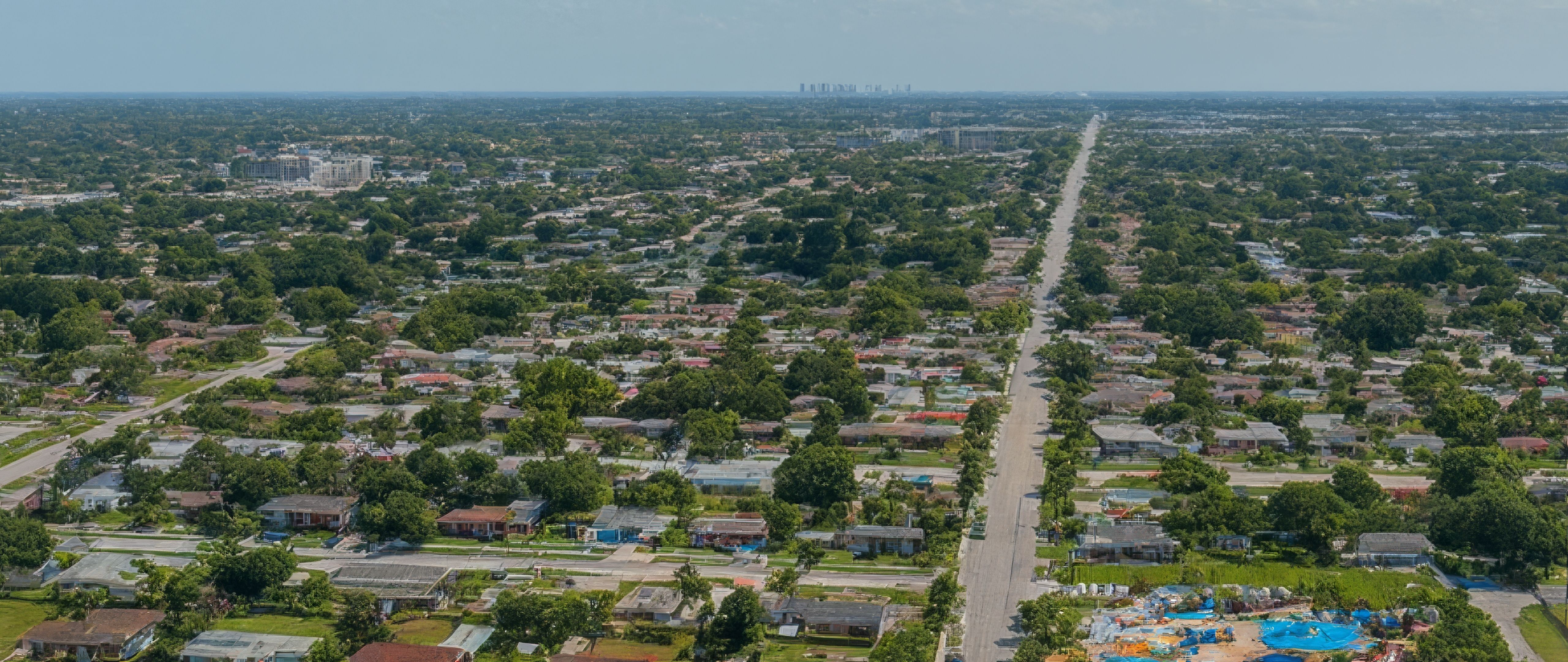
Palmetto Estates, Miami, Florida - EVERYTHING You Want to Know
Stick with us as we take a closer look at Palmetto Estates. There's more to this neig...
.png)
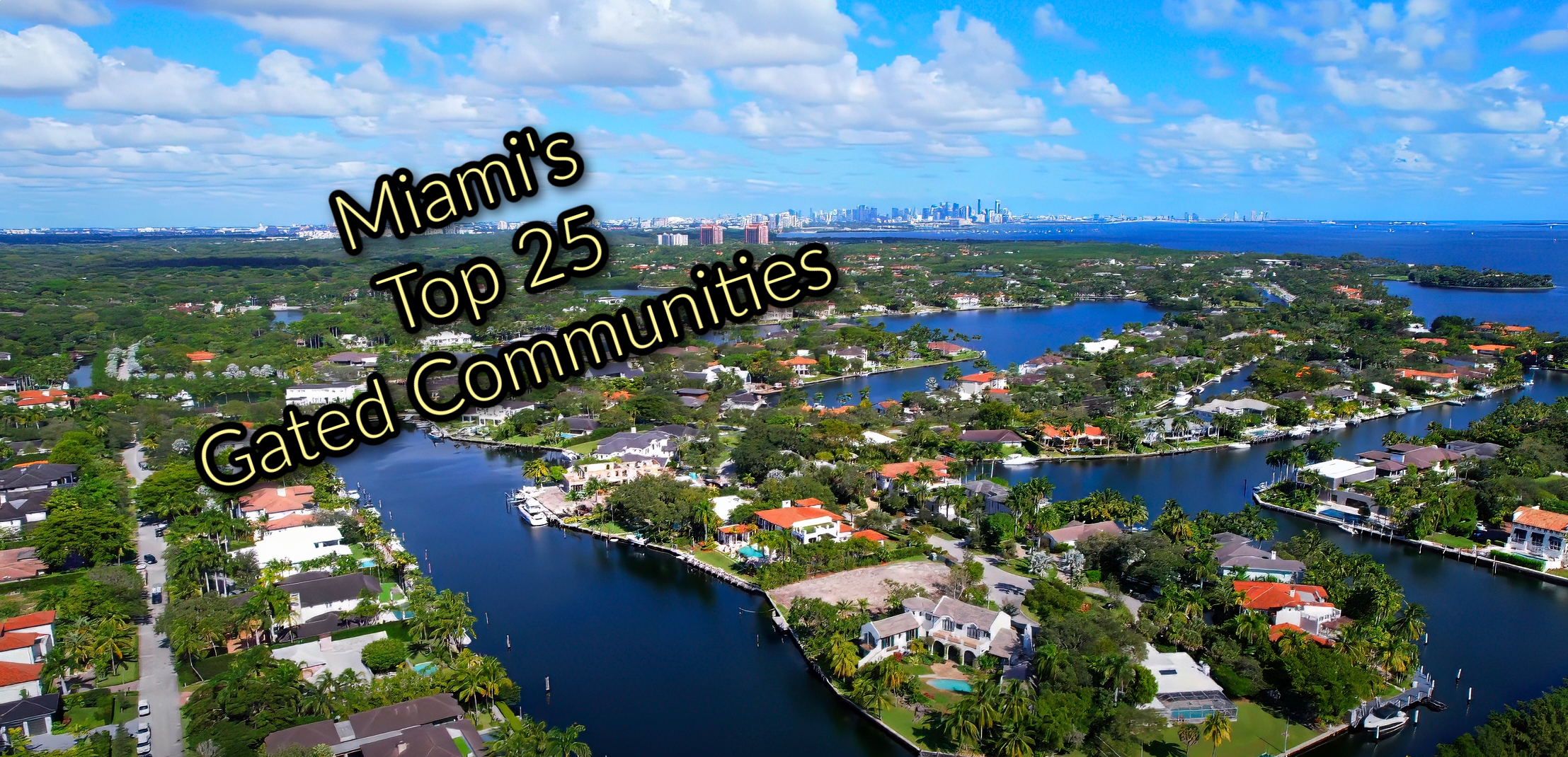
The Ultimate Guide to Miami-Dade's Top 25 Gated Communities for Single-Family Homes
Discover Miami's top gated communities in this essential guide for luxury home buyers...

Miami's BEST Restaurants in EVERY Neighborhood
Check out the absolute BEST restaurants in every neighborhood of Miami, including the best...
Selling Your Home?
Who are we?
We are the ALL IN Miami Group out of Miami.
We are Colombian, Filipino, Cuban, German, Japanese, French, Indian, Syrian, and American.
We are Christian, Hindu, and Jewish.
We are many, but we are one.
We sell luxury homes in Miami, Florida.
Although some of our clients are celebrities, athletes, and people you read about online, we also help young adults find their first place to rent when they are ready to live on their own.
First-time buyers?
All the time!
No matter what your situation or price range is, we feel truly blessed and honored to play such a big part in your life.