



What Nobody Tells You About Living in Palmetto Bay

Amit Bhuta
I use non-traditional marketing to inspire the most motivated buyers to pay the max for Miami luxury homes...
I use non-traditional marketing to inspire the most motivated buyers to pay the max for Miami luxury homes...
Palmetto Bay is known as Miami's version of a peaceful village, tucked under a canopy of parks and quiet, tree-lined streets.
It entices people with top-rated schools, the slower pace, and that "small town" charm everyone swears by after just one weekend visit.
In fact, the marketing photos back it up too by featuring joggers gliding down Old Cutler Road, palm trees swaying, everything looking like a postcard for the good life.
Yes, it's true — a lot of that reputation is genuinely earned.
But there's a side of "close to nature" that doesn't quite make it into the listings.
And once you've lived here long enough, you realize the greenery has its own residents, some of them with opinions, teeth, and zero respect for property lines.
In Palmetto Bay, "peaceful village" comes with an asterisk nobody tells you about at closing.
Here are seven things nobody tells you about living in Palmetto Bay.
 (72).png?w=1140)
1) Your GPS Will Become Your Closest Relationship
Palmetto Bay gives its trees plenty of breathing room, and it extends the same courtesy to almost everything you need to reach.
The spacious residential layout is part of the appeal, but groceries, school drop-offs, appointments, practices, restaurants, and work can sit in entirely different chapters of your day.
The village is working toward a more walkable and bikeable future through Complete Streets and multimodal transportation planning, which is useful progress but also a clue that effortless car-free living is not yet the standard experience.
Palmetto Bay offers free local Freebee rides, while its IBus connects a designated park-and-ride area with Dadeland South Metrorail during weekday commuting hours.
Those services help, but they do not turn a spread-out suburb into a neighborhood where coffee, dinner, school, and work all happen within a ten-minute stroll.
The Census Bureau reports a mean commute of 35.3 minutes for Palmetto Bay workers, and anyone heading north during a busy period may develop strong opinions about traffic before reaching the second podcast episode.
A peaceful home can therefore come with a surprisingly busy windshield.
The trade-off works well for residents who value space enough to plan around driving, but it can wear on anyone who wants daily life to unfold within a few compact blocks.
Palmetto Bay may give you a quieter address, but your car will still know all your secrets.
 (73).png?w=1140)
2) Moving South Doesn't Mean Moving Cheap
The map may show that you have moved farther from central Miami, but your bank account will not interpret that distance as a coupon.
Palmetto Bay’s housing market reflects the value placed on larger properties, established residential streets, schools, greenery, and access to South Miami-Dade rather than bargain-hunting geography.
For 2020 through 2024, the Census Bureau reported a median owner-occupied home value of $879,700 and median monthly ownership costs of $3,756 for households with a mortgage.
Median gross rent during the same period was $2,101, so renting does not provide a secret side entrance into inexpensive Palmetto Bay living either.
While these figures are historical Census estimates rather than current asking prices, they make one point clear: moving south does not automatically move the decimal point in your favor.
Buyers may receive more house, land, privacy, or greenery than the same budget would secure in denser parts of Miami, but those benefits are already baked into the price.
The search can become especially sobering for anyone expecting a spacious family home, a pool, a fancy interior, and a quiet street to appear together at a modest suburban number.
Palmetto Bay does not pretend to be fixated on money, which is convenient because the closing documents will handle that part.
The address can be worth the expense for the right household, but it should be approached as a premium residential choice rather than an affordable escape route.
 (74).png?w=1140)
3) Your Address Decides Your School, Not Your Zip Code's Reputation
School reputations travel through group chats much faster than attendance-boundary maps.
Palmetto Bay is widely associated with strong educational options, and the village promotes both public and private schools, as well as specialty programs available in the area.
That broad reputation can help you in starting a search, but it cannot tell you which public school a particular front door is assigned to.
Miami-Dade maintains separate attendance-boundary data and an address-based school locator because zoning follows specific properties rather than neighborhood praise, real-estate shorthand, or whatever a cousin heard three years ago.
Two homes marketed under the same community name can therefore lead to different school assignments, transportation routines, or application decisions.
A nearby campus is not automatically the assigned campus, and a school mentioned prominently in a listing is not a substitute for checking the current boundary.
Specialty, magnet, private, and choice programs may expand the options, but they can involve separate admissions processes, tuition, transportation, or availability.
Buyers should verify elementary, middle, and high school assignments for the exact address before treating the school plan as settled.
This is one of those unglamorous tasks that can prevent a very glamorous misunderstanding.
The village name may help sell the educational promise, but the house number is the deciding factor.
 (75).png?w=1140)
4) Tropical Curb Appeal Is a Full-Time, Unpaid Position
A Palmetto Bay yard can look effortlessly tropical in photographs because photographs never show anyone cleaning the pool filter.
Mature trees, broad lawns, palms, hedges, pools, irrigation, outdoor surfaces, and older home systems can create the lush privacy buyers want, but every beautiful layer eventually introduces itself to the maintenance calendar.
Leaves fall, roots travel, branches need constant cutting, humidity encourages uninvited biological experiments, and landscaping grows to the point that even winter can't stop it.
Some homes also rely on septic systems, and the village advises regular inspections and pumping every three to five years as necessary.
That makes utility infrastructure another property-specific detail to investigate rather than a subject to cram after the guest bathroom expresses concerns.
Permeable surfaces, drainage around the home, water restrictions, pool care, and tree work can all influence how much time and professional help the property demands.
No, greenery isn't a bad bargain, but it does mean that curb appeal is being produced by labor somewhere, even when the listing photos describe it as “natural.”
Owners who enjoy gardening, outdoor projects, and managing a substantial property may consider the work part of the pleasure.
Anyone hoping for lock-the-door-and-forget-it ownership may discover that the bougainvillea has rejected that arrangement.
The tropical look is real, but so is the invoice — or the Saturday morning spent earning the right to avoid one.
 (76).png?w=1140)
5) Paradise Comes With a Drainage Plan, So Read It
Water is one of Palmetto Bay’s most attractive neighbors, but it does not always respect property lines or social boundaries.
The village’s canals, coastal position, heavy rain, storm-surge exposure, and changing groundwater conditions make flood research part of sensible home shopping rather than an optional activity for unusually cautious people.
Palmetto Bay’s Resilience Action Plan evaluates compound flooding from sea-level rise, storm surge, rainfall, groundwater changes, and the interconnected canal system.
Its Stormwater Master Plan also examines existing infrastructure and prioritizes projects intended to reduce flooding and improve drainage across the village.
That does not mean every street or property faces the same problem, which is precisely why buyers should review flood-zone information, elevation, drainage history, insurance requirements, and previous water intrusion for the exact home.
A sunny showing after two dry weeks will reveal the kitchen finishes, but it may remain mysteriously silent about what the driveway does during an intense afternoon storm.
The village participates in FEMA’s Community Rating System and currently reports premium discounts for qualifying flood-insurance policies because of its floodplain-management work.
That discount is useful, but it should not be mistaken for permission to stop asking questions.
The goal is not to panic whenever a canal appears in the view but to understand what that view may require during hurricane season.
In Palmetto Bay, “How is the drainage?” deserves the same serious tone as “How old is the roof?” even when the backyard is doing its best luxury-resort impression.
 (77).png?w=1140)
6) Palmetto Bay Runs on Park Dates, Not Bar Crawls
Palmetto Bay is not short on things to do, but many of them begin with sunscreen, athletic shoes, or a folding chair.
Coral Reef Park spans more than 50 acres and includes green space, preserved pinelands, sports facilities, a playground, trails, canals, and places for picnics and community activities.
Palmetto Bay Park adds large recreational spaces, courts, playground facilities, and a six-field softball complex, while the newer Coral Reef Park Recreation Center offers classes, gatherings, wellness programs, and community events.
The result is a social rhythm built heavily around families, sports, parks, markets, home gatherings, children’s schedules, and planned community events.
A productive Saturday might include pickleball, a farmers market, a birthday party under a pavilion, and one parent wondering why youth sports require more equipment than a minor expedition.
There are restaurants and gathering places nearby, but the village’s identity does not revolve around dense nightlife, spontaneous sidewalk crowds, or walking downstairs into a row of bars.
That subtler pattern is not a missing feature for residents who came specifically to escape Miami’s louder routines.
It can, however, disappoint someone who expects the social energy of Coconut Grove, Brickell, or Miami Beach to follow them home and lower the volume.
Palmetto Bay is a magnet for people who enjoy making plans, hosting friends, joining activities, and building a routine around the community rather than waiting for entertainment to appear outside the front door.
The nightlife is not dead; it may simply need to be home by the babysitter’s deadline.
 (78).png?w=1140)
7) The Village Wants More — Just Not Too Much
Palmetto Bay wants better restaurants, stronger commercial areas, more housing choices, improved mobility, and a livelier center, but also wants to protect the calm residential character that made people move there.
It's a reasonable ambition, and one that calls for responsible growth, diverse housing, economic development, and a more walkable and bikeable community.
Its Downtown Palmetto Bay Code encourages compact mixed-use buildings, pedestrian-friendly streets, bicycle access, and convenient services while using development standards to control scale and form.
At the same time, the Comprehensive Plan explicitly connects future development and the preservation of environmental features and community character.
Those goals can coexist on paper more peacefully than they do when a proposal introduces height, density, parking, traffic, or change near someone’s home.
Residents may want a stronger town center without Palmetto Bay resembling a denser Miami neighborhood, which means progress will come with conditions, meetings, revisions, and several strongly worded public comments.
This careful pace can protect what people value, but it can also make new housing, commercial energy, and pedestrian improvements slower or more complicated to deliver.
Someone buying in this neighborhood should not assume that it will remain frozen in its current form, yet they should not expect rapid reinvention either.
Palmetto Bay is open to becoming more complete, provided the new version resembles the old one closely enough to avoid causing a neighborhood emergency.
WHO GETS THE MOST OUT OF LIVING IN PALMETTO BAY?
Those who would rather host the weekend than drive north looking for one
Palmetto Bay is not where the day ends, but where much of life happens.
Its larger lots, quieter streets, pools, patios, and shaded yards give everyday routines more room to spread out.
The parks add another layer, especially when weekends revolve around sports, walks, playground time, picnics, or burning off enough energy to earn an early bedtime.
This community rewards people who enjoy making plans rather than waiting for the neighborhood to create excitement on command.
Here, a good Saturday can include a morning at Coral Reef Park, lunch close to home, a swim in the backyard, and dinner with friends who remembered to bring mosquito spray.
The village also works well for households that value privacy but still want schools, recreation, and familiar services nearby.
Its calm begins to make sense when peace is viewed as the main event rather than the pause between more interesting plans.
Palmetto Bay offers routines a comfortable setting, especially when they involve children, pets, outdoor space, hobbies, or frequent gatherings at home.
Even the drive becomes easier to accept when the destination at the end of it offers enough room to exhale.
The yard work, housing costs, and quieter social pace are still part of the package, but they support a lifestyle built around space and stability.
For anyone who wants South Florida warmth without having Miami’s full personality performing outside the window every night, Palmetto Bay can be a very convincing answer.
WHO MAY WANT TO KEEP LOOKING?
Anyone who needs coffee, dinner, and a social life within walking distance
Palmetto Bay does not rush to fill every evening with noise, foot traffic, or anything newly opened around the corner.
Its appeal depends heavily on enjoying what is already there: homes, parks, schools, greenery, water, and a slower residential pattern.
That can become frustrating to someone whose ideal day includes walking to coffee, browsing several shops, meeting friends for drinks, and deciding what to do next without opening a navigation app.
The village has restaurants and local activity, but it does not provide the dense, spontaneous energy found in neighborhoods built around nightlife and street life.
Palmetto Bay also asks for patience from anyone commuting north, especially when a simple trip begins collecting red lights like loyalty points.
The housing market can create another mismatch when moving farther south is expected to produce a noticeably cheaper version of Miami living.
Large properties look generous on paper, but they have trees, pools, drainage questions, repairs, landscaping, and a recurring list of chores that has no respect for Sunday plans.
The village may also seem too quiet for anyone whose preferred social life depends on being surrounded by constant activity rather than arranging it.
Even future growth arrives carefully because Palmetto Bay wants improvement without losing the low-rise calm that defines it.
That balance protects the village’s identity, but it can test anyone hoping for rapid change, denser development, or a more urban center next year.
Palmetto Bay is not withholding excitement out of spite; it simply assumes you brought hobbies, a car, and perhaps a very dependable group chat.
AN HONEST TAKEAWAY
What living in Palmetto Bay really comes down to
Palmetto Bay makes a strong first impression because the promise is trees, space, parks, respected schools, attractive homes, and enough distance from central Miami to enjoy a blissful lower volume.
The deeper truth is that every part of that promise comes with a practical condition attached.
The space requires upkeep, the quiet requires driving, the school reputation requires address-level research, and the tropical setting requires serious conversations about water.
Those conditions reveal that Palmetto Bay is not effortless paradise wrapped in a school-zone map.
It is a carefully chosen version of suburban South Florida life, with more room to breathe and more responsibility packed into that room.
The village works best when calm does not register as boredom, home maintenance does not arrive as a personal betrayal, and driving is treated as part of the daily operating system.
In exchange, Palmetto Bay offers something Miami does not always provide easily: a sense that the day can end without another event demanding attention.
There is comfort in that rhythm, especially when life already contains enough noise on its own.
Living in Palmetto Bay comes down to deciding whether peace, space, and community are worth the price of admission—and the occasional Saturday spent negotiating with a palm tree.
%20(45).png)
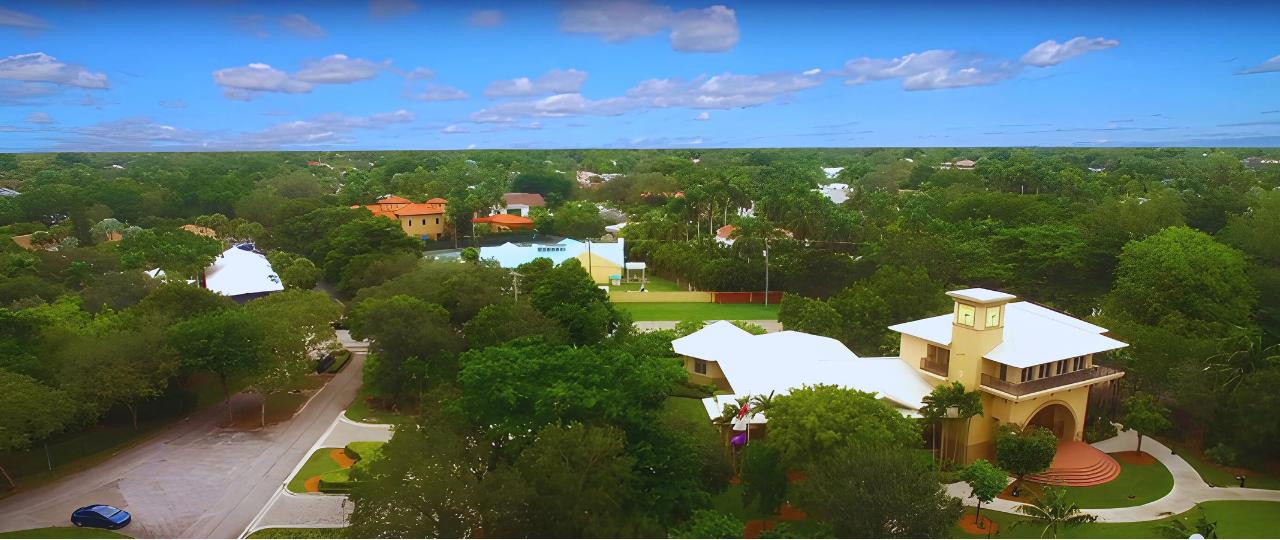
Palmetto Bay, Miami, Florida - EVERYTHING You Want to Know
Jump on this virtual rendezvous across the BEST of Palmetto Bay, where you'll be priv...
.png)
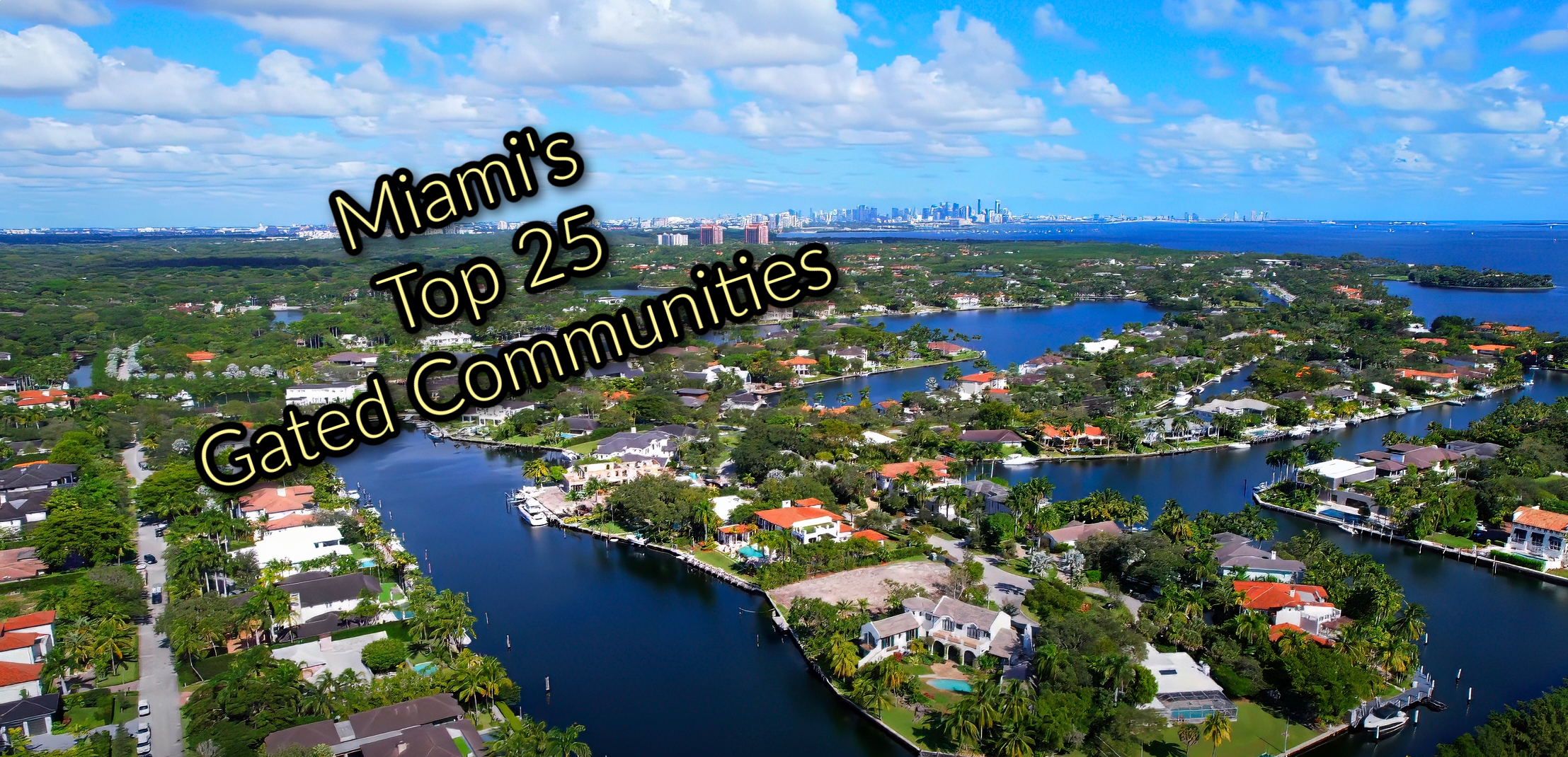
The Ultimate Guide to Miami-Dade's Top 25 Gated Communities for Single-Family Homes
Discover Miami's top gated communities in this essential guide for luxury home buyers...

Miami's BEST Restaurants in EVERY Neighborhood
Check out the absolute BEST restaurants in every neighborhood of Miami, including the best...
Selling Your Home?
Who are we?
We are the ALL IN Miami Group out of Miami.
We are Colombian, Filipino, Cuban, German, Japanese, French, Indian, Syrian, and American.
We are Christian, Hindu, and Jewish.
We are many, but we are one.
We sell luxury homes in Miami, Florida.
Although some of our clients are celebrities, athletes, and people you read about online, we also help young adults find their first place to rent when they are ready to live on their own.
First-time buyers?
All the time!
No matter what your situation or price range is, we feel truly blessed and honored to play such a big part in your life.