



What Nobody Tells You About Living in Naranja

Amit Bhuta
I use non-traditional marketing to inspire the most motivated buyers to pay the max for Miami luxury homes...
I use non-traditional marketing to inspire the most motivated buyers to pay the max for Miami luxury homes...
Naranja is far from a glossy Miami fantasy, and it's exactly how it gets people's attention.
Here, everything is more practical — you have an accessible South Dade location, Homestead convenience, parks nearby, growing transit options, and a life with fewer financial jump scares.
It attracts those who want to stay far away from velvet ropes, rooftop sushi, or a condo lobby that smells richer than their tax return.
And they successfully shield themselves from all that, but not from a few realities waiting just behind the sensible price tag.
Here are five things nobody tells you about living in Naranja.
 (29).png?w=1140)
1) Affordable Is Relative, and the Bills Don't Believe in Vacations
Naranja can look like one of the more reachable doors into Miami-Dade.
That is the part people notice first, especially after browsing listings farther north and wondering if the kitchen sink was priced separately.
Compared with glossier parts of the county, Naranja can seem more practical, more possible, and less interested in charging extra just because a palm tree is visible from the parking lot.
But “more affordable” does not always mean “financially easy.”
The local numbers still have very Miami-Dade manners, which means they smile politely while taking a larger piece of the paycheck.
Census data lists Naranja’s median gross rent at $1,713, median owner-occupied home value at $372,100, and owner-occupied housing rate at only 24.5 percent, so the area is not exactly handing out starter homes with a welcome basket.
That matters because affordability is not just about being cheaper than somewhere else.
It is about what is left after rent, insurance, groceries, gas, childcare, repairs, and the one random expense that always arrives acting shocked to see you.
For the right household, Naranja can still make financial sense.
Just do not confuse “less painful than other parts of Miami-Dade” with “the bills packed a swimsuit and went on vacation.”
 (30).png?w=1140)
2) Near the Highway Doesn't Mean Near Anything Else
Naranja looks convenient because Homestead is nearby, U.S. 1 is part of the conversation, the Turnpike is not some mythical creature, and the broader South Dade corridor gives the area a real connection to the rest of the county.
That sounds comforting until daily life starts asking follow-up questions.
Where do you work?
Where do your kids go to school?
Where is your doctor?
Where is the grocery store you actually like?
Where is the friend who says, “Just come over,” as if Miami-Dade traffic is a small bump in the road (pun intended)?
Naranja teaches people that access and convenience are cousins, not twins.
The South Dade TransitWay and Metro Express improvements are meaningful, with Miami-Dade describing a 20-mile corridor from Dadeland South to SW 344th Street with 14 BRT stations.
It helps people whose routines align with the corridor, but not erase the daily geography of South Dade, where “close” can still involve timing, traffic, transfers, parking, and a gas tank that develops its own emotional needs.
Naranja can connect you to a lot, but not as quickly as the map promised when it was being cute.
 (31).png?w=1140)
3) Under Construction, Literally and Figuratively
Naranja has real redevelopment attention, especially through the Naranja Lakes Community Redevelopment Area, which has been tied to housing, infrastructure, commercial improvement, public safety, small-business support, and long-term neighborhood investment.
That sounds promising because a place with a plan is usually better than one that everyone has agreed to ignore.
But redevelopment is not fairy dust, nor does it land on a corridor on Monday and turn every sidewalk, storefront, streetlight, and vacant lot into a before-and-after photo by Friday.
The Naranja Lakes CRA plan points to issues such as housing affordability pressure, infrastructure deficiencies, underperforming commercial areas, and public realm needs, which is planning language for “there is work to do, and no, one ribbon-cutting will not fix it.”
Living in an area with momentum will signal potential, but you may also live beside the unfinished version of that potential.
Some blocks may show progress.
Some corners may still look like they missed the meeting.
Naranja is growing, but it is growing in real time, which means patience is not a bonus feature.
It is part of the lease, the mortgage, and possibly the guest list.
 (32).png?w=1140)
4) Great Park, But Don't Expect a Postcard Everywhere Else
Naranja has local recreation that deserves credit.
Naranja Park offers amenities such as an aquatic center, a lighted baseball field, basketball courts, a multipurpose field, a playground, parking, and pool access features, so this is not one of those “park nearby” claims where the park is three benches and a tree with commitment issues.
For families, kids, weekend routines, and anyone who needs a place to move around without paying for a boutique fitness class, that is a genuine plus.
The broader South Dade location also puts residents within reach of outdoor and agricultural attractions people associate with the Homestead and Redland side of the county.
But daily life in Naranja is not one long sunny afternoon at the park.
The same area that gives you recreation access can also give you practical corridors, uneven streetscapes, basic errands, and views that are more “running to get paper towels” than “historic postcard from paradise.”
That means buyers and renters should separate the weekend version of Naranja from the Tuesday-at-5:40-p.m. version.
The park is real.
The charm is real.
But so is the ordinary, slightly messy, very human reality around it.
 (33).png?w=1140)
5) An Orange Grove Town Still Finding Its New Name
Naranja’s name gives it a softer image than its history suggests.
It sounds sweet, simple, and sunny, like a place that should come with roadside citrus and no unanswered planning questions.
And yes, Naranja’s name comes from the Spanish word for orange, and the area’s identity has long been tied to South Dade’s agricultural past.
But this is not just an orange-grove footnote on a county map.
Naranja also has a modern history shaped by postwar development, military families connected to nearby Homestead Air Force Base, and the long aftermath of Hurricane Andrew.
FIU’s community profile notes that development expanded in the 1960s and 1970s, then Hurricane Andrew devastated much of the area in 1992, with rebuilding taking longer than in nearby communities.
That kind of history can leave a neighborhood with roots, resilience, and a sense that the next chapter is still being negotiated in public.
Naranja is not neatly packaged in the way some buyers expect when they hear “up-and-coming.”
It is a community with a past, a practical present, and a future that still seems to be asking what name it wants to wear next.
That may be exactly what some people appreciate about it.
It may also be exactly what others are not ready for.
WHO GETS THE MOST OUT OF LIVING IN NARANJA?
People who'd rather save money than impress a dinner guest
Naranja hands you a lower price tag and lets you figure out the rest.
That alone makes it a fit for anyone tired of watching Miami-Dade prices climb like a bad stock chart.
U.S. 1 runs right through, and the South Dade TransitWay actually gives you a bus option instead of just a highway view.
The pace stays low-key, as everything in this community is designed to function.
Money set aside through the CRA has started patching up sidewalks, lighting, and a few storefronts that clearly needed the help.
Naranja Park encourages outdoor time, ballfields, open space, and offers a spot where kids can actually run around without dodging traffic.
The roots go back to orange groves and the old Homestead Air Force Base, so there's real history under the newer construction.
Hurricane Andrew rewrote this area decades ago, and pieces of that rebuild are still visible if you know where to look.
None of this is what you'd consider luxe or sophisticated, but it's honest, and that'll age better than trendy.
Anyone comfortable watching a neighborhood improve slowly, instead of overnight, will actually enjoy the process of this neighborhood.
Naranja isn't hiding what it is, and that kind of directness is why residents love it.
WHO MAY WANT TO KEEP LOOKING?
Those who need a coffee shop within walking distance
Naranja isn't the place for a five-minute stroll to brunch.
Being near a highway sounds convenient until you realize every errand still requires getting in the car.
Vacant storefronts and aging buildings still dot the area, reminding everyone that the upgrade is in progress, not finished.
Redevelopment plans move at government speed, which is a polite way of saying slowly.
Naranja Park is solid, but it's one park, not a whole recreation district, so don't expect a menu of outdoor options.
This isn't Redland with its farm stands, and it isn't Coral Gables with its manicured everything, so comparing it to either sets you up for disappointment.
The area's identity is still catching up to its history, thanks to decades of storms and slow rebuilding that left a story that's still being written.
Even rent in Naranja has climbed faster than paychecks in most cases, so "affordable" doesn't always hold up once the lease is signed.
Buyers expecting a finished product on day one will likely feel like they walked into a renovation mid-project.
Naranja offers potential, and not everyone has patience for potential.
If daily ease matters more than long-term upside, this probably isn't the spot for your next home.
AN HONEST TAKEAWAY
What living in Naranja really comes down to
Naranja runs on function, and that trade-off shapes basically everything about living in this community.
The lower prices are real, but so is the rent burden and wages that haven't quite caught up to housing costs.
Being near major roads and transit sounds like a win, until daily errands remind you that nearby isn't the same as easy.
The redevelopment happening through the CRA is genuine, offering new lighting, better sidewalks, and small wins that stack up over time.
Those wins just haven't added up to a full transformation yet, and pretending otherwise would be a disservice.
Naranja Park gives the area a legitimate outdoor anchor, even if it's the only major one around.
Its orange-grove roots and military history give Naranja a real backstory, even while its present-day identity is still taking shape.
All of this makes Naranja a place meant to be faced with realistic expectations.
The people who do well in this neighborhood are the ones who value function and are willing to wait out the upgrade.
The people who struggle are usually the ones expecting a finished neighborhood instead of one still under construction.
Naranja delivers exactly what it promises, nothing more, nothing less, so take it as it is.
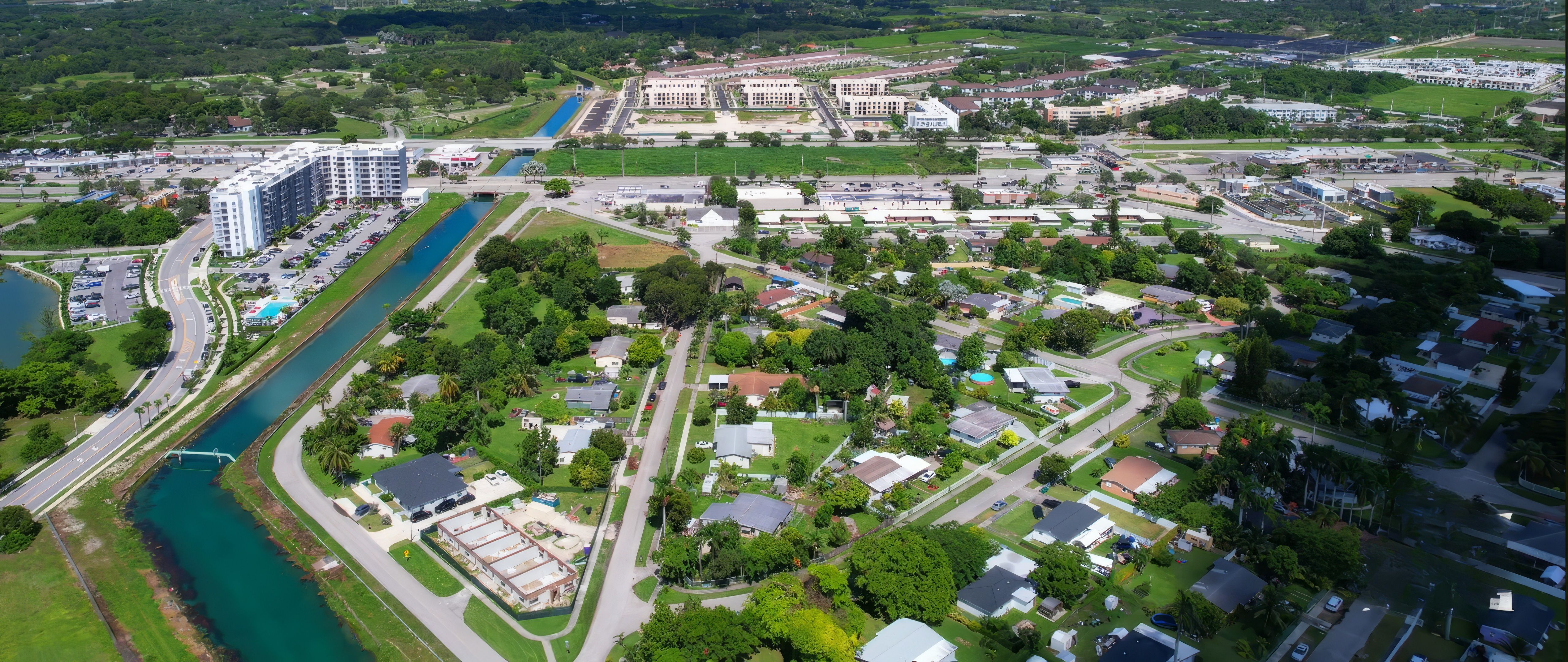
Naranja, Miami, Florida - EVERYTHING You Want to Know
stash the snacks, silence the notifications, and buckle up — we're about to...
.png)
The Ultimate Guide to Miami-Dade's Top 25 Gated Communities for Single-Family Homes
Discover Miami's top gated communities in this essential guide for luxury home buyers...

Miami's BEST Restaurants in EVERY Neighborhood
Check out the absolute BEST restaurants in every neighborhood of Miami, including the best...
Selling Your Home?
Who are we?
We are the ALL IN Miami Group out of Miami.
We are Colombian, Filipino, Cuban, German, Japanese, French, Indian, Syrian, and American.
We are Christian, Hindu, and Jewish.
We are many, but we are one.
We sell luxury homes in Miami, Florida.
Although some of our clients are celebrities, athletes, and people you read about online, we also help young adults find their first place to rent when they are ready to live on their own.
First-time buyers?
All the time!
No matter what your situation or price range is, we feel truly blessed and honored to play such a big part in your life.