



What Nobody Tells You About Living in Midtown

Amit Bhuta
I use non-traditional marketing to inspire the most motivated buyers to pay the max for Miami luxury homes...
I use non-traditional marketing to inspire the most motivated buyers to pay the max for Miami luxury homes...
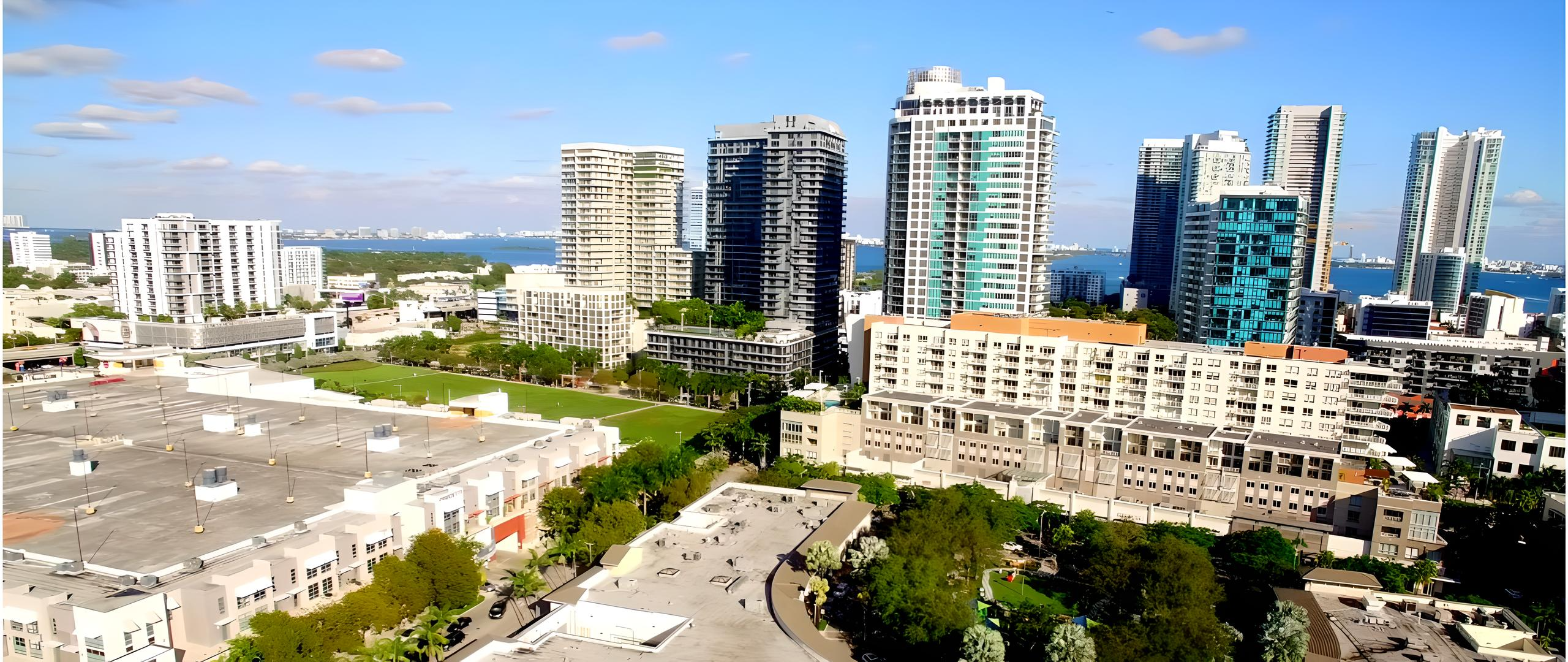
Midtown went from an empty rail yard to one of Miami's most in-demand addresses faster than almost any neighborhood in the city's history.
People love it for the obvious reasons: the sleek modern towers, an actual walkable retail core, and a location that puts Wynwood, the Design District, and Downtown all within easy reach.
You can say Midtown has become the go-to for anyone who wants city energy without living in the chaos of Brickell or South Beach.
The restaurant and nightlife scene has real range too, with low-key wine bars sitting comfortably next to lively rooftop spots.
Indeed, this tiny pocket has pulled off something impressive, building a genuine sense of neighborhood out of what used to be industrial leftovers.
Typically, that kind of fast, well-earned popularity usually means a place is doing almost everything right.
"Almost" being the key word.
Here are six things nobody tells you about living in Midtown.
 (14).png?w=1140)
1) Everything's Close, Except When It's Also Sold Out
Midtown gives you the dangerous illusion that your errands have finally become civilized.
You can grab groceries, pick up something for the apartment, meet someone for lunch, squeeze in a workout, buy a candle you did not need, and still convince yourself that this is efficiency and not retail hypnosis.
Convenience is one of the neighborhood’s strongest selling points.
The Shops at Midtown and the surrounding blocks make daily life easier in a way many Miami neighborhoods pretend they can.
You are not always driving across town for basics, which feels like a breakthrough in a city where “quick errand” often sounds like a dare.
The thing is, everyone else has discovered this convenience.
The same stores, restaurants, gyms, coffee spots, and parking garages that make Midtown useful also draw shoppers, diners, residents, delivery drivers, rideshares, and people who apparently woke up with the same Target list as you.
That means the neighborhood can feel practical and crowded at the same time.
You may be close to everything, but it does not guarantee a quiet aisle, an unoccupied table, an empty parking spot, or the last rotisserie chicken.
Midtown’s charm is not old-world.
It is modern convenience with receipts, garage ramps, and someone blocking the curb with hazard lights.
For people who love access, this is a major perk.
For people who want a neighborhood that feels personal, hidden, and untouched by the weekend errand parade, Midtown may seem a little too commercially fluent.
It is incredibly practical.
It also knows exactly how to sell you three things on the way to the thing you came for.
 (15).png?w=1140)
2) Car-Free Sounds Great Until You Actually Need One
Midtown is one of the unique Miami neighborhoods that can make a person briefly believe they have outgrown car dependency.
You picture yourself walking to coffee, crossing over to dinner, running small errands nearby, and becoming the local legend who says things like “I just walked there” with casual superiority.
And to be fair, Midtown supports that dream more than many parts of Miami.
The layout places shops, restaurants, services, gyms, and residential buildings close enough that some daily routines can be done on foot.
But when “walkable for Miami” gets mistaken for “fully car-free,” you'll find yourself in trouble.
Those are very different contracts, and only one of them comes with fewer parking tickets.
Midtown still has busy intersections, parking garages, traffic, rideshares, delivery trucks, drivers making sudden decisions, and errands that take you beyond the convenient bubble.
You may walk to dinner, but you may still need a car for work, school runs, beach days, airport trips, bigger shopping, family visits, or anything involving furniture, bulk paper towels, or personal dignity in August humidity.
Walking is part of the lifestyle in Midtown, but so is figuring out where the car goes.
This is a neighborhood that can reduce your driving, not erase it from your life like a motivational poster with better zoning.
Midtown lets you enjoy a more urban daily rhythm, but it won't turn Miami into Copenhagen with palm trees and parking validation.
 (16).png?w=1140)
3) Wynwood's Cousin or Edgewater's Roommate? Pick One
Midtown has its own address, but its personality keeps borrowing outfits from nearby neighborhoods.
You are close to Wynwood’s murals, restaurants, nightlife, galleries, and creative buzz.
You are near Edgewater’s condo corridors, water-adjacent lifestyle, and vertical residential energy.
You are also close to the Design District, where a casual stroll can accidentally become an educational seminar on luxury pricing.
Because of that location, people sometimes describe Midtown as if it automatically includes all those identities.
Midtown is not fully Wynwood, even if Wynwood’s energy spills over.
It is not Edgewater, even if many people who want condo convenience compare the two.
It is not the Design District, even if the proximity makes the neighborhood feel more sophisticated by association.
Midtown sits in the middle of all that, which makes it practical, social, and strategically placed.
It also means the neighborhood can feel harder to define than places with a stronger old-Miami identity.
Some people move for restaurant access.
Some move for apartment convenience.
Some move because it gives them a shortcut to several Miami scenes without committing to just one.
That flexibility can make Midtown feel a little like the friend who is invited to different cliques but does not fully belong to any single one.
The neighborhood works best for people who value access over a clear identity.
Midtown may not have one dominant personality, but it has proximity, and in Miami, proximity has its own fan club.
 (17).png?w=1140)
4) Quiet Hours Are More of a Suggestion in Midtown
Midtown's energy is charming until it reverses outside your building at 11:47 p.m.
This is not the neighborhood for people who want deep suburban silence, dramatic birdsong, and the soft emotional support of a cul-de-sac.
Midtown moves.
It has restaurants, apartments, delivery drivers, shoppers, gym crowds, dogs, scooters, sirens, rideshares, garbage trucks, construction crews, and people who believe their car engine deserves a solo.
This activity keeps the streets from feeling empty, gives residents plenty to do nearby, and makes the neighborhood feel more urban than many parts of Miami.
For some people, that rhythm allows them to look outside and see signs of life.
They want the option to walk to dinner, meet friends nearby, and feel connected to the city rather than sealed away from it.
But active neighborhoods do not always lower the volume when you are tired.
Restaurant nights, weekend crowds, delivery activity, and building-to-building noise can all become part of daily life.
Even ordinary sounds seem louder when you live above, beside, or across from the action.
Midtown is social and convenient, but it is not especially shy, so you need to choose your building, floor, exposure, and tolerance level carefully.
A courtyard-facing unit may give you one version of Midtown.
A unit facing a busy street may introduce you to every beep, rev, shout, and delivery confirmation within a four-block radius.
The neighborhood is fun when you want energy.
It is less charming when the energy wants to introduce itself before your alarm does.
 (18).png?w=1140)
5) This Skyline Update is Brought to You by Constant Construction
Midtown often looks like Miami opened a browser tab, forgot to close it, and kept adding projects, and it's no accident.
This neighborhood is still being shaped, edited, polished, revised, fenced off, reopened, and reimagined in real time.
New buildings, refreshed storefronts, improved streetscapes, residential demand, and nearby growth all create the sense that the neighborhood is moving forward.
There is an exciting quality to living somewhere that still has momentum.
It can make the area feel current, valuable, and plugged into Miami’s future.
But it also involves cranes, blocked sidewalks, construction fencing, early noise, detours, dust, closed lanes, changed entrances, and that strange Miami experience of leaving home one day and discovering an entire corner is now plywood.
A neighborhood in transition can be exciting, but it can also be inconvenient.
Restaurants change.
Stores rotate.
Empty parcels become job sites.
Views shift.
Traffic patterns get weird.
A building that seemed isolated when you moved in may suddenly have a new neighbor with twenty-three floors and opinions about sunlight.
This makes Midtown a place where the future is part of the package, and the future will wear a hard hat sometimes.
People who love growth may see that as opportunity.
People who want a settled, quiet, finished neighborhood may find the constant evolution tiring.
Midtown is still loading, and the update does not always ask for permission before installing.
 (19).png?w=1140)
6) Read the HOA Docs Before You Sign Your Signature
Midtown can make condo and apartment life look simple from the outside.
There is the building lobby, the pool deck, the gym, the parking garage, the nearby restaurants, the easy errands, and the comforting idea that someone else is handling the landscaping.
The adult version of this life comes with documents.
Before falling in love with a view, a floor plan, or a lobby that smells like expensive neutrality, buyers need to understand the building they are joining.
HOA fees, reserves, assessments, rental rules, pet policies, parking arrangements, insurance, maintenance history, building management, and renovation limits all matter.
They matter even more in a neighborhood where many people are buying access, convenience, and location rather than land, privacy, or traditional single-family charm.
In Midtown, the value often comes from being close to everything.
But the fine print decides whether the deal still makes sense after the excitement fades and the monthly statements start speaking clearly.
A lower purchase price may not mean much if fees are high.
A great unit may become less flexible if rental restrictions do not match your plans.
A beautiful building may still have upcoming repairs, budget concerns, or assessment conversations that deserve your full attention before you become financially committed.
It is not the fun part of owning a home, but it is the part that protects you.
Midtown can be a smart choice for people who value convenience, energy, and central access.
It just asks buyers to be practical before they become romantic.
The building may have a pool, a gym, and a view, but those documents have the plot twist.
WHO GETS THE MOST OUT OF LIVING IN MIDTOWN?
Those who'd rather walk to dinner than search for parking
Midtown was built for people who treat "car-free" as a genuine lifestyle goal, and not just a nice idea on a real estate flyer.
Groceries, gyms, restaurants, and a full mall sit close enough that entire weeks can pass without anyone touching a steering wheel.
Foot traffic is a complete design, with wide sidewalks and open-air retail built specifically for people moving on two legs.
Construction cranes are basically part of the skyline at this point, and the neighborhood rewards anyone who can shrug that off as background noise rather than an inconvenience.
Midtown also thrives on blurred borders, sitting so close to Wynwood, Edgewater, and the Design District that residents get three neighborhoods' worth of energy without technically leaving home.
Noise and crowd tolerance matter a lot too, since restaurants, bars, and steady pedestrian traffic keep the streets active well past a normal bedtime.
Younger professionals and creatives tend to fit right in, mostly because the neighborhood's whole identity leans toward motion, reinvention, and staying slightly unfinished on purpose.
Condo living dominates the housing stock, so people who don't mind HOA meetings and shared amenities adjust faster than most.
Midtown rewards flexibility over routine, since the neighborhood itself keeps shifting shape every couple of years.
Dog owners get an unexpected win too, with informal green space turned into a de facto park nobody had to lobby for.
The overall vibe favors momentum, walkability, and constant low-level buzz over anything resembling stillness.
For the right mindset, that combination doesn't feel chaotic; it feels like a dream come true.
WHO MAY WANT TO KEEP LOOKING?
Buyers hoping for quiet nights and a predictable skyline
Midtown will frustrate anyone expecting quiet as a baseline rather than an occasional bonus.
Restaurant traffic, foot traffic, and general urban buzz don't really clock out, even on weeknights that should theoretically be calm.
The car-free pitch sounds great until specific errands demand a car anyway, and parking then becomes its own small negotiation.
People who want one clear, consistent neighborhood identity will get tripped up by how tangled Midtown's borders are with Wynwood, Edgewater, and the Design District.
Someone chasing a finished, settled skyline should brace for disappointment too, since new construction and shifting storefronts are basically permanent fixtures in Midtown.
Condo fees and building rules add real financial texture that can catch buyers off guard if they only looked at square footage and skipped the fine print.
Anyone allergic to shared walls, shared amenities, or HOA logistics will feel that friction quickly in a neighborhood this condo-heavy.
The pace itself filters people out too, since constant motion and reinvention can wear anyone thin, especially when they're craving stability.
Older, established charm is not really on the menu, given that most of Midtown was built over the last two decades.
People wanting a slower, more residential feel will likely find the energy exhausting rather than exciting after a while.
Midtown asks for comfort with change, noise, and ongoing construction as standard operating conditions.
If predictability and quiet matter more than convenience and buzz, this probably isn't the neighborhood built for that.
AN HONEST TAKEAWAY
What living in Midtown really comes down to
Midtown promises convenience, walkability, and a compact, easy-access lifestyle that few other Miami neighborhoods can match.
That said, proximity to everything also means proximity to everyone, and the noise and crowd energy come standard, not as an occasional surprise.
The neighborhood's identity stays a little slippery too, blending into Wynwood, Edgewater, and the Design District so often that "where exactly is Midtown" becomes a fair question, not a joke.
Movement without a car works most days, until a specific errand or event reminds everyone that Miami was never really built to skip driving entirely.
Development never really stops either, and that constant construction cuts both ways — exciting for some and exhausting for others.
Financially, the fine print matters just as much as the location, since condo fees, assessments, and building rules shape ownership as much as the skyline view does.
None of this makes Midtown a bad choice; it simply means the neighborhood asks for a specific kind of person, one who prefers motion over stillness and convenience over quiet.
You'll have walkability in exchange for buzz, modern design in exchange for ongoing change, easy access in exchange for financial fine print.
Midtown isn't secretly flawed, but expect it to be upfront about what it demands.
Understanding that trade will help you thrive in this pocket.
Remember, living in Midtown is choosing constant motion on purpose and being glad you did.
%20(31)-fotor-20240530123157.png)
Midtown, Miami, Florida - EVERYTHING You Want to Know
Embark on this virtual journey through all the irresistible corners of Midtown! By the end...
.png)
The Ultimate Guide to Miami-Dade's Top 25 Gated Communities for Single-Family Homes
Discover Miami's top gated communities in this essential guide for luxury home buyers...


Miami's BEST Restaurants in EVERY Neighborhood
Check out the absolute BEST restaurants in every neighborhood of Miami, including the best...
Selling Your Home?
Who are we?
We are the ALL IN Miami Group out of Miami.
We are Colombian, Filipino, Cuban, German, Japanese, French, Indian, Syrian, and American.
We are Christian, Hindu, and Jewish.
We are many, but we are one.
We sell luxury homes in Miami, Florida.
Although some of our clients are celebrities, athletes, and people you read about online, we also help young adults find their first place to rent when they are ready to live on their own.
First-time buyers?
All the time!
No matter what your situation or price range is, we feel truly blessed and honored to play such a big part in your life.