



Overtown, Miami — A Cheat Sheet for Buyers, Visitors, & the Curious

Amit Bhuta
I use non-traditional marketing to inspire the most motivated buyers to pay the max for Miami luxury homes...
I use non-traditional marketing to inspire the most motivated buyers to pay the max for Miami luxury homes...
Before highways, large-scale redevelopment plans, and a skyline that expanded west, Overtown was already the cultural and economic heart of Black Miami.
Today, that same neighborhood sits in the shadow of Downtown’s growth, carrying the weight of its past and the pressure of what comes next.
Why does Overtown continue to draw attention despite its complex reputation?
Is it a smart place to buy, rent, or invest in Miami right now?
What do home prices, rental costs, housing options, and neighborhood conditions actually look like on the ground?
This guide provides information on Overtown’s real estate, housing market, and neighborhood evolution, including its safety, redevelopment trends, and what buyers and residents should realistically expect.
Here's what you need to know about living in, visiting, and understanding Overtown.
-topaz-upscale-2.1x.jpeg?w=1140)
LIVING IN OVERTOWN
What is Overtown known for in Miami today?
Overtown is known for being one of Miami’s most historically significant Black neighborhoods and one of its most closely watched redevelopment areas.
It was once the center of Black cultural and business life in segregated Miami, with the Lyric Theater and the old “Little Broadway” corridor anchoring a nationally recognized entertainment district.
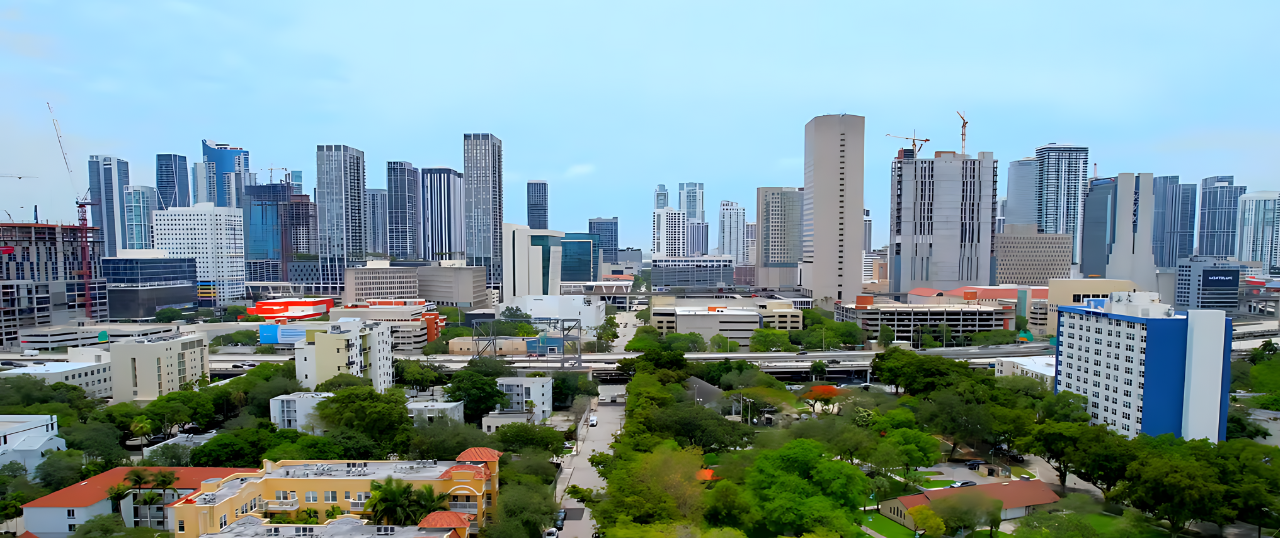
Today, Overtown is known both for its cultural legacy and for the intense redevelopment pressure created by Downtown Miami, Miami Worldcenter, and Brickell.
Where exactly is Overtown located relative to Downtown and Brickell?
Overtown sits immediately northwest of Downtown Miami and just north of Brickell, which is one of the main reasons demand and investor interest have intensified.
It is close to Government Center, MiamiCentral, Miami Worldcenter, and the urban core more broadly, placing residents near major employment, transit, and entertainment nodes.
That location gives Overtown a much more central position than many other neighborhoods with comparable affordability history.
Is Overtown a good place to live in Miami right now?
Overtown can be a strong fit for people who want central access, urban convenience, and a neighborhood with major redevelopment momentum.
However, it is not a simple plug-and-play choice.
Living in Overtown makes the most sense for people who value proximity to Downtown, transit access, and future upside more than polished neighborhood uniformity.
It is less suitable for buyers or renters expecting a fully stabilized, low-friction environment, as Overtown is still a neighborhood in transition rather than a finished product.
Is Overtown safe to live in, and how does safety vary by block?
Safety in Overtown needs to be evaluated on a block-by-block basis rather than a single neighborhood-wide label.
Areas closer to newer developments, major streets, or active mixed-use corridors may feel more monitored and better maintained, while other sections still reflect disinvestment, vacant lots, or older public housing conditions.
Anyone considering Overtown as a place to live should assess the specific building, surrounding properties, lighting, foot traffic, and proximity to key corridors rather than relying solely on past reputation or current marketing narratives.
What types of properties are available in Overtown?
Overtown has a much wider property mix than many people assume.
The neighborhood includes older single-family homes, duplexes, small multifamily buildings, subsidized and public housing, affordable rental communities, market-rate apartments, and a growing number of condo and mixed-use developments near the Downtown edge.
That mix is part of what makes Overtown complicated to evaluate, because the housing stock ranges from long-standing low-income and public housing sites such as Culmer Gardens and Culmer Place to new urban residential projects tied to nearby redevelopment.
How much do homes and condos cost in Overtown?
Current market data places Overtown’s median listing price at approximately $480,500, while the broader for-sale inventory ranges from lower-priced older units to significantly more expensive newer condo developments closer to Downtown.
The median price per square foot is approximately $392, reflecting that Overtown is no longer priced as a deeply overlooked neighborhood, even though its housing stock remains highly varied.
In practical terms, smaller or dated condos may still fall in the low-to-mid $200,000s or $300,000s, while newer units and stronger locations—particularly near Miami Worldcenter—can exceed those ranges by a wide margin.
How much does it cost to rent in Overtown?
Rental pricing in Overtown is highly segmented, making broad neighborhood averages potentially misleading.
The current data shows a median apartment rent of about $2,779 across Overtown, while Northeast Overtown averages closer to $1,625 and Southeast Overtown ranges from $2,842 to $2,852, highlighting how sharply prices vary by location and building type.
For renters, this means Overtown includes both legacy affordability pockets and newer urban housing priced much closer to Downtown-adjacent expectations than many would assume.
Is there strong rental demand in Overtown?
Rental demand in Overtown is supported by its central location, access to transit, and lower entry prices than in Downtown and Brickell.
The neighborhood attracts renters seeking proximity to jobs and urban amenities without premium core pricing, including service workers, young professionals, and transit-dependent residents.
Demand can vary depending on building quality, management, and exact location, but overall, the area maintains a consistent renter base due to its accessibility.
Why are prices in Overtown increasing?
Prices are rising because Overtown is next to some of the most aggressively redeveloping areas in Miami, including Downtown, Miami Worldcenter, and the transportation hub around MiamiCentral.
Its location, transit access, and redevelopment pipeline make it attractive to both developers and buyers who believe they are entering before full stabilization.
At the same time, long-term disinvestment created a low baseline, so even moderate growth now feels dramatic when compared with Overtown’s past valuation levels.
What job centers are accessible from Overtown?
Overtown provides direct access to major employment hubs, including Downtown Miami, Brickell’s financial district, MiamiCentral, and nearby government and healthcare institutions.
It is also within reach of logistics, service, hospitality, and construction-related jobs in the broader urban core and surrounding districts.
This proximity to multiple employment centers is one of the area's key drivers behind both rental demand and long-term investment interest.
Is Overtown considered a gentrifying neighborhood?
Yes, Overtown is widely understood as a gentrifying neighborhood, and that is one of the most important lenses through which to understand it.
Redevelopment pressure comes from new housing, transit-oriented investment, major public funding, and spillover from adjacent districts.
Meanwhile, long-term residents and preservation advocates continue to raise concerns about displacement and cultural erasure.
That tension between reinvestment and displacement is not a side issue in Overtown; it is one of Overtown's defining realities today.
Are there new developments or luxury buildings in Overtown?
Yes, particularly along the edges where Overtown connects to the Downtown core and major redevelopment zones.
In addition to affordable and public housing redevelopment—such as Choice Neighborhoods initiatives and the Quadplex homeownership project—there are also newer market-rate and mixed-use residential developments, including HUB Miami Residences, which offers studio to two-bedroom units ranging from approximately 394 to 1,046 square feet.
This combination means Overtown now includes both affordability-focused housing initiatives and investor-oriented urban product, contributing to a noticeably mixed economic landscape.
What is the lifestyle like living in Overtown?
Living in Overtown is much more urban and location-driven than in most suburban Miami neighborhoods.
Residents are close to Downtown jobs, transit, event venues, civic institutions, and new development corridors, while also living in a neighborhood that still carries visible signs of uneven reinvestment.
The day-to-day experience is best described as central, practical, and fast-moving, with much more emphasis on access and mobility than on quiet residential sameness.
Is Overtown walkable or transit-friendly?
Overtown is one of the more transit-friendly neighborhoods outside the densest parts of Downtown and Brickell.
It is served by the Historic Overtown/Lyric Theatre Metrorail station, the Culmer station area, nearby Government Center access, and the broader Metromover system that links the urban core through multiple loops and numerous stations.
For residents seeking to reduce dependence on a car, transit access is a real advantage, even though walkability varies on the block, destination, and comfort with a highly urban environment.
How long does it take to commute from Overtown to key areas?
Overtown’s central location allows relatively short commutes to Downtown Miami, Brickell, and MiamiCentral, often within 5 to 15 minutes, depending on traffic and starting point.
Travel times increase when heading to areas such as Miami Beach, Coral Gables, or Kendall, where commutes can range from about 20 to 45 minutes or more during peak hours.
Because of direct access to I-95 and State Road 836, commute times are highly dependent on traffic patterns, route selection, and time of day.
What schools serve Overtown?
Schools in Overtown include Frederick Douglass Elementary School and Booker T. Washington Senior High School, both of which are historically important institutions in the area.
Booker T. Washington Senior High is located at 1200 NW 6th Avenue in Overtown, known as one of Miami-Dade’s oldest public schools serving Black students.
As with any urban neighborhood, actual school assignment can vary by address, and families should verify attendance boundaries directly rather than relying on the neighborhood name alone.
For more information on the public and private schools in the area, visit Best Schools in Overtown.
What kind of residents live in Overtown?
Overtown has a diverse resident base that includes long-term Black residents, renters, lower-income households, individuals in subsidized or public housing, and a growing number of newer renters and buyers drawn by its central location.
Census-based estimates place the population at 10,000 residents, with several thousand households and an average household size of roughly two people, reflecting a dense, urban living pattern rather than a traditional family-oriented suburb.
This mix contributes to a socially and economically layered environment, where long-established community roots coexist with increasing market pressure and new development activity.
Is Overtown better for renters or buyers?
At this stage, Overtown is generally easier to approach as a rental market than as a traditional owner-occupant market.
The neighborhood has a large rental footprint, a significant presence of affordable and public housing, and a wide range of apartment inventory.
By contrast, buying often requires more careful judgment around redevelopment potential, resale timing, and block-level conditions.
This does not mean buyers should avoid Overtown, but it does mean renters typically face a lower-friction entry point into the neighborhood.
Are there HOA buildings in Overtown, or is it mostly rentals?
Overtown includes both, but the neighborhood is still heavily rental-oriented overall.
Older multifamily properties, public and affordable housing, and apartment-heavy product remain a major part of the local landscape, while condo and HOA-style buildings are more concentrated near the edges, touching Downtown and newer development corridors.
For buyers, that means building rules, fees, and rental flexibility can vary dramatically depending on whether the property is in a newer condo environment or part of the older neighborhood fabric.
Is parking easy in Overtown?
Parking availability in Overtown varies significantly depending on property type and location.
Newer condo and mixed-use developments typically provide structured or assigned parking, while older properties and interior streets often rely on street parking with more limited availability.
For buyers and renters, confirming parking arrangements is important, especially in areas closer to Downtown where demand is higher and supply is more constrained.
What are property taxes like in Overtown?
Property taxes in Overtown vary by property and are not determined at the neighborhood level.
Costs can rise after a purchase or reassessment, especially in areas where values have increased.
Buyers should review each property’s tax history carefully, since older homes and newer developments often have very different tax levels.
What should buyers expect for insurance costs in Overtown?
Insurance costs depend heavily on the type of property you are buying.
Newer condos and recently built mixed-use projects may offer a more predictable insurance profile than older single-family homes or small multifamily properties, where roof age, electrical systems, flood designation, and overall building condition can raise costs.
In Overtown, buyers should treat insurance as part of the total urban-ownership equation, not as an afterthought, especially when comparing older neighborhood housing with newer edge-of-Downtown inventory.
Insurance costs can be significantly higher for older structures without updated roofs, electrical systems, or adequate flood mitigation features.
Are short-term rentals allowed in Overtown?
Short-term rentals in the City of Miami are regulated through zoning and permitted use, rather than allowed uniformly across neighborhoods.
City guidelines state that short-term rental or lodging use requires the appropriate zoning designation and approvals, and that single-family homes and duplexes within T3 and T4-R transect zones are generally not eligible under current regulations.
As a result, Overtown is not a simple “yes or no” short-term rental market, since eligibility depends on property type, zoning classification, and whether the building is legally permitted for lodging use.
What are the best areas or pockets within Overtown to live in?
The most attractive areas are those with better access to transit, newer or well-maintained buildings, and proximity to Downtown.
This includes locations near the Lyric Theatre station, redevelopment corridors toward MiamiCentral and Miami Worldcenter, and buildings with professional management.
Interior areas may offer lower price points and potential upside in some cases, but they require a more careful evaluation of surrounding properties, maintenance levels, and overall street conditions.
Is Overtown in a flood zone, and do buyers need to check flood insurance?
Yes, buyers should check the flood designation property by property.
Although Overtown is not a waterfront lifestyle neighborhood, Miami’s flood risk is highly parcel-specific, and lender or insurer requirements can vary by site.
This is especially important in a neighborhood where buyers may be comparing older structures, public-housing redevelopments, and new urban projects with very different building profiles.
-topaz-upscale-2.1x.jpeg?w=1140)
VISITING OVERTOWN
What does Overtown feel like when you visit?
Overtown feels like a neighborhood where Miami’s past and future are colliding in plain view.
A visitor will notice historic Black cultural landmarks, public housing and affordable housing sites, transit infrastructure, vacant or underused parcels, and new urban development all within a relatively compact area.
It does not function as a polished tourist district, but it remains one of the most historically significant and centrally located neighborhoods in Miami.
Is Overtown worth visiting in Miami?
Yes, if the goal is to understand Miami beyond beaches, nightlife, and the most branded neighborhoods.
Overtown is worth visiting for its Black history, cultural institutions, and its role in the story of segregation, displacement, and redevelopment in Miami.
It is not a casual leisure neighborhood like Wynwood or Coconut Grove, but it is still worth visiting for those interested in history, culture, and how cities change.
What are the main things to do in Overtown?
The strongest reasons to spend time in Overtown are cultural and historical rather than purely recreational.
The Lyric Theater and Black Archives complex remains a major anchor, and the neighborhood’s evolving cultural district, historic streets, and proximity to Downtown-adjacent venues make it a place to explore with context rather than just a checklist.
For many visitors, Overtown is best as a "culture & history" stop that connects easily to Downtown attractions.
For a typical day in Overtown, check out Top 5 Things to Do in Overtown.
What historic landmarks are in Overtown?
The Black Archives Historic Lyric Theater Cultural Arts Complex is the best-known landmark in Overtown and one of the most important Black cultural sites in Miami.
The Lyric Theater was built in 1913, became the center of Overtown’s old “Little Broadway,” and remains a symbol of the neighborhood’s cultural importance and long struggle for preservation.
Historic Overtown’s significance is tied not only to one building, but to the broader legacy of a once-thriving Black business and entertainment district that was later disrupted by highway construction and urban renewal.
What is Overtown’s cultural significance in Miami?
Overtown is one of the most important historically Black neighborhoods in South Florida.
It served as a center of Black business, entertainment, and civic life during segregation, becoming known as “Little Broadway” and part of Miami’s “Harlem of the South” legacy because major Black performers and leaders passed through or performed there.
Its cultural significance today is inseparable from both its achievements and the damage done by disinvestment, expressway construction, and urban renewal policies.
How close is Overtown to Downtown Miami and Brickell?
Overtown is extremely close to both.
Parts of the neighborhood are effectively adjacent to Downtown, and transit or short-drive access to Brickell is one of Overtown’s strongest practical advantages.
That closeness is one reason the neighborhood now attracts renters, buyers, and developers who might have ignored it in earlier decades.
Is Overtown walkable for visitors?
Overtown can be walkable in short segments, especially around the Lyric Theatre area, transit stations, and the edges connecting to Downtown infrastructure.
But walkability here is not the same as in a polished pedestrian district, because comfort depends on the exact route, time of day, and how familiar the visitor is with a rapidly changing urban environment.
Visitors who want an easier experience usually benefit from anchoring their route at a transit stop, a landmark, or a specific destination rather than wandering the neighborhood without a plan.
Are there restaurants, nightlife, or entertainment options in Overtown?
Overtown’s identity is more historical and cultural than nightlife-driven, but it does connect to entertainment through the Lyric Theater, nearby Downtown venues, and the broader urban core surrounding it.
That means visitors can combine a stop in Overtown with access to Downtown Miami, Miami Worldcenter, and other nearby districts rather than expecting Overtown itself to function like a nightlife destination.
Its strongest entertainment value comes from culture, performance, heritage, and adjacency rather than from a dense concentration of bars or destination restaurants within the neighborhood itself.
Top 5 Places to Eat in Overtown highlights some of the best restaurants in the area.
-topaz-upscale-2.1x.jpeg?w=1140)
UNDERSTANDING OVERTOWN
Why does Overtown have the reputation it has?
Overtown’s reputation stems from a mix of historic importance, visible poverty, redevelopment pressure, and decades of outsider narratives about decline.
People often talk about Overtown through the lens of crime or disinvestment, but the framing is incomplete unless it also includes the role of segregation, highway construction, forced displacement, and uneven reinvestment.
In other words, Overtown’s reputation is not just about present-day conditions; it is also about what happened to the neighborhood and who benefited from those changes.
What happened to Overtown historically?
Historically, Overtown was one of the most vibrant Black neighborhoods in Miami and a major cultural and commercial center during segregation.
But beginning in the mid-20th century, highway construction, urban renewal, and public policy decisions went through the neighborhood, displacing large numbers of residents and businesses.
That history is essential to understanding why Overtown carries both extraordinary cultural significance and deep redevelopment scars today.
How did highways impact Overtown’s development?
Highways had a devastating effect on Overtown.
City and planning materials directly note that the construction of I-95 through Overtown further suppressed revitalization, while historical accounts describe demolition, eminent domain, and major neighborhood disruption tied to highway and urban-renewal projects.
That physical severing of the community is one of the central reasons Overtown developed so differently from nearby neighborhoods despite its prime location.
Is Overtown improving or being redeveloped?
Yes, Overtown is being redeveloped, but the better question is for whom and at what speed.
Public and private investment is clearly flowing into the area through affordable-housing initiatives, Choice Neighborhoods funding, CRA-backed projects, transit-oriented momentum, and market-rate residential development near the Downtown edge.
At the same time, redevelopment is uneven, and the neighborhood still reflects tension between revitalization, affordability, and displacement risk.
Who is investing in Overtown right now?
Investment in Overtown comes from multiple directions rather than one single player.
Public-sector and quasi-public investment is coming through the Southeast Overtown/Park West CRA and federal housing programs, while private developers are also pursuing new residential and mixed-use products around the neighborhood’s edges and nearby Downtown-adjacent zones.
That mix of public affordable-housing funding and private urban development is one reason Overtown feels like a neighborhood under active transformation rather than passive market drift.
How does Overtown compare to Wynwood, Allapattah, or Downtown?
Overtown is more historically grounded than Wynwood, less focused on industrial-art redevelopment than Allapattah, and less polished and more affordable than Downtown.
It has a deeper cultural legacy than Wynwood and a more visible history of displacement.
Compared to Downtown, it offers lower prices and redevelopment potential, but also more uneven conditions and ongoing affordability challenges.
What are the biggest risks of buying in Overtown?
The biggest risks include overpaying for a projected “future value” that has not yet materialized, underestimating block-to-block variation, and misjudging how much of the neighborhood is truly stabilized today.
Buyers may also face issues such as weak building economics, problematic HOA structures, incorrect assumptions about short-term rental eligibility, or buying older properties without fully understanding the condition, insurance requirements, or flood exposure.
In Overtown, the right purchase can be strategically sound, but confusing proximity to growth with guaranteed performance can lead to costly mistakes.
What are the biggest opportunities in Overtown?
The biggest opportunity is location.
Overtown sits next to Downtown, Brickell access routes, major transit infrastructure, and one of Miami’s strongest redevelopment corridors, which means it offers urban-central positioning that many other neighborhoods cannot match at similar historical entry points.
For the right buyer, that creates potential in long-term appreciation, rental demand, and culturally meaningful reinvestment, especially if the property is chosen carefully and the purchase thesis is realistic.
Is Overtown a good long-term investment?
Overtown can be a strong long-term investment, but it is not straightforward.
Its appeal is driven by its central location, access to infrastructure and transit, ongoing redevelopment activity, and the fact that the neighborhood is still being repriced as Miami’s urban core expands around it.
The long-term case is not that Overtown will mirror Brickell or Wynwood, but that its location and continued reinvestment can support gradual value growth, even as affordability and preservation remain key local concerns.
What is the future outlook for Overtown?
Overtown’s future is closely tied to continued redevelopment from Downtown, public housing transformation initiatives, and infrastructure investment.
The neighborhood is expected to see ongoing change, but not uniform transformation, meaning some areas will stabilize faster than others.
Long-term outcomes will depend on how redevelopment balances affordability, preservation, and private investment, making Overtown a location where growth is likely but uneven.
Who should consider buying in Overtown?
Buyers who should consider Overtown are those who understand urban transition and are comfortable evaluating a neighborhood in motion rather than in finished form.
That includes some long-term investors, buyers priced out of more expensive urban-core districts, and people who value transit access and central location enough to accept variability.
It can also make sense for buyers who care about supporting reinvestment in a historically important neighborhood, provided they go in with realistic expectations and strong due diligence.
Who should avoid Overtown?
Buyers seeking predictability, consistent neighborhood conditions, and a low-analysis purchase may find Overtown unsuitable.
It is also not an ideal fit for those who are uncomfortable with visible transition, varied housing conditions, or the social and political complexities tied to redevelopment in historically Black urban neighborhoods.
Overtown requires context, patience, and careful evaluation, making it a poor match for buyers who want a straightforward, low-friction purchase.
-topaz-upscale-2.1x.jpeg?w=1140)
%20(40).png)
Overtown, Miami, Florida - EVERYTHING You Want to Know
Jump at this rare chance to solve the charming puzzle that is Historic Overtown. By, the e...
.png)
The Ultimate Guide to Miami-Dade's Top 25 Gated Communities for Single-Family Homes
Discover Miami's top gated communities in this essential guide for luxury home buyers...


Miami's BEST Restaurants in EVERY Neighborhood
Check out the absolute BEST restaurants in every neighborhood of Miami, including the best...
Selling Your Home?
Who are we?
We are the ALL IN Miami Group out of Miami.
We are Colombian, Filipino, Cuban, German, Japanese, French, Indian, Syrian, and American.
We are Christian, Hindu, and Jewish.
We are many, but we are one.
We sell luxury homes in Miami, Florida.
Although some of our clients are celebrities, athletes, and people you read about online, we also help young adults find their first place to rent when they are ready to live on their own.
First-time buyers?
All the time!
No matter what your situation or price range is, we feel truly blessed and honored to play such a big part in your life.