



Little River, Miami — A Cheat Sheet for Buyers, Visitors, & the Curious

Amit Bhuta
I use non-traditional marketing to inspire the most motivated buyers to pay the max for Miami luxury homes...
I use non-traditional marketing to inspire the most motivated buyers to pay the max for Miami luxury homes...
Little River is no longer just a pass-through area north of the Design District and Little Haiti.
It has transformed into something more, and this guide will help you understand Little River, piece by piece.
With warehouses turned into restaurants, creative studios mixed among old industrial blocks, and one of Miami’s oldest waterways running along its edge, Little River, Miami, sits north of Wynwood, the Design District, and Little Haiti, and south of El Portal and Miami Shores.
In recent years, it has become one of the most talked-about neighborhoods for buyers, renters, restaurant-goers, and those who are watching where Miami’s next wave of growth is heading.
In fact, Little River’s patchwork of residential, commercial, and industrial streets has become a hub for local businesses and destination dining.
Intrigued? This guide will provide even more reasons to appreciate Little River by answering questions about housing, lifestyle, history, redevelopment, and the factors that define the neighborhood today.
Here's what you need to know about living in, visiting, and understanding Little River.
-topaz-upscale-2.1x.jpeg?w=1140)
LIVING IN LITTLE RIVER
Where is Little River located in Miami?
Little River is in the north-central part of Greater Miami.
It is commonly described as north of Wynwood, the Miami Design District, and Little Haiti, and south of El Portal and Miami Shores.
The neighborhood takes its name from the Little River, which runs along its northern edge and helps define the area geographically.
In practical terms, Little River sits close to several high-recognition areas without being identical to any of them.
That is part of its appeal.
It feels more tucked-in and more industrial-residential than the Design District, but it is still close enough to Downtown Miami, Biscayne Boulevard, and I-95 to stay highly connected.
Is Little River part of the City of Miami?
Partly, yes, but this answer needs nuance.
The historic Little River neighborhood is associated with Miami and was incorporated into the growing City of Miami in 1925.
However, the broader Little River focus area today spans multiple jurisdictions, including the City of Miami, El Portal, and unincorporated Miami-Dade.
That means municipal governance can vary by specific address.
Some properties and projects fall under the City of Miami, while others follow county rules or adjacent municipal boundaries.
Anyone buying property, reviewing zoning, or checking development approvals in Little River should confirm the exact jurisdiction and not assume the entire district operates under a particular city government.
What is Little River known for?
Little River is known for being one of Miami’s oldest neighborhoods and for its current mix of industrial character, creative reuse, and destination food and drink.
The neighborhood now includes notable restaurants, cafés, bars, and design-oriented businesses, which is a big reason it has become one of the city’s most-watched emerging districts.
It is also known for its historic and civic landmarks.
The Cathedral of St. Mary traces its roots to the Little River Mission Club in 1929, and the Little River itself remains one of the original rivers flowing into Biscayne Bay in Miami-Dade County.
Those details matter because Little River’s identity is not just trendy and recent.
It also has real historic depth.
What is the population of Little River?
Little River itself is a relatively small historic neighborhood, although the broader Little River district is within census tracts with roughly 15,000 to 20,000 residents, depending on how the boundaries are defined.
The surrounding area reflects Miami’s broader diversity, with residents from Caribbean, Latin American, and U.S. backgrounds living alongside newer creative and professional arrivals drawn by the neighborhood’s redevelopment.
Is Little River a good place to live?
Little River can be a strong fit for residents who want a more urban, evolving, non-master-planned neighborhood with central access and a growing amenity base.
It appeals to people who like being near Miami’s core but do not want a high-rise-heavy environment like Downtown or Brickell.
The trade-off is that Little River is still uneven block to block.
Some streets feel residential and established, while others remain industrial, transitional, or clearly in redevelopment mode.
That makes it a neighborhood where the exact location matters more than the name alone.
Is Little River safe?
Little River should be evaluated through its micro-location rather than a single label.
The neighborhood includes residential pockets, commercial corridors, and industrial stretches, so activity levels and street feel can change quickly from one block to the next.
For buyers and renters, the smart approach is to visit at different times of day, check the exact surrounding uses, and pay attention to lighting, traffic, and the condition of nearby properties.
In neighborhoods like Little River, the specific block often tells you more than the ZIP code.
What types of homes are available in Little River?
Little River has a mixed housing stock.
Buyers and renters can find older single-family homes, duplexes, triplexes, modest multifamily buildings, condos, and scattered newer residential projects.
In some parts of the district, industrial and commercial parcels are also near housing, which adds to the neighborhood’s transitional character.
This variety is one reason the neighborhood attracts diverse types of buyers.
Some people are looking for older homes with character, while others focus on redevelopment potential, rental demand, or proximity to the new restaurant and creative-business cluster.
How much do homes cost in Little River?
Home prices in Little River vary widely depending on property type, lot size, building condition, and redevelopment potential.
Recent market data shows that Little River's median listing price is roughly $640,000 to $650,000, though actual sale prices can vary by property and block.
Smaller condos and older units may be in the high $300,000s to low $400,000s, while many single-family homes typically list between about $450,000 and $700,000.
Renovated houses, larger lots, or properties with redevelopment potential can exceed $750,000, especially in areas with stronger investment and new construction activity.
Is Little River affordable for first-time buyers?
Little River is not the bargain neighborhood it once might have been perceived to be.
It can still be below some of Miami’s core luxury districts, although current listing levels mean many first-time buyers will still find it challenging, especially if they want move-in-ready single-family housing.
In practice, first-time buyers usually have the best shot when they focus on smaller units, older properties that need work, or areas that are slightly less polished than the neighborhood’s hottest commercial pockets.
The location is attractive, but affordability is tighter than the neighborhood’s industrial past might suggest.
Is Little River a good real estate investment?
Little River has become one of Miami’s more-watched investment stories because it combines location, neighborhood branding, and redevelopment activity.
It sits near the Design District, Little Haiti, and major north-south corridors, and it has developed enough restaurant and lifestyle momentum to attract wider attention from investors and developers.
That said, it is not a simple plug-and-play investment district.
Returns depend on the exact parcel, zoning, building condition, tenant strategy, and the property's proximity to the parts of Little River that have already developed stronger destination appeal.
Are there apartments or condos in Little River?
Yes. Little River includes apartments, older multifamily buildings, and some condo-style units, though it still reads more low-rise and mixed-use than tower-heavy.
For renters, asking prices vary widely depending on size and condition.
Smaller units can appear in the mid-$1,000 range, while renovated apartments and larger units may reach $3,000 or more.
Are there good schools near Little River?
Families in and around Little River are served by Miami-Dade County Public Schools.
Nearby public school options associated with the area include Phyllis R. Miller Elementary School, Morningside K-8 Academy, and Miami Edison Senior High School.
Depending on the exact address and grade level, families may also consider magnet programs, charter options, and private schools in surrounding neighborhoods.
You may also visit Best Schools in Little River for more information.
Are there parks or outdoor spaces in Little River?
Yes. Little River offers several smaller outdoor spaces and waterfront areas connected to the Little River itself.
Little River Mini Park is along the water and provides a small green space with views of the river and the surrounding neighborhood.
Nearby parks also offer additional recreation options for residents.
For parks that allow dogs, check out Dog-Friendly Parks Near Little River.
Is Little River walkable or transit-friendly?
Little River is walkable in pockets, particularly around the restaurant and business clusters that have developed in recent years.
Some areas allow residents to walk between cafés, restaurants, and local businesses.
However, the broader district still functions largely as a car-oriented neighborhood.
Public transit connections are available through Miami-Dade Transit bus routes, but many households rely on cars for commuting and errands.
What is the commute like from Little River?
Little River’s location places it within convenient commuting distance of several major employment districts in Miami.
Downtown Miami is roughly 6 miles south, Midtown Miami and the Design District are about 2 to 3 miles away, and the Biscayne Boulevard commercial corridor sits about 1 to 2 miles east, depending on the exact starting point in the neighborhood.
These distances typically translate to 10 to 20 minutes by car to Midtown or the Design District and about 15 to 25 minutes to Downtown Miami under normal traffic conditions.
Rush-hour congestion along major routes such as NE 2nd Avenue, Biscayne Boulevard, I-95, and NW 7th Avenue can extend commute times, particularly during weekday morning and evening peak periods.
How close is Little River to Downtown Miami and the airport?
Little River sits several miles north of Downtown Miami.
Many trips to Downtown or Midtown can take around 10 to 20 minutes, depending on traffic.
Miami International Airport is also reachable within roughly 20 to 25 minutes by car in typical conditions.
-topaz-upscale-2.1x.jpeg?w=1140)
VISITING LITTLE RIVER
Is Little River worth visiting?
Yes. Little River has become one of Miami’s more interesting dining and creative districts.
Visitors often come specifically for restaurants, bars, cafés, and neighborhood businesses located inside converted warehouse spaces and industrial buildings.
The neighborhood offers a different atmosphere from Miami’s beach districts and high-rise areas.
What can you do in Little River?
Most visits to Little River revolve around food, drinks, and exploring the neighborhood’s evolving commercial scene.
Visitors often move between restaurants, coffee shops, cocktail bars, and small creative businesses.
The district is less about a single landmark attraction and more about discovering a cluster of interesting places within a compact area.
For a typical day in Little River, visit Top 5 Things to Do in Little River.
What is the Little River district in Miami?
The Little River district refers to the broader neighborhood area that includes residential streets, commercial corridors, and industrial buildings near the Little River waterway.
In recent years, the name has also become associated with the growing restaurant and hospitality cluster developing in the area.
This broader identity is why the term Little River is sometimes used to describe both a historic neighborhood and a larger cultural district.
Are there good restaurants in Little River?
Yes. Little River has become one of Miami’s most talked-about restaurant destinations.
The area includes a growing number of restaurants, cafés, bakeries, and bars that attract visitors from across the city.
This concentration of food and hospitality businesses is one of the main reasons the neighborhood has gained wider recognition.
Check out Top 5 Places to Eat in Little River for some of the best dining recommendations.
Is Little River an arts or creative neighborhood?
Little River has developed a reputation for adaptive reuse and creative businesses rather than large-scale street art or murals.
Industrial buildings and warehouses have been converted into restaurants, studios, and small creative workspaces.
This gives the district a different character from areas such as Wynwood while still maintaining a strong creative presence.
What is St. Mary’s Cathedral in Little River?
The Cathedral of St. Mary is one of the neighborhood’s most important historic landmarks.
Its origins date back to the late 1920s when a small mission club formed in the Little River area.
Today, it serves as the cathedral church of the Archdiocese of Miami and remains a major religious and civic institution in the neighborhood.
When is the best time to visit Little River?
Little River is typically the most active in the evening, when restaurants and bars are busiest.
Weekend evenings are especially popular for people exploring the neighborhood’s dining and nightlife scene.
Daytime visits are still worthwhile for seeing the neighborhood’s architecture, businesses, and industrial character.
Is parking easy in Little River?
Parking in Little River is generally easier than in Miami’s densest districts, such as Brickell or South Beach.
However, popular restaurant clusters can still become busy during peak hours.
Visitors often rely on street parking or small private lots, depending on the location.
-topaz-upscale-2.1x.jpeg?w=1140)
UNDERSTANDING LITTLE RIVER
Why is it called Little River?
The neighborhood takes its name from the Little River, one of the historic waterways that flow into Biscayne Bay.
The river forms a geographic landmark along the district's northern edge and helped shape early settlement patterns in the area.
How old is Little River?
Little River is one of Miami’s older neighborhoods.
Settlement in the area dates back to the late nineteenth century, and the community eventually became incorporated into the expanding City of Miami in the early twentieth century.
Its long history explains why the neighborhood includes a mix of historic structures, older residential blocks, and newer redevelopment.
What neighborhoods surround Little River?
Little River sits among several well-known Miami neighborhoods.
Little Haiti lies to the south, while El Portal and Miami Shores sit to the north.
Other nearby areas include the Design District, Upper East Side neighborhoods, and West Little River to the west.
Is Little River the same as Little Haiti or West Little River?
No. Little River, Little Haiti, and West Little River are separate places even though their names sound similar.
Little Haiti lies directly south of Little River, while West Little River is an unincorporated community in Miami-Dade County located farther inland.
The similarities in naming come from the shared geography of the Little River waterway corridor.
Is Little River gentrifying or changing quickly?
Little River has experienced rapid change in recent years.
New restaurants, redevelopment projects, and growing investor interest have transformed parts of the neighborhood.
At the same time, longtime residents and local observers continue to debate how redevelopment should balance economic growth and the preservation of the community identity.
What is the Little River District project?
The Little River District is a large redevelopment proposal focused on housing, mixed-use development, and neighborhood investment in the broader Little River area.
The project includes plans for new residential units, retail space, and community improvements designed to reshape parts of the district.
Because of its size and scope, the project has become a major topic in conversations about the neighborhood’s future.
What is the bottom line on Little River today?
Little River stands at an intersection between history and redevelopment.
It remains one of Miami’s older neighborhoods while also becoming a focal point for new restaurants, creative businesses, and real estate investment.
For residents and visitors alike, the neighborhood offers a combination of cultural depth, evolving identity, and proximity to the city’s urban core that continues to draw attention.
-topaz-upscale-2.1x.jpeg?w=1140)
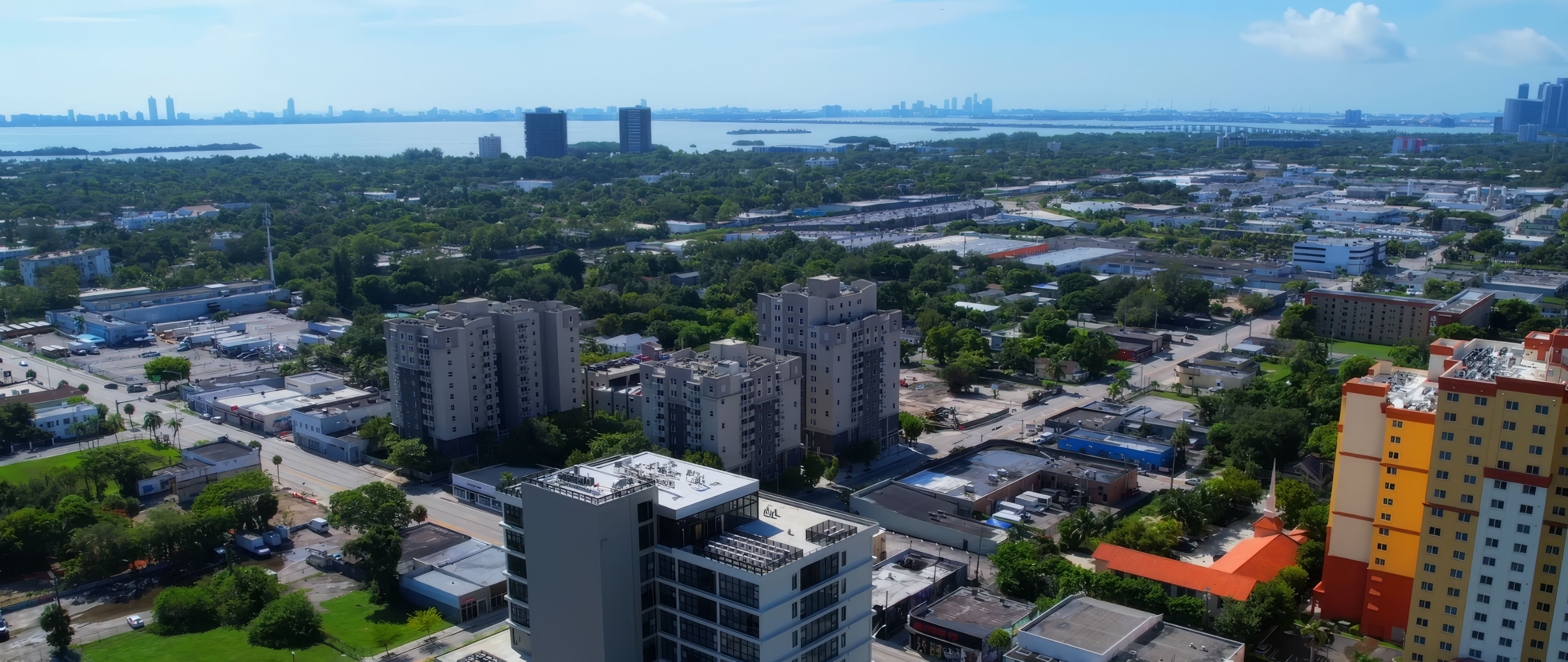
Little River, Miami, Florida - EVERYTHING You Want to Know
As Little River transforms before our eyes, we'll give you a grand tour of its nooks ...
.png)
The Ultimate Guide to Miami-Dade's Top 25 Gated Communities for Single-Family Homes
Discover Miami's top gated communities in this essential guide for luxury home buyers...


Miami's BEST Restaurants in EVERY Neighborhood
Check out the absolute BEST restaurants in every neighborhood of Miami, including the best...
Selling Your Home?
Who are we?
We are the ALL IN Miami Group out of Miami.
We are Colombian, Filipino, Cuban, German, Japanese, French, Indian, Syrian, and American.
We are Christian, Hindu, and Jewish.
We are many, but we are one.
We sell luxury homes in Miami, Florida.
Although some of our clients are celebrities, athletes, and people you read about online, we also help young adults find their first place to rent when they are ready to live on their own.
First-time buyers?
All the time!
No matter what your situation or price range is, we feel truly blessed and honored to play such a big part in your life.