



Hialeah, Miami — A Cheat Sheet for Buyers, Visitors, & the Curious

Amit Bhuta
I use non-traditional marketing to inspire the most motivated buyers to pay the max for Miami luxury homes...
I use non-traditional marketing to inspire the most motivated buyers to pay the max for Miami luxury homes...
Hialeah is built for living, working, and lasting at scale.
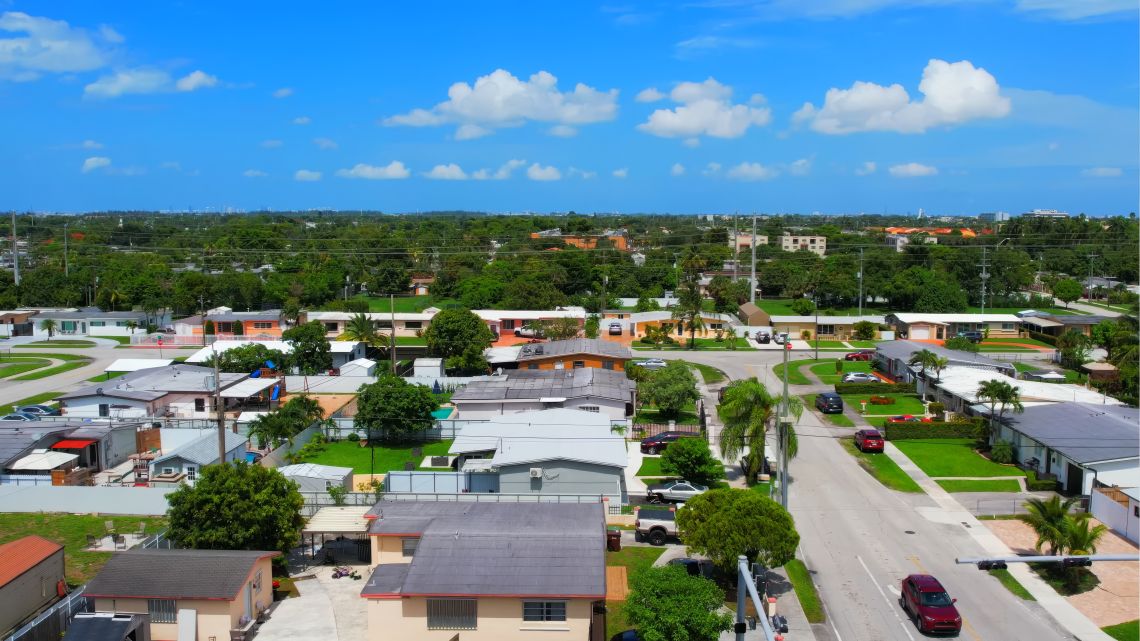
As one of the most densely populated cities in Florida and the cultural and industrial backbone of western Miami-Dade, Hialeah has a level of identity and economic weight that naturally prompts questions from buyers, renters, investors, and longtime Miami residents alike.
Located northwest of Downtown Miami and bordering Miami International Airport, this fully incorporated city offers its own government, police department, zoning authority, and infrastructure network shaped by decades of small-business activity and generational homeownership.
When a city carries this much population density, housing stock diversity, and economic influence, conversations around safety, zoning, traffic, flood risk, and long-term property value follow closely behind.
This guide cuts through all the guesswork.
Here's what you need to know about living in, visiting, and understanding Hialeah.
-topaz-upscale-2.1x.jpeg?w=1140)
LIVING IN HIALEAH
Where is Hialeah located?
Hialeah is located northwest of Downtown Miami in Miami-Dade County, directly west of Miami International Airport.
It borders Miami Lakes, Miami Springs, Medley, Doral, and unincorporated Miami-Dade.
Major transportation routes, including the Palmetto Expressway (SR 826), Gratigny Parkway (SR 924), and Okeechobee Road (US-27), run through or along the city, making it highly connected to the broader county.
Its positioning places it closer to infrastructure and industry than waterfront skylines.
Is Hialeah its own city?
Yes. Hialeah is a fully incorporated municipality with its own mayor, city council, municipal police department, fire services, and zoning authority.
It is not part of the City of Miami and is not in unincorporated Miami-Dade County.
Local ordinances, inspections, planning decisions, and code enforcement are handled at the city level.
How many people live in Hialeah?
Hialeah has a population of over 220,000, making it one of the largest cities in Miami-Dade County and one of the most densely populated cities in Florida.
That density shapes everything from housing layouts and parking to traffic flow and commercial activity.
Is Hialeah safe?
Safety varies by section, property type, and activity level, as in most dense urban environments.
Hialeah operates its own police department and maintains regular municipal patrol services.
Crime patterns differ between industrial zones, high-density residential blocks, and quieter single-family neighborhoods.
Buyers should review current neighborhood-level data and visit specific areas at different times of day rather than relying on broad citywide assumptions.
Is Hialeah crowded?
Hialeah is built densely.
Many neighborhoods were developed between the 1950s and 1980s, before modern suburban lot spacing and parking ratios were common.
Residential blocks are compact, and commercial corridors remain active throughout the day.
In addition to residential density, Hialeah includes substantial industrial and warehouse zoning, particularly near rail corridors and major highways.
This contributes to daytime truck traffic and commercial movement in certain sections of the city, especially those closer to industrial districts.
Is parking difficult in Hialeah?
Parking depends largely on neighborhood design and household occupancy levels.
Older sections with duplexes, converted garages, and multi-generational households may experience tighter street parking.
Single-family homes with driveways tend to provide better private parking, but overall density influences availability.
Buyers should evaluate parking conditions during evenings and weekends when occupancy is highest.
What do homes cost in Hialeah in 2025?
As of 2025, single-family homes typically range from the mid-$400,000s into the $700,000s, depending on size, condition, renovations, and specific location within the city.
Duplexes, townhouses, and condos may trade at lower price points, while renovated or oversized properties can exceed typical ranges.
Pricing in Hialeah is driven more by renovation quality and lot configuration than by prestige zoning categories.
Is Hialeah considered affordable?
Compared to waterfront Miami neighborhoods and Coral Gables, Hialeah is often perceived as more attainable.
However, countywide appreciation has raised prices significantly over the past decade.
It remains largely a working- and middle-income housing market, but it is no longer priced at historic entry-level levels relative to the broader Miami metropolitan area.
What is rent like in Hialeah?
Rental prices in Hialeah vary by property type and condition.
One-bedroom apartments generally trade lower than coastal Miami markets, while renovated units and larger townhomes command higher monthly rates.
Demand remains consistent due to proximity to employment corridors and the airport.
Are homes in Hialeah older?
Much of Hialeah’s housing stock was built between the 1950s and 1980s.
Concrete block construction is common.
Many homes have undergone additions, renovations, roof replacements, or modernization.
New construction exists but represents a smaller share of the overall inventory compared to cities like Doral.
Condition and updates significantly influence insurance costs and resale value.
What types of housing are common in Hialeah?
Hialeah contains a diverse mix of residential properties reflecting its rapid mid-century expansion and high demand for homeownership.
The city includes single-family homes, duplexes, small multi-family buildings, townhouses, and garden-style condominiums.
Residential properties often sit near commercial corridors rather than in strictly separated districts.
Multi-generational households are common, influencing bedroom counts, efficiency conversions, and interior layouts across many properties.
What’s the difference between East and West Hialeah?
East Hialeah is generally older and denser, with smaller lots and closer proximity to industrial corridors and the airport.
West Hialeah contains somewhat newer housing, slightly wider residential streets in certain areas, and quicker access to the Palmetto Expressway for some residents.
Both sections are urban in character, and the primary differences relate to housing age, layout, and density rather than socioeconomic separation.
Does Hialeah have its own police department?
Yes. The City of Hialeah operates its own police department and municipal services.
Law enforcement, emergency response, and local ordinance enforcement are administered at the city level.
How strict is code enforcement in Hialeah?
Hialeah actively enforces zoning regulations and building codes.
Unpermitted additions, illegal efficiency units, and noncompliant structures can result in citations or liens.
Buyers should verify permit history, open violations, and compliance status before closing.
Can you legally add an efficiency unit in Hialeah?
Adding an efficiency or accessory dwelling unit depends entirely on zoning classification, lot size requirements, and city permitting rules.
Not all properties qualify.
Unpermitted garage conversions are subject to enforcement.
Buyers interested in rental flexibility should consult city zoning guidelines and confirm compliance before assuming additional income potential.
What are property taxes like in Hialeah?
Property taxes in Hialeah include both Miami-Dade County and the City of Hialeah millage rates.
Taxes are based on assessed value and may increase after purchase if the previous owner benefited from Homestead caps.
Florida’s Homestead Exemption remains available for eligible primary residents.
Are there HOA communities in Hialeah?
While much of Hialeah consists of standalone single-family neighborhoods without associations, townhome developments and condominium communities may have homeowners’ associations with monthly fees.
HOA presence depends on property type rather than citywide policy.
Does Hialeah flood?
Hialeah is inland and does not face coastal storm surge risk, unlike Miami Beach.
However, portions of the city fall within FEMA flood zone classifications.
Flood risk depends on elevation and parcel-specific mapping.
Buyers should review each property’s Flood Insurance Rate Map designation.
Is flood insurance required in Hialeah?
Flood insurance is typically required for financed properties in FEMA-designated Special Flood Hazard Areas.
Even outside high-risk zones, lenders may recommend coverage.
Elevation certificates and finished floor heights influence premiums.
What are homeowners' insurance costs like in Hialeah?
Insurance costs in Hialeah reflect South Florida market conditions.
Premiums depend primarily on roof age, wind mitigation features, construction type, and insured replacement value rather than just location.
Older roofs and unrenovated properties tend to carry higher premiums.
What schools serve Hialeah?
Miami-Dade County Public Schools serves Hialeah.
The city includes well-known campuses such as Hialeah Senior High School, American Senior High School, Hialeah Gardens Senior High School, Palm Springs Middle School, Hialeah Middle School, and Hialeah-Miami Lakes Senior High.
At the K–8 and elementary level, schools such as Mae M. Walters Elementary School, Twin Lakes Elementary School, and Hialeah Elementary School serve different sections of the city.
School performance ratings, enrollment sizes, and academic outcomes vary by campus.
Charter and private school options are also available within and around Hialeah.
Assignments should always be verified through Miami-Dade County Public Schools’ current zoning maps before making housing decisions.
Find more information about the schools in Hialeah at Best Schools in Hialeah.
Is Hialeah good for families?
Hialeah attracts many families due to a multigenerational household culture, strong community networks, and relative proximity to schools and local businesses.
Density can be a trade-off, but ownership stability and family presence are defining characteristics of many neighborhoods.
What is the commute like from Hialeah?
Hialeah is connected by the Palmetto Expressway (SR 826), Gratigny Parkway (SR 924), and Okeechobee Road (US-27).
Downtown Miami is typically 20 to 35 minutes away, depending on traffic.
Miami International Airport is often less than 15 minutes from many neighborhoods.
The Okeechobee Metrorail Station and Tri-Rail access provide additional transit options.
Traffic intensity varies by time of day due to density and industrial activity.
Hialeah also provides relatively quick access to neighboring cities such as Miami Lakes and Doral, both typically within 10 to 20 minutes, depending on traffic.
This proximity expands employment, retail, and dining options without requiring long cross-county travel.
Is Hialeah near Miami International Airport?
Yes. Hialeah borders Miami International Airport, and travel time to the airport is often under 15 minutes from many neighborhoods.
Proximity benefits frequent travelers and airport employees, but also contributes to occasional aircraft noise in areas closest to the runways.
Is Hialeah a good long-term investment?
Hialeah’s long-term value is supported by its population size, ownership culture, proximity to major highways and the airport, and limited new large-scale residential land.
Appreciation tends to follow trends in broader Miami-Dade County.
The city also maintains consistent rental demand driven by workforce housing needs and multi-generational households, which supports occupancy stability across many property types.
Investors should focus on property condition, zoning compliance, and realistic rental assumptions.
Is Hialeah good for real estate investors?
Hialeah attracts investors seeking rental stability rather than luxury speculation.
Duplexes and multi-family properties are common, and consistent workforce housing demand supports occupancy levels.
However, zoning compliance and permit history must be carefully reviewed before assuming rental flexibility.
-topaz-upscale-2.1x.jpeg?w=1140)
VISITING HIALEAH
What is Hialeah known for?
Hialeah is widely recognized for its Cuban-American majority population, Spanish-speaking daily environment, and strong small-business economy.
It is also known for industrial manufacturing corridors and long-standing residential blocks that reflect mid-20th-century expansion.
Is Hialeah tourist-friendly?
Hialeah is not designed as a resort destination.
Visitors are more likely to experience it for food, cultural immersion, local retail, and community events rather than beachfront attractions.
For a typical day in Hialeah, visit Top 5 Things to Do in Hialeah.
Is Hialeah walkable?
Walkability in Hialeah is limited to specific commercial corridors.
Most areas are car-dependent due to the density and layout of infrastructure.
How far is Hialeah from Miami Beach and Downtown Miami?
Downtown Miami is typically 20 to 35 minutes away, depending on traffic conditions.
Miami Beach may range from 30 to 45 minutes, depending on the route and congestion.
-topaz-upscale-2.1x.jpeg?w=1140)
UNDERSTANDING HIALEAH
Why is Hialeah so Cuban?
Hialeah became a primary settlement area for Cuban immigrants beginning in the 1960s.
Over decades, the city developed strong Cuban-American political, cultural, and business networks that continue to shape its identity today.
Is Hialeah urban or suburban?
Hialeah is urban in density and layout but residential in character.
It combines industrial zones, commercial corridors, and compact housing in a way that differs from master-planned suburban communities.
How is Hialeah different from Miami?
Hialeah is its own incorporated city with its own government.
It is more densely built, less tourism-oriented, and more centered on residential ownership and local business than the City of Miami’s waterfront and high-rise districts.
Historically, Hialeah developed as a working- and middle-income, ownership-driven city rather than a high-rise investor-focused market.
That foundation continues to influence housing patterns, small-business concentration, and long-term residency stability today.
Is Hialeah growing?
Hialeah’s growth is gradual and density-driven rather than expansion-based.
With limited undeveloped land remaining, change tends to occur through renovation, redevelopment, and zoning adjustments rather than large-scale new subdivisions.
What long-term factors are shaping Hialeah?
Long-term factors include countywide housing demand, airport proximity, infrastructure modernization, zoning enforcement, insurance market pressures, and demographic continuity.
Hialeah’s future depends more on structural forces than on branding trends.
%20(15)-fotor-20240523131058.png)
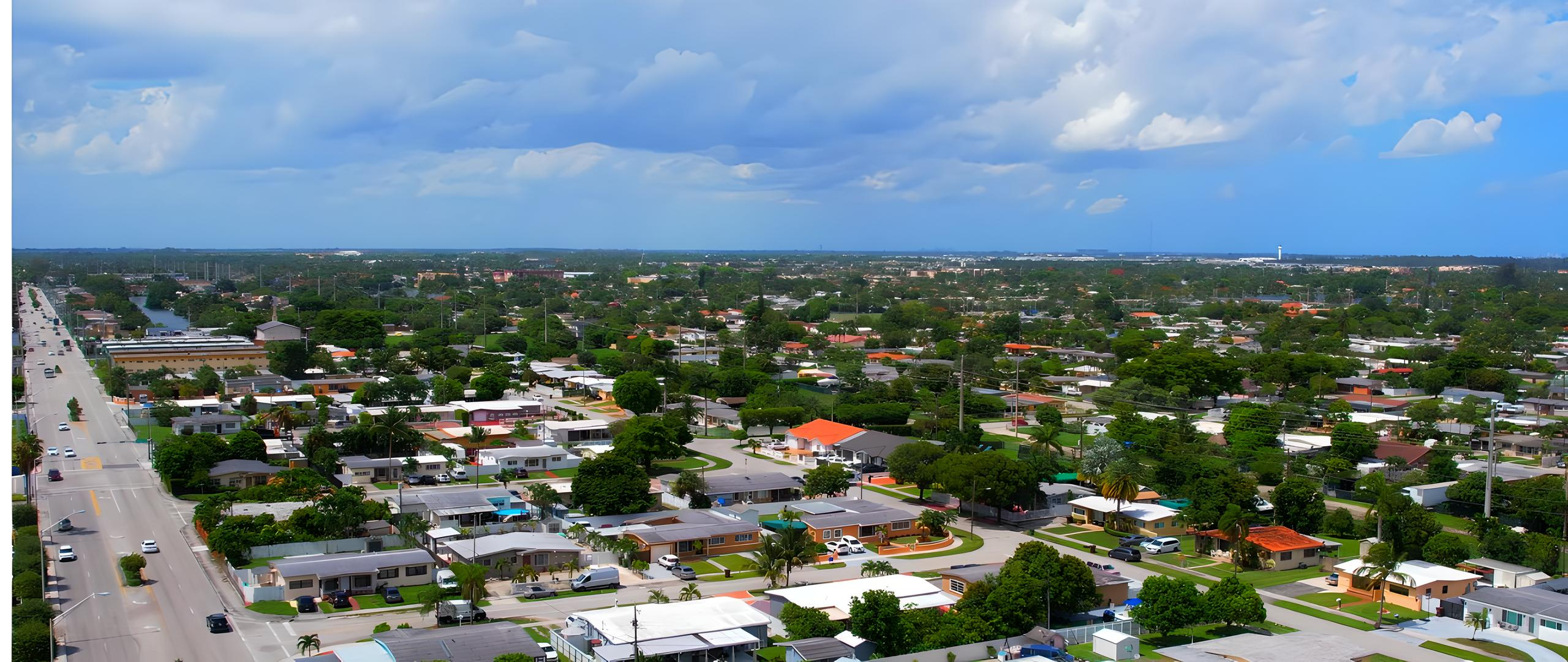
Hialeah, Miami, Florida - EVERYTHING You Want to Know
Buckle up and join us for an unrivaled virtual journey across the BEST of Hialeah! After s...
.png)
The Ultimate Guide to Miami-Dade's Top 25 Gated Communities for Single-Family Homes
Discover Miami's top gated communities in this essential guide for luxury home buyers...

Miami's BEST Restaurants in EVERY Neighborhood
Check out the absolute BEST restaurants in every neighborhood of Miami, including the best...
Selling Your Home?
Who are we?
We are the ALL IN Miami Group out of Miami.
We are Colombian, Filipino, Cuban, German, Japanese, French, Indian, Syrian, and American.
We are Christian, Hindu, and Jewish.
We are many, but we are one.
We sell luxury homes in Miami, Florida.
Although some of our clients are celebrities, athletes, and people you read about online, we also help young adults find their first place to rent when they are ready to live on their own.
First-time buyers?
All the time!
No matter what your situation or price range is, we feel truly blessed and honored to play such a big part in your life.