



Goulds, Miami — A Cheat Sheet for Buyers, Visitors, & the Curious

Amit Bhuta
I use non-traditional marketing to inspire the most motivated buyers to pay the max for Miami luxury homes...
I use non-traditional marketing to inspire the most motivated buyers to pay the max for Miami luxury homes...
Goulds isn't designed around a golf course or a branding campaign, nor is it a master-planned community — it's a vision of South Dade practicality sitting squarely in the path of Miami’s expanding horizon.
And as growth moves south, so do the questions about what Goulds really is — and where it’s headed.
Located along the US-1 corridor in southern Miami-Dade County, Goulds is an unincorporated community, which means zoning, development, flood oversight, policing, and taxation are handled at the county level.
In Goulds, larger lots, mixed residential and agricultural zoning, and rising home values reflect how the community is shaped more by land, regulation, and market pressure than by resort-style amenities.
But that doesn’t mean it isn’t worth a second glance.
In fact, this unassuming South Dade agricultural pocket has become increasingly attractive to buyers seeking more affordable home prices, larger lots, flexibility, and long-term ownership potential in Miami.
The real question is whether the trade-offs are worth it.
This guide breaks down the core conversations around governance, safety, insurance exposure, flood zones, infrastructure, long-term investment viability, and what Goulds is becoming.
Here's what you need to know about living in, visiting, and understanding Goulds.
-topaz-upscale-2.1x.jpeg?w=1140)
LIVING IN GOULDS
Where is Goulds located?
Goulds sits along US-1 (South Dixie Highway) in southern Miami-Dade County, between Cutler Bay to the north and Princeton and Homestead to the south.
It is roughly 20 miles southwest of Downtown Miami and firmly positioned within the South Dade corridor.
Since it is inland rather than coastal, Goulds follows a different development pattern compared to eastern Miami neighborhoods.
Its location places it directly along a major north–south growth route, which influences both property values and long-term expansion potential.
Is Goulds a city?
No. Goulds is an unincorporated community within Miami-Dade County.
It does not operate under its own mayor or city council.
Instead, all zoning, permitting, policing, infrastructure planning, and development oversight are managed at the county level.
For homeowners and investors, this matters.
There is no additional municipal tax layer as you would find in incorporated cities, but there is also no localized city government driving branding or redevelopment initiatives specific to Goulds.
Growth decisions follow county priorities.
What types of homes are in Goulds?
Housing in Goulds is primarily single-family homes situated on modest to larger lots.
Many properties reflect mid-to-late 20th-century construction, though renovations and new infill builds have steadily increased.
Unlike master-planned suburbs, Goulds does not consist of uniform developments.
Lot sizes tend to feel more generous than those in eastern Miami neighborhoods, and zoning classifications sometimes include agricultural residential designations.
High-rise condos and dense townhouse clusters are not characteristic of the area.
How much do homes cost in Goulds in 2025?
As of 2025, single-family home prices in Goulds typically range from the mid-$400,000s into the low-$600,000s, depending on size, condition, location within the neighborhood, and lot configuration.
Larger parcels or extensively renovated homes may exceed that range.
While prices remain lower than in many coastal Miami neighborhoods, values have risen steadily over the past several years as housing demand has pushed south.
Goulds is no longer considered deeply discounted compared to the rest of Miami-Dade, but it remains comparatively accessible for buyers seeking space.
What are rental prices like in Goulds?
Rental inventory in Goulds primarily consists of single-family homes rather than apartment towers or large multifamily complexes.
As of 2025, three-bedroom homes typically lease between approximately $2,400 and $3,200 per month, depending on size, renovations, and lot condition.
Since much of the housing stock is detached homes, the rental supply is more limited than in condo-heavy neighborhoods.
Investor interest has increased as pricing pressure spreads south, but Goulds is not considered a high-density rental hub.
It remains a predominantly single-family environment with a mix of owners and tenants.
Is Goulds safe?
Safety is one of the most asked questions about Goulds.
Crime patterns in the area generally align with broader South Miami-Dade trends rather than dense urban cores.
Violent crime rates are not comparable to high-density inner-city districts, and many residential streets have stable owner occupancy.
Property crime levels can fluctuate, particularly near commercial corridors and major roadways.
As in many transitioning areas, safety can vary block by block.
Reviewing Miami-Dade Police Department zone statistics provides clearer insight than relying solely on reputation.
Is Goulds in a flood zone?
Parts of Goulds fall within FEMA-designated flood zones common across South Miami-Dade County.
Although the area is inland and not bayfront, flood risk classification depends on parcel elevation and the specific FEMA Flood Insurance Rate Map designation assigned to each property.
Buyers should confirm a home’s flood zone status before purchase, as certain classifications may trigger lender-required flood insurance.
Goulds does not face direct coastal storm surge exposure, but it remains within South Florida’s broader flood-risk landscape, including heavy rainfall and long-term sea level considerations.
South Dade was significantly impacted by Hurricane Andrew in 1992, an event that permanently reshaped regional building codes.
While Goulds is not coastal, it is fully exposed to hurricane wind risk like the rest of Miami-Dade County.
Homes built or renovated under post-Andrew standards generally meet stricter structural requirements, which can influence both storm resilience and insurance underwriting.
What are homeowners' insurance costs like in Goulds?
Homeowners insurance in Goulds reflects broader South Florida market conditions.
Premiums are driven less by ZIP code and more by structural factors such as a home’s age, roof condition, wind mitigation features, and flood zone classification.
Older properties without updated roofing systems or impact-rated protection typically carry higher premiums, while newer construction or properly retrofitted homes may qualify for mitigation credits.
In this region, roof age is especially significant.
Insurers frequently require 4-point inspections on older homes to evaluate electrical, plumbing, roofing, and HVAC systems before issuing or renewing coverage.
Homes with updated roofs, impact windows, reinforced garage doors, and documented wind mitigation features generally receive more favorable underwriting consideration.
For buyers in Goulds, windstorm coverage and roof condition should be evaluated early, as they materially affect total ownership costs.
What are property taxes like in Goulds?
Miami-Dade County assesses property taxes in Goulds.
Since the area is unincorporated, homeowners do not pay an additional city municipal millage rate on top of their county taxes.
Tax bills include county services, school board assessments, and any applicable special taxing districts.
Primary homeowners may qualify for Florida’s Homestead Exemption, which reduces taxable value and limits annual increases in assessed valuation.
Are there HOA communities in Goulds?
Homeowners’ associations are far less common in Goulds than in master-planned suburban developments.
Most residential streets operate without HOA governance.
Some newer clusters or smaller developments may include association oversight, but they are not the defining characteristic of the area.
Many buyers are drawn to Goulds specifically because it offers fewer restrictive covenants and greater flexibility in property use.
What zoning regulations apply in Goulds?
Zoning in Goulds falls under Miami-Dade County classifications.
Typical designations include residential and agricultural categories, each with specific density limits, setback standards, and permitted-use requirements.
Since Goulds is unincorporated, there is no separate municipal zoning authority; all land-use decisions are governed by county code and the Comprehensive Development Master Plan.
Some larger parcels in Goulds may offer subdivision or lot-splitting potential, but eligibility depends entirely on zoning classification, minimum lot size standards, and allowable density under county regulations.
Buyers planning construction, subdivision, business operations, or long-term land banking should verify buildable density and development rights directly through Miami-Dade regulatory databases before assuming expansion flexibility.
Are short-term rentals allowed in Goulds?
Short-term rental regulations in unincorporated Miami-Dade vary by zoning classification and county policy.
Some areas permit regulated short-term rentals with required registration and compliance standards, while others restrict transient occupancy use.
Since the policy updates periodically, investors considering Airbnb-style usage must confirm the most current county regulations before purchase.
Can you operate a home-based business in Goulds?
Certain home occupations are permitted in unincorporated Miami-Dade County, including portions of Goulds, provided they meet zoning requirements.
Limitations typically apply to signage, employee traffic, and updates to the property exterior.
Agricultural parcels may allow additional forms of land-related operations.
Verification through county planning authorities remains essential before assuming approval.
What schools serve Goulds?
Miami-Dade County Public Schools serves Goulds.
Local public schools include Goulds Elementary School, Arthur & Polly Mays Conservatory of the Arts (6–12), and Miami Southridge Senior High School, which serves much of the surrounding South Dade area.
Depending on zoning boundaries, some students may also attend Cutler Bay Middle School or other nearby campuses.
School performance ratings, enrollment sizes, and academic outcomes vary by campus and year, so families should verify current attendance boundaries through Miami-Dade County Public Schools.
Private and charter school options are also accessible in nearby Cutler Bay and Homestead, expanding educational choices for residents.
You may also visit Best Schools in Goulds for more information on your public and private school options.
What is the population and demographic profile of Goulds?
Goulds has a population of roughly 11,000 to 12,000 residents, making it a small but established South Dade community.
The area reflects a diverse demographic mix, with significant Hispanic and Black populations and a median age generally in the early 40s.
Median household income falls below the overall Miami-Dade County median, reinforcing Goulds’ positioning as a comparatively accessible single-family housing market within the region.
Homeownership remains strong relative to many denser Miami neighborhoods, though rental households are still present throughout the community.
The area includes longtime residents alongside newer buyers drawn by pricing, lot size, and long-term positioning within South Dade.
What is the commute like in Goulds?
US-1 functions as the primary north–south corridor serving Goulds.
Commute times vary depending on the time of day and traffic patterns.
Driving to Downtown Miami or Brickell typically ranges from 35 to 60 minutes.
Coral Gables may be within 30 to 50 minutes, depending on traffic flow.
Travel south to Homestead generally takes between 15 and 25 minutes.
Peak congestion along US-1 during morning and evening rush hours is common.
Is Goulds walkable or transit-friendly?
Goulds is largely car-dependent.
Most daily errands require driving, and pedestrian infrastructure is limited compared to denser East Side Miami neighborhoods.
Public transportation can be accessed along US-1 through Miami-Dade Transit bus routes, but commuting efficiency is significantly higher by car.
Buyers seeking walkable retail corridors or rail-oriented development will not find that environment here.
The area functions as a traditional South Dade suburban corridor rather than a transit-oriented district.
Is Goulds growing or redeveloping?
Goulds has experienced steady appreciation and gradual reinvestment rather than dramatic urban transformation.
Renovations, lot upgrades, and incremental redevelopment have increased in recent years as buyers search further south for affordability.
However, the area is not undergoing widespread luxury redevelopment.
Change has been influenced by migration pressure rather than coordinated master planning.
Is Goulds a good long-term investment?
Goulds appeals to buyers and investors who prioritize land value, flexibility, and relative affordability within Miami-Dade County.
Since it lacks strong municipal branding and luxury amenity infrastructure, appreciation is tied more closely to regional migration and county planning trends.
For those seeking a long-term positioning play tied to South Dade expansion, Goulds presents an opportunity.
For buyers seeking prestige or resort-style identity, it may not align with expectations.
-topaz-upscale-2.1x.jpeg?w=1140)
VISITING GOULDS
Is there anything to do in Goulds?
Goulds is not a destination-driven tourism neighborhood.
Visitors typically pass through it while traveling toward Homestead or the Florida Keys.
Its character is residential and practical rather than entertainment-focused.
That said, its historical landmarks and proximity to larger South Dade attractions provide context for those exploring beyond central Miami.
For a typical day in Goulds, check Top 5 Things to Do in Goulds.
What is Cauley Square?
Cauley Square Historic Village is one of the most recognized sites associated with Goulds.
Established in the early 1900s as a railroad settlement, it now features preserved historic structures, boutique spaces, and small eateries.
It represents a glimpse into South Florida’s agricultural and railway history and remains a cultural anchor in the area.
Are there parks or outdoor spaces in Goulds?
Goulds Park Community Center serves as a primary recreational space for residents, offering open space and sports facilities.
Nearby communities such as Cutler Bay provide access to additional regional parks.
The broader South Dade landscape also offers agricultural scenery and open spaces compared to eastern Miami.
Dog-Friendly Parks Near Goulds provides a list of dog-friendly parks in and around Goulds.
How close is Goulds to the Florida Keys?
Goulds is positioned approximately 30 to 45 minutes north of Key Largo, depending on traffic conditions.
Its location along US-1 makes it a convenient starting point for travel toward the Florida Keys.
Is Goulds close to other communities?
Goulds borders Cutler Bay to the north and Princeton to the south, with Homestead further along the corridor.
This location situates it within reach of commercial centers while remaining lower density than many incorporated suburbs.
-topaz-upscale-2.1x.jpeg?w=1140)
UNDERSTANDING GOULDS
Why is Goulds part of Miami but not a city?
Goulds is classified as a census-designated place within unincorporated Miami-Dade County.
It has never been incorporated as an independent municipality.
Many South Dade communities share this structure, receiving county-level governance rather than operating under a separate city government.
What is Goulds historically known for?
Goulds originated as a railroad stop and agricultural settlement in the early 20th century.
Farming and land-based industry shaped its early development pattern.
Elements of that agricultural origin remain visible today through zoning classifications and larger lot configurations.
Is Goulds rural or suburban?
Goulds exists between those two definitions.
Its residential layout reflects suburban living, yet certain parcels and zoning categories retain agricultural characteristics.
It does not resemble dense urban Miami neighborhoods, nor is it an open farmland.
It represents a transitional South Dade environment.
Why are home prices rising in Goulds?
Price increases reflect broader Miami-Dade housing demand pushing southward.
As more central neighborhoods became less affordable, buyers expanded their search radius.
Goulds’ location along US-1 and comparatively larger lot sizes have contributed to sustained demand and gradual appreciation.
Is Goulds becoming gentrified?
Goulds is experiencing reinvestment, but not widespread urban gentrification.
Improvements and renovations are occurring, yet the area has not transformed into a luxury enclave.
Change has been steady rather than disruptive.
How does Goulds compare to Princeton or Naranja?
Goulds, Princeton, and Naranja are all unincorporated South Dade communities with similar governance structures.
Princeton and Naranja sit slightly further south and have seen varying levels of new construction.
Goulds’ slightly more northern position places it closer to Cutler Bay, which can influence pricing and accessibility.
What long-term factors will shape Goulds?
Several structural forces will influence Goulds over time.
Continued southward housing demand within Miami-Dade County will likely sustain pricing pressure.
County-level land-use planning decisions under the Comprehensive Development Master Plan will determine allowable density and scope of redevelopment.
Flood adaptation policy and insurance market shifts will affect homeowners' costs.
Infrastructure changes along US-1 may influence accessibility and commercial growth.
Goulds’ future will be shaped less by branding and more by these underlying structural dynamics shaping South Dade.
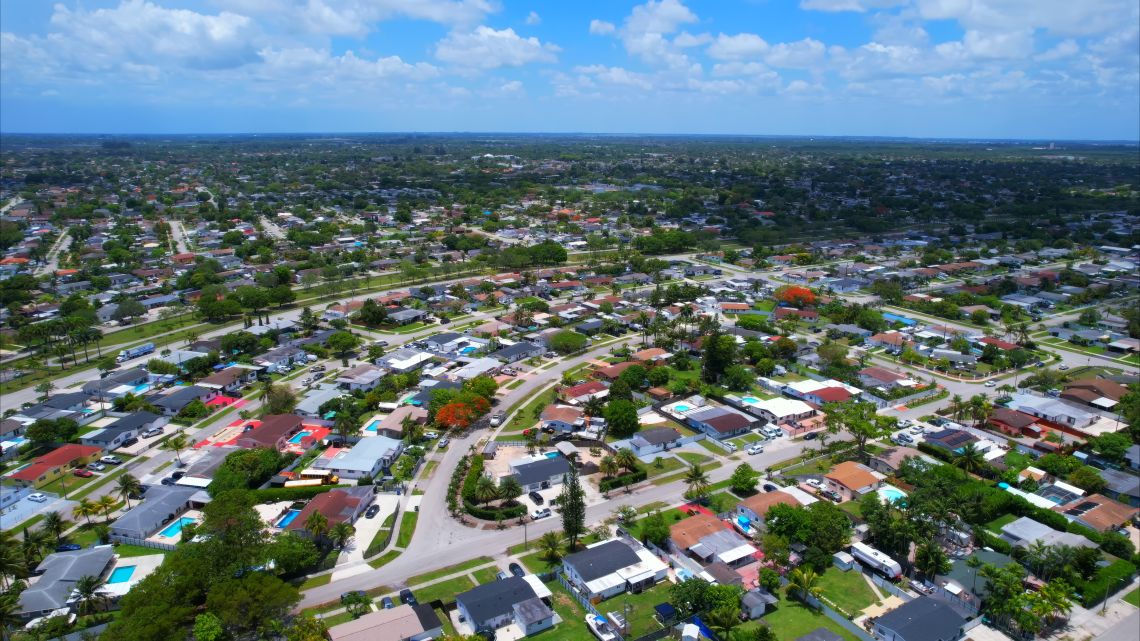
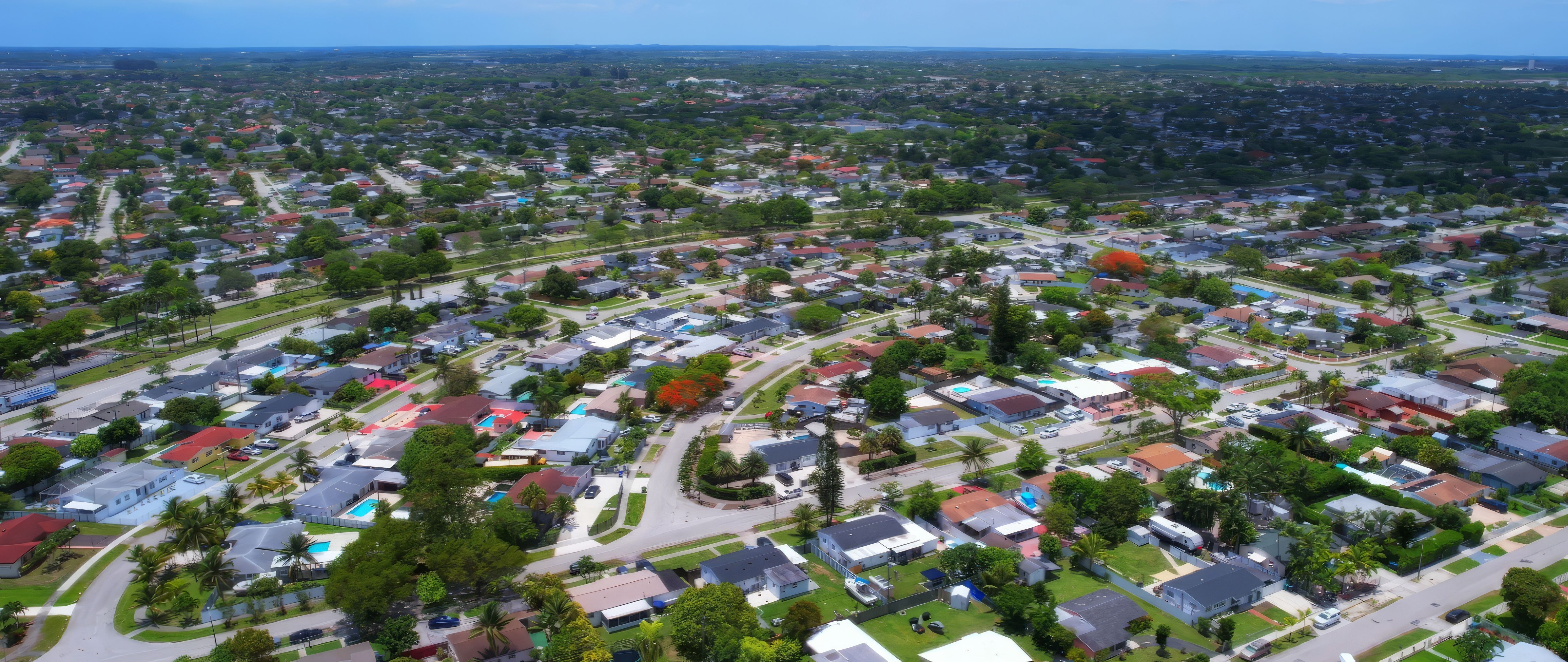
Goulds, Miami, Florida - EVERYTHING You Want to Know
Join us as we pull back the curtain on Goulds. You're in for a virtual escape into wh...
.png)
The Ultimate Guide to Miami-Dade's Top 25 Gated Communities for Single-Family Homes
Discover Miami's top gated communities in this essential guide for luxury home buyers...

Miami's BEST Restaurants in EVERY Neighborhood
Check out the absolute BEST restaurants in every neighborhood of Miami, including the best...
Selling Your Home?
Who are we?
We are the ALL IN Miami Group out of Miami.
We are Colombian, Filipino, Cuban, German, Japanese, French, Indian, Syrian, and American.
We are Christian, Hindu, and Jewish.
We are many, but we are one.
We sell luxury homes in Miami, Florida.
Although some of our clients are celebrities, athletes, and people you read about online, we also help young adults find their first place to rent when they are ready to live on their own.
First-time buyers?
All the time!
No matter what your situation or price range is, we feel truly blessed and honored to play such a big part in your life.