



El Portal, Miami — A Cheat Sheet for Buyers, Visitors, & the Curious

Amit Bhuta
I use non-traditional marketing to inspire the most motivated buyers to pay the max for Miami luxury homes...
I use non-traditional marketing to inspire the most motivated buyers to pay the max for Miami luxury homes...
In a city driven by expansion, El Portal chooses preservation.
Bordered by Miami Shores, Little River, and the Upper East Side, El Portal sits close enough to everything, yet separate by design — tucked beneath a canopy of mature trees just north of the city’s more bustling districts.
There is no skyline competing for attention, no buzzing commercial strip, no waterfront towers climbing upward — just a residential village that remains intentionally rooted.
It is a rare slice of Miami: a small incorporated village defined by single-family homes, strict residential zoning, and a deliberate commitment to protecting its character.
Why? Most who search for this village ask the same, alongside El Portal’s safety, home values, flood risk, governance, and overall livability.
So settle in, as this guide answers anything and everything about El Portal.
Here's what you need to know about living in, visiting, and understanding El Portal.
-topaz-upscale-2.1x.jpeg?w=1140)
LIVING IN EL PORTAL
Where is El Portal located, and is it part of the City of Miami?
El Portal is located in northeastern Miami-Dade County, just west of Biscayne Boulevard, immediately south of Miami Shores, and north of Little River.
While often grouped broadly under “Miami,” it is not part of the City of Miami.
It is its own incorporated village.
Its compact footprint places residents approximately 15–20 minutes from Downtown Miami, about 10 minutes from the Design District, and roughly 20–25 minutes from Miami Beach, depending on traffic.
Is El Portal its own municipality, and how is it governed?
Yes. El Portal was incorporated in 1937 and is governed by its own mayor and village council.
It operates independently from the City of Miami and maintains authority over zoning, land use, and development approvals.
The village operates its own police department, while services such as fire rescue are coordinated through Miami-Dade County.
Due to its small size, development proposals and zoning decisions are reviewed locally, allowing tighter control over density and preservation.
Municipal independence is one of its defining traits.
What services does the Village of El Portal provide?
El Portal provides local police services and code enforcement at the village level.
Utilities, fire rescue, and certain public infrastructure services integrate with Miami-Dade County systems.
The village scale allows governance decisions to remain highly localized compared to larger municipalities.
What types of homes are in El Portal?
El Portal is almost entirely single-family residential.
Homes include 1920s Mediterranean and Mission-style properties, mid-century ranch designs, and contemporary renovations or rebuilds.
There are no high-rise condominium buildings, and there is a limited number of multifamily developments.
The neighborhood retains its horizontal character and low density.
How large are lots in El Portal?
Lot sizes in El Portal typically range from approximately 6,000 to 9,000 square feet, with some larger parcels exceeding that depending on street and subdivision.
Mature trees, deeper front setbacks, and established landscaping contribute to a noticeably more spacious feel compared to higher-density neighborhoods closer to Downtown Miami.
While not suburban in half-acre scale, most homes offer more yard space and separation between properties than adjacent urban corridors dominated by multifamily or mixed-use development.
How much do homes cost in El Portal?
Home prices in El Portal generally range from the high six figures to well over $1.5 million, depending on lot size, renovation level, and architectural character.
Updated or expanded homes with modern systems and preserved historic elements often trade at the top of the range.
Since inventory is limited and the village is small, pricing can vary significantly from property to property rather than moving in uniform trends.
Scarcity and zoning restrictions that prevent high-density redevelopment help support long-term value stability.
Is El Portal more expensive than Miami Shores?
El Portal and Miami Shores often trade within comparable single-family price ranges, although Miami Shores offers waterfront inventory and a broader housing stock.
El Portal’s smaller size and preservation-focused zoning create scarcity that supports competitive pricing.
Buyers frequently compare governance structure, density, and community scale when choosing between the two.
What has appreciation been like in El Portal?
Over the past decade, El Portal has benefited from steady appreciation aligned with broader North Miami single-family trends.
Limited land supply and zoning restrictions that prevent large-scale redevelopment support long-term value stability.
Rather than experiencing high-rise development cycles, El Portal’s appreciation is influenced more by scarcity and demand for detached homes near central employment hubs.
Are property taxes different in El Portal?
El Portal levies its own municipal millage rate in addition to Miami-Dade County taxes.
Since it is an incorporated community, residents fund village-level services directly.
Florida homestead exemptions apply for qualifying primary residences, capping assessed value increases under state law.
Is El Portal safer than Miami Shores or Little River?
El Portal maintains its own police department, creating a localized law enforcement presence uncommon for a village of its size.
Compared to nearby commercial corridors and mixed-use districts, it generally experiences lower pedestrian and nightlife-related activity, contributing to a calmer residential environment.
As with any municipality, safety conditions vary by street and situation.
However, its low density and limited commercial zoning tend to support a quieter profile than busier surrounding areas.
Is El Portal good for families?
Its single-family housing stock, shaded streets, and lack of high-density development appeal to households prioritizing residential calm over nightlife access.
While there are no large commercial districts within the village itself, proximity to parks, schools, and neighboring amenities offers balance without internal congestion.
What schools serve El Portal?
El Portal falls within Miami-Dade County Public Schools, with zoning determined by specific property address.
Nearby public options commonly associated with the area include Phyllis R. Miller Elementary School, Horace Mann Middle School, and Miami Edison Senior High School, although assignments should always be confirmed using the district’s official address lookup tool before purchasing.
Many families also consider private and charter options nearby, such as Miami Country Day School in Miami Shores, St. Rose of Lima Catholic School, and several charter programs operating throughout the Upper East Side and surrounding neighborhoods.
For a deeper breakdown of school ratings, enrollment data, and private school alternatives, visit the Best Schools in El Portal guide.
Is El Portal in a flood zone, and does it flood during hurricanes?
Portions of El Portal fall within FEMA-designated flood zones, as is common across Miami-Dade County.
Flood zone designation does not necessarily indicate chronic flooding but may require flood insurance depending on the property's elevation and lender requirements.
El Portal is not directly waterfront, which reduces storm surge exposure compared to bayfront neighborhoods.
However, elevation varies by street, and heavy rain events during hurricane season can affect drainage systems throughout South Florida.
Buyers should review FEMA flood maps, elevation certificates, insurance requirements, and property-specific flood history rather than relying on general assumptions about the neighborhood.
Flood risk should always be evaluated at the property level.
Are short-term rentals allowed in El Portal?
El Portal maintains residential-focused zoning.
Short-term rental regulations are stricter than in tourism-heavy districts, and buyers considering Airbnb-style operations should review current village ordinances with caution.
The regulatory structure prioritizes long-term residential stability.
What zoning and tree protection rules exist in El Portal?
El Portal enforces preservation-oriented zoning and tree canopy protections.
Development proposals, demolitions, and major exterior changes are reviewed at the village level.
Tree preservation contributes significantly to the community's visual identity and helps maintain its residential atmosphere.
Is El Portal walkable?
El Portal is walkable in a neighborhood sense, with shaded residential streets suitable for daily walks.
However, commercial walkability within village boundaries is limited.
Retail and dining destinations in surrounding neighborhoods are typically accessed by car.
Is El Portal noisy from traffic, trains, or flight paths?
El Portal is not located directly under a major commercial airport flight path, though occasional aircraft noise is common throughout much of Miami-Dade.
Streets closest to Biscayne Boulevard may experience more traffic noise than interior blocks, but the village does not contain major rail corridors.
Noise perception depends on proximity to arterial roads rather than village-wide conditions.
What daily conveniences are near El Portal?
Residents are minutes from grocery stores, restaurants, pharmacies, and retail options along Biscayne Boulevard, in Little River, and in Miami Shores.
El Portal offers central access without embedding commercial congestion into its residential streets.
For more information, check Top 5 Shopping Spots Near El Portal.
What is the renter-homeowner ratio in El Portal?
Since El Portal is primarily single-family residential, homeownership rates tend to be higher than in high-density condo neighborhoods.
Residency often feels more stable and long-term than in investor-driven districts.
The overall population remains small compared to surrounding municipalities.
What is the overall community vibe of El Portal?
El Portal feels shaded, insulated, and restrained.
You notice tree canopy and single-family homes more than vertical skyline growth.
It functions as a village in structure and tone rather than as a city sector.
Who is El Portal best suited for?
El Portal suits buyers seeking detached homes, lower density, and municipal autonomy near central Miami.
It may not appeal to those seeking waterfront towers, nightlife corridors, or mixed-use vibrancy.
Its appeal lies in scale and preservation.
-topaz-upscale-2.1x.jpeg?w=1140)
VISITING EL PORTAL
Is El Portal a good place to stay when visiting Miami?
El Portal is not a tourism-centered destination.
Visitors typically stay in the surrounding neighborhoods while choosing El Portal for its quieter residential location.
It functions better as a peaceful base near more active districts rather than as a destination itself.
Are there hotels in El Portal?
There are no major hotel corridors within El Portal.
Hotel accommodations are located in nearby areas such as Downtown Miami, Miami Shores, and Miami Beach.
Visit the Top 5 Hotels Near El Portal to know your nearest options.
What is there to do in or near El Portal?
Recreation within the village itself is residential in nature.
However, the Design District, Midtown Miami, Wynwood, and Miami Beach are all accessible within a short drive.
Its value lies in proximity rather than entertainment density.
For a typical day in El Portal, visit Top 5 Things to Do in El Portal.
-topaz-upscale-2.1x.jpeg?w=1140)
UNDERSTANDING EL PORTAL
Why is it called El Portal?
“El Portal” translates to “the gateway,” reflecting its early identity as a residential gateway north of Miami’s initial urban expansion.
The village was incorporated in 1937 and has maintained its independent status since.
What makes El Portal different from Miami Shores and Little River?
Miami Shores is larger and offers waterfront properties and a broader institutional presence.
Little River features increasing mixed-use redevelopment.
El Portal is smaller, strictly residential in tone, and locally governed with tight control over zoning and development scale.
Is El Portal facing development pressure?
Like many North Miami communities, El Portal occasionally has "teardown" and rebuild activities.
However, zoning restrictions limit vertical or high-density expansion.
Its preservation-oriented governance structure has historically slowed dramatic transformation.
What is the long-term outlook for El Portal?
As Miami continues expanding northward, El Portal’s identity remains anchored in residential preservation.
Limited land supply and municipal autonomy position it as a stable pocket rather than a growth corridor.
Its long-term value depends on its refusal to become something else.
-topaz-upscale-2.1x.jpeg?w=1140)
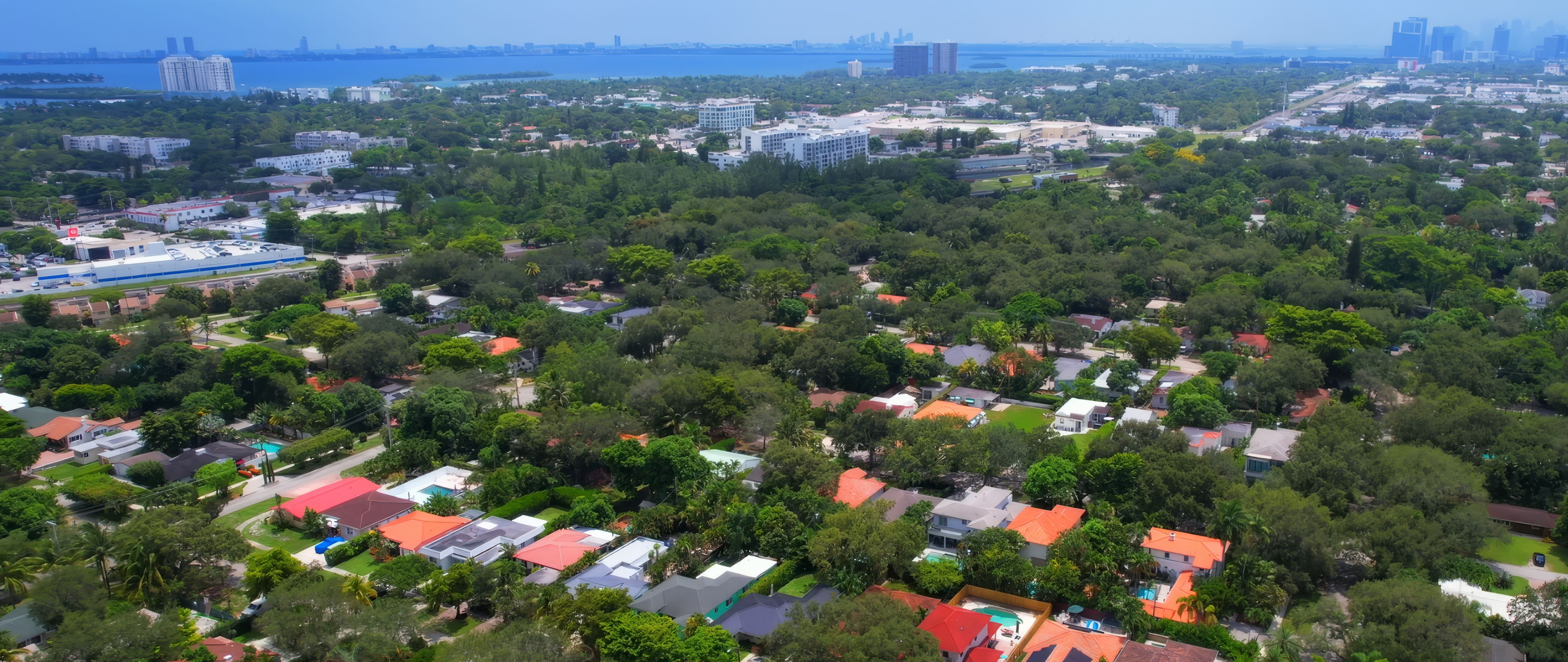
El Portal, Miami, Florida - EVERYTHING You Want to Know
Click "Read More" and join us in exploring all things El Portal from home! We�...
.png)
The Ultimate Guide to Miami-Dade's Top 25 Gated Communities for Single-Family Homes
Discover Miami's top gated communities in this essential guide for luxury home buyers...

Miami's BEST Restaurants in EVERY Neighborhood
Check out the absolute BEST restaurants in every neighborhood of Miami, including the best...
Selling Your Home?
Who are we?
We are the ALL IN Miami Group out of Miami.
We are Colombian, Filipino, Cuban, German, Japanese, French, Indian, Syrian, and American.
We are Christian, Hindu, and Jewish.
We are many, but we are one.
We sell luxury homes in Miami, Florida.
Although some of our clients are celebrities, athletes, and people you read about online, we also help young adults find their first place to rent when they are ready to live on their own.
First-time buyers?
All the time!
No matter what your situation or price range is, we feel truly blessed and honored to play such a big part in your life.