



Who Lives in West Little River? (It's Not Who You Think!)

Amit Bhuta
I use non-traditional marketing to inspire the most motivated buyers to pay the max for Miami luxury homes...
I use non-traditional marketing to inspire the most motivated buyers to pay the max for Miami luxury homes...
There are two sides to West Little River.
One is what outsiders see, or think they see, involving crime concerns, aging homes, low-price suspicion, and every warning someone heard from someone who heard it from someone else.
The other is what residents live every day, that’s full of blocks, families, churches, small businesses, shortcuts, renovation opportunities, and cherished memories that negate the label West Little River has carried for decades.
And while not everyone can ignore it because, of course, reputation, safety, and block-by-block difference matter, those who choose not to reduce West Little River to its roughest assumptions discover that, sometimes, possibility comes wrapped with complexity.
And they're glad they unwrapped theirs at the right time.
Here are the five types of buyers you’ll meet in West Little River.
 (34).png?w=1140)
1) The Cousin-Couch Command Center
Some buyers look at a listing and see square footage.
The Cousin-Couch Command Center looks at a listing and immediately calculates where everyone would sleep if somebody’s lease ends, a parent needs help, the kids want separate rooms, and one relative announces they are “figuring things out” with three bags and no timeline.
This buyer is usually in their early 30s to mid-50s, often part of a larger household, a multigenerational setup, blended family, or family network where housing is not only about privacy but about keeping people housed, helped, watched, fed, picked up, dropped off, and emotionally managed with a kitchen that never gets a full day off.
They tend to look for three- to five-bedroom single-family homes, homes with converted spaces, properties with extra parking, duplex-style possibilities, or houses with flexible square footage to absorb real family life.
A second living area matters.
A larger yard matters.
A driveway that can survive never-ending birthdays, cookouts, and surprise visitors can matter with the seriousness of a legal document.
West Little River makes sense for this buyer because the neighborhood has a more household-heavy rhythm than many glossier areas in Miami.
The appeal is not marble counters or staged perfection but the chance to create a practical home base in Miami where relatives can help each other without everyone being priced into separate corners of the county.
This buyer understands that a house can be a shelter, headquarters, daycare backup, elder-care plan, and family storage unit all at once.
They do not need the home to look like a design magazine.
They need it to survive a Wednesday.
 (33).png?w=1140)
2) Grandma Knows This Block
Grandma Knows This Block does not need an online forum to explain the neighborhood, because someone in the family already knows which street floods, which neighbor watches everything, which church still has community pull, and which corner store has seen three generations come through the door.
This buyer is usually in their late 30s to 70s, and the decision may involve parents, adult children, grandparents, siblings, and relatives who have very strong opinions about people not signing the mortgage.
Their connection to West Little River is personal before it is financial.
They may have grown up nearby, gone to school in the area, attended church, rented, visited family, or maintained ties to surrounding communities like Little Haiti, Liberty City, Brownsville, El Portal, or north-central Miami.
They often look for modest single-family homes, older homes on familiar blocks, smaller properties for aging relatives, or homes close to family networks, churches, doctors, shops, and longtime neighbors.
A perfect property is not always the point, and a known block can matter more than a prettier kitchen.
This buyer is not blind to the neighborhood’s reputation.
They simply know that public reputation and lived knowledge are not the same thing.
They understand the difference between one street and the next, between a block they trust and a block they would skip, between a house that needs work and a house that creates problems money cannot fix.
For them, West Little River is not an abstract “affordable area.”
It is a place tied to memory, obligation, culture, routine, and the comfort of not needing to explain everything from scratch.
Outsiders may see risk first.
This buyer sees relationships, history, and the rare Miami advantage of still knowing who to call.
 (31).png?w=1140)
3) The Miami Door-Cracker
The Miami Door-Cracker is not shopping with fantasy money and not pretending otherwise.
This buyer is usually in their late 20s to late 40s and may be a first-time buyer, a renter trying to become an owner, a working household, a young family, a single professional, or a couple who wants a foothold in Miami without being laughed out of the market by a pre-approval letter.
They are looking for a way in.
That does not mean they are careless.
It means they are willing to study neighborhoods that other buyers dismiss too quickly because the price points come with questions, research, and a sharper decision-making process.
They often consider smaller single-family homes, older houses, condos, townhomes, modest duplexes, or properties that may need cosmetic work but still offer a path toward ownership.
They are not always in the market for their forever home.
Sometimes they are chasing the first real step.
West Little River can appeal to this buyer because it may offer a more affordable entry point than areas with cleaner branding, newer finishes, or stronger public perception.
That entry point still demands homework.
They need to compare blocks, inspect carefully, understand insurance, determine repair needs, study nearby sales, and resist the urge to confuse a lower price with an easy win.
This buyer is practical, alert, and probably has seventeen tabs open, three mortgage calculators running, and one family member texting them, “Are you sure about that area?”
The answer may be yes, but the Miami Door-Cracker knows the door into ownership may not open from the prettiest side of town.
And getting through the door can matter more than impressing people who are not helping with the down payment.
 (32).png?w=1140)
4) Permit-Chasing Picasso
Permit-Chasing Picasso walks into an older property and sees two things at once: the current problems and the version everyone else is too tired to imagine.
This buyer is usually in their mid-30s to early 60s and may be a contractor-minded homeowner, small investor, renovation-savvy couple, tradesperson, designer, landlord-in-training, or patient buyer who knows that “needs TLC” can mean either opportunity or financial slapstick.
They are drawn to older homes, properties with repair needs, duplex or income-property potential, larger lots, homes with additions, or houses that could become more functional with the right work.
They are not scared by old tile, awkward layouts, tired kitchens, or exterior repairs.
They are scared by bad numbers, bad inspections, unclear permits, and surprises that start with someone saying, “My cousin did the electrical.”
This buyer is different from the affordability-focused buyer because they are not only trying to get into Miami.
They are trying to create value.
They may want to renovate for themselves, build equity, add rental income, improve a property over time, or turn a neglected house into something safer, cleaner, and more useful.
West Little River interests them because older housing stock can create openings for buyers who understand work, risk, and timing.
The neighborhood does not hand them an easy before-and-after story.
It hands them a puzzle with permitting, repairs, pricing, safety perception, and long-term value all sitting at the same table.
This buyer likes puzzles, although they may also yell at the puzzle in Home Depot.
For Permit-Chasing Picasso, the appeal is not perfection but a property with enough room for improvement that the future version might be worth the dust, phone calls, and occasional urge to sleep in the paint aisle.
 (35).png?w=1140)
5) The Little River Radar Reader
The Little River Radar Reader is not buying only what the neighborhood is today.
They are watching what surrounds it, what pressures are moving nearby, and what north-central Miami might become once development money, transit conversations, affordability demand, and location logic keep pushing into the same map.
This buyer is usually in their mid-30s to late 60s and may be a cautious investor, long-term owner-occupant, real estate watcher, small landlord, or buyer who has learned that Miami change rarely sends a polite calendar invite before prices move.
They are not the same as fixer buyers, although they may also like older properties.
Their main interest is the broader area of West Little River near Little River, Little Haiti, El Portal, I-95 access, employment corridors, and areas already receiving more public attention.
They may consider single-family homes, duplexes, small multifamily properties, corner lots, homes near major roads, or properties that could benefit from future area movement.
They are not buying because the neighborhood looks easy.
They are buying because the location raises questions worth studying.
This buyer reads planning news, watches nearby sales, checks zoning maps, follows redevelopment debates, and understands that growth can bring opportunity, pressure, displacement concerns, and real community tension at once.
They are not in West Little River for a fairy tale about “the next hot neighborhood.”
They know that phrase can involve a smoothie bar in one hand and a rent increase in the other.
West Little River appeals to them because it sits in a complicated position.
It is close enough to a major change to be interesting, but complex enough to demand caution.
The Little River Radar Reader is patient, research-heavy, and allergic to hype without receipts.
They know possibility is not the same as certainty.
They also know that in Miami, the people who understand a neighborhood before everyone else starts pretending they always did may be the ones who make the smartest long-term moves.
SO… WHO IS WEST LITTLE RIVER REALLY FOR?
Those who are not afraid of a neighborhood that makes them slow down before saying yes
The right buyer does not arrive in West Little River expecting the listing photos to do all the explaining.
They arrive knowing this is the sort of place where the decision happens in layers.
First comes the address.
Then comes the block.
Then comes the house.
Then comes the inspection.
Then comes the family member with an opinion, the contractor with a different opinion, and the lender who would like everyone to stop improvising.
That layered process does not scare the buyers who fit West Little River.
It helps them.
They want to understand what they are buying, why it is priced the way it is, what the neighborhood reputation affects, and what the property could become with care, time, money, and fewer surprises hiding behind the drywall.
This area often resonates with buyers who are already familiar with north-central Miami’s complexity, or those willing to learn it with humility instead of swagger.
They may be supporting a larger household, returning near relatives, searching for their first real Miami foothold, planning renovations, or watching the nearby Little River and Little Haiti corridor with a long-range lens.
Their reasons vary, but they share one important trait.
They are not shopping with lazy assumptions.
They know an older home can be both an opening and a headache.
They know affordability can be both an opportunity and a warning sign.
They know community memory can be more useful than a glossy neighborhood guide.
They know a street can tell one story at noon and another story after dark, which is why they ask better questions than, “Is this area good?”
For these buyers, West Little River is not a simple yes.
It is a serious "maybe" that deserves real investigation.
That may not sound romantic, but in Miami real estate, a serious "maybe" can be powerful.
It means the door has not closed.
It means the buyer still has a shot at ownership, roots, renovation, proximity, or long-term value in a city where many doors are now open only for people carrying a suitcase full of cash and delusion.
West Little River is best for buyers who do not need the safest public opinion in the room.
They need a decision they can defend because they did the work.
WHO MIGHT NOT LOVE IT?
People who are looking for a neighborhood that makes the hard questions disappear
Some buyers want the house hunt to feel clean.
They want the neighborhood name to soothe them, the streets to reassure them, the finishes to impress them, and the public reputation to make their relatives nod instead of sending concerned links at midnight.
West Little River is unlikely to give them that easy comfort.
It isn't a neighborhood where every concern politely steps aside because the price looks appealing.
A buyer has to sit with the questions.
Which block feels stronger?
What does the inspection reveal?
Has the home been maintained, patched, or creatively “updated” by someone confident but with no permit history?
How does the area feel during the hours the buyer will truly live there?
What will resale look like?
What does nearby redevelopment mean for the community, and who benefits if the map starts changing faster?
Buyers who dislike that level of homework may feel worn out before they even reach the second showing.
They may also struggle if they need neighborhood charm to be obvious, consistent, and easy to explain at dinner.
West Little River has history, culture, affordability, access, and possibility, but it does not package those things in a neat little bow.
The experience can shift from block to block, and that shift matters.
A buyer who wants predictability may keep waiting for the area to behave like a more expensive neighborhood with a lower price.
That is not a fair expectation.
A buyer who wants a quick bargain may think that lower pricing cancels due diligence.
On the contrary, it increases the need for it.
This area may test anyone who wants certainty over strategy.
It may frustrate anyone who wants a ready-made story more than a property they have to understand.
West Little River is not cruel to these buyers, but it refuses to do their homework for them.
THE PART THAT MATTERS
Why West Little River works for the people who choose it
The strongest case for West Little River is not made from far away.
From far away, the reputation gets too much oxygen.
Up close, the picture becomes harder to summarize and more useful to examine.
A family may see a house with enough rooms to keep relatives close without stretching the budget past sanity.
A longtime local may see a block tied to memory, church, neighbors, and the practical comfort of knowing where life already happens.
A first-time buyer may see a rare opening in Miami, even if the opening comes with inspection notes, family doubts, and a spreadsheet that needs supervision.
A renovation-minded buyer may see an older property whose value depends less on polish and more on whether the bones, permits, numbers, and location can support the plan.
A long-game buyer may see a nearby change and understand that north-central Miami is not frozen, even when public perception moves more slowly than reality.
None of those buyers is pretending that West Little River is easy.
That is why their choices make sense.
They are not relying on wishful thinking.
They are weighing reputation against specifics, price against repairs, access against perception, and possibility against risk.
That is a more demanding way to buy, but it can also be a more honest one.
West Little River offers room for buyers who are not entering the market from the top shelf.
Room for families who need practical space.
Room for residents with roots that still matter.
Room for buyers who can improve what others overlook.
Room for people watching change carefully instead of clapping every time someone says “redevelopment.”
The neighborhood’s value is not that it erases concern.
Its value is that it gives the right buyer enough reasons to keep looking closer.
For the people who choose West Little River, the decision usually comes down to this: they saw the caution signs, checked the ground underneath them, and still found a reason to stay in the conversation.
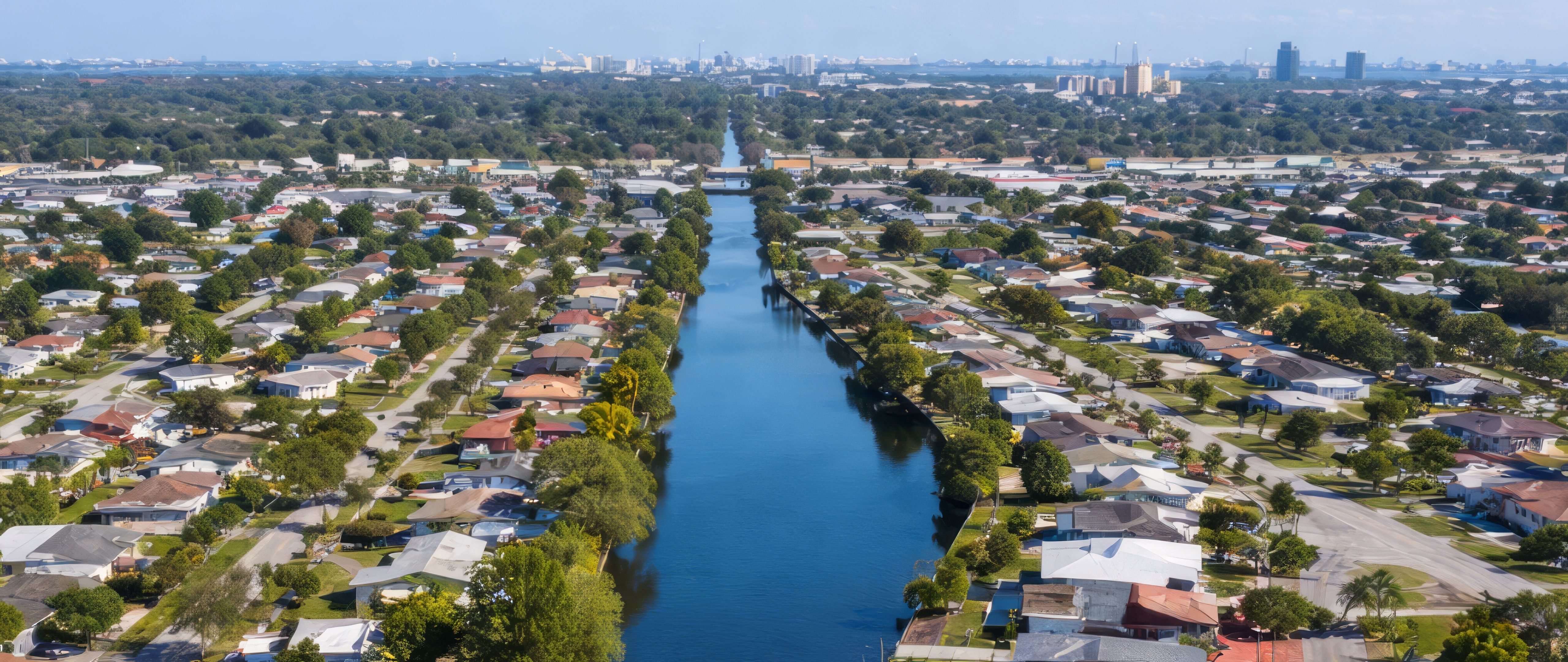
West Little River, Miami, Florida - EVERYTHING You Want to Know
Grab your go-to snack, cue up a playlist that fits the vibe, and get ready to explore ever...
.png)
The Ultimate Guide to Miami-Dade's Top 25 Gated Communities for Single-Family Homes
Discover Miami's top gated communities in this essential guide for luxury home buyers...


Miami's BEST Restaurants in EVERY Neighborhood
Check out the absolute BEST restaurants in every neighborhood of Miami, including the best...
Selling Your Home?
Who are we?
We are the ALL IN Miami Group out of Miami.
We are Colombian, Filipino, Cuban, German, Japanese, French, Indian, Syrian, and American.
We are Christian, Hindu, and Jewish.
We are many, but we are one.
We sell luxury homes in Miami, Florida.
Although some of our clients are celebrities, athletes, and people you read about online, we also help young adults find their first place to rent when they are ready to live on their own.
First-time buyers?
All the time!
No matter what your situation or price range is, we feel truly blessed and honored to play such a big part in your life.