



Who Lives in Coral Terrace and Flagami? (It's Not Who You Think!)

Amit Bhuta
I use non-traditional marketing to inspire the most motivated buyers to pay the max for Miami luxury homes...
I use non-traditional marketing to inspire the most motivated buyers to pay the max for Miami luxury homes...
Coral Terrace and Flagami? Aren’t those the busy areas by Flagler and Calle Ocho with older homes, a lot of rentals, a bit of inconsistency, and always stuck in Coral Gables’ shadow?
It’s the common first impression of these two understated communities—and honestly, it makes sense.
Most people experience them from the main roads, usually while heading somewhere else or coming home, moving through the faster, louder, more mixed corridors without ever seeing what sits just beyond them.
But the people who actually own homes in Coral Terrace and Flagami don’t live in that version.
They’ve already driven past the surface, walked the side streets, and paid attention to how the neighborhoods function day to day.
For them, the narrative shifts.
“Busy” becomes access.
“Older homes” become flexible.
“Inconsistency” becomes a trove of options.
And the comparison to Coral Gables stops mattering altogether.
They’re not trying to fit into a label—they’re choosing what works.
And if you see yourself in any of these groups, chances are, you would too.
Here are the six types of buyers you’ll meet in Coral Terrace and Flagami.
 (31).png?w=1140)
1) The “We Grew Up Around Here” Locals
There’s no learning curve for this group, usually in their late 20s to late 40s.
These buyers already know the streets, the shortcuts, and which blocks feel more residential than others.
They’ve spent years passing through—or living nearby—and by the time they’re ready to buy, the question isn’t if this area works, it’s which house does.
They gravitate toward single-family homes, often older ones with solid structure, because they already understand the value behind them.
Coral Terrace wins them over with its more uniform residential feel, while parts of Flagami appeal for their accessibility and familiarity.
For them, this isn’t a discovery—it’s a decision that feels long overdue.
 (28).png?w=1140)
2) The Budget-Stretchers (But Make It Smart)
The Budget-Stretchers have seen the numbers, and they’ve decided where the line is.
Late 20s to early 40s, this group is financially aware in a very real way—they’re willing to stretch, but only if it still allows them to live comfortably after the purchase.
Coral Gables might’ve been part of the search at one point, but the math didn’t sit right.
So they pivot, not down, but strategically.
In Coral Terrace and Flagami, they find single-family homes that give them space and location without forcing them into a tight financial corner.
Many go for homes that are livable now but leave room for gradual upgrades, because spreading out improvements feels smarter than paying upfront for everything.
They are not chasing a deal—they’re building a plan that holds up long after closing.
 (29).png?w=1140)
3) The Multi-Gen Households
Space is not optional for them — it’s the entire point.
Most fall between their early 30s and 60s, and they’re buying with more than one generation in mind: parents, in-laws, adult children—sometimes all at once.
What they need is flexibility, and that often means duplexes, homes with separate entrances, or layouts that can be divided without feeling cramped.
Flagami stands out for its variety of property types, while Coral Terrace offers single-family homes with enough room to adapt over time.
To them, choosing either of these neighborhoods isn’t a temporary setup or a compromise.
It’s a structure that reflects how they live—and plan to keep living.
 (32).png?w=1140)
4) The “Why Pay Gables Prices?” Crowd
At some point, these people did the comparison—and that was enough.
Usually between 30 and 50, the "Why Pay Gables Prices" crowd has walked through homes in Coral Gables, appreciated the aesthetics, and then immediately questioned the price difference.
Not emotionally—logically.
So they step just outside it, into Coral Terrace and Flagami, where they have access to the same general area without the added cost tied to reputation.
They tend to choose well-maintained single-family homes that prioritize livability first, not presentation.
They are not trying to replicate the Gables.
They’re trying to make a decision that feels justified every time they think about it—and here, it does.
 (30).png?w=1140)
5) The First-Time, But Not Clueless Buyers
They ask the right questions early—and it shows.
Ranging from mid-20s to late 30s, this group is entering the market with just enough awareness to avoid the usual mistakes.
They know they’re not getting perfection, and they’re not expecting it — what matters is getting in the right way.
They often lean toward smaller single-family homes or fixer-uppers with strong potential, especially in Flagami, where entry points can be more flexible.
Coral Terrace becomes appealing when they want something slightly more stable in layout and feel.
They are not chasing the ideal home.
They are choosing a starting point that actually works.
 (33).png?w=1140)
6) The Live-In Investors
You won’t always notice them right away—but they’ve already thought three steps ahead.
Typically between 30 and 55, this group is buying homes they will live in, while quietly making sure they can support them financially.
That could mean a duplex, an efficiency unit, or a layout that allows part of the home to generate income.
Flagami becomes especially attractive for this reason, while Coral Terrace offers opportunities through larger lots and adaptable spaces.
They’re not flipping or rushing.
They’re structuring something that gives them options—now, and later.
And even if they never move, they’ve already built flexibility into the decision.
SO… WHO IS CORAL TERRACE OR FLAGAMI REALLY FOR?
Those who look for homes that work harder than they look
Some buyers walk into a neighborhood looking for a feeling.
Others walk in asking what the home can actually do for them.
Coral Terrace and Flagami attract the latter: buyers who care about how a property functions day-to-day—how easily they can get around, how flexible the space is, and whether the home can adapt as their needs change.
They are not overly concerned with whether the neighborhood feels polished at first glance.
They are paying attention to what’s behind that first impression.
To them, access matters, so does layout, and the ability to use the home in more than one way, whether that means accommodating family, making gradual upgrades, or creating additional income over time.
There’s also a level of practicality that runs through most of these buyers.
They understand trade-offs, but they also recognize when something is being undervalued simply because it doesn’t present itself in a certain way.
Coral Terrace and Flagami reward that kind of thinking.
They are for buyers who don’t need everything to look perfect on day one, as long as it works exactly how they need it to.
And more often than not, they are for people who are comfortable making decisions that make sense to them, even if they don’t match what everyone else expects.
WHO MIGHT NOT LOVE IT?
Those who need immediate visual appeal
Not every buyer connects with Coral Terrace and Flagami — and that usually comes down to expectations.
If the goal is to move into a neighborhood that already feels polished, uniform, and visually curated from the moment you arrive, this may feel like a mismatch.
These areas don’t present themselves all at once.
They require a bit of context, and not everyone wants to look for it.
Buyers who prioritize walkability in the sense of stepping outside and immediately being surrounded by cafés, shops, and social spaces may also feel disconnected.
There are commercial corridors nearby, but daily life in Coral Terrace and Flagami is still structured around driving and knowing where you’re going.
It can also feel less appealing to those who prefer newer construction or homes that are already fully updated.
Much of the housing stock is older, which means variation in condition, layout, and overall presentation from one property to the next.
For some buyers, that flexibility is an advantage.
For others, it feels like uncertainty.
And for anyone who places a strong emphasis on neighborhood reputation or wants the address itself to carry a certain level of recognition, these areas may feel like they fall short — even when they function well.
Coral Terrace and Flagami can't compete on perception, but they will be loved by buyers who are willing to look past it.
THE PART THAT MATTERS
Why Coral Terrace and Flagami work for the people who choose them
What makes Coral Terrace and Flagami work is not how they present themselves — it’s how much they allow.
These neighborhoods don’t try to control the outcome.
They give buyers room to decide how they want to live, how they want to use their space, and how much they want to build into it over time.
The location also helps strengthen the attraction.
Close to major roads, central to multiple parts of Miami, and easy to move in and out of without overthinking every trip, Coral Terrace and Flagami provide that kind of access that can shape everyday life in ways buyers only fully appreciate after they’ve settled in.
Then there’s the housing itself.
They're not uniform or overly curated, but adaptable in ways that newer or more regulated neighborhoods often are not.
Single-family homes, duplexes, efficiencies — these different setups allow for different strategies, whether that’s accommodating family, generating income, or simply having options later on.
Financially, buyers enter a central area without overextending, which changes how stable a long-term purchase feels.
Here, homes are not always treated as stepping stones.
They become places people adjust to, build around, and keep.
That’s what Coral Terrace and Flagami offer — flexibility that becomes harder to replace once you’ve experienced it.
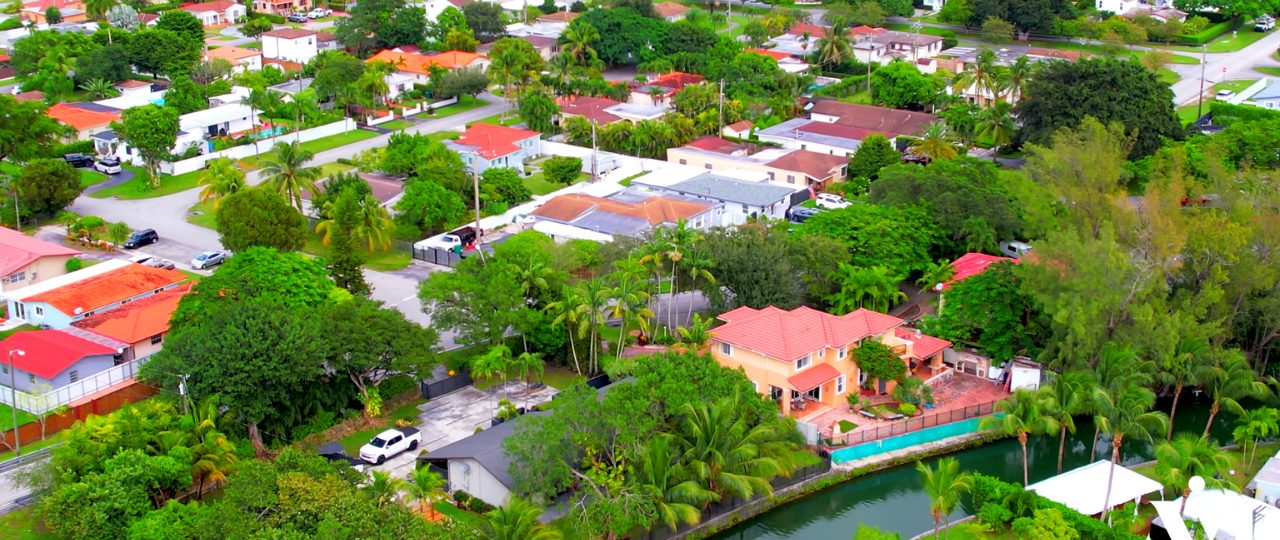%20(3).png)
Coral Terrace | Flagami, Miami, Florida - EVERYTHING You Want to Know
Join us as we embark on a virtual rendezvous to all things Coral Terrace and Flagami! We&#...
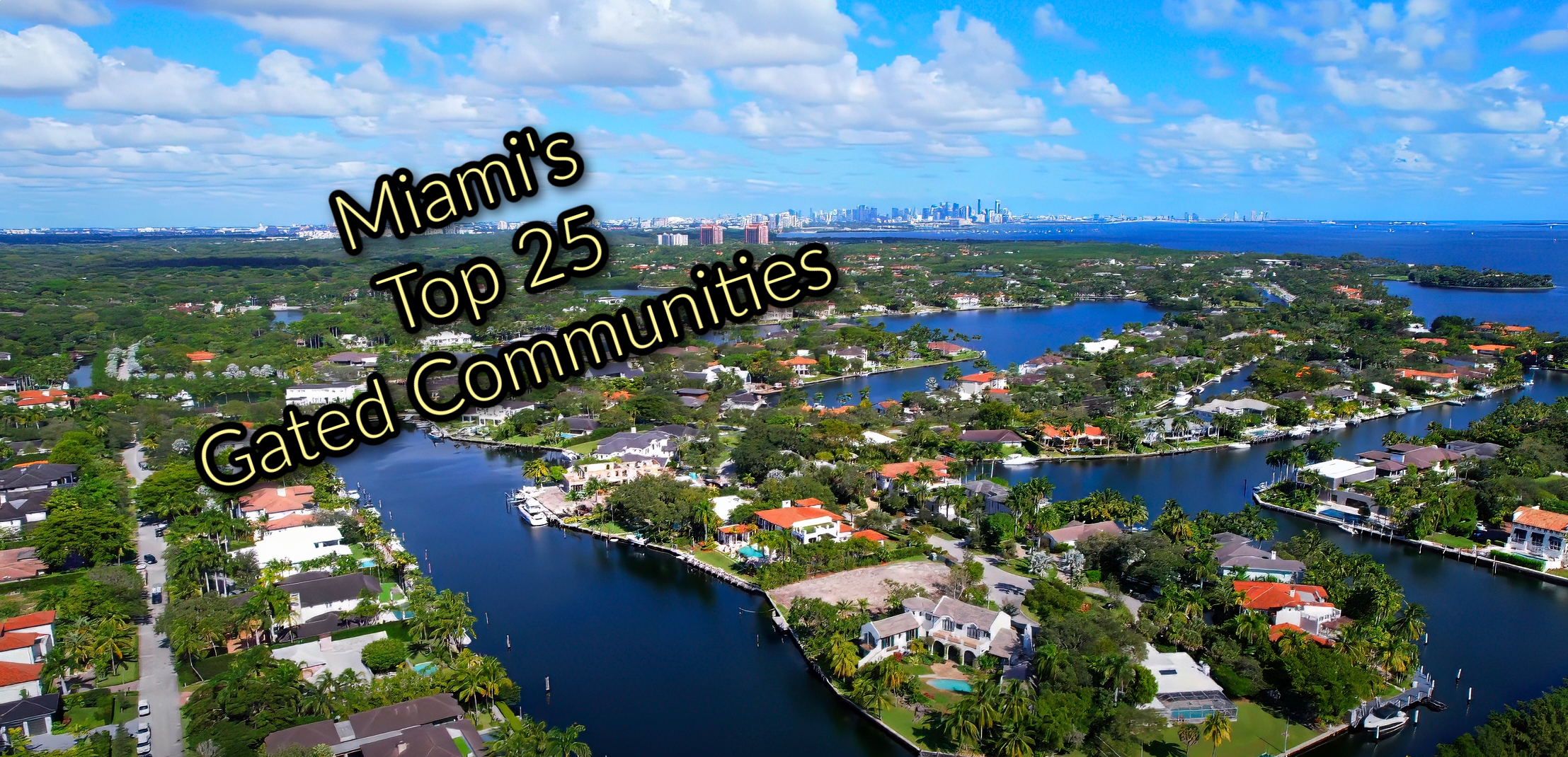.png)
The Ultimate Guide to Miami-Dade's Top 25 Gated Communities for Single-Family Homes
Discover Miami's top gated communities in this essential guide for luxury home buyers...


Miami's BEST Restaurants in EVERY Neighborhood
Check out the absolute BEST restaurants in every neighborhood of Miami, including the best...
Selling Your Home?
Who are we?
We are the ALL IN Miami Group out of Miami.
We are Colombian, Filipino, Cuban, German, Japanese, French, Indian, Syrian, and American.
We are Christian, Hindu, and Jewish.
We are many, but we are one.
We sell luxury homes in Miami, Florida.
Although some of our clients are celebrities, athletes, and people you read about online, we also help young adults find their first place to rent when they are ready to live on their own.
First-time buyers?
All the time!
No matter what your situation or price range is, we feel truly blessed and honored to play such a big part in your life.