



What $300K, $700K, and $1M+ Gets You in Little Havana Right Now

Amit Bhuta
I use non-traditional marketing to inspire the most motivated buyers to pay the max for Miami luxury homes...
I use non-traditional marketing to inspire the most motivated buyers to pay the max for Miami luxury homes...
The Little Havana real estate is like the dominoes its residents love to play — every property seems to affect the next one.
A renovated place raises eyebrows, a nearby development raises expectations, and suddenly the asking price down the block has developed the confidence to mark up from last year's.
So, if you think you know what you're getting into by shopping from a distance, well, you have another thing coming.
It'll get undoubtedly more serious once your own bank account joins the game.
The neighborhood sits close enough to Miami’s major employment and entertainment districts to keep demand interested, yet its older urban fabric means buyers are rarely comparing perfectly matched properties.
Meanwhile, price can reflect condition, location, land value, income potential, or how aggressively someone believes the next few years will unfold.
So, where does one go from here?
You play the hand in front of you, keep an eye on what is moving around it, and make sure your savings do not get knocked over in the process.
Here’s what your budget can get you right now in Little Havana.
AROUND $300K
 (30).png?w=1140)
1) Older Entry-Level Condos
If getting into Little Havana matters more than owning a patch of grass, $300,000 isn't as tiny as you think.
The neighborhood still has older condos priced well below the cost of its detached homes, giving buyers a way into the market without stretching toward the $600Ks and $700Ks.
These are generally modest one- and two-bedroom units in older low-rise buildings, though, not glass towers with rooftop cabanas and a lobby that smells like expensive perfume.
That said, the simpler setup can work perfectly well for someone who wants a home base near central Miami and does not need a large private yard.
But a cheap unit does not always mean equally inexpensive ownership.
Association fees cover shared expenses, and buyers should review the association's budget, reserves, insurance, upcoming repairs, and any special assessments before deciding what the condo truly costs each month.
Age is also a factor, since some older Miami-Dade buildings are subject to periodic structural recertification requirements depending on their age, height, and location.
For a $300,000 buyer, the best condo may be the one that leaves plenty of money untouched after closing rather than the one that uses every dollar simply because the lender says you can.
AROUND $700K
 (31).png?w=1140)
1) Older Detached Single-Family Homes
At $700,000, buyers can realistically shop older detached homes, including the one-story houses and longtime residences woven through the streets beyond Calle Ocho that we've all known and loved in Little Havana.
Current listings around the neighborhood include detached properties in roughly the upper $600Ks and $700Ks, reinforcing this as a much more realistic single-family budget than $300,000.
Do not expect the houses to line up neatly by price, because age, renovation, lot size, additions, and exact location can make two similar-looking homes different by a mile.
One seller may have already handled the kitchen, windows, and major systems, while another may be offering decades of character along with decades of maintenance history.
If you would rather choose your own improvements than pay a premium for somebody else's taste, that's not necessarily a downside.
However, it does mean permit history deserves a look, especially in older housing where additions and renovations may have accumulated over several owners; the City of Miami provides an online permit-history search for exactly that purpose.
At $700,000, chase the house that has been cared for where it matters, not simply the one that learned how to pose best for staging.
 (32).png?w=1140)
2) Existing Duplexes / Two-Unit Income Properties
Some buyers explore Little Havana counting closets; others start counting front doors.
Duplexes give that second group a reason to pay attention, with existing two-unit properties showing up from roughly the $600Ks through the upper-$800Ks in the current market.
A buyer can live in one side and rent the other, keep separate space for family, or treat both units as an investment.
That setup has real value in a centrally located neighborhood where rental demand can make an extra legal unit far more interesting than an oversized primary bedroom, but make sure everything's legal.
Older Miami properties can accumulate conversions and additions over time, so the advertised unit count should match City records and permits before even considering rental income.
Current rent matters more than the rent someone promises you could collect after renovations, perfect tenants, and a very cooperative universe.
For buyers who want their Little Havana property to contribute financially, a duplex can make $700,000 work harder—but only when both doors lead to numbers you have verified.
 (33).png?w=1140)
3) Small Infill / Redevelopment Lots
Small vacant parcels and redevelopment lots can be in the same general price range as a house, because in Little Havana, the buyer may be paying for the right to build rather than for something already standing.
These urban infill sites are typically individual parcels tucked between existing streets and buildings rather than huge development tracts.
Their value depends heavily on zoning, which are the City rules controlling what can be built, how intensely the land can be used, and other development standards.
Miami 21 establishes those rules and assigns properties specific zoning categories through the City's official zoning atlas.
That makes the empty lot itself only the beginning of the adventure.
Architecture, engineering, permits, demolition where needed, utility work, financing, and construction still have to join the project after closing, and none of them accept enthusiasm as payment.
For someone determined to build in Little Havana, a smaller infill lot can be a smart entry into development—provided the zoning supports the project before the rendering gets expensive.
AROUND $1M+
 (34).png?w=1140)
1) Triplexes, Fourplexes & Small Apartment Buildings
You know the Little Havana search has changed when the showing starts with a rent roll instead of a room tour.
Above $1 million, buyers increasingly encounter properties with several income-producing units, moving the purchase beyond the simpler owner-plus-tenant setup of a duplex.
Current Little Havana-area multifamily inventory comfortably steps into seven figures, while the broader neighborhood search includes substantial small apartment and multi-unit properties and lower-priced duplexes.
More units can spread rental income across several households, so one vacancy does not necessarily leave the entire property earning nothing.
Of course, four rent checks also come with four opportunities for a toilet to choose Sunday morning for personal growth.
What you should focus on is the net income—the money remaining after operating expenses—rather than gross rent alone.
Buyers should account for vacancies, maintenance, utilities paid by the owner, insurance, management, taxes, and larger building repairs before deciding whether the asking price works.
Older apartment properties may also fall under Miami-Dade's building recertification program depending on age and other qualifying factors, making recertification status significant before closing.
For a seven-figure multifamily purchase, let the property's existing operations prove the investment case rather than relying on future rent increases to rescue it.
 (35).png?w=1140)
2) Larger / Higher-Density Development Sites
In Little Havana, larger parcels and higher-density sites command seven figures because they offer more development capacity than the single infill lots available farther down the market.
The important difference is not merely square footage.
Zoning, frontage, parcel configuration, allowable density, and the possibility of combining neighboring sites can change what a developer can realistically create.
Miami 21 governs new development and redevelopment throughout the City, so the property's zoning designation needs to support the project, rather than just sound promising in the marketing remarks.
Land buyers also have to budget for the months—or years—between purchasing the site and collecting revenue from whatever eventually replaces it.
During that gap, financing, taxes, design work, professional fees, permitting, and other carrying costs continue even when the site itself isn't productive.
That is why a large Little Havana development site should be valued backward from a realistic project, not forward from the most ambitious thing somebody can squeeze into a glossy rendering.
At $1 million-plus, buy density you can use, not one you have to explain away later.
THE REAL COST OF BUYING IN LITTLE HAVANA
So, which budget works best in Little Havana?
Build a Little Havana budget with a little elbow room, instead of worrying about maximizing it.
For someone who wants to enter this community, $300,000 can open the door through a condo, but spending every available dollar on the unit itself leaves little protection if the building later asks owners to contribute toward a major project.
A buyer determined to own a detached house should think closer to the $700,000 range, with additional cash available for the realities that come with older Miami housing.
The extra reserve matters because the charming house near Calle Ocho may have accumulated renovations, additions, and repairs across several decades, and City permit records can reveal a story the staging forgot to mention.
Investors need a different cushion altogether.
A rental property can look affordable based on gross income and become considerably less charming as soon as vacancies, repairs, utilities, management, and building work start taking bites at the rent.
Older qualifying buildings may also face Miami-Dade recertification requirements, so a multi-unit buyer should know where the property sits in that cycle before treating today's expenses as permanent.
Developers have perhaps the strangest version of the Little Havana budget because buying the land can be the easiest number to calculate.
Miami 21 determines what the parcel can legally become, while design, approvals, financing, and construction determine whether that legal possibility makes financial sense.
And because Little Havana sits so close to central Miami, buyers are often competing with people who see more than a home when they look at the same address, which can make it tempting to pay for future density, future rents, or the next wave of neighborhood demand before any of them materialize.
While there's nothing wrong with buying into that future, you shouldn't choose a current deal that requires every prediction to come true.
In Little Havana, you do not need to predict where every domino will fall.
You only need enough room in the budget that one unexpected move does not knock your whole plan over.
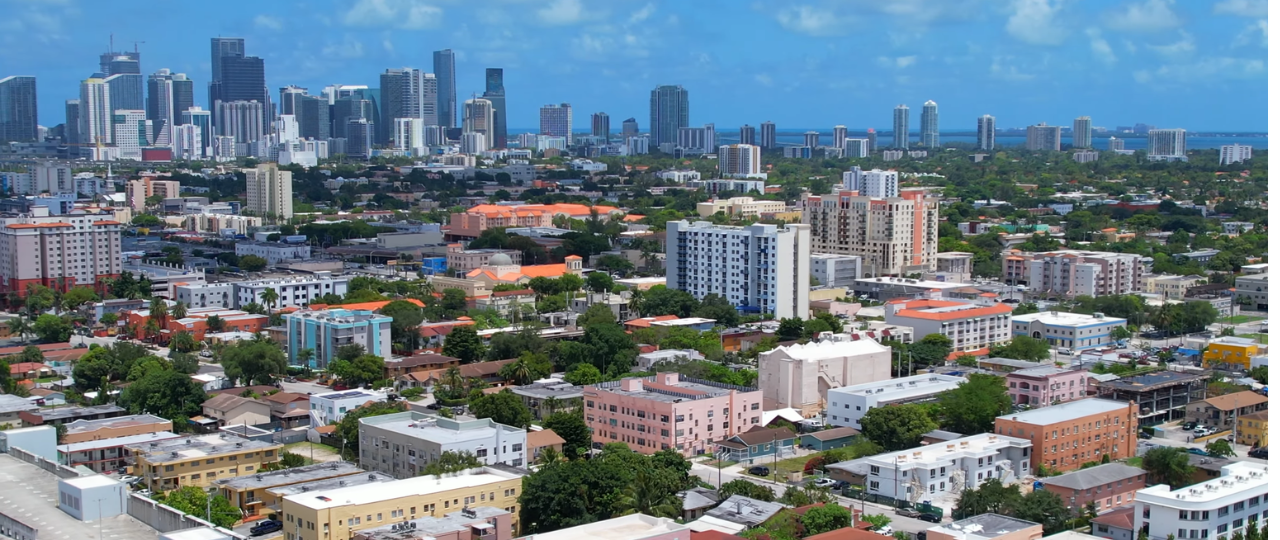%20(23).png)
Little Havana, Miami, Florida - EVERYTHING You Want to Know
Drop everything you're doing and hop on this virtual escapade across Little Havana�...
.png)
The Ultimate Guide to Miami-Dade's Top 25 Gated Communities for Single-Family Homes
Discover Miami's top gated communities in this essential guide for luxury home buyers...


Miami's BEST Restaurants in EVERY Neighborhood
Check out the absolute BEST restaurants in every neighborhood of Miami, including the best...
Selling Your Home?
Who are we?
We are the ALL IN Miami Group out of Miami.
We are Colombian, Filipino, Cuban, German, Japanese, French, Indian, Syrian, and American.
We are Christian, Hindu, and Jewish.
We are many, but we are one.
We sell luxury homes in Miami, Florida.
Although some of our clients are celebrities, athletes, and people you read about online, we also help young adults find their first place to rent when they are ready to live on their own.
First-time buyers?
All the time!
No matter what your situation or price range is, we feel truly blessed and honored to play such a big part in your life.