



What $300K, $500K, and $1M+ Gets You in Little Haiti Right Now

Amit Bhuta
I use non-traditional marketing to inspire the most motivated buyers to pay the max for Miami luxury homes...
I use non-traditional marketing to inspire the most motivated buyers to pay the max for Miami luxury homes...
In Little Haiti, Creole conversations aren't the only things that occasionally need subtitles.
Why? Well, a price that looks high at first may be telling you more about the land, location, or its future than the property itself, while a lower one may come with baggage your inspector can't ignore.
Indeed, Little Haiti is changing; investment is moving in, and more buyers with very different goals are competing for pieces of the same map.
Some are shopping for today, some are betting on tomorrow, and the smartest ones are making sure they are not accidentally paying for both.
But who comes out on top are those who can appreciate the neighborhood’s momentum without getting hypnotized by the phrase “up-and-coming.”
After all, future potential is much more fun when you did not already pay full price for it.
Oh, and for the prices, keep scrolling!
Here’s what your budget can get you right now in Little Haiti.
AROUND $300K
 (22).png?w=1140)
1) Entry-Level Condos / Co-ops
Not every Little Haiti buyer needs a yard, a roof to maintain, and a Saturday morning relationship with the lawn mower.
The neighborhood still has a small stock of older low-rise condos and co-ops that can put ownership well below the cost of a detached house, with current condo inventory sitting around the mid-$100Ks rather than anywhere near the full $300,000 budget.
These are generally modest one- and two-bedroom units in older buildings rather than amenity-heavy towers with rooftop pools and a concierge.
The lower purchase price can be especially helpful for buyers who seek location and ownership over private outdoor space.
But the unit price is only a chunk of what you have to pay.
Monthly association fees, building insurance, reserves, planned repairs, and possible special assessments can turn a suspiciously cheap condo into a much more intriguing monthly payment.
Co-ops also vary from condos because buyers purchase shares in the corporation that owns the building rather than directly owning the unit itself, so financing and approval rules deserve an early look.
For someone who wants the lowest practical entry into Little Haiti, this category can work well—just read the association paperwork with the same enthusiasm you read the listing photos.
 (23).png?w=1140)
2) Small Residential Infill Lots / Buildable Lots
Every once in a while, the most ambitious listing in Little Haiti won't have a house at all.
Small vacant parcels remain part of the neighborhood's market, with current land offerings showing residential-sized sites from roughly $200Ks to $400Ks depending on location, size, and development potential.
These are infill lots, meaning empty parcels tucked into an already developed neighborhood rather than land in a brand-new subdivision.
For a buyer with a clear plan, that can mean starting fresh instead of paying for an older building only to spend more money undoing it.
However, be cautious with the term "buildable."
What fits physically on the lot and what Miami zoning legally allows can be two very different things, which means setbacks, density, parking, permitted uses, and utility access need to be confirmed.
The City uses its planning and land-use rules to determine how properties can be developed, and those rules matter enormously when much of the property's value depends on what comes next.
A $300,000 lot can be an exciting Little Haiti entry, but only when the project penciled in after closing is as realistic as the purchase itself.
AROUND $500K
 (24).png?w=1140)
1) Older Detached Single-Family Homes
For a more traditional house hunt in Little Haiti, aim for a budget of at least $500K.
At this level, buyers can find the neighborhood's older detached housing stock, often modest one-story homes built decades ago and sitting on established urban lots.
Condition can vary dramatically, which is why two houses with similar bedroom counts can have very different asking prices without anyone necessarily misplacing a zero.
One may have updated kitchens, impact windows, and newer systems, while another may still be carrying enough original material to qualify as a small time capsule.
That variation is part of the appeal for buyers who would rather choose where their renovation dollars go over automatically paying for somebody else's version of modern.
It is also why square footage alone is a poor shortcut for value in this listing type.
Roof age, plumbing, electrical work, additions, lot usefulness, and overall condition can matter more than whether one listing technically has an extra bedroom.
If you want a traditional Little Haiti house around $500,000, shop the condition and the parcel together—the prettier living room is only one of them.
 (26).png?w=1140)
2) Existing Duplexes / Small Multifamily Income Properties
One property, two households, and suddenly the mortgage has a potential coworker.
Existing duplexes are a meaningful part of Little Haiti's market in the $500Ks and $600Ks, with current multifamily listings showing several two-unit and small income properties in that range.
That can appeal to an owner who lives in one unit and rents the other, a family that wants separate living spaces, or an investor who has no intention of picking a favorite side.
The charm of the setup is that a purchase can create more than one stream of use or income.
The paperwork, however, may cause you to lose that "love at first sight" vibe.
Buyers need to verify the legal unit count, existing leases, deposits, current rents, utility arrangements, and whether additions or conversions match City records.
A duplex producing believable income today is very different from one whose advertised return depends on future rents, future renovations, and a future tenant who apparently never calls maintenance.
For buyers who want Little Haiti real estate to help pay for itself, this is an ideal option.
AROUND $1M+
 (25).png?w=1140)
1) New-Construction Townhomes / Twin Homes
Cross seven figures in Little Haiti, and some of the neighborhood's oldest housing stock suddenly has very young competition.
New townhomes and twin homes have begun appearing around the $1.1 million mark, including multiple 2026-built offerings with three or four bedrooms and contemporary layouts.
These are a different proposition from buying an older detached home and renovating it room by room.
Here, you can expect newer construction, taller, more open interiors, impact-rated openings where included, modern kitchens, private outdoor areas in some projects, and considerably less archaeological work behind the walls.
The trade can be a smaller private parcel, attached or semi-attached living, and pricing that reflects both the new construction and the changing market around it.
As the category is still emerging, buyers should not expect dozens of nearly identical options for comparison.
They should also check HOA obligations, builder warranties, completion status, and exactly what is included, because "new construction" can describe everything from ready for furniture to ready for another conversation with the contractor.
If modern design matters more than owning an older detached house, $1 million-plus allows Little Haiti to offer a genuinely different residential option.
 (28).png?w=1140)
2) Larger & Newer Multifamily Properties
Little Haiti's upper multifamily market includes larger renovated properties, triplex-style buildings, and newer projects carrying asking prices above $1 million, and the broader current multifamily inventory remains one of the neighborhood's more active property segments.
Here, you're paying for scale as more units can mean more rental income and less dependence on a tenant keeping the entire property occupied.
Unfortunately, more doors also bring more roofs, plumbing fixtures, air conditioners, turnovers, and repair requests.
This means gross rent matters much less than the income left after expenses.
Buyers should review current leases, vacancy, utilities, insurance, maintenance, management, upcoming capital work, and the legal status of every unit before considering the property earnings.
Newer construction can reduce some immediate repair risk, but it usually commands a substantial premium and still needs careful inspection.
If the goal is serious income rather than simply owning a spare rental unit, the $1 million-plus market offers Little Haiti buyers more scale—but the deal needs to survive real expenses, not just enthusiastic projections.
 (27).png?w=1140)
3) Higher-Density Development Sites / Assemblages
Large development sites and assemblages—several neighboring parcels sold together—can command seven figures because buyers are paying for land area, zoning, density, and the ability to create a much larger project in Little Haiti.
Current listings include multi-parcel sites marketed for denser residential or mixed-use redevelopment, including assemblages with T5 zoning and enough combined land for substantially more units than a small residential infill lot could support.
This is why the category belongs separately from the $300,000 lot market.
A person buying one small parcel to build a house or duplex is playing a very different game from a developer combining lots for a larger project.
The purchase price is only the admission ticket, because architecture, engineering, entitlement work, permitting, financing, demolition where needed, construction, and time all arrive afterward.
Assemblages also introduce another complication: the project may depend on acquiring the right combination of neighboring parcels, and one missing piece can change the plan considerably.
At this end of Little Haiti, buyers should value the site according to what today's rules and realistic construction computations allow—not according to the tallest building somebody can fit into a rendering.
THE REAL COST OF BUYING IN LITTLE HAITI
So, which budget works best in Little Haiti?
In Little Haiti, the cheapest buyer and the richest developer can both be looking at the same block for completely different reasons.
That makes having a budget important, but knowing whose game you are playing matters even more.
A homeowner may see an older house worth improving, while an investor sees future rents and a developer sees land in both.
This is part of why Little Haiti's prices can become difficult to explain through bedrooms and bathrooms alone.
The neighborhood has also become part of Miami's discussion of climate gentrification, as researchers and advocates point to its relatively higher inland elevation as one factor attracting development pressure as coastal risk comes into focus.
That said, higher ground shouldn't be treated like a coupon guaranteeing appreciation.
Buyers only need to recognize that forces much larger than the individual house are already influencing how land is valued.
For someone who wants a home, roughly $500,000 remains a far more natural budget than chasing a seven-figure redevelopment story.
A $300,000 buyer can enter more cost-effectively through a condo or land, but both come with their own homework—association finances for one and construction calculations for the other.
Once the budget reaches $1 million, it becomes especially important to decide whether you are paying for a better place to live or the ability to make the property do something bigger.
Development buyers should budget for time itself, as land costs continue while plans, approvals, financing, and construction move at their own speed.
Investors should be equally suspicious of projected rents that require the neighborhood to become more expensive before the deal starts working.
Little Haiti has enough momentum that buying in this community can make the future difficult to ignore.
However, its culture, existing community, and current market are not merely a waiting room for whatever comes next.
The buyer who does best in Little Haiti may be the one who can see the neighborhood's next chapter without paying as though it has already been written.
%20(22)-fotor-20240528134935.png)
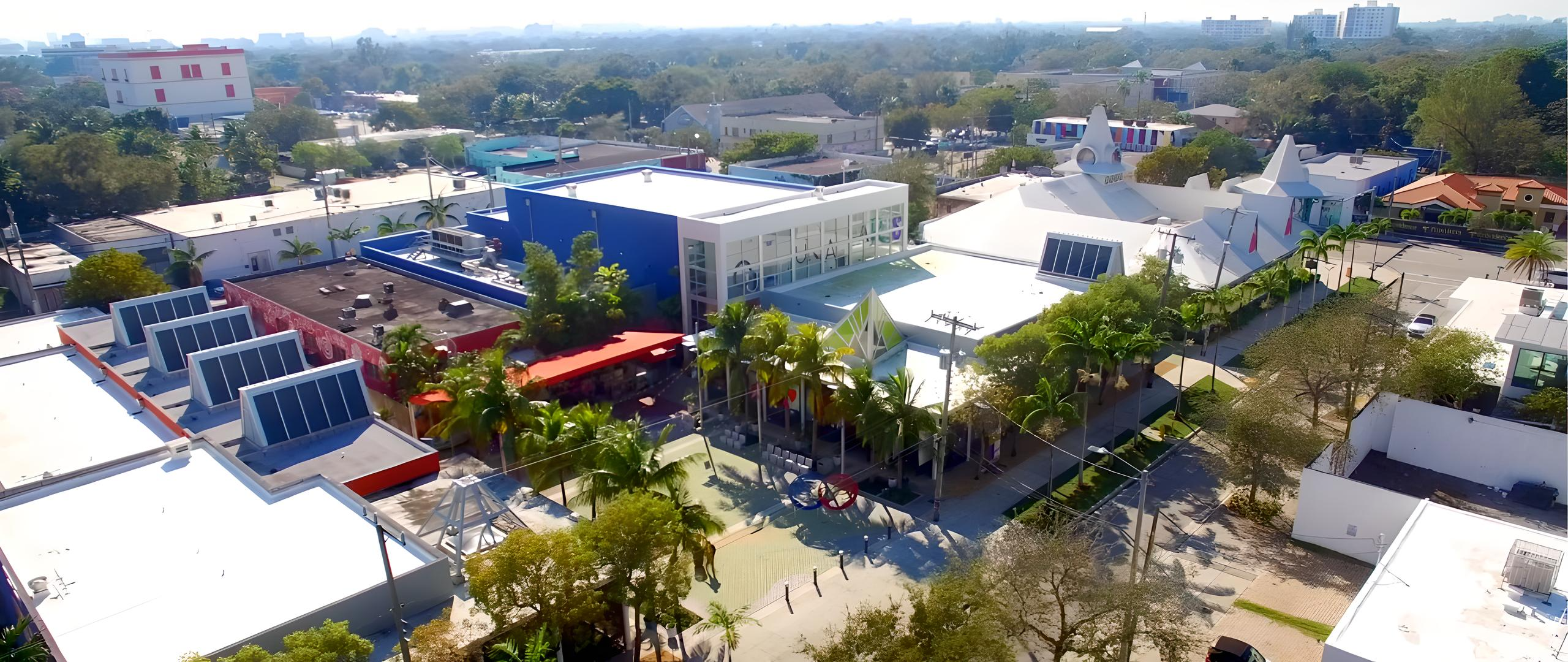
Little Haiti, Miami, Florida - EVERYTHING You Want to Know
Jump at this rare chance to explore the best of Little Haiti without leaving your seat! By...
.png)
The Ultimate Guide to Miami-Dade's Top 25 Gated Communities for Single-Family Homes
Discover Miami's top gated communities in this essential guide for luxury home buyers...


Miami's BEST Restaurants in EVERY Neighborhood
Check out the absolute BEST restaurants in every neighborhood of Miami, including the best...
Selling Your Home?
Who are we?
We are the ALL IN Miami Group out of Miami.
We are Colombian, Filipino, Cuban, German, Japanese, French, Indian, Syrian, and American.
We are Christian, Hindu, and Jewish.
We are many, but we are one.
We sell luxury homes in Miami, Florida.
Although some of our clients are celebrities, athletes, and people you read about online, we also help young adults find their first place to rent when they are ready to live on their own.
First-time buyers?
All the time!
No matter what your situation or price range is, we feel truly blessed and honored to play such a big part in your life.