



What Nobody Tells You About Living on the Upper East Side

Amit Bhuta
I use non-traditional marketing to inspire the most motivated buyers to pay the max for Miami luxury homes...
I use non-traditional marketing to inspire the most motivated buyers to pay the max for Miami luxury homes...
Watch yourself turn into the person who says "MiMo" out loud in casual conversation, every chance you get, in just a day of moving to the Upper East Side.
And boy, does it happen fast!
One minute you're touring an apartment, the next you're defending a 1950s motel-turned-condo like it's your firstborn.
It's just the effect that the Upper East Side Miami has on everyone, thanks to its retro charm, slower pulse than Downtown, and enough proximity to everything without actually being in the thick of it.
Just six months in and you'll be dropping phrases like "hidden gem" and "old Miami soul" while conveniently turning a blind eye to the growing pains that came with it.
Oh, yes, it has those too.
So before you fall for the vintage signage and the promise of authenticity, let's talk about the reality check waiting on the other side of month six.
Here are five things nobody tells you about living on the Upper East Side.
 (8).png?w=1140)
1) Ask Ten Upper East Side Residents Where They Live. Get Ten Different Answers.
The Upper East Side is more like a family reunion where everyone shares a last name but insists they are nothing alike.
One person will say Morningside, another will say Shorecrest, and someone from Bay Point may answer as though the guard gate has granted diplomatic status.
The City of Miami lists separate associations for Bayside, Bay Point, Belle Meade, Morningside, Palm Grove, Shorecrest, Magnolia Park, and several smaller pockets under the Upper East Side umbrella.
The exact pocket can determine whether the street is gated, historically protected, close to Biscayne Boulevard, beside the bay, lined with condos, or dealing with a major drainage project.
Two houses marketed under the same Upper East Side label can offer completely different versions of daily life before breakfast has even been served.
A quiet bungalow beneath mature trees does not come with the same rules, traffic, water access, or surroundings as a condo near the boulevard or a waterfront home behind private access.
Real estate listings often flatten those differences because “Upper East Side” fits more neatly inside a search box than a detailed explanation of local boundaries.
So before getting attached to the general area, check the subdivision name, association, historic designation, flood information, and nearby roads for the exact address.
Around here, asking “Do you like the Upper East Side?” is a little like asking whether someone likes sandwiches, because the filling changes the entire answer.
 (9).png?w=1140)
2) Want to Replace a Window? Better Bring a Permit and a Prayer!
Historic charm becomes much less adorable when one cracked window introduces you to a new branch of local government.
Parts of Morningside, Bayside, Palm Grove, and the Biscayne Boulevard MiMo corridor are historically designated, with homes and buildings representing several periods of Miami’s growth.
For a designated property, the City of Miami requires a Certificate of Appropriateness for work that's as modest as replacing windows, in addition to the usual construction permits.
Minor repairs may qualify for staff review, while major additions, demolition, new construction, and larger alterations may require a special certificate and a board hearing.
In other words, the renovation plan that involves “opening up the kitchen” may end with you learning several new abbreviations.
The rules help protect the architecture that gives these streets their character, so they are not pointless obstacles invented to ruin your Saturday.
They do mean that speed, material choices, window styles, roof details, and exterior changes may not be entirely your decision.
Older homes can also have dated electrical systems, plumbing, roofs, air-conditioning equipment, and renovations whose permit history may require a closer look.
A beautifully updated interior is reassuring, but it does not explain whether the addition in the back was approved or simply built during a time of great confidence.
The safest renovation budget includes money, patience, and enough emotional space for City Hall to have a say about your window frames.
 (10).png?w=1140)
3) Proximity Is Not the Same Thing as Access, and Biscayne Boulevard Will Prove It
Biscayne Boulevard can place dinner close enough to smell and inconvenient enough to ask for a transportation plan.
The corridor between roughly NE 50th and NE 77th streets forms the historic MiMo district and remains the commercial spine running through the Upper East Side.
Restaurants, shops, services, apartments, and distinctive old motels may sit only a few blocks from home, which sounds decently walkable until you see the route.
Crossing a busy multi-lane road in heat, rain, traffic, or sandals chosen for appearance rather than survival is not the same experience as strolling down a compact main street.
A property east of Biscayne Boulevard may offer easier access to bayfront residential pockets, while a home on the other side may have a different relationship with the same businesses.
Distance on a listing measures feet and miles, but it does not measure signal timing, crossings, sidewalk comfort, or how many lanes stand between you and your coffee.
Homes close to the boulevard may also trade shorter errands for more road noise, headlights, and the background hum of a major urban corridor.
The best way to test the setup is to walk from the house to the places you expect to use rather than nodding approvingly at the map from an air-conditioned car.
That six-minute drive to dinner may remain six minutes, while the promised ten-minute walk becomes a sweaty expedition with one dangerous left turn.
The Upper East Side offers more nearby activity than many residential neighborhoods, but Biscayne Boulevard still decides whether “nearby” means convenient or just visible.
 (11).png?w=1140)
4) $34.6 Million, 327 Properties, and a Drainage Project That Runs Through 2029
Shorecrest is getting a $34.6 million plumbing upgrade, except the pipes will be beneath the streets and the appointment's set to last several years.
The Shorecrest South project is designed to reduce localized flooding through larger stormwater inlets and pipes, injection wells, drainage trenches, a pump station, road reconstruction, curbs, ramps, and related street work.
The City estimates the cost at $34,607,969 and says the work will affect 327 properties, including 248 residential and 79 non-residential properties.
Those numbers make it clear that neighborhood flooding was not solved by telling everyone to buy taller rain boots.
The project is good news for long-term resilience because it moves stormwater more effectively and protects property.
The construction period, though, is another story, as the City notes that road closures can occur while streets, drainage systems, and other infrastructure are rebuilt.
The current schedule places the first phase from July 2026 through March 2027 and the second phase from May 2027 through May 2029, although the City warns that timing can change.
That means some buyers may inherit improved drainage, active construction, detours, or a sampler platter containing all three.
The project boundaries cover a specific part of Shorecrest, so an Upper East Side address alone does not tell you whether the property sits inside the work area.
Even after improvements, buyers should still examine elevation, prior flooding, drainage around the lot, insurance costs, and how the street behaves after a heavy storm.
A multimillion-dollar project can improve the neighborhood’s future, but during construction, your usual route home may develop its own creative process.
 (12).png?w=1140)
5) The Neighborhood You're Moving Into Today Is Not the One You'll Wake Up in Someday
The Upper East Side is changing while everyone is still arguing about what to call their individual corner of it.
Near NE 54th Street, the proposed Sabal Palm Village Special Area Plan covers nearly 26 acres and envisions a large mix of housing, offices, commercial space, a hotel, civic areas, parks, pedestrian passages, and a greenway.
The proposal includes 2,929 residential units and buildings in several different urban height categories, which would represent a major shift in scale for that part of the area.
It remains a proposal under City review, not a finished neighborhood waiting behind a ribbon.
While these renderings are excellent at showing future trees, it also means years of trucks, dust, hearings, and revised plans.
Transportation may change too, with Miami-Dade planning Northeast Corridor commuter-rail stations in the Design District and Little Haiti along the existing rail corridor.
The rail project has entered the federal engineering phase, but design, operations, costs, funding, and other details are still being refined.
Future transit and development could bring more businesses, housing choices, pedestrian activity, and alternatives to driving.
They could also bring more density, construction, traffic, taller buildings, and pressure on streets that already have full calendars.
Buyers should study nearby zoning and active proposals without paying today’s price for an amenity that remains on tomorrow’s drawing board.
The Upper East Side’s unfinished quality is part of its appeal, but anyone moving in should understand that the neighborhood has not promised to freeze itself for the closing photo.
WHO GETS THE MOST OUT OF LIVING ON THE UPPER EAST SIDE?
Those who want a combination of old Miami character and city convenience
The Upper East Side rewards people who would rather live somewhere with a past than inside a neighborhood assembled from the same five floor plans.
Its tree-lined streets, mid-century buildings, historic homes, and old roadside motels give the area a personality that newer developments often try to manufacture with murals and expensive lighting.
Biscayne Boulevard keeps restaurants, coffee shops, markets, and everyday services as part of the weekly routine.
The neighborhood works especially well for anyone who likes being near activity without sleeping directly above it.
A home tucked east or west of the boulevard can offer residential calm while the commercial corridor handles dinner, errands, and the occasional overpriced pastry.
The different pockets also provide more variety than the Upper East Side name initially suggests, ranging from guarded waterfront streets to bungalow blocks and condo-lined corridors.
That variety makes the area useful for households that care more about finding the right street than joining one perfectly matched community.
Historic districts add beauty and continuity, which matters when seeing original details brings more joy than replacing everything with gray tile.
The Upper East Side also suits anyone comfortable with a neighborhood that is still changing and has not finished deciding what its next chapter will look like.
New development, drainage work, and future transit plans may bring inconvenience, but they also show that the area isn't being left to coast on charm alone.
At its best, the Upper East Side offers personality, location, and enough unpredictability to keep the neighborhood from becoming boring.
WHO MAY WANT TO KEEP LOOKING?
People who can't function without simple answers, simple renovations, and simple street crossings
The Upper East Side can turn a basic home search into a research project with better landscaping.
Its collection of separate neighborhoods means the experience can change sharply within a few blocks, so choosing the area without studying the exact pocket is risky.
A quiet historic street, a condo near Biscayne Boulevard, and a low-lying Shorecrest property may share the same broad label and nothing else.
Older homes can involve repairs, permit questions, previous additions, and electrical panels that appear to have witnessed several decades.
Historic designation can add another round of approvals when exterior changes involve windows, roofs, additions, or other visible features.
That protection preserves the architecture, but it may frustrate anyone whose strategy begins with demolition and ends with ordering whatever is currently trending.
Biscayne Boulevard brings essential businesses nearby, although crossing it can turn a short walk into a small test of judgment, timing, and footwear.
Flood risk and construction, particularly in areas where major drainage work may affect access and daily routines for years, are also factors to consider.
Future development may also change views, traffic, density, and the overall pace of nearby streets.
The Upper East Side asks for more due diligence than neighborhoods where every block follows the same rules, and every house was built during the same decade.
Anyone searching for predictability may prefer an area where the windows, flood maps, road projects, and zoning proposals do not all require separate homework assignments.
AN HONEST TAKEAWAY
What living on the Upper East Side really comes down to
The Upper East Side is Miami with the edits still visible.
Its best streets proudly feature old architecture, mature landscaping, waterfront pockets, and commercial landmarks that could not be recreated by dropping a luxury tower beside a branded coffee shop.
Its rougher edges are just as real, including traffic, flooding concerns, aging homes, uneven walkability, and development plans that are capable of changing the view from the porch.
That mixture is why the neighborhood can be difficult to summarize and easy to misunderstand.
Calling it charming ignores the practical work of older properties and protected districts.
Calling it convenient ignores the fact that Biscayne Boulevard can sit between a house and the very place described as nearby.
Calling it up-and-coming misses that several parts already have identities, while other sections remain in the middle of major change.
The Upper East Side makes the most sense when its contradictions are treated as part of the address rather than flaws that will magically disappear after closing.
The block matters more than the broad neighborhood label, and the actual house matters even more than the block.
A careful choice can deliver character, access, and a setting that does not resemble every other corner of Miami.
Living on the Upper East Side comes down to accepting that the neighborhood’s personality is not smooth, which is also the reason it has one.
%20(67).png)
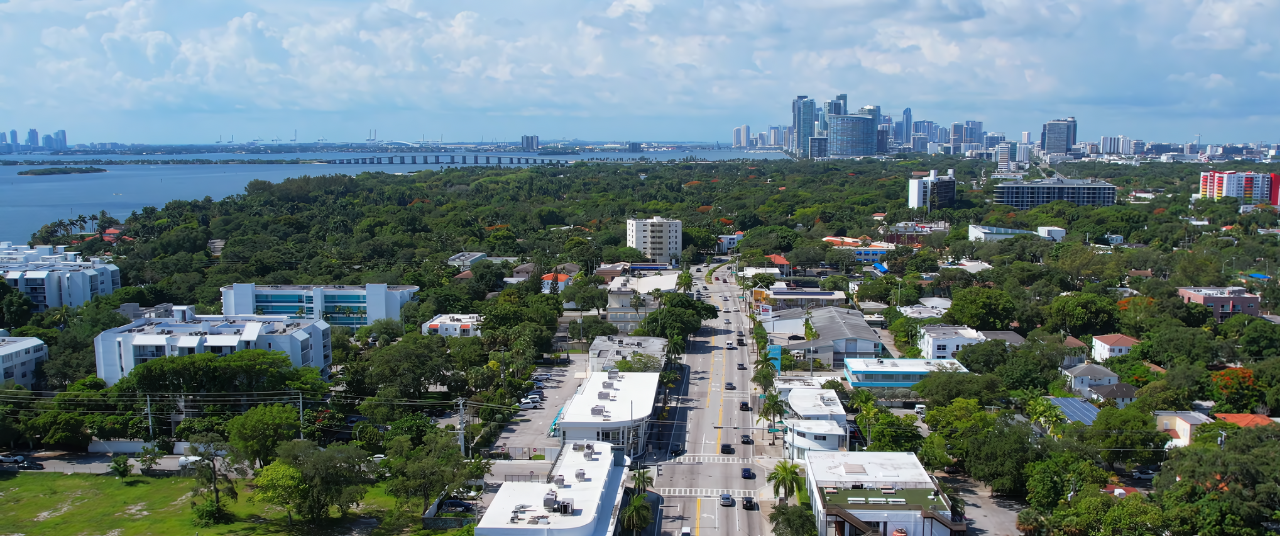
Upper East Side, Miami, Florida - EVERYTHING You Want to Know
Embark on this virtual escapade across all the irresistible layers of the Upper East Side!...
.png)
The Ultimate Guide to Miami-Dade's Top 25 Gated Communities for Single-Family Homes
Discover Miami's top gated communities in this essential guide for luxury home buyers...


Miami's BEST Restaurants in EVERY Neighborhood
Check out the absolute BEST restaurants in every neighborhood of Miami, including the best...
Selling Your Home?
Who are we?
We are the ALL IN Miami Group out of Miami.
We are Colombian, Filipino, Cuban, German, Japanese, French, Indian, Syrian, and American.
We are Christian, Hindu, and Jewish.
We are many, but we are one.
We sell luxury homes in Miami, Florida.
Although some of our clients are celebrities, athletes, and people you read about online, we also help young adults find their first place to rent when they are ready to live on their own.
First-time buyers?
All the time!
No matter what your situation or price range is, we feel truly blessed and honored to play such a big part in your life.