



What Nobody Tells You About Living on Normandy Isle

Amit Bhuta
I use non-traditional marketing to inspire the most motivated buyers to pay the max for Miami luxury homes...
I use non-traditional marketing to inspire the most motivated buyers to pay the max for Miami luxury homes...
Two minutes is the average commute in Normandy Isle, and it's usually the first thing new residents brag about at dinner parties.
It's a small, walkable island where everything — the pool, the park, the restaurants — is close enough that owning a car can feel optional (and it typically is).
The whole neighborhood was dredged out of swampland in under two years by a Frenchman with something to prove, and that "built too fast, don't ask questions" energy never really left, it seems.
You move in expecting efficiency and charm, and for a while, that's exactly what you get.
Then a few other averages start surfacing — ones nobody mentioned during the open house.
Here are six things nobody tells you about living on Normandy Isle.
.png?w=1140)
1) Normandy Isle and Normandy Shores Are Twins Who Never Actually Hung Out
Miami real estate has a habit of introducing neighboring communities as though they share a toothbrush.
Normandy Isle and Normandy Shores, for example, may sit next to each other and share the same surname, but they do not promise the same daily experience.
Normandy Isle is the broader, more varied neighborhood, where apartments, condos, single-family homes, local businesses, parks, and the Normandy Fountain district coexist within a few blocks.
Normandy Shores is the golf-course-centered residential enclave to the north, with its own local government neighborhood improvement district and a more secluded identity.
That distinction matters because neighborhood descriptions frequently fold both areas into one glossy package featuring fairways, waterfront estates, private docks, and very confident aerial photography.
A condo near Normandy Fountain is not a discounted version of a Normandy Shores house overlooking the golf course.
It comes with a separate set of compromises involving density, street activity, parking, association management, building age, and proximity to businesses.
Even within Normandy Isle, a waterfront home, an interior condo, and an apartment above the commercial corridor may have little in common beyond the ZIP code and French street names.
Buyers should pin down the exact address, walk the surrounding blocks at different hours, and confirm whether the amenity featured in the listing is included, nearby, or merely visible when the drone flies high enough.
They may belong to the same island family, but they are not from the same group chat.
 (1).png?w=1140)
2) Close to the Beach But Closer to Your Parking App
Did you know that your address's proximity to the Atlantic is enough to influence weekend plans, yet far enough away to make flip-flops poor transportation?
Normandy Isle sits on the bay side of North Beach, so reaching the ocean usually requires traveling east rather than stepping outside and discovering sand in the lobby.
Depending on which part of the city you live in, the trip can be manageable by bicycle, trolley, car, or an ambitious walk undertaken before Miami remembers that humidity exists.
The free North Beach Loop serves stops along 71st Street, and Miami Beach reports an average trolley frequency of approximately 20 minutes across its routes.
But while the service is useful, “approximately 20 minutes” is not a legally binding agreement between you and the universe.
Driving offers more control until every other household has independently developed the same beach plan.
Miami Beach offers resident parking discounts and permit programs, but those benefits reduce cost and inconvenience rather than summoning a space beside your destination.
Parking pressure has remained important enough for the city to offer a North Beach resident parking pilot and hold a 2026 town hall specifically addressing enforcement and the effects of nearby development.
Residents who want the beach within easy reach may find the distance perfectly reasonable.
Anyone who imagines walking barefoot from the kitchen to the shoreline should consider an oceanfront address and spare the parking app from becoming their most-used relationship.
 (2).png?w=1140)
3) Is That Historic Charm... or a Recertification Waiting to Happen?
A curved façade, terrazzo floor, and pastel exterior can persuade a buyer to forgive several things that an engineer will not.
Normandy Isle’s older buildings give the neighborhood much of its visual personality, and the historic district alone encompasses approximately 82 acres and includes 237 buildings.
Many properties offer low-rise scale, breezeways, generous layouts, decorative details, and a version of Miami Beach architecture that predates the era of identical glass balconies.
They may also contain aging roofs, plumbing stacks, electrical systems, elevators, balconies, windows, waterproofing, and concrete components that have been maintaining their own calendars.
Miami-Dade requires qualifying condo and cooperative buildings of three stories or more within three miles of the coastline to undergo initial recertification at 25 years and repeat the process every 10 years.
Florida law also requires milestone inspections and structural integrity reserve studies for many condominium and cooperative buildings of three habitable stories or more.
None of this makes an older building automatically undesirable, but it makes the association’s records nearly as important as the unit itself.
Inspection reports, reserve studies, meeting minutes, insurance documents, pending repairs, assessment history, and the condition of shared systems can reveal expenses that the listing photos politely cropped out.
A beautifully renovated kitchen will not protect an owner from a major balcony project or an underfunded roof reserve.
Historic charm deserves admiration, but it also deserves a document request, a professional inspection, and someone who knows that “original condition” is not always a compliment.
 (3).png?w=1140)
4) The Same Water You Love Also Sends You Insurance Quotes
Biscayne Bay may be excellent at sunsets, but it's notably less skilled at respecting property lines.
Water gives Normandy Isle its breezes, views, docks, canals, and pleasant sense of separation from the mainland.
It also turns flood exposure from a theoretical concern into an address-specific calculation.
Risk can vary according to flood-zone designation, ground elevation, building design, unit level, drainage conditions, storm-surge exposure, and the placement of essential equipment.
Miami-Dade provides an address-based flood-map tool and separately maps storm-surge planning zones because the two systems measure different hazards.
A higher-floor condo may keep the living space above the water while leaving the garage, elevator machinery, electrical equipment, storage room, or only practical exit route in a more vulnerable position.
Waterfront homeowners may also face seawall maintenance, while condo owners can inherit seawall or drainage costs through association assessments without ever owning a boat.
Insurance is where the scenery receives an invoice, so buyers should request property-specific quotes early rather than estimating costs from another building down the street.
They should also ask about prior flooding, claims history, elevation certificates, drainage improvements, deductibles, exclusions, and whether the policy covers the contents, the structure, or only the owner’s portion of it.
The view may still justify the expense, but the responsible version of island living includes knowing where the water goes when it stops posing for photographs.
 (4).png?w=1140)
5) A Charming Town Center or Just a Really Nice Fountain — You Decide
Normandy Fountain carries itself like the mayor of a tiny European village, which is impressive for a landmark surrounded by moving traffic.
The fountain, Rue Vendome, and the nearby commercial blocks give Normandy Isle a recognizable center with restaurants, services, events, and independent businesses.
That civic heart is valuable in a city where some residential neighborhoods offer little to walk to besides another hedge with excellent posture.
Here, residents can develop familiar routines, recognize business owners, attend community programming, and handle certain errands without turning every outing into a cross-county mission.
However, this is not a fully developed urban main street where every cuisine, boutique, professional service, and late-night plan waits beneath coordinated awnings.
The business mix, pedestrian comfort, shade, and storefront presentation remain uneven enough that the North Beach CRA continues to support façade improvements, business development, public-space activation, and additional shade around the plaza.
Those investments are encouraging, but they also confirm that the district is still being strengthened rather than unveiled as a finished masterpiece.
Some residents will appreciate having a compact selection of familiar places and community events nearby.
Others may exhaust their personal rotation quickly and resume driving whenever dinner requires more options, the shopping list becomes specific, or the evening continues past neighborhood hours.
The fountain gives Normandy Isle a heart, but even a charming heart cannot host every date night, complete every errand, and guarantee that the café has not run out of the one milk you drink.
 (5).png?w=1140)
6) Peaceful for Now, Under Construction Forever
The phrase “up-and-coming” has worked more unpaid overtime in Miami real estate than most human beings should tolerate.
Normandy Isle has an established residential rhythm, but it belongs to a North Beach district receiving sustained public investment, redevelopment attention, and infrastructure planning.
The North Beach CRA is funding work connected to transportation, resiliency, housing, commercial revitalization, and community improvements throughout the redevelopment area.
Nearby projects include the 72nd Street Community Complex, which is planned to contain athletic facilities, a pool, pickleball courts, a library, community rooms, retail space, and structured parking.
Other long-term plans envision additional housing, hotels, shops, restaurants, public-space improvements, and a more developed North Beach Town Center.
Many of those changes could improve daily life by adding stronger amenities, refreshed infrastructure, more businesses, and better reasons to remain in the area after dinner.
Yet they may involve detours, lane closures, construction noise, dust, displaced parking, shifting traffic patterns, and long stretches when the neighborhood’s future resembles a collection of orange barriers.
Timelines can also move, budgets can change, and proposals can be redesigned, so residents should distinguish between a concept rendering, an approved plan, a funded project, and something currently drilling into the pavement.
Growth may increase convenience and long-term appeal, but it can also challenge the quiet, low-rise atmosphere that attracted residents before the cranes received invitations.
Living on this island means accepting that preservation and reinvention are negotiating in real time, and neither party is known for ending meetings early.
WHO GETS THE MOST OUT OF LIVING ON NORMANDY ISLE?
People who don't see a "slow morning" as a weakness but as a personality trait
Normandy Isle runs on its own clock, and that clock is set about ten notches slower than the rest of Miami Beach.
Here, nothing towers over you, so the sky actually shows up instead of hiding behind glass condos.
Water sneaks into almost every view, whether it's a canal behind the house or a glimpse of the bay from the balcony.
Getting anywhere takes minutes, not highway meltdowns, so the whole "life is too short for traffic" thing actually applies.
Errands turn into little walks, not full-blown missions, since most of what you need is a few blocks away.
The old buildings do some serious flexing too, with pastel colors and retro details that make a simple walk feel like a tour.
The plaza actually earns its keep, hosting markets, music, and random Tuesday gatherings that somehow always pull a crowd.
Normandy Isle fits anyone who wants a neighborhood that isn't just a cluster of addresses.
The vibe stays social without ever getting rowdy, more "chat by the fountain" than "party till 3 a.m."
Bigger, louder parts of Miami are still close enough for a night out whenever the mood strikes.
Put it all together, and you get a place built for patience, not hustle, and mornings that don't demand caffeine by the gallon.
Normandy Isle rewards people who actually want to slow down, not just people who talk about it at brunch.
WHO MAY WANT TO KEEP LOOKING?
Those who need constant buzz and are not comfortable with the volume turned down low
Normandy Isle isn't chasing the next trendy hotspot or a rotating lineup of Instagram-ready restaurants.
The food scene is comfortable and familiar, far from the flashy or built-for-the-camera options you're used to on Miami Beach.
Here, a good chunk of the buildings carry real age, which means charm on one side and real upkeep talk on the other.
Older condos and co-ops often come loaded with inspection rules, reserve funds, and paperwork that can blindside a first-time buyer.
The unhurried pace that makes it special can feel like watching paint dry if your calendar typically looks chaotic.
Being close to the bay looks great in photos, right up until flood zones and insurance quotes crash the conversation.
Parking gets tricky sometimes, too, especially with resident permits and tight spots during the busier hours of the day.
The little commercial strip has charm, sure, but it still mixes empty storefronts in with the good stuff.
A few streets currently feel more like a construction zone than a postcard, thanks to ongoing infrastructure work.
Public transit exists, but it runs on the same relaxed schedule as everything else, so a twenty-minute wait is just Tuesday.
None of this makes Normandy Isle a dealbreaker; it just means the fit isn't right for everyone.
Anyone craving brand-new buildings, fast transit, or zero construction noise should probably keep searching.
AN HONEST TAKEAWAY
What living on Normandy Isle really comes down to
Normandy Isle will never win a popularity contest against the more popular parts of Miami Beach.
It's a small pocket of the city that asks for a little patience and hands back a real sense of place in return.
The charm is genuine, but so are the water bills, the building checkups, and the occasional slow bus.
What you get on this island isn't some luxe brochure fantasy, but a textured, slightly imperfect version of island life.
The neighborhood keeps its history intact instead of tearing it down for something shinier and forgettable.
That mix of old bones and fresh projects means change is happening, just at its own unhurried pace.
Choosing this island means trading a bit of convenience for a whole lot of personality.
It also means reading the fine print behind the pretty parts, from flood maps to HOA fees.
Normandy Isle isn't for everyone, and honestly, it never asked to be.
It's for the version of Miami Beach that still feels like a real neighborhood, quirks and all.
Once you see it through that lens, the whole picture will finally click into place.
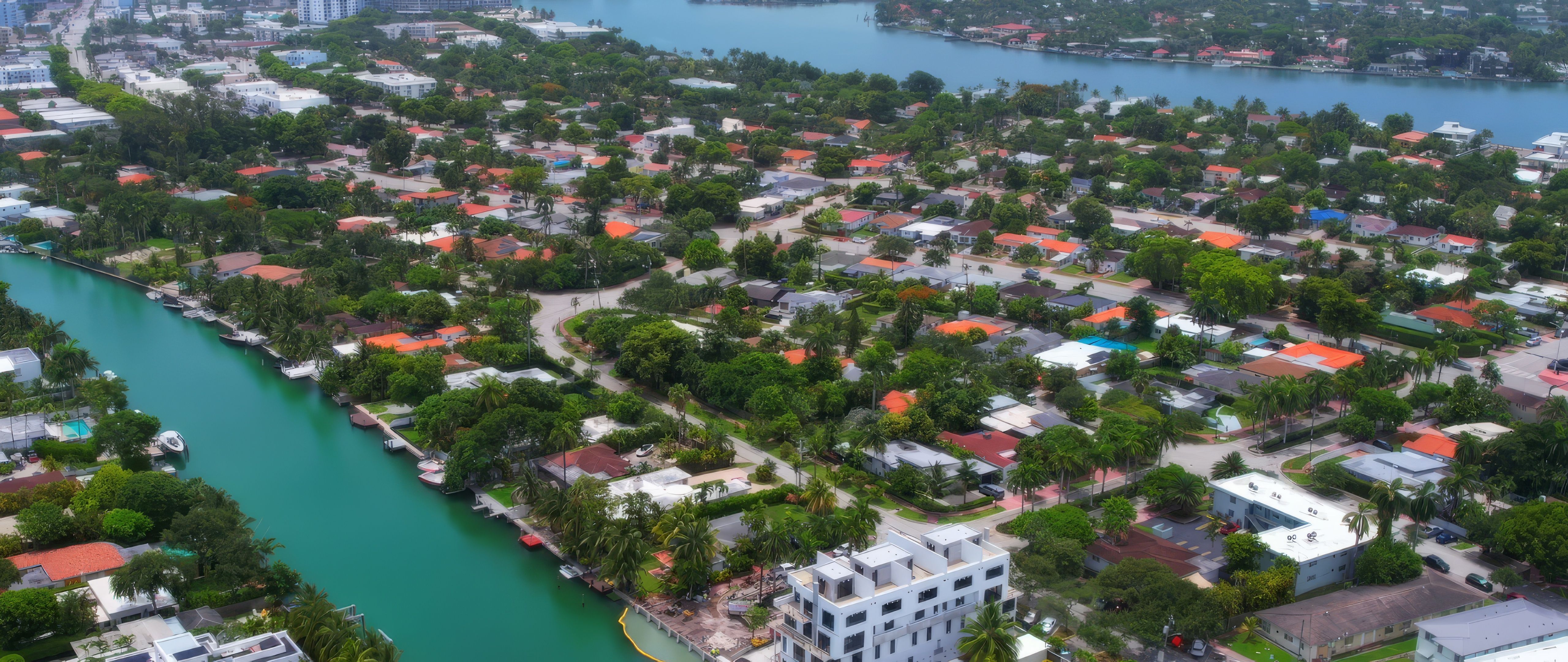
Normandy Isle, Miami, Florida - EVERYTHING You Want to Know
Lean back on a sun-warmed stoop, let the breeze catch your sleeves, and sink into the easy...
.png)
The Ultimate Guide to Miami-Dade's Top 25 Gated Communities for Single-Family Homes
Discover Miami's top gated communities in this essential guide for luxury home buyers...


Miami's BEST Restaurants in EVERY Neighborhood
Check out the absolute BEST restaurants in every neighborhood of Miami, including the best...
Selling Your Home?
Who are we?
We are the ALL IN Miami Group out of Miami.
We are Colombian, Filipino, Cuban, German, Japanese, French, Indian, Syrian, and American.
We are Christian, Hindu, and Jewish.
We are many, but we are one.
We sell luxury homes in Miami, Florida.
Although some of our clients are celebrities, athletes, and people you read about online, we also help young adults find their first place to rent when they are ready to live on their own.
First-time buyers?
All the time!
No matter what your situation or price range is, we feel truly blessed and honored to play such a big part in your life.