



What Nobody Tells You About Living in Westchester

Amit Bhuta
I use non-traditional marketing to inspire the most motivated buyers to pay the max for Miami luxury homes...
I use non-traditional marketing to inspire the most motivated buyers to pay the max for Miami luxury homes...
Westchester has always been known for its confusing boundaries that even longtime Miamians are still figuring out where it actually begins and ends.
What it's firm on, though, is what it offers, and that's why everyone loves it, despite its residents not knowing which zip code they belong to.
Think ranch homes from the '50s that have aged better than most Miami trends, a park the size of a small country, and croquetas delicious enough to end friendships over "whose spot is better."
So while it gets lumped in with Kendall constantly, mistaken for its more famous neighbor the way a quiet sibling gets introduced as "the other one," Westchester knows it punches above its weight when it comes to schools, peaceful streets, and a pristine, under-the-radar reputation.
Or so it thought.
Here are five things nobody tells you about living in Westchester.
 (26).png?w=1140)
1) Westchester Is a Vibe With a Zip Code
Westchester is where asking for the neighborhood boundary can turn into a family argument before the cafecito arrives.
The official census area runs from SW 8th Street to Bird Road and from the Palmetto Expressway to SW 117th Avenue, while community shorthand has often placed the western edge around SW 87th Avenue.
In other words, the map says one thing, the locals say another, and both are prepared to defend themselves.
Westchester is also unincorporated, so there is no City of Westchester waiting with its own mayor, police patch, and tastefully branded utility bill.
Miami-Dade County handles the government side, while the Area 10 Westchester board weighs local zoning and land-use matters.
That arrangement gives Westchester a strong neighborhood identity without the tidy municipal border usually attached to one.
People often describe it by landmarks, schools, restaurants, churches, shopping centers, and whichever stretch of Bird Road they have personally claimed.
A listing can therefore announce “Westchester” with great confidence while the parcel map prepares a longer explanation.
The loose definition is part of the charm because Westchester behaves more like a shared culture than a planned district with matching entrance monuments.
It also means the exact address is more important than the neighborhood label when permits, zoning, services, and property records are involved.
Westchester knows precisely what it is, even when nobody agrees on exactly where it ends.
 (27).png?w=1140)
2) Your Dream House Has Had More Plastic Surgery Than You Think
The original floor plan may be the only thing at closing that remembers the 1950s.
Westchester’s postwar growth began with a namesake subdivision in 1955, followed by a wave of residential development through the 1960s.
Since then, many houses have acquired enclosed carports, covered patios, extra bedrooms, second kitchens, expanded driveways, bonus rooms, and additions that introduced themselves as “part of the original house.”
Those changes can make an older home better than the modest layout its first owners received.
They can also turn the inspection into an architectural detective story where every doorway has an alibi.
Miami-Dade allows property owners to search permit applications and inspection history by address, which is worth doing before trusting a beautifully staged conversion.
The County requires permits for work that includes additions, pools, sheds, fences, windows, doors, and numerous other home projects.
Even a legitimate accessory dwelling unit must meet zoning, lot-size, size, parking, occupancy, and Certificate of Use requirements rather than surviving on a hot plate and family consensus.
A separate entrance does not make a room legal, and calling it an “efficiency” does not grant it diplomatic immunity from the building code.
This means permit history, certificates, surveys, roof records, electrical panels, plumbing, and previous insurance claims should be at the top of the priority list.
Westchester homes often have great stories, but make sure every new chapter received permission to join the book.
 (30).png?w=1140)
3) No Skyline, No Problem — There's a Strip Mall for That
Westchester does not need a downtown skyline because the good stuff is hiding behind a parking lot.
Its social life unfolds through shopping centers, bakeries, cafeterias, restaurants, bowling lanes, markets, salons, and family businesses spread across the major roads.
Miami-Dade’s neighborhood history identifies La Carreta on Bird Road as a community gathering place and highlights Westchester’s Cuban, Colombian, Salvadoran, Chilean, and Mexican food scene.
The same history points to longtime names such as Frankie’s Pizza, Bird Bowl, Arbetter’s Hot Dogs, and Yesterday and Today Records.
While it's not inside a trendy pedestrian district with matching benches and a fountain designed for engagement photos, you won't even care once you're already there.
Westchester’s commercial corridors work because they serve daily life.
The tradeoff is that a restaurant being close does not necessarily mean you will walk there unless crossing a major road in Miami heat is part of the evening plan.
Most outings begin with finding the car keys and end with claiming that the trip was worth it.
Westchester’s town square is not one place; it is a collection of plazas where the parking lot looks ordinary, and the inside is doing all the work.
 (28).png?w=1140)
4) Westchester's Location Is a Flex Until You're Stuck on Bird Road
On a map, Westchester appears to have won the location lottery.
The Palmetto Expressway marks its eastern side, while Bird Road, Coral Way, SW 8th Street, and several major avenues connect it to a large portion of central and western Miami-Dade.
That sounds efficient until rush hour starts.
The 2020–2024 Census estimate puts Westchester’s average one-way commute at 29.6 minutes, which is enough time for a podcast host to introduce four guests and resolve nothing.
An average also cannot predict the Tuesday when Bird Road transforms three miles into a personal endurance event.
Schools, shopping centers, restaurants, FIU, Tamiami Park, Tropical Park, and ordinary weekday errands create different traffic waves across the area.
A house may be geographically close to work, family, or the expressway while sitting on the inconvenient side of several crowded intersections.
Westchester’s central position remains helpful, but “central” describes where the neighborhood sits, not how quickly the traffic light will release you.
Test the route during the hour you will use it rather than on a peaceful weekend showing when Bird Road is pretending to cooperate.
Pay attention to left turns, school zones, expressway entrances, and whether every grocery trip requires crossing the same bottleneck.
Westchester gives you access to plenty of Miami, but it may ask for thirty minutes and a full tank of patience in return.
 (29).png?w=1140)
5) The Water Doesn't Care That You're Not Near the Beach
The Atlantic Ocean is nowhere in sight, yet rainwater still knows the address.
Before canals made large-scale development possible, the land around Westchester was subject to seasonal rain and flooding.
While its history does not mean modern Westchester turns into a lake whenever clouds gather, “inland” should never be mistaken for “waterproof.”
Miami-Dade instructs property owners to check flood zones by exact address because the designation can vary from one location to another.
The official map is important, but it cannot tell you whether a particular driveway funnels water toward the garage or whether the backyard becomes a temporary pond after an afternoon storm.
Lot grading, swales, drains, downspouts, paved yards, nearby additions, and the elevation of neighboring properties can all change where runoff decides to spend the evening.
Ask what happens after sustained rain, how quickly standing water clears, and whether any lower room or converted garage has experienced intrusion.
An elevation certificate can show how a structure sits in relation to its mapped flood level when one is available or required.
Fresh flooring and a scented candle provide no useful testimony about last September’s rainstorm.
Water does not need an ocean view; it only needs a low spot, a blocked drain, and thirty determined minutes of Miami weather.
WHO GETS THE MOST OUT OF LIVING IN WESTCHESTER?
Anyone who knows the best neighborhood spots may share a wall with a tax office
Westchester does not waste time building a postcard when it could be filling a plaza with restaurants, bakeries, markets, salons, and one parking lot everyone has strong opinions about.
Its appeal comes from being practical, familiar, and full of places that earn loyalty even without a rooftop bar or a neon slogan.
Bird Road and the surrounding commercial strips give the neighborhood a social life that unfolds through cafecito counters, family dinners, bowling nights, errands, and businesses that have outlasted several design trends.
Westchester makes sense when daily convenience matters more than living in a community designed for weekend postings.
The homes offer established lots and layouts that have often been expanded to fit real households rather than preserved as museum pieces from the 1950s.
That history can produce extra bedrooms, covered patios, second kitchens, and enough bonus space to make the original floor plan seem like an opening suggestion.
Its central position also keeps large parts of Miami-Dade within reach, even when Bird Road decides that “within reach” involves several red lights.
The neighborhood works well when driving is already part of the routine and a short car trip does not count as a personal defeat.
There is also comfort in a place where the restaurants, schools, parks, churches, and shopping centers have become everyday landmarks rather than newly launched amenities.
Westchester guarantees personality without asking every block to match, every storefront to look polished, or every house to pretend it has never been altered.
It gives the most back when practical living, strong local flavor, and a little controlled chaos sound better than a neighborhood with perfect branding and nowhere memorable to eat.
WHO MAY WANT TO KEEP LOOKING?
Those who want a predictable house, road, and parking lot
Westchester can be difficult for anyone whose dream neighborhood requires clean symmetry and very few follow-up questions.
The houses have lived long enough to collect additions, conversions, repairs, and floor plans that may require more explanation than the listing description provides.
A bonus room might be genuinely useful, legally permitted, or held together by confidence and an extension cord.
The neighborhood rewards careful property research, which may disappoint anyone hoping the inspection can begin and end with admiring the chandeliers.
Its commercial life is lively, but much of it sits behind wide roads and parking lots rather than along a quiet pedestrian street.
Dinner may be nearby in every practical sense and still require car keys, a left turn, and a brief negotiation with traffic.
Bird Road, Coral Way, SW 8th Street, and the Palmetto can connect Westchester to the rest of Miami while testing how personally someone takes brake lights.
The broad neighborhood boundaries add another small puzzle because an address marketed as Westchester may change depending on the map used.
Heavy rain adds questions about drainage, low spots, converted garages, and whether the backyard has a temporary aquatic situation.
Westchester is not the easiest match for anyone seeking brand-new construction, effortless walking, quiet roads, and homes with short permit histories.
It offers plenty of convenience, but almost none of it arrives wrapped in simplicity.
AN HONEST TAKEAWAY
What living in Westchester really comes down to
Westchester is Miami without the presentation deck.
It does not rely on skyline views, waterfront branding, gates, or a carefully staged town center to explain why people keep choosing it.
The neighborhood builds its case through established homes, familiar roads, long-running businesses, strong food culture, and a location that places much of Miami-Dade somewhere on the other side of traffic.
Its personality lives in the plazas, where an ordinary storefront can offer the meal, service, or gathering place that becomes part of the weekly routine.
Its houses tell a similar story because many have been adjusted, enlarged, and reworked to suit changing households over several decades.
That flexibility can be a major advantage, provided the permits and construction quality tell the same story as the square footage.
Westchester’s central location remains one of its strongest features, although the roads frequently demand patience as a fee.
The inland setting seems safely removed from coastal concerns, but rainwater flooding may still depend on grading, drainage, and the history of the property.
None of these realities makes Westchester less appealing; they explain why its appeal is practical rather than polished.
Living here comes down to accepting a place where the food may be excellent, the house may contain a surprise room, and Bird Road will always believe your schedule is open to revision.
%20(73).png)
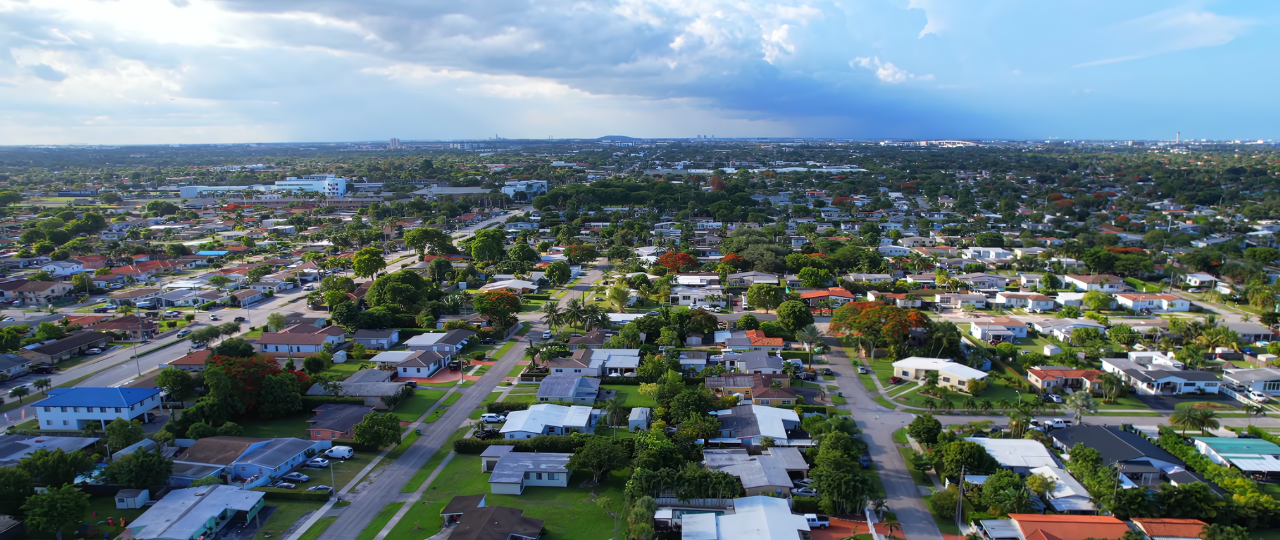
Westchester, Miami, Florida - EVERYTHING You Want to Know
Let's venture across the BEST of Westchester, stylin' and thriving! By the end o...
.png)
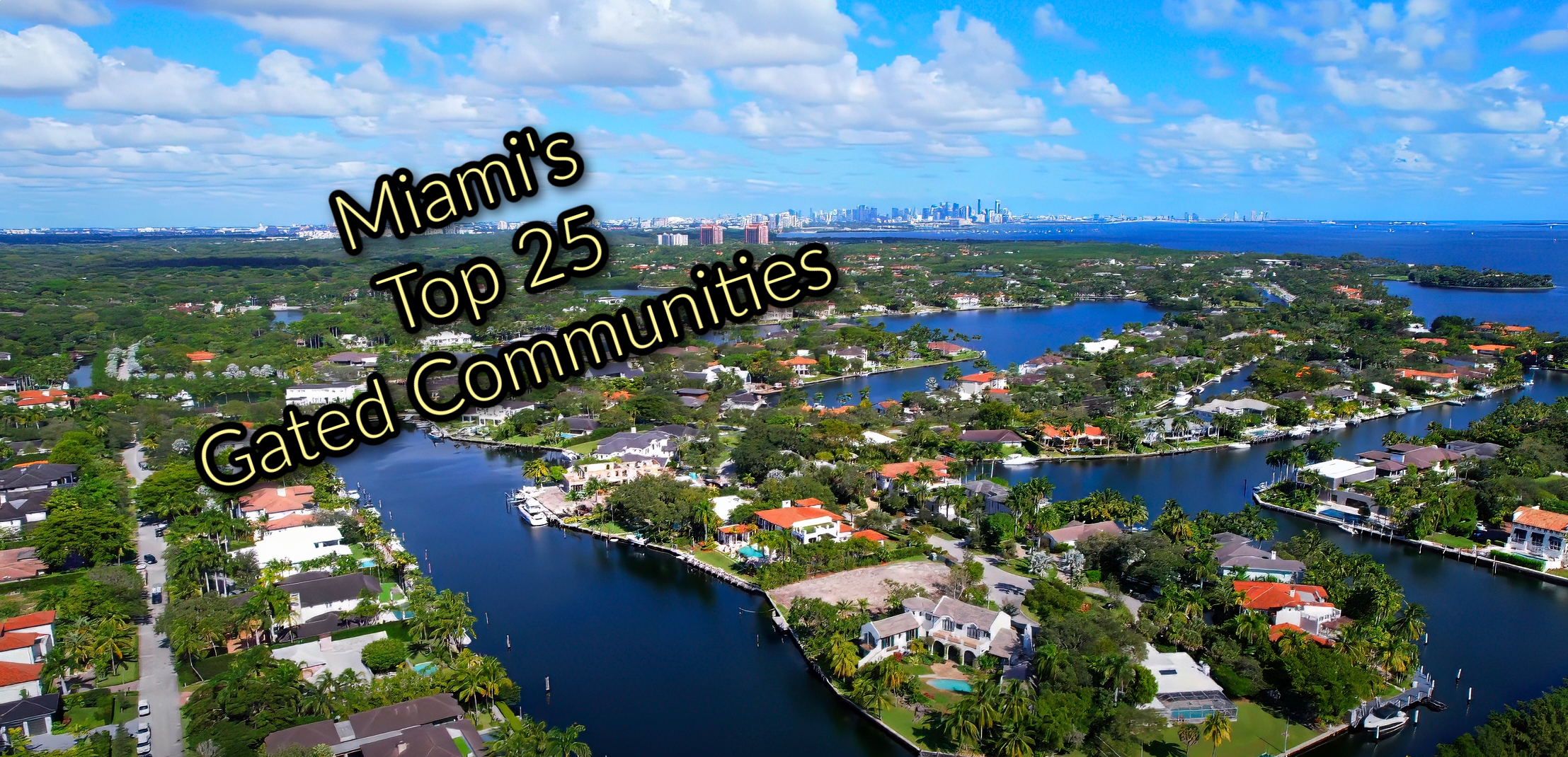
The Ultimate Guide to Miami-Dade's Top 25 Gated Communities for Single-Family Homes
Discover Miami's top gated communities in this essential guide for luxury home buyers...

Miami's BEST Restaurants in EVERY Neighborhood
Check out the absolute BEST restaurants in every neighborhood of Miami, including the best...
Selling Your Home?
Who are we?
We are the ALL IN Miami Group out of Miami.
We are Colombian, Filipino, Cuban, German, Japanese, French, Indian, Syrian, and American.
We are Christian, Hindu, and Jewish.
We are many, but we are one.
We sell luxury homes in Miami, Florida.
Although some of our clients are celebrities, athletes, and people you read about online, we also help young adults find their first place to rent when they are ready to live on their own.
First-time buyers?
All the time!
No matter what your situation or price range is, we feel truly blessed and honored to play such a big part in your life.