



What Nobody Tells You About Living in Surfside

Amit Bhuta
I use non-traditional marketing to inspire the most motivated buyers to pay the max for Miami luxury homes...
I use non-traditional marketing to inspire the most motivated buyers to pay the max for Miami luxury homes...
Fact: Surfside is one of the smallest towns in Miami-Dade, and somehow it could still play the underrated best friend everyone secretly likes more than the lead in a rom-com.
It's marketed as peaceful, walkable, and refreshingly free of the ego South Beach carries like a lucky charm.
New residents love that it's simple, calmer, slower, and still beach-forward than ever.
In fact, they probably think they'd finally found the neighborhood that escaped the usual Miami chaos entirely.
The thing is, small towns tend to have big personalities, and you'd only find out once you're living inside the zip code.
So before you sign the lease, we'll give you the deets.
Here are six things nobody tells you about living in Surfside.
 (8).png?w=1140)
1) Surfside Has Multitudes (and Most of Them Are Zoned)
Surfside is small enough to cross before a podcast episode gets interesting, yet it manages to fit several different neighborhoods into the walk.
The eastern edge places oceanfront condos, hotels, luxury residences, and the beach along Collins Avenue.
One block west, Harding Avenue handles the restaurants, shops, services, and sidewalk conversations that give Surfside something resembling a downtown.
Continue toward the bay, and the buildings drop into quieter streets of single-family houses, duplexes, gardens, and driveways where the loudest nearby attraction may be someone’s leaf blower.
This arrangement is no accident, because Surfside’s official land-use plans separate low-density residential areas, higher-density housing, commercial blocks, hotel uses, and recreational land.
That zoning map explains why moving only a few hundred feet can change the view, noise level, building rules, parking situation, and number of neighbors sharing the elevator.
A Collins Avenue address may come with an ocean balcony, a staffed lobby, hotel activity, and several hundred people living above and below one another.
A home near Harding Avenue puts coffee, dinner, errands, and the occasional parking dispute closer to the front door.
The western residential streets offer more space and less vertical company, although they trade direct ocean views for backyards, quieter sidewalks, and the responsibility of handling the entire roof.
Architecture adds another layer, with older low-rise buildings, modest houses, renovated properties, polished new residences, and beachfront projects sharing a town that declined to choose one design era.
Surfside does not offer one standard lifestyle in miniature; it offers several living environments pressed together so tightly that choosing the right block matters almost as much as choosing the right home.
 (9).png?w=1140)
2) This Pocket Walks the Walk, But Cars Can Still Talk
Surfside gives pedestrians the satisfying experience of finishing errands without entering a climate-controlled metal box first.
The Harding Avenue business district is compact, the beach runs alongside town, and neighboring Bal Harbour sits close enough that many ordinary trips can happen on foot.
That convenience turns breakfast, groceries, dinner, parks, and the shoreline into parts of the same outing instead of separate missions requiring snacks and expert navigation.
The town describes its business district as pedestrian-friendly, and its small scale supports walking and cycling in a way much of South Florida can only discuss during planning meetings.
Cars, however, have not accepted a supporting role.
Collins and Harding avenues carry local traffic alongside drivers moving through the barrier island, and town studies have examined congestion, speeding, pedestrian safety, and vehicles diverting onto residential streets to avoid backups.
A destination may be five minutes away geographically while the drive takes long enough for the navigation app to begin offering emotional support.
Parking is another factor, with municipal street spaces and lots currently charging $5 per hour and imposing a three-hour nonrenewable limit in several locations, including the main Harding Avenue business blocks.
Walking often removes the meter, the circling, and the debate over whether a space is legally large enough for the car.
Driving remains useful for longer trips, heavy groceries, bad weather, and anyone unwilling to carry four shopping bags while maintaining dignity.
Surfside’s transportation lesson is simple: the town rewards comfortable shoes, while the car occasionally responds by honking from Collins Avenue.
 (10).png?w=1140)
3) Public Shoreline, Members-Only Everything Else
The Atlantic Ocean does not ask for a Surfside utility bill before allowing someone onto the sand.
The beach is public, with access points along the town and wheelchair-accessible entrances at 88th and 96th streets.
An oceanfront building may provide direct access and an excellent place to store beach chairs, but the shoreline beyond the property is not a private carpet reserved for the condo.
Surfside’s more exclusive advantages begin at the oceanfront Community Center, where the town hosts pools, lap lanes, a children’s activity pool, a slide, a Jacuzzi, multipurpose rooms, lockers, and green space.
This is where proof of residency becomes useful.
Resident identification, guest procedures, passes, fees, and facility policies determine who can enter and under what arrangement.
The title exaggerates by a few pool noodles, since approved guests and Surfside hotel guests can qualify for certain town recreation benefits.
That said, no one should arrive expecting the gate attendant to accept “I’m nearby” as documentation.
Surfside also offers parks, courts, playgrounds, programs, and a main recreation space at 96th Street Park, giving the town more public facilities than its small footprint suggests.
The public beach means the shoreline can include tourists, hotel guests, day visitors, families, runners, and anyone else who found parking before losing hope.
The resident advantage is not an empty beach but easier access to facilities and services that make regular beach life more comfortable.
Surfside therefore offers open sand with a local benefits package, which is sort of like a “public coastline with a very organized pool desk.”
 (11).png?w=1140)
4) Shabbat Sets the Town's Clock, Whether You Notice or Not
Friday afternoon in Surfside exudes the energy of a town checking the time and realizing dinner requires a plan.
Surfside has a visible Jewish community, including a strong Orthodox presence, and that identity extends well beyond a synagogue address or one shelf in a grocery store.
Harding Avenue has developed into a major kosher dining hub, with the town’s current directory listing kosher cafés, delis, steakhouses, pizza shops, bakeries, Japanese restaurants, Israeli food, and several businesses offering Shabbat-related service.
This is a neighborhood where kosher choices do not end with “salad without the bacon,” and dinner can range from falafel to tasting menus without leaving the commercial strip.
Shabbat observance brings a visible change of pace from Friday evening through Saturday, particularly around homes, places of worship, pedestrian routes, and businesses that adjust their schedules.
Restaurant hours and shopping plans may require more advance checking than in a district where every establishment assumes Saturday is business as usual.
Jewish holidays also influence community events and public-safety planning, with Surfside police coordinating with Jewish leaders and regional agencies around major observances.
But it doesn't mean that every person in Surfside shares the same religion, background, or weekly routine.
The town remains international and varied, with hotels, non-kosher restaurants, longtime local businesses, and households following many traditions.
The difference is that Jewish community life is prominent enough to shape the food scene, calendar, foot traffic, and the atmosphere of Harding Avenue.
Surfside’s weekly rhythm is not hidden in a community bulletin; it is visible in restaurant hours, family gatherings, people walking to services, and the sudden importance of ordering Friday dinner before everyone else has the same idea.
 (12).png?w=1140)
5) Buying a Condo Means Buying Its Baggage
A condo listing usually introduces the ocean view first because “pending concrete repairs” performs poorly as the opening photograph.
The unit may contain the marble kitchen, balcony, closets, and dramatic sunrise — but ownership also includes a financial relationship with every roof, garage, elevator, façade, pool, pipe, and waterproofed surface shared by the building.
Florida law now requires qualifying condo buildings to complete milestone structural inspections, generally beginning at 30 years and repeating every ten years, with local authorities permitted to require an earlier first inspection because of conditions such as proximity to salt water.
Associations in buildings with three stories or more must also complete structural integrity reserve studies that estimate major future repair costs and provide a funding plan.
Those reports can lead to higher monthly fees, special assessments, loans, major repairs, or several uncomfortable meetings in the community room.
A serious review should include inspection reports, reserve studies, current budgets, insurance, engineering work, repair schedules, association minutes, pending litigation, and any assessment already approved or openly circling the agenda.
Florida resale rules also require applicable contracts to address milestone reports and reserve studies, giving these documents a formal role in the purchase rather than leaving them as an optional stack someone remembers after closing.
Surfside’s coastal environment makes common-area upkeep especially important because salt, moisture, wind, sun, and water intrusion do not care how tastefully the lobby was renovated.
The Champlain Towers South collapse remains a profound part of Surfside’s history and community memory, and it should be acknowledged with respect rather than turned into a dramatic sales warning.
Its practical lesson is that a condo cannot be evaluated solely from inside the unit, no matter how flawless the staging or how persuasive the ocean looks at golden hour.
Buying in Surfside means reading the building’s history before inheriting its future bills, because some baggage arrives in designer luggage and some arrives as a six-figure assessment.
 (13).png?w=1140)
6) Dunes, Drains, and a Very Detailed Evacuation Plan
Surfside’s oceanfront setting comes with a relationship agreement in which the Atlantic provides the scenery and refuses to promise good behavior.
The town identifies sudden rainfall and storm surge as local flood hazards, which means coastal preparation involves more than checking whether a hurricane icon has appeared on the weather app.
Drainage has become a continuing public issue, with Surfside studying short- and long-term improvements and holding community forums focused on flooding and stormwater challenges.
The town is also in Storm Surge Planning Zone B and directs evacuation for Category 2 hurricanes or stronger when the corresponding evacuation requirement applies.
A storm-surge evacuation zone is not the same as a property’s FEMA flood zone, which means one map tells you when to leave, and the other helps describe property-level flood exposure and insurance considerations.
Surfside began a dune-restoration project in May 2026 to improve coastal resilience, protect the beachfront, reduce erosion, and restore native habitat, with completion projected for September 2026.
The dunes are valuable protection, but they are not a magic force field that sends every storm back into the Atlantic with an apology.
Property research still needs to include elevation, drainage history, flood insurance, ground-floor vulnerability, windows, generators, mechanical equipment, garage exposure, and the building or home’s emergency procedures.
A high-rise may shift some preparation to the condo association, while a single-family home places more of the checklist directly on the owner.
Surfside’s detailed alerts, supply lists, evacuation guidance, hotlines, and assistance programs make sense because leaving a barrier island during a major storm is not an event best organized at the final minute.
The coast gives Surfside much of its beauty, but dunes, drains, insurance papers, and a full tank of gas are part of the same waterfront package.
WHO GETS THE MOST OUT OF LIVING IN SURFSIDE?
Those who want a walkable beach town with its own rhythm
Surfside shows you that daily life can be convenient without becoming loud, oversized, or packed with nonstop entertainment.
Its small footprint puts the beach, Harding Avenue, parks, restaurants, and basic errands within the radius, so walking can replace several unnecessary car trips.
The town gives the day a compact routine, where coffee, groceries, dinner, and a beach walk can happen without turning into four separate expeditions.
Harding Avenue adds enough food and services to keep Surfside useful, while the residential streets prevent the whole place from reading like one long shopping district.
The oceanfront side brings direct beach access and high-rise living, while the western blocks offer quieter homes and fewer elevator conversations.
That variety helps Surfside work for people who want choices but do not want those choices spread across half of Miami-Dade County.
The Jewish community also gives Surfside a clear weekly rhythm through kosher dining, synagogues, holiday activity, and the visible slowdown around Shabbat.
Town facilities add another advantage through the Community Center, pools, parks, programs, and recreation spaces that make the local address more useful than the ZIP code alone.
Surfside also suits anyone who appreciates a place with its own government, services, rules, and civic debates, rather than functioning as one more section of a much larger city.
The arrangement works especially well when beach access, walkability, community life, and a neighborhood-scale business district matter more than nightlife or endless retail.
When its small size is treated as the main attraction rather than a temporary stop between Bal Harbour and Miami Beach, Surfside will be one of the best options.
WHO MAY WANT TO KEEP LOOKING?
Anyone who needs easy driving and simple condo ownership
In Surfside, a short distance cannot guarantee a quick drive.
Collins Avenue and Harding Avenue lead to more traffic than the town’s size would suggest, and nearby destinations can require patience once cars begin lining up.
Parking adds its own small performance, complete with meters, time limits, circling, and the quiet optimism that someone will leave just as you arrive.
The beach is public, so oceanfront living does not come with the power to remove tourists, hotel guests, runners, families, or anyone else who found an access point.
Surfside also asks condo owners to think beyond the unit, because the building’s inspections, reserves, repairs, insurance, and special assessments can matter more than the newly installed jacuzzi.
Older buildings may bring charm and established locations, but they can also bring engineering reports thick enough to qualify as weekend reading.
The coastal setting adds flood planning, storm preparation, evacuation rules, and drainage concerns to a town that already keeps a detailed relationship with the Atlantic.
The strong Jewish identity may also require some adjustment for anyone who expects every restaurant and business to have the same hours every week.
Surfside’s zoning creates clear differences between the oceanfront, Harding Avenue, and the residential side, so choosing the wrong block can produce the wrong version of the town.
Construction, redevelopment, and condo work can also place cranes, crews, and repair noise surprisingly close in a place where nothing is very far away.
Anyone seeking effortless driving, private beaches, simple building finances, and a neighborhood that never changes may find Surfside charming right up until the paperwork arrives.
AN HONEST TAKEAWAY
What living in Surfside really comes down to
Surfside is a tiny town with a strong personality that can make its one square mile seem much busier on paper.
It puts the beach, a compact business district, quieter residential streets, hotels, parks, and town facilities within a short distance of one another.
That closeness allows ordinary life to happen without spending half the day crossing South Florida.
It also means every decision matters more, from the block you choose to the building report you did not read.
The oceanfront, commercial corridor, and western residential streets offer different versions of Surfside, even though they sit only a few minutes apart.
The beach remains public, while the Community Center and several local benefits reward people who can prove they belong there.
Condo living brings ocean views and shared amenities, but it also brings association budgets, inspections, repair schedules, and the possibility of an assessment at a terrible time.
Surfside’s Jewish community gives the town a strong cultural identity that shapes the food scene, weekly schedule, and atmosphere without making it completely uniform.
The Atlantic supplies the scenery, while dunes, drains, insurance, storm alerts, and evacuation planning are the non-Instagrammable half of the arrangement.
Surfside is gorgeous but not effortless, peaceful but not empty, and walkable until the moment a car becomes necessary.
So, if you're thinking of moving to Surfside, you have to accept that a small beach town can make life easier in many ways while still keeping several binders of fine print nearby.
%20(62).png)
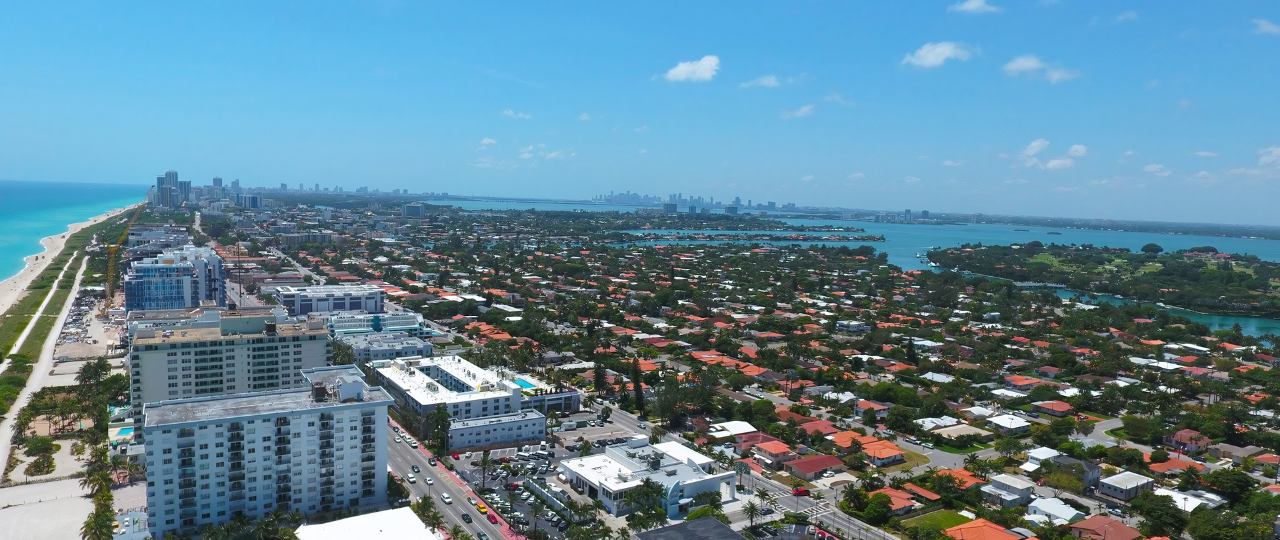
Surfside, Miami, Florida - EVERYTHING You Want to Know
Are you ready to go on this virtual adventure across all the desirable layers of Surfside?...
.png)
The Ultimate Guide to Miami-Dade's Top 25 Gated Communities for Single-Family Homes
Discover Miami's top gated communities in this essential guide for luxury home buyers...


Miami's BEST Restaurants in EVERY Neighborhood
Check out the absolute BEST restaurants in every neighborhood of Miami, including the best...
Selling Your Home?
Who are we?
We are the ALL IN Miami Group out of Miami.
We are Colombian, Filipino, Cuban, German, Japanese, French, Indian, Syrian, and American.
We are Christian, Hindu, and Jewish.
We are many, but we are one.
We sell luxury homes in Miami, Florida.
Although some of our clients are celebrities, athletes, and people you read about online, we also help young adults find their first place to rent when they are ready to live on their own.
First-time buyers?
All the time!
No matter what your situation or price range is, we feel truly blessed and honored to play such a big part in your life.