



The Roads, Miami — A Cheat Sheet for Buyers, Visitors, & the Curious

Amit Bhuta
I use non-traditional marketing to inspire the most motivated buyers to pay the max for Miami luxury homes...
I use non-traditional marketing to inspire the most motivated buyers to pay the max for Miami luxury homes...
The Roads sits next to Brickell, but it doesn’t play by its rules.
Without high-rises, a uniform skyline, or a consistent pricing pattern from one block to the next, it feels like stepping into a residential pocket with city-level access just a short walk away.
You get angled streets, older homes beside new construction, and a neighborhood where elevation, traffic flow, and zoning quietly shape everything.
Walk a few minutes east, and you’re in the middle of Miami’s busiest district.
Walk back in, and it shifts yet again — quieter, more residential, yet never fully disconnected from what’s next door, creating a constant push and pull that defines The Roads.
At first glance, it can feel difficult to figure out, but this guide is ready to answer questions about flood zones, home prices, zoning rules, and overall livability in The Roads Miami.
Here's what you need to know about living in, visiting, and understanding The Roads.
-topaz-upscale-2.1x.jpeg?w=1140)
LIVING IN THE ROADS
Is The Roads a good place to live?
The Roads is one of Miami’s most strategically positioned residential neighborhoods, sitting directly next to Brickell while maintaining a lower-density atmosphere of single-family homes.
It attracts buyers who want immediate access to major employment hubs without committing to high-rise living, offering a balance between convenience and a more grounded residential environment.
Key advantages include walkable proximity to Brickell, consistent long-term appreciation, and a central location roughly 5–10 minutes from Downtown, Coconut Grove, and Key Biscayne.
At the same time, buyers should factor in block-specific flood exposure, traffic spillover along key corridors, and higher insurance costs associated with older homes.
Is The Roads in a flood zone, and which areas are most affected?
The Roads is largely situated within FEMA flood zones AE and X, with meaningful elevation differences occurring even within a few blocks.
Lower-lying sections closer to the Miami River and areas around SW 15th Road, SW 3rd Avenue, and parts of SW 2nd Avenue tend to experience more frequent street flooding during heavy rain and king tide events.
Flooding in The Roads is often driven by a combination of tidal influence, drainage limitations, and proximity to low-elevation corridors rather than direct waterfront exposure.
Properties with elevation certificates above base flood elevation typically benefit from reduced insurance costs, while those below it may face higher premiums and stricter lending requirements.
What are the typical property taxes in The Roads, and how does the homestead exemption affect them?
A home purchased at $1.5 million without a homestead exemption may have annual taxes ranging between $27,000 and $33,000, depending on assessed value adjustments.
Florida’s homestead exemption can reduce taxable value by up to $50,000 and cap annual assessment increases, significantly stabilizing long-term tax growth for primary residents.
Buyers should expect a tax reset to near-market value after purchase, often resulting in a noticeable increase compared to the previous owner’s tax bill.
What is the cost of living in The Roads compared to other Miami neighborhoods?
The cost of living in The Roads is considered above average due to its proximity to Brickell and the limited supply of single-family homes.
Beyond home prices, ongoing costs are primarily driven by property taxes, insurance, and maintenance of older properties.
Annual property taxes can range from approximately $20,000 to over $40,000, depending on purchase price, while combined homeowners and flood insurance may add another $5,000 to $12,000 per year.
Daily expenses such as groceries, dining, and services are influenced by nearby Brickell pricing, which tends to be higher than in more residential areas further west.
Overall, The Roads reflects a central Miami cost structure where location convenience comes with higher ownership and lifestyle expenses.
What is the typical price range for homes in The Roads?
Single-family homes in The Roads generally range from approximately $1.2 million to $3.5 million, depending on condition, size, and location within the neighborhood.
Original or unrenovated homes on standard lots typically fall between $1.2 million and $1.8 million.
Renovated homes and newer construction commonly range from $2.2 million to $3.5 million, with some modern builds exceeding that range depending on finishes and square footage.
Price per square foot typically ranges from about $700 to $1,200, with newer homes pushing toward the upper end.
What are the typical lot sizes and home sizes in The Roads?
Most lots in The Roads fall between 5,000 and 7,500 square feet, with occasional parcels reaching 9,000 square feet.
Original homes often range from 1,200 to 2,200 square feet, reflecting early 20th-century construction patterns.
Newer or expanded homes typically range from 2,500 to over 4,000 square feet, often utilizing two-story designs to maximize allowable space.
Lot size limitations compared to nearby neighborhoods play a significant role in pricing and redevelopment decisions.
Are homes in The Roads mostly original or newly built?
The Roads presents a mixed inventory of preserved historic homes, partial renovations, and full redevelopment projects.
Many homes built between the 1920s and 1950s remain in place, though a growing number have been replaced with modern construction over the past decade.
Buyers frequently encounter properties that require updates to electrical systems, plumbing, roofing, and structural components if they are not newly renovated.
New construction homes command a premium due to updated systems, hurricane-resistant features, and contemporary layouts.
What zoning regulations affect properties in The Roads?
The Roads is primarily governed by Miami’s T3 and T4 zoning classifications, with transitional zones closer to Brickell allowing for increased density.
T3 zoning generally supports single-family residential use with specific setbacks, height limits, and lot coverage restrictions.
T4 zoning allows for more flexibility, including certain multi-unit configurations depending on the parcel and frontage.
Zoning plays a critical role in determining whether a property can be expanded, redeveloped, or converted, making it essential for buyers evaluating long-term potential.
Does The Roads have an HOA or monthly fees?
Most of The Roads does not have a homeowners association, as it is a traditional residential neighborhood rather than a planned or gated community.
This means there are generally no monthly HOA fees or community-wide restrictions beyond standard city regulations and zoning rules.
However, homeowners are individually responsible for property maintenance, landscaping, and compliance with Miami building codes.
In rare cases where properties have been subdivided or redeveloped into multi-unit configurations, there may be limited shared agreements, but these are not the norm for the neighborhood.
How does traffic affect daily living in The Roads?
Traffic is one of the most consistent challenges due to the neighborhood’s location between Brickell, Coral Way, and access routes to I-95.
Major corridors such as SW 1st Avenue, SW 3rd Avenue, and Coral Way frequently serve as cut-through routes during peak hours.
Commute times to Brickell typically range from 5 to 10 minutes by car, while access to I-95 can take approximately 10 to 15 minutes, depending on congestion.
Interior streets are generally quieter but can still experience spillover traffic, especially during weekday rush hours.
Is parking difficult in The Roads?
Parking varies significantly based on proximity to Brickell and the specific block layout.
Homes with private driveways or garages generally avoid issues, but street parking can become limited, particularly in the northeastern portion of the neighborhood.
Evenings and weekends tend to increase demand due to visitors and nearby activity in Brickell.
Narrow streets and older infrastructure can also affect parking availability and maneuverability.
How walkable is The Roads for everyday living?
The Roads offers moderate walkability, with its strongest advantage being its proximity to Brickell’s commercial core.
Residents on the eastern side can walk to Brickell City Centre or Mary Brickell Village in approximately 10 to 20 minutes.
However, the neighborhood itself has limited internal retail, meaning most errands require short drives.
While sidewalks and tree-lined streets support pedestrian movement, heat, humidity, and traffic crossings often reduce practical walkability during much of the year.
What schools serve The Roads, and how strong are they?
The Roads is zoned for Miami-Dade public schools such as Coral Way K-8 Center, which is widely recognized for its bilingual curriculum and consistent academic performance.
Depending on the exact address, zoning may also include Shenandoah Middle School and Miami Senior High School.
Private school options within a 10–15 minute drive include Immaculata-La Salle High School and Carrollton School of the Sacred Heart.
School zoning is a key factor for buyers, particularly those seeking strong K-8 continuity within proximity.
For a closer look at the private and public school options in the area, visit Best Schools in The Roads.
How safe is The Roads compared to nearby neighborhoods?
The Roads is generally considered a stable residential neighborhood with lower density than Brickell, contributing to a quieter and more controlled environment.
Safety levels are typically higher than in nearby high-density areas, though conditions can vary by block, particularly along major corridors where traffic and activity are more consistent.
The neighborhood is not gated, so safety is influenced more by street lighting, visibility, and individual property security measures rather than controlled access.
Compared to Brickell, The Roads experiences significantly less transient foot traffic, which reduces late-night activity and contributes to a more residential safety profile.
Overall, it is regarded as a relatively secure and predictable area within central Miami.
What are the insurance considerations for homes in The Roads?
Insurance costs in The Roads are influenced by both flood exposure and the age of many properties.
Older homes often require updates to roofs, electrical systems, and plumbing to qualify for standard coverage.
Combined homeowners and flood insurance costs typically range from approximately $5,000 to $12,000 annually, depending on risk factors.
Four-point inspections and wind mitigation reports are commonly required during the purchasing process.
Are short-term rentals allowed in The Roads?
Short-term rentals are generally restricted under City of Miami regulations, particularly for stays of less than 30 days.
Most properties in The Roads do not meet the zoning or licensing requirements for a legal short-term rental operation.
Enforcement has increased in recent years, with fines issued for non-compliant listings.
This makes The Roads more suitable for long-term residential use rather than short-term rental investment strategies.
Is The Roads a good area for real estate investment?
The Roads is considered a strong long-term investment due to its location adjacent to Brickell and the limited supply of single-family homes.
Appreciation is primarily driven by redevelopment, proximity to employment centers, and ongoing demand for centrally located housing.
Rental yields for long-term leases are moderate rather than high, making it more attractive to appreciation-focused investors than cash-flow strategies.
Opportunities often exist in acquiring older homes for renovation or redevelopment.
How much redevelopment is happening in The Roads?
Redevelopment activity has increased significantly over the past decade, with many older homes being replaced by modern two-story residences.
Teardowns are common on standard 5,000–7,500-square-foot lots where new construction can substantially increase property value.
New builds frequently resell at a premium, often exceeding $2.5 million, depending on size and finishes.
This ongoing transformation is reshaping the neighborhood while maintaining its residential character.
How much noise from Brickell affects The Roads?
Noise levels vary depending on proximity to Brickell and major roadways.
Properties closer to the eastern edge may experience occasional noise from traffic, nightlife, and emergency vehicles.
Interior streets are generally quieter, with minimal direct impact from Brickell’s activity.
The neighborhood overall maintains a calmer atmosphere compared to adjacent urban districts.
-topaz-upscale-2.1x.jpeg?w=1140)
VISITING THE ROADS
Can you walk from Brickell to The Roads, and how long does it take?
Yes, The Roads is directly adjacent to Brickell and is one of the few residential areas within walking distance of the district.
From the northeastern edge, walking to central Brickell typically takes about 10 to 15 minutes.
Locations further south or west may require approximately 15 to 25 minutes, depending on distance.
Major intersections can affect timing, particularly when crossing SW 7th Street.
Is parking available for visitors in The Roads?
Visitor parking is primarily limited to residential street parking throughout the neighborhood.
Availability is generally better during daytime hours but becomes more limited in the evenings and on weekends.
There are no large public parking garages within The Roads itself.
Visitors often rely on nearby Brickell parking structures if street parking is unavailable.
Are there restaurants and shops within The Roads itself?
The Roads is almost entirely residential, with minimal commercial development within its boundaries.
Most restaurants, cafes, and shops are located in nearby areas such as Brickell, Coral Way, and Shenandoah.
These destinations are typically within a 5 to 10-minute drive or a short walk, depending on location.
The neighborhood functions more as a residential base than a standalone dining or retail destination.
For more information on the nearby restaurants and retail options, check out Top 5 Places to Eat in The Roads and Top 5 Shopping Spots Near The Roads.
What is the street layout like in The Roads, and is it easy to navigate?
The Roads features a distinctive diagonal street pattern that differs from Miami’s traditional grid system.
This layout can initially be confusing for visitors unfamiliar with angled intersections and road naming.
However, it helps reduce long straight traffic flows and contributes to the neighborhood’s unique character.
Navigation becomes easier with familiarity but may require adjustment for first-time visitors.
What is the overall atmosphere of The Roads during the day and night?
During the day, The Roads feels calm and residential with limited commercial activity.
At night, the neighborhood remains relatively quiet compared to nearby Brickell, which becomes more active.
Its proximity to nightlife without directly absorbing that activity is a defining characteristic.
The overall atmosphere remains consistent with a residential neighborhood rather than an entertainment district.
-topaz-upscale-2.1x.jpeg?w=1140)
UNDERSTANDING THE ROADS
Why is the neighborhood called “The Roads”?
The name originates from the neighborhood’s diagonal street design, which sets it apart from Miami’s standard grid layout.
This planning approach dates back to the early 20th century and was intended to create a more dynamic residential environment.
The angled streets remain one of the most recognizable features of the neighborhood today.
How does The Roads compare to Brickell?
The Roads offers a low-density residential alternative immediately adjacent to Brickell’s high-rise urban core.
While Brickell is dominated by condos, offices, and nightlife, The Roads consists primarily of single-family homes.
Pricing per square foot can be comparable or higher for newer homes in The Roads, but the lifestyle experience is significantly quieter.
How does The Roads compare to Shenandoah?
Shenandoah typically offers larger lots and slightly lower entry prices compared to The Roads.
The Roads commands a premium due to its closer proximity to Brickell and the central business districts.
Buyers often choose between the two based on budget, lot size preferences, and desired convenience in location.
Who typically buys homes in The Roads?
Buyers often include professionals working in Brickell or Downtown who want a short commute while maintaining a single-family home lifestyle.
The neighborhood also attracts families seeking a central location without suburban distance.
Developers and investors are active, as well, particularly in acquiring older properties for redevelopment.
Is The Roads considered a luxury neighborhood?
The Roads is best categorized as a transitional luxury market rather than a traditional luxury enclave.
It features multi-million-dollar homes but lacks waterfront estates, gated access, or large estate parcels found in other high-end neighborhoods.
Its value is driven primarily by location and redevelopment potential rather than exclusivity.
What drives property value appreciation in The Roads?
Proximity to Brickell is the primary driver of demand and long-term appreciation.
Limited inventory and small lot sizes create supply constraints that support price growth.
Ongoing redevelopment and modernization of older homes also contribute to increasing property values.
Is The Roads more of a long-term residential area or a redevelopment zone?
The neighborhood functions as both a long-term residential area and an active redevelopment zone.
Some blocks retain historic character with long-term residents, while others are transitioning toward modern construction.
This combination creates a dynamic environment that continues to evolve.
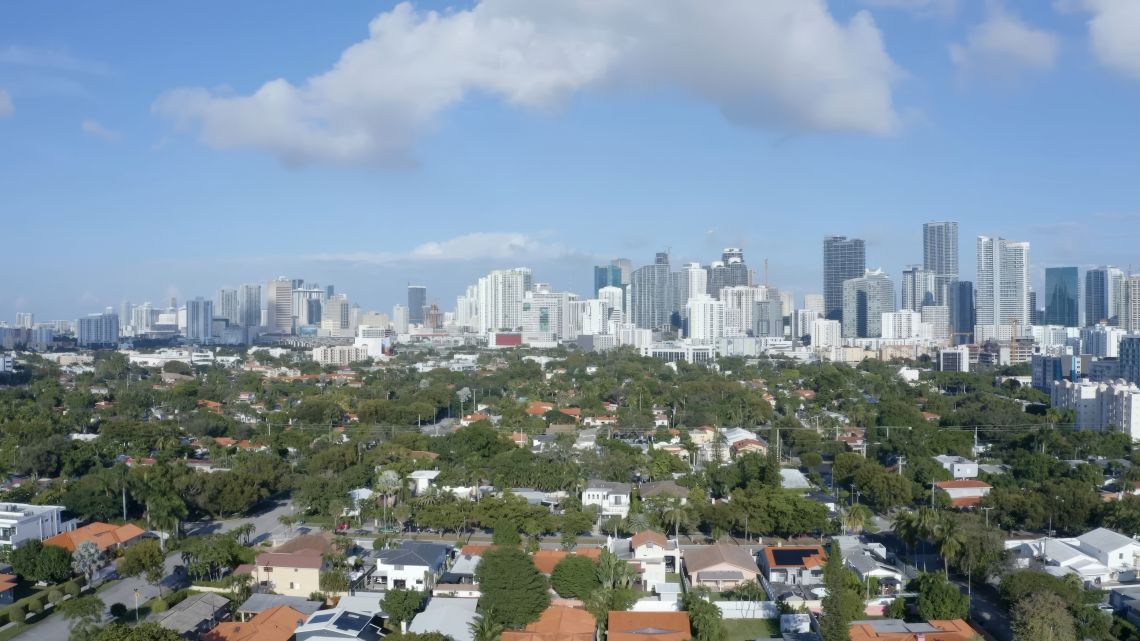
%20(65).png)
The Roads, Miami, Florida - EVERYTHING You Want to Know
Enjoy this virtual journey across the BEST of The Roads, from everything you WANT and NEED...
.png)
The Ultimate Guide to Miami-Dade's Top 25 Gated Communities for Single-Family Homes
Discover Miami's top gated communities in this essential guide for luxury home buyers...

Miami's BEST Restaurants in EVERY Neighborhood
Check out the absolute BEST restaurants in every neighborhood of Miami, including the best...
Selling Your Home?
Who are we?
We are the ALL IN Miami Group out of Miami.
We are Colombian, Filipino, Cuban, German, Japanese, French, Indian, Syrian, and American.
We are Christian, Hindu, and Jewish.
We are many, but we are one.
We sell luxury homes in Miami, Florida.
Although some of our clients are celebrities, athletes, and people you read about online, we also help young adults find their first place to rent when they are ready to live on their own.
First-time buyers?
All the time!
No matter what your situation or price range is, we feel truly blessed and honored to play such a big part in your life.