



Biscayne Park, Miami — A Cheat Sheet for Buyers, Visitors, & the Curious

Amit Bhuta
I use non-traditional marketing to inspire the most motivated buyers to pay the max for Miami luxury homes...
I use non-traditional marketing to inspire the most motivated buyers to pay the max for Miami luxury homes...
Biscayne Park doesn't fit the typical Miami mold — a distinction that only makes people want to know more about it.
Offering mid-century homes, oversized lots, and canopy-covered streets between Miami Shores and North Miami, just off Biscayne Boulevard, this incorporated village prides itself as a "Gateway to Miami."
Biscayne Park is also its own municipality, officially designated as a bird sanctuary and natural wildlife habitat.
All these layers in such a small community are bound to raise questions — especially as surrounding neighborhoods continue to grow and evolve.
Is it safe? Is it part of Miami? Are short-term rentals allowed? Is it in a flood zone?
So, instead of piecing together answers from multiple sources, we've gathered the most relevant and frequently asked questions into one clear overview of what Biscayne Park is really about.
Here's your guide to living in, visiting, and understanding Biscayne Park.
-topaz-upscale-2.1x.jpeg?w=1140)
LIVING IN BISCAYNE PARK
Where is Biscayne Park located?
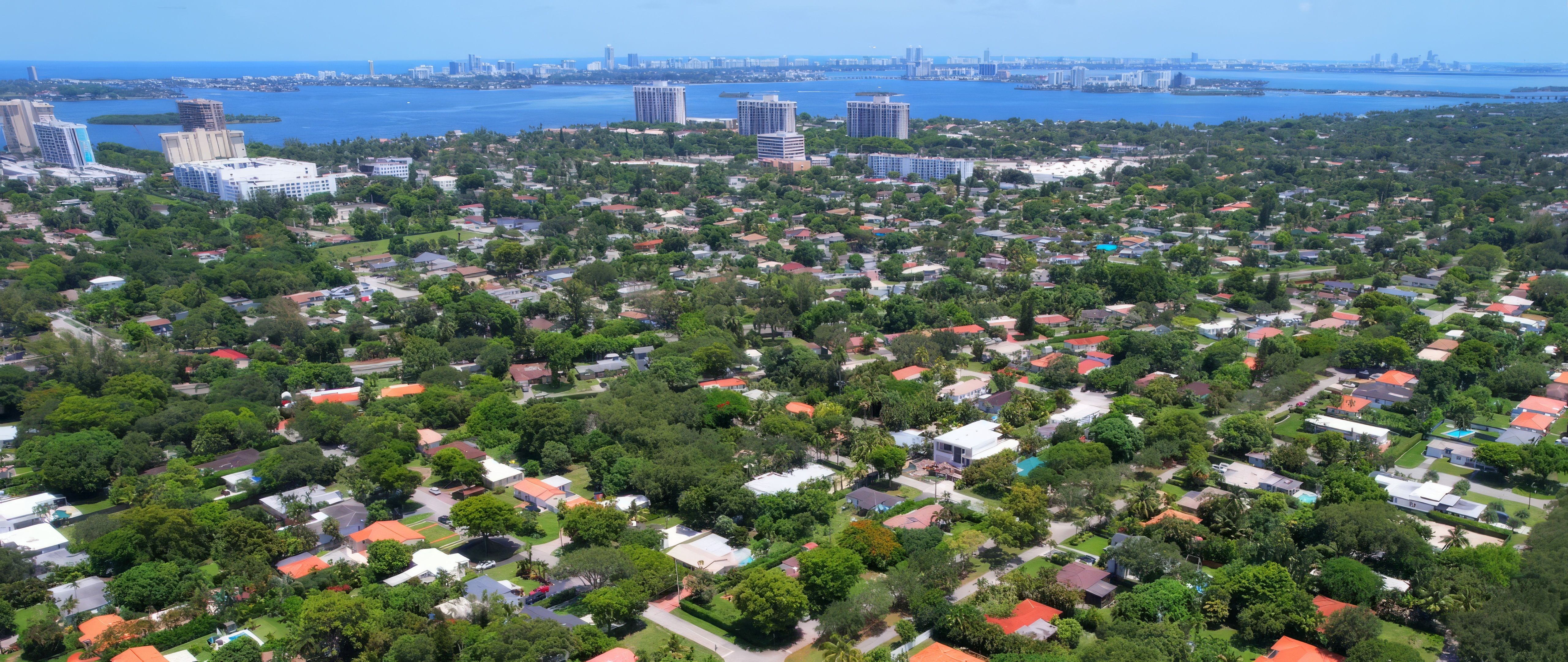
Biscayne Park is a small incorporated village in northern Miami-Dade County, positioned just west of Biscayne Boulevard between Miami Shores and North Miami.
It sits roughly 9 miles north of Downtown Miami and 15–20 minutes from Miami Beach by car.
While near major commercial corridors, the village itself remains entirely residential, without internal retail strips or high-rise development.
Its location also allows residents to access Downtown Miami, Aventura, and the surrounding business districts while living in a quieter residential pocket.
Is Biscayne Park its own city or part of Miami?
Biscayne Park is its own incorporated municipality.
It operates independently from the City of Miami, North Miami, and Miami Shores, with its own mayor and village commission overseeing zoning, local ordinances, and municipal services.
Although many mailing addresses are casually described as "Miami," governance and development regulations are handled at the village level.
What is it like living in Biscayne Park?
Living in Biscayne Park means single-family homes on larger parcels, mature tree canopy, and minimal through-traffic.
There are no condo towers, nightlife districts, or commercial corridors within the village, and most daily errands require a short drive to Biscayne Boulevard or into Miami Shores.
Its designation as a bird sanctuary also reinforces preservation of green space, contributing to a noticeably residential, low-density atmosphere compared to nearby neighborhoods.
Is Biscayne Park a good place to live?
Biscayne Park appeals to buyers who prioritize space, zoning stability, and a contained neighborhood setting.
Many homes sit on 10,000-square-foot lots or larger, which exceeds the parcel sizing of many surrounding Miami communities.
It is not designed for urban walkability, but for residents who value limited density and residential consistency; it’s a distinct alternative within northern Miami-Dade.
Is Biscayne Park safe?
Biscayne Park is primarily a residential village without designated nightlife zones or high-volume retail activities.
While safety should always be evaluated through current public data, the village’s small footprint, limited commercial presence, and lower traffic volume contribute to a calmer residential feel compared to busier neighboring areas.
Is Biscayne Park walkable?
The village is walkable for recreation and neighborhood strolls beneath mature trees.
However, it is not walkable for daily errands, as there are no grocery stores or restaurants within village limits.
Most residents drive 3–5 minutes to reach nearby commercial areas.
What is the commute from Biscayne Park to Downtown Miami and Brickell?
Downtown Miami and Brickell are typically 20–30 minutes away by car, depending on traffic patterns.
Access to Biscayne Boulevard and I-95 allows relatively direct routes into central business districts.
Is Biscayne Park close to the beach?
Yes. Miami Beach and Mid-Beach areas are generally 15–20 minutes away by car, depending on traffic and bridge access.
What types of homes are in Biscayne Park?
Housing in Biscayne Park consists almost entirely of single-family detached homes.
Here, architectural styles range from 1930s residences to mid-century ranch homes, renovated transitional properties, and occasional newer construction builds.
Since parcel sizes are generally larger than in neighboring communities, renovations and expansions are common.
Multi-family buildings are rare within the village.
Are there condos or townhomes in Biscayne Park?
No. Biscayne Park is predominantly zoned for single-family homes.
Buyers seeking condo or townhouse developments typically explore Miami Shores or North Miami instead.
What are home prices in Biscayne Park?
Home prices commonly range from approximately $850,000 to over $3.5 million, depending on lot size, condition, and architectural updates.
Recent median sale prices are generally between $1.2 million and $1.4 million, although pricing depends on inventory levels and the quality of renovation.
What are typical lot sizes in Biscayne Park?
Most residential parcels measure approximately 10,000 square feet or larger, with some properties exceeding 20,000 square feet.
This lot structure distinguishes Biscayne Park from many Miami neighborhoods where smaller parcels are more common.
Are there HOA fees in Biscayne Park?
There is no master homeowners' association governing the village.
Residents do not pay universal HOA dues tied to municipal living, although individual properties may have private agreements or restrictions.
Are short-term rentals allowed in Biscayne Park?
As Biscayne Park maintains single-family zoning and operates under its own municipal code, short-term rentals are generally restricted.
Buyers considering rental use should confirm current ordinances directly with the village before purchasing.
Is Biscayne Park in a flood zone?
Portions of Biscayne Park fall within FEMA-designated flood zones, common across much of eastern Miami-Dade County.
Flood insurance requirements depend on elevation, lender requirements, and specific flood zone classification.
What are property taxes like in Biscayne Park?
Property taxes vary based on assessed value and exemptions.
For example, a home assessed at around $1.2 million may generate annual property taxes of roughly between $13,000 and $18,000 before exemptions, although actual tax bills depend on millage rates and homestead status.
Are there zoning or building restrictions in Biscayne Park?
Yes. The village enforces single-family zoning, setback requirements, and height limitations.
Renovations, additions, and new construction must comply with municipal building review and permitting procedures.
Is Biscayne Park a good real estate investment?
Since inventory remains limited and development density is restricted, demand for single-family homes in Biscayne Park has remained relatively stable.
Like any real estate purchase, long-term performance depends on market cycles, property condition, and location within the village.
What schools serve Biscayne Park?
Biscayne Park is part of the Miami-Dade County Public Schools system.
Buyers should verify attendance zones directly with the district, as boundaries and school assignments are subject to change.
You may also visit Best Schools Near Biscayne Park for more information on your public and private school options.
Are there parks or community amenities in Biscayne Park?
The village maintains small parks and green spaces consistent with its residential character.
In Biscayne Park, amenities focus on neighborhood recreation rather than large-scale commercial venues.
-topaz-upscale-2.1x.jpeg?w=1140)
VISITING BISCAYNE PARK
Is Biscayne Park gated?
No. Biscayne Park is not a gated community.
Its streets are open to the public and accessible through regular neighborhood roadways.
Can anyone drive through Biscayne Park?
Yes. The village’s roads are public, and visitors are allowed to drive through.
That said, traffic volume remains lower than on nearby commercial corridors, as there are no major retail destinations within its boundaries.
Are there public events in Biscayne Park?
The village periodically hosts municipal meetings and small community events.
These event schedules are typically shared through the official village communication channels.
What is near Biscayne Park?
Restaurants, grocery stores, and retail centers line nearby Biscayne Boulevard.
Miami Shores also offers additional dining and service options just south of the village.
Meanwhile, Downtown Miami, Brickell, Miami Beach, and Aventura are all accessible within approximately 20–30 minutes by car.
-topaz-upscale-2.1x.jpeg?w=1140)
UNDERSTANDING BISCAYNE PARK
When was Biscayne Park established?
Biscayne Park was developed during the 1920s land expansion period and incorporated in 1931, later becoming a village in 1933.
Its original planning emphasized residential lot size and landscaped streets.
Why is it called Biscayne Park?
The name reflects its proximity to Biscayne Bay and its original identity as a landscaped residential community designed with park-like surroundings.
How is Biscayne Park different from Miami Shores?
Miami Shores offers commercial corridors, retail centers, and a broader mix of housing types, including condominiums.
On the other hand, Biscayne Park is smaller, primarily single-family, and lacks a commercial core within its limits.
How is Biscayne Park different from North Miami?
North Miami is a larger city with a collection of residential and commercial development, cultural institutions, and higher-density zones.
Meanwhile, Biscayne Park remains a smaller, low-density residential village focused almost entirely on single-family zoning and neighborhood preservation.
-topaz-upscale-2.1x.jpeg?w=1140)
-topaz-upscale-4x-2.jpeg)
Biscayne Park, Miami, Florida - EVERYTHING You Want to Know
Welcome to your unofficial walkthrough — a peek into Biscayne Park's pulse,...
.png)
The Ultimate Guide to Miami-Dade's Top 25 Gated Communities for Single-Family Homes
Discover Miami's top gated communities in this essential guide for luxury home buyers...
The Ultimate Guide to Miami-Dade's Top 25 Gated Communities for Single-Family Homes
Discover Miami's top gated communities in this essential guide for luxury home buyers...

Miami's BEST Restaurants in EVERY Neighborhood
Check out the absolute BEST restaurants in every neighborhood of Miami, including the best...
Selling Your Home?
Who are we?
We are the ALL IN Miami Group out of Miami.
We are Colombian, Filipino, Cuban, German, Japanese, French, Indian, Syrian, and American.
We are Christian, Hindu, and Jewish.
We are many, but we are one.
We sell luxury homes in Miami, Florida.
Although some of our clients are celebrities, athletes, and people you read about online, we also help young adults find their first place to rent when they are ready to live on their own.
First-time buyers?
All the time!
No matter what your situation or price range is, we feel truly blessed and honored to play such a big part in your life.