



Who Lives on the Upper East Side? (It's Not Who You Think!)

Amit Bhuta
I use non-traditional marketing to inspire the most motivated buyers to pay the max for Miami luxury homes...
I use non-traditional marketing to inspire the most motivated buyers to pay the max for Miami luxury homes...
The name “Upper East Side” sounds like it automatically comes with a doorman, a marble lobby, and someone carrying a tiny dog named something expensive.
Then you drive through Biscayne Boulevard and get neon motel signs, traffic, restaurants, older buildings, tropical trees, and at least one moment where you wonder if the name made you exaggerate the whole experience in your head.
That gap between the fancy name and the mismatched first impression is exactly why many people miss the true beauty of Miami's Upper East Side.
You see, behind the commercial stretch, the mixed architecture, and the parts that still look unfinished, is one of the city's most layered residential pockets.
Here, restored historic homes sit near bayfront enclaves, MiMo character gives it a visual identity rather than another copy-paste luxury gloss, and buyers can find leafy streets, old Miami charm, waterfront privacy, creative energy, and central convenience without pretending it's all perfectly polished.
And these are the groups who understand that personality, location, architecture, and long-term upside do not always arrive wearing matching marble.
Here are the six types of buyers you’ll meet on the Upper East Side.
 (1).png?w=1140)
1) The Crown Molding Detective
Give The Crown Molding Detective one arched doorway, one patch of original terrazzo, or one suspiciously beautiful old window, and they are already mentally canceling their weekend plans for a restoration project.
This buyer is usually in their mid-30s to late 50s, and is drawn to older single-family homes in Morningside, Bayside, Shorecrest, Palm Grove, and Belle Meade.
They are not shopping for the newest white-box build with the emotional range of a hotel hallway.
They want 1920s charm, 1930s details, midcentury personality, wood floors, vintage tile, generous porches, and enough old Miami character to make every showing feel like a small architectural treasure hunt.
They can look at a dated kitchen and see possibility instead of punishment, which is either admirable or a very expensive personality trait.
Upper East Side Miami works for them because the neighborhood still has homes that respect history, texture, and individuality without forcing every property into the same glossy Miami formula.
This buyer wants a house with a story, even when that story includes old plumbing, one confusing bathroom choice, and a contractor estimate that briefly makes them stare into the distance.
 (2).png?w=1140)
2) The Gate Code Royalty
For some buyers, the dream is not being seen; it is disappearing behind a gate so gracefully that even the delivery driver feels underdressed.
The Gate Code Royalty is often in their 40s to 70s, and this group can include executives, entrepreneurs, high-net-worth households, privacy-minded families, and established buyers who want luxury without the constant performance of being in a louder, more prestigious neighborhood.
They are most likely to pursue homes in Bay Point, Belle Meade, Belle Meade Island, and other gated or waterfront pockets where privacy, security, water access, mature landscaping, and exclusivity carry real weight.
This buyer may want a renovated estate, a waterfront home with a dock, a larger single-family residence, or a tucked-away property that gives them room to host, retreat, and avoid explaining their life to every passing car.
They are not choosing Upper East Side Miami because Biscayne Boulevard has neon signs and traffic with main-character energy.
They are choosing it because it can offer subtle residential luxury behind the public-facing corridor.
For them, the beauty of Upper East Side Miami is that one minute the city is loud, visible, and moving fast, and the next minute the gate closes and everyone else’s chaos becomes background noise.
 (3).png?w=1140)
3) Captain Biscayne Chaos
Captain Biscayne Chaos is the buyer who sees vintage motel signs, restaurants, renovation dust, coffee shops, older storefronts, tropical trees, and traffic all sharing the same stretch, then somehow decides the neighborhood has excellent comedic timing.
This buyer is usually in their late 20s to late 40s, and they may be a creative professional, designer, hospitality person, entrepreneur, remote worker, or city-loving couple who wants character without moving into a neighborhood that has been molded into total predictability.
They often look for condos, apartments, smaller single-family homes, updated older properties, duplexes, or homes near the MiMo District and Biscayne Boulevard corridor.
They want restaurants, cafés, bars, local businesses, a visual personality, and enough daily movement to make the neighborhood feel alive instead of staged.
The unevenness does not scare them as quickly as it scares more cautious buyers, because they see the charm in a place that has not sanded down every edge for brochure approval.
They know Upper East Side Miami can look polished in one pocket, chaotic on the next stretch, and charming again before the next light changes.
This buyer is not pretending Biscayne Boulevard is perfectly graceful, but appreciates that it gives the neighborhood stories, options, and a little bit of “what did I just pass?” entertainment.
 (4).png?w=1140)
4) The Ten-Minute Map Hacker
The Ten-Minute Map Hacker starts every home search by opening a map, zooming out, and calculating how many daily frustrations the address can remove from their life.
This buyer is typically in their early 30s to mid-50s, and may be a professional, consultant, hybrid worker, frequent traveler, couple, small household, or practical move-up buyer with obligations scattered across Miami.
They are likely to consider updated single-family homes, townhomes, condos, duplex-style properties, and older homes in a central location.
For them, Upper East Side Miami is valuable because Downtown, Wynwood, Midtown, the Design District, Miami Beach, Miami Shores, and the airport can all sit within a more manageable daily orbit.
They may enjoy the architecture and restaurants, but the real romance is reaching dinner, work, errands, school drop-off, or a flight without turning every drive into a spiritual test.
This buyer can accept a commercial corridor with rougher edges because they understand the tradeoff.
They get central Miami access, residential pockets, nearby dining, and a neighborhood identity that offers more personality than another interchangeable condo cluster.
 (5).png?w=1140)
5) The Park-and-Porch Negotiator
By the time The Park-and-Porch Negotiator reaches Upper East Side Miami, they have usually discovered that wanting space, charm, parks, convenience, and city access in one Miami neighborhood is how adults accidentally become real estate philosophers.
This buyer is often in their early 30s to early 50s, and they may be a couple planning, a young family, a blended household, a move-up buyer, or someone who wants an authentic residential rhythm without surrendering to full suburban quiet.
They are most likely to pursue single-family homes, renovated older houses, properties near leafy residential streets, homes close to Morningside Park or Legion Park, or houses with yards, porches, flexible rooms, and enough storage to keep daily life from becoming a hallway obstacle course.
They like that Upper East Side Miami can feel residential without becoming sleepy.
The neighborhood gives them parks, mature trees, historic homes, and calmer side streets, while Biscayne Boulevard keeps restaurants, cafés, services, and errands close enough to matter.
This buyer is not always chasing the biggest home or the flashiest address.
They want a home that can handle work calls, guests, pets, school logistics, groceries, weekend plans, and one person in the household insisting that the porch could “use a little something.”
Upper East Side Miami fits them because it gives everyday life more room without disconnecting them from the city they still want to be part of.
 (6).png?w=1140)
6) The No-Lawn-Life Diplomat
The No-Lawn-Life Diplomat loves the idea of Upper East Side Miami, but they have made peace with the fact that not every beautiful old house needs to become their personal maintenance era.
This buyer can range from the late 20s to late 60s, including singles, couples, downsizers, part-time residents, remote workers, budget-conscious professionals, and people who want the neighborhood without inheriting a roof, a yard, and a mysterious leak with excellent timing.
They are more likely to search for condos, apartment-style residences, older low-rise buildings, smaller homes, renovated units, or compact properties that offer access to the area without the cost and upkeep of a larger single-family home.
For them, Upper East Side Miami is appealing because it brings them near Biscayne Boulevard, MiMo dining, Miami Shores, Downtown, Midtown, the Design District, and Miami Beach without requiring a full-house commitment.
They may admire historic homes from the sidewalk with genuine respect and a very healthy sense of personal boundaries.
This buyer wants convenience, character, and location, but they also want the freedom to lock the door, leave town, and not wonder if a mango tree is currently declaring war on the driveway.
Their version of Upper East Side life is practical, mobile, and still connected to the neighborhood’s personality, which is why they love it.
SO… WHO IS THE UPPER EAST SIDE REALLY FOR?
Buyers who can get past Biscayne Boulevard’s first impression and understand why the side streets keep winning people over
Upper East Side Miami is for buyers who can handle a little visual whiplash without needing to call a committee meeting about it.
They understand that Biscayne Boulevard may greet them with traffic, neon signs, older storefronts, and restaurants packed into buildings with very active past lives, yet also know the neighborhood is not defined by its busiest road.
This is for people who can drive past the uneven commercial stretch, turn into a residential pocket, and immediately understand why someone would fight emotionally and financially for a restored house with mature trees.
It suits buyers who appreciate contrast, because Upper East Side Miami is not trying to be one perfectly themed resort village with matching fonts and synchronized landscaping.
It gives historic-home hunters their old Miami details, privacy buyers their gated pockets, lifestyle buyers their MiMo corridor, practical buyers their central map, households their parks and porches, and low-maintenance buyers their condos and smaller-footprint options.
That range rewards people who do not panic when charm and chaos share the same ZIP code.
The right buyer sees the old motel signs, the banyan shade, the restaurants, the waterfront enclaves, the side-street homes, and the still-changing edges as part of the same story rather than signs that the neighborhood forgot to pick a personality.
Upper East Side Miami works best for people who want Miami with texture, convenience, and character, but still have enough common sense to know that personality sometimes comes with traffic and one building that looks like it has survived three different branding eras.
WHO MIGHT NOT LOVE IT?
Those who want every street to look as expensive as the name sounds
Upper East Side Miami may not win over buyers who want every block to deliver the same visual promise from the moment they arrive.
This is not the easiest neighborhood for someone who needs the entrance, the main road, the surrounding buildings, the price point, and the neighborhood reputation to all line up neatly like a luxury brochure that has never met real life.
A buyer who wants only pristine new construction, uniform streetscapes, brand-new sidewalks everywhere, and zero questions from visiting relatives may spend too much time negotiating with their own expectations.
They may enjoy one section near Morningside or Belle Meade, then feel confused by Biscayne Boulevard, then wonder why the neighborhood can be charming, expensive, busy, historic, residential, and still a little scrappy in the same afternoon.
That reaction is understandable, but it also means they may be happier in a place with a more predictable identity and fewer plot twists between errands.
The Upper East Side may not fit buyers who avoid older homes, renovation questions, mixed-use corridors, visible transitioning, or the practical reality that location in Miami often comes with movement, noise, and the occasional testing of everyone’s inner peace.
People who want a quiet suburb may find it too urban, while people who want nonstop high-rise glamour may find it too residential and low-slung.
The neighborhood doesn't lack appeal, but it can be difficult for the wrong buyer because its appeal is layered, specific, and hardly gift-wrapped on the first pass.
Upper East Side Miami is best understood by buyers who can read between the buildings, and that is not everyone’s favorite homework assignment.
THE PART THAT MATTERS
Why the Upper East Side works for the people who choose it
Living on the Upper East Side isn't about falling in love with perfection, but it asks buyers to notice the parts that other people miss when they are too busy judging the neighborhood from the middle of Biscayne Boulevard traffic.
You see, it's not one of those Miami neighborhoods that introduces itself with a flawless entrance, matching landscaping, and a personality approved by twelve marketing meetings.
It is more layered than that, and honestly, a little less interested in making itself easy for people who need every block to explain itself immediately.
The buyers who choose it understand that a neighborhood can have old motel signs and million-dollar homes, busy restaurants and quiet porches, historic details and renovation questions, gated streets and very public commercial edges, all existing within the same daily orbit.
They are not pretending the contrast is invisible.
They are choosing it because the contrast is part of the value.
For the architecture lover, the Upper East Side offers homes with age, detail, and a sense of Miami that existed before every renovation became a white-and-glass audition tape.
For the privacy buyer, it offers tucked-away enclaves where the city can be close without being invited all the way into the driveway.
For the Biscayne loyalist, it offers restaurants, MiMo personality, local businesses, and the pleasure of living somewhere that still has a pulse instead of a curated showroom soundtrack.
For the practical buyer, the map makes a good argument, as Downtown, Wynwood, Midtown, the Design District, Miami Beach, Miami Shores, and the airport are all close enough to make daily life feel less scattered.
For households, it offers parks, residential pockets, porches, yards, and side streets that can carry real routines without cutting them off from the city.
For low-maintenance buyers, it offers a way into the neighborhood without requiring them to adopt an old house, name the roof leak, and spend every weekend having deep conversations with a contractor.
That is why Upper East Side Miami keeps working for people who know how to read a neighborhood beyond the obvious parts.
It gives them character without chaos, convenience without complete sameness, and beauty that sometimes waits until you turn off the main road.
The name may sound like it should arrive with marble floors and a tiny, expensive dog, but the real appeal is much more Miami than that.
Upper East Side Miami works because its best buyers are not looking for a neighborhood that performs luxury from curb to curb.
They are looking for a place with texture, access, history, privacy, restaurants, trees, old bones, and enough personality to make every other polished option look a little too well-behaved.
%20(67).png)
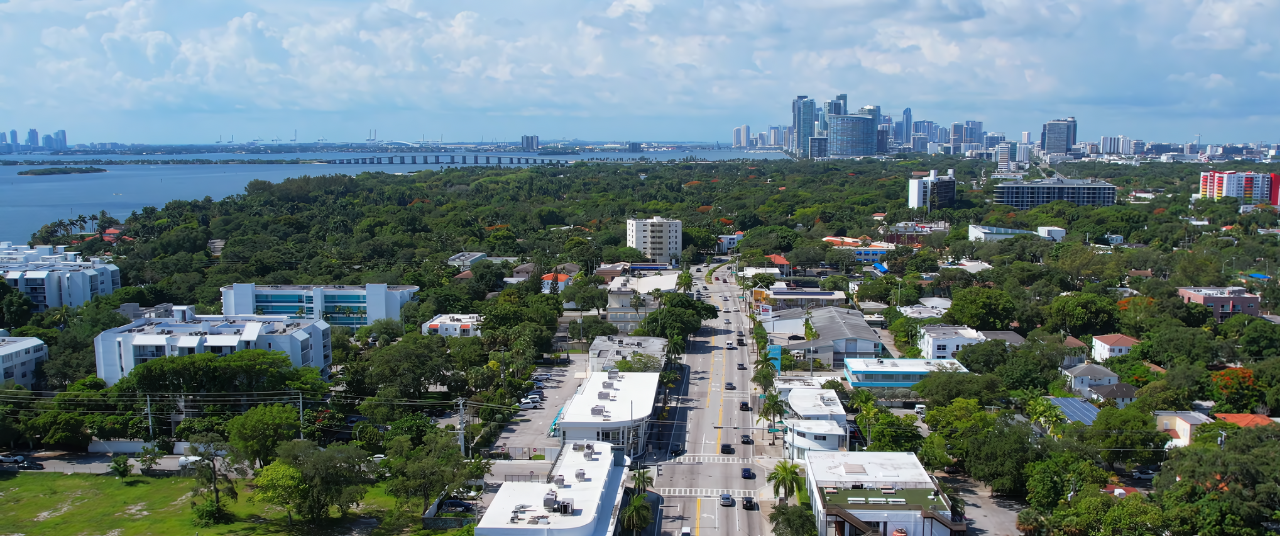
Upper East Side, Miami, Florida - EVERYTHING You Want to Know
Embark on this virtual escapade across all the irresistible layers of the Upper East Side!...
.png)
The Ultimate Guide to Miami-Dade's Top 25 Gated Communities for Single-Family Homes
Discover Miami's top gated communities in this essential guide for luxury home buyers...

Miami's BEST Restaurants in EVERY Neighborhood
Check out the absolute BEST restaurants in every neighborhood of Miami, including the best...
Selling Your Home?
Who are we?
We are the ALL IN Miami Group out of Miami.
We are Colombian, Filipino, Cuban, German, Japanese, French, Indian, Syrian, and American.
We are Christian, Hindu, and Jewish.
We are many, but we are one.
We sell luxury homes in Miami, Florida.
Although some of our clients are celebrities, athletes, and people you read about online, we also help young adults find their first place to rent when they are ready to live on their own.
First-time buyers?
All the time!
No matter what your situation or price range is, we feel truly blessed and honored to play such a big part in your life.