



Who Lives in Sweetwater? (It's Not Who You Think!)

Amit Bhuta
I use non-traditional marketing to inspire the most motivated buyers to pay the max for Miami luxury homes...
I use non-traditional marketing to inspire the most motivated buyers to pay the max for Miami luxury homes...
Ask anyone you know to describe Sweetwater, and 9 out of 10 times they'll say, “Isn’t that the place near FIU where every direction starts with a mall, a gas station, or someone’s abuela saying, ‘Dale, it’s right there’?”
Others even say it's a backup plan for those who want to move to Doral but can't afford it (which is a twisted way of saying it's affordable).
And yes, they're right — Sweetwater is compact, busy, practical, heavily Hispanic, close to FIU, and surrounded by enough shopping, roads, apartments, and daily errands to make the whole city feel like it runs on cafecito, car keys, and extremely specific parking instincts.
This messy-but-useful combination of access, culture, price logic, family ties, and everyday convenience is exactly why different kinds of people are moving to Sweetwater.
Some want a first-owned home near work and family, some want rental potential tied to FIU and nearby jobs, some want a condo or townhouse that makes ownership possible, and some want a community where Spanish is not a translation issue but part of the neighborhood’s operating system.
Scroll to see which group you belong to.
Here are the five types of buyers you’ll meet in Sweetwater.
 (40).png?w=1140)
1) The Closing-Cost Climber
While some buyers treat homeownership like a vague future dream, this one has already opened the calculator, checked the down payment, and asked the lender a question so specific it made everyone sit up straighter.
The Closing-Cost Climber is usually in their late 20s to early 40s, and is trying to buy their first place without leaving the West Miami-Dade world they already understand.
They are often looking at condos, townhomes, smaller single-family homes, or older properties in Sweetwater because the goal is not to impress strangers at brunch but to finally stop paying rent.
This buyer may be a young professional, a couple buying together, an FIU graduate staying nearby, or someone who has lived with family while saving and is ready for an address that comes with their own mailbox and fewer household negotiations.
They care about monthly payment, HOA fees, parking, insurance, commute routes, nearby jobs, and whether the property offers a realistic first step into ownership.
They are not expecting perfection because they know the budget is not walking into the room wearing a cape.
They may accept an older kitchen, a smaller floor plan, or a condo building that does not exactly scream “architectural masterpiece,” as long as the numbers work and the location keeps life convenient.
Sweetwater speaks to this buyer because it offers a more practical path into ownership near FIU, Doral, malls, family, jobs, and daily errands, which is a very meaningful win in a market where even basic math sometimes acts disrespectfully.
 (41).png?w=1140)
2) Professor Cash Flow
The moment this buyer hears “near FIU,” their brain does not picture campus life; it starts mentally arranging lease terms, parking rules, and how many bedrooms can survive college students with confidence and a microwave.
Professor Cash Flow is often in their 30s to 60s, looking at Sweetwater through an investor’s lens because the city sits near a major university, job centers, retail corridors, and a renter-heavy population.
They may be interested in condos, townhomes, duplex or triplex-style opportunities where available, or small properties that can appeal to students, faculty, staff, young workers, service employees, and families who need a practical location.
This buyer studies rental demand, HOA restrictions, maintenance costs, parking availability, number of bedrooms, transit access, and whether the property can handle turnover without becoming a full-time emotional burden.
They are not buying purely for charm, although they will happily mention charm if it helps the listing photos later.
Their real question is whether the property can produce income, hold demand, and remain useful in a city where FIU, malls, nearby Doral jobs, and West Miami-Dade traffic keep renters looking for convenience.
They may also be a parent buying for a student with a longer-term rental plan, which is just investment logic wearing a family-friendly outfit.
Sweetwater works for them because renters are already part of the city’s housing reality, and the location gives investment-minded buyers a practical reason to keep running the numbers until the spreadsheet finally smiles back.
 (42).png?w=1140)
3) Casa Command Center
In some Sweetwater households, buying a home is less about finding “the perfect place” and more about finding a property that can survive three generations, four schedules, two cars too many, and one relative who was “only visiting for the weekend” six months ago.
Casa Command Center is usually made up of buyers in their 30s to 60s, and are often multigenerational families who need a home that can handle real household traffic.
They may look for single-family homes, larger townhomes, properties with flexible layouts, extra bedrooms, converted spaces, enough parking, and proximity to schools, jobs, family members, grocery stores, medical offices, churches, and all the everyday places that keep a family running.
This buyer is not choosing Sweetwater because it looks like a magazine spread.
They are choosing it because life is nearby, Spanish is part of the daily rhythm, relatives are close, and the city’s practical layout supports the kind of family logistics that do not fit neatly into a minimalist floor plan.
They care about bedrooms, bathrooms, storage, parking, school access, commute routes, and how easily someone can drop off food, pick up a child, check on an older parent, or swing by after work without having to pass half of Miami-Dade.
This home may host birthdays, homework, caregiving, family dinners, visiting relatives, and at least one conversation happening loudly from another room because walking over would be too simple.
Sweetwater makes sense for this buyer because the city supports closeness, and for multigenerational households, closeness is not just sentimental; it is how the whole family machine keeps running.
 (43).png?w=1140)
4) The Maintenance Dieter
After years of dealing with yards, repairs, roof worries, and household chores that multiply like they have a secret group chat, this buyer is ready to put the home on a maintenance diet.
The Maintenance Dieter is usually in their late 50s to late 70s, often an empty-nester, an older adult, a longtime local, or a practical downsizer who wants to simplify without leaving the people and places that still make life feel familiar.
They may look for condos, townhomes, villas, or smaller homes in Sweetwater because they want less upkeep, easier cleaning, fewer repair surprises, and a home that does not require a weekend work crew to stay respectable.
This buyer still wants nearby family, Spanish-speaking businesses, doctors, groceries, restaurants, churches, malls, and the comfort of living somewhere they already know how to navigate.
They are not trying to vanish into a luxury retirement bubble where every hallway smells like new carpet, and nobody knows their cousin.
They want independence with backup close by, which means they can keep their own space while still being near the relatives who will absolutely “just pass by” and somehow stay until dinner.
Parking, elevators, HOA fees, stairs, safety, medical access, and proximity to errands all matter because this buyer is planning for comfort, not just convenience.
Sweetwater fits them because it lets downsizers reduce the home workload without cutting themselves off from family, community, and the familiar daily circuit that still makes them feel rooted.
 (44).png?w=1140)
5) Doral Math Survivor
This buyer did not give up on Doral as much as they looked at the numbers, made direct eye contact with reality, and decided Sweetwater deserved a fair audition.
The Doral Math Survivor is often in their late 20s to 50s, and they want the access benefits of western Miami-Dade without stretching their budget until it starts making concerning noises.
They may be looking at condos, townhomes, smaller single-family homes, or older properties that keep them near Doral jobs, FIU, Dolphin Mall, Miami International Mall, major roads, schools, restaurants, and family networks.
This buyer is strategic rather than flashy.
They understand that a neighborhood does not need a luxury reputation to be useful, especially when the daily map includes work commutes, school drop-offs, errands, shopping, relatives, and traffic patterns that can ruin a person’s attitude before 9 a.m.
They want location efficiency, cultural familiarity, and a realistic purchase price, even if that means choosing a home that needs updates or a building that is more practical than pretty.
For them, Sweetwater is not a consolation prize.
It is the place where the budget, commute, family needs, and ownership goal stop fighting each other long enough to sign paperwork.
SO… WHO IS SWEETWATER REALLY FOR?
Those who are trying to make Miami-Dade life add up without needing a luxury neighborhood name to do the math
Sweetwater makes the most sense for buyers who have looked at the realities of West Miami-Dade and decided they are not shopping for a fantasy, a mood board, or a driveway that needs its own marketing team.
They are shopping for a home that helps life flow smoothly.
That may sound unglamorous until you remember that in Miami, being near work, school, family, shopping, expressways, and someone who can help with the kids can matter more than a prettier entrance sign with landscaping that minds its own business.
In fact, this buyer understands that convenience is not a consolation prize.
It is a survival tool.
This is the buyer who wants to get into ownership, stay near relatives, reduce commute stress, support an FIU-connected rental plan, or choose a condo or townhouse that won't make their monthly payment look like it joined a cartel.
They may be a young professional buying for the first time, a couple trying to stop renting, a parent buying with a student in mind, a multigenerational household needing more room, or a downsizer who wants less maintenance without leaving the family orbit.
What they usually share is a practical mindset and a very Miami understanding of distance.
A place can look “close” on a map and still ruin your afternoon if the wrong roads are involved.
Sweetwater appeals because it keeps buyers near FIU, Doral, malls, restaurants, shops, family networks, and everyday errands without paying extra cost for a polished reputation that does not help unload groceries.
It also fits buyers who value cultural familiarity.
In Sweetwater, Spanish is part of daily life, family networks matter, and errands can come with the comfort of being understood without needing to explain the household’s rhythm.
That matters to buyers who want more than a roof.
They want a neighborhood that recognizes how their life works, from the way relatives visit to the way weekends are built around errands, food, family, and someone saying they are “five minutes away” when they have clearly just left the house.
Sweetwater is best for people who see value in a useful location, flexible housing, cultural comfort, and ownership that feels possible.
It may not have the gloss of Doral or the postcard charm of older Miami neighborhoods, but it has something many buyers need more: a realistic path to live near the places and people that already shape their lives.
WHO MIGHT NOT LOVE IT?
Buyers who are expecting Sweetwater to behave like Doral with a smaller receipt
Sweetwater may not satisfy buyers who want every block to look curated, quiet, spacious, and freshly polished for a real estate video with slow piano music.
This is a busy, compact, practical city, and it does not pretend otherwise.
The streets can feel active, parking can require strategy, the housing can vary from condos and townhomes to older homes and denser residential pockets, and daily life often moves with the energy of people who have places to be and no time for decorative nonsense.
For some buyers, it may be too much reality in one ZIP code.
A buyer who wants wide, quiet streets, large newer homes, gated-community uniformity, manicured subdivisions, and a neighborhood atmosphere that whispers “master-planned calm” may find Sweetwater too dense or too utilitarian.
It is not built around grand entrances, big-lot prestige, or the peaceful illusion that every errand will come with abundant parking and emotional closure.
It is built around access, affordability, proximity, and daily movement.
Sweetwater may also not be ideal for buyers who dislike older properties, compact floor plans, HOA trade-offs, condo rules, renovation needs, or the realities of buying in a market where practical housing often comes with compromise.
A first-time buyer may find an opportunity, but it may involve accepting dated finishes, limited storage, association fees, smaller yards, or a property that needs patience before it starts acting cute.
An investor may like the rental logic, but they still need to understand restrictions, maintenance, parking, tenant turnover, and building rules.
A family may love the proximity to relatives and errands, but still needs to be honest about space, traffic, and parking demands.
Sweetwater is not a place for buyers who want convenience without congestion or value without trade-offs.
It is also not the best match for someone who wants a neighborhood to boost their ego more than their daily routine.
If the goal is to say the address and watch people nod with instant recognition, Sweetwater may not deliver that little social sparkle.
If the goal is to live near FIU, Doral, malls, jobs, family, Spanish-speaking businesses, and the daily machinery of West Miami-Dade, then the city is the perfect option.
Sweetwater rewards buyers who can separate usefulness from glamour.
Anyone who cannot do that may spend the entire home search asking why the neighborhood is not pretending harder.
THE PART THAT MATTERS
Why Sweetwater works for the people who choose it
The reason Sweetwater works is simple, but not shallow: it solves real problems for buyers who are tired of treating homeownership like a lifestyle costume.
It gives them a location that connects to work, school, family, shopping, rental demand, and daily errands without forcing them into the price points of nearby cities that have stronger name recognition, which isn't a small thing in Miami-Dade.
For a first-time buyer, Sweetwater can offer a more realistic entrance into ownership through condos, townhomes, smaller homes, or older properties that still keep them near familiar roads, stores, and people.
For an investor, the city’s renter-heavy profile, proximity to FIU, and access to nearby employment areas can make the numbers worth studying carefully.
For a multigenerational household, Sweetwater can keep family members close enough for caregiving, school support, shared meals, emergency pickups, and those visits that begin with “I’m just stopping by” and end with someone reheating dinner.
For a downsizer, the city can offer a way to simplify the home without disconnecting from the doctors, churches, shops, relatives, and Spanish-speaking routines that already structure daily life.
For a value-focused buyer priced out of shinier nearby areas, Sweetwater can deliver location benefits without demanding their every dollar.
Sweetwater is not selling escape but connection.
Connection to FIU.
Connection to Doral and West Miami-Dade job centers.
Connection to malls, roads, restaurants, services, and family networks.
Connection to a community where Spanish is woven into the everyday rhythm and where practical living is not treated like a downgrade.
The buyers who choose Sweetwater are often making careful, layered decisions.
They are balancing budget, commute, relatives, rental potential, household size, and plans in a city where one wrong location choice can turn every weekday into a traffic-based character test.
Sweetwater works because it gives these buyers a way to stay plugged into the places they need without overpaying for polish they may not even care about.
It is busy, compact, and sometimes messy, like how useful places tend to be.
But for the right buyer, that mess has a purpose.
It means life is nearby, the math has a chance, and the city is doing exactly what they need it to do, even if the parking lot occasionally requires prayer, patience, and one backup plan.
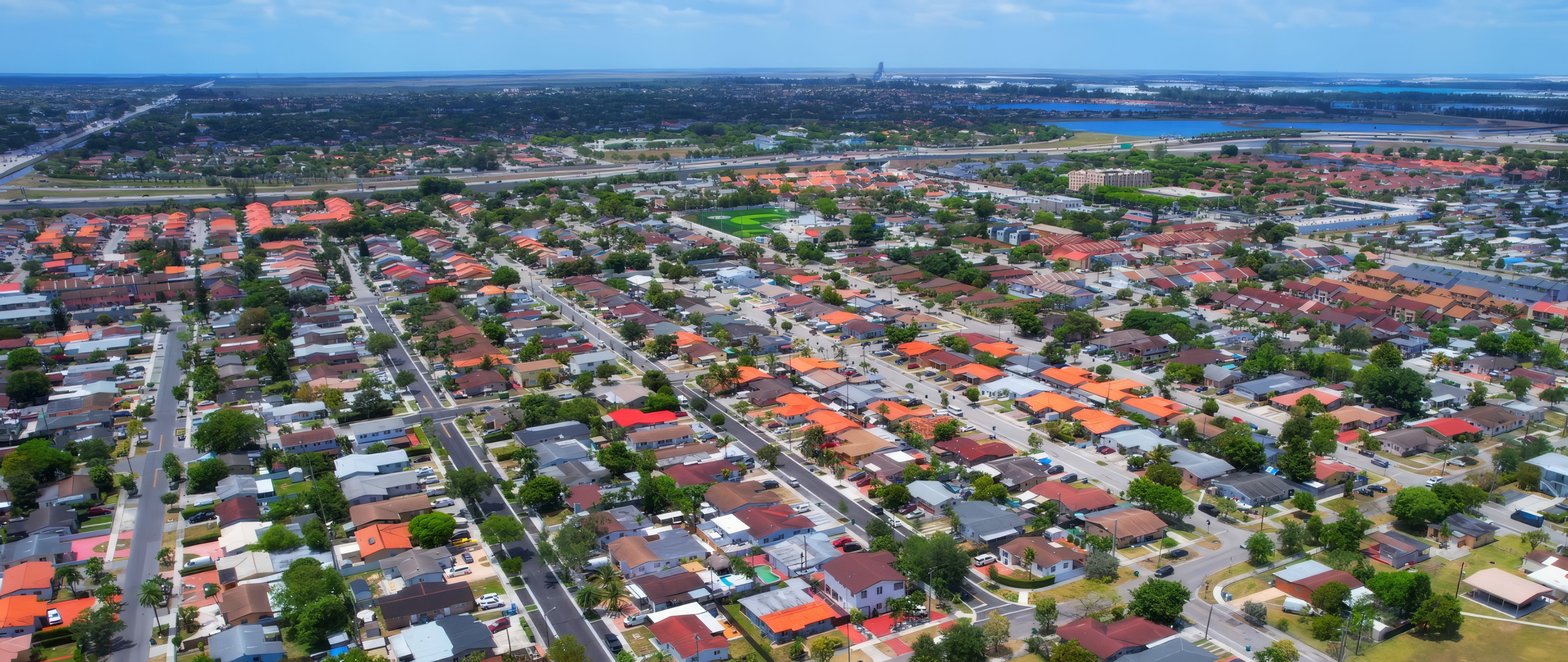
Sweetwater, Miami, Florida - EVERYTHING You Want to Know
Set aside everything you think you know about Sweetwater and join us as we wander through ...
.png)
The Ultimate Guide to Miami-Dade's Top 25 Gated Communities for Single-Family Homes
Discover Miami's top gated communities in this essential guide for luxury home buyers...


Miami's BEST Restaurants in EVERY Neighborhood
Check out the absolute BEST restaurants in every neighborhood of Miami, including the best...
Selling Your Home?
Who are we?
We are the ALL IN Miami Group out of Miami.
We are Colombian, Filipino, Cuban, German, Japanese, French, Indian, Syrian, and American.
We are Christian, Hindu, and Jewish.
We are many, but we are one.
We sell luxury homes in Miami, Florida.
Although some of our clients are celebrities, athletes, and people you read about online, we also help young adults find their first place to rent when they are ready to live on their own.
First-time buyers?
All the time!
No matter what your situation or price range is, we feel truly blessed and honored to play such a big part in your life.