



Who Lives in Shenandoah? (It's Not Who You Think!)

Amit Bhuta
I use non-traditional marketing to inspire the most motivated buyers to pay the max for Miami luxury homes...
I use non-traditional marketing to inspire the most motivated buyers to pay the max for Miami luxury homes...
Do not trust Shenandoah’s arches too quickly.
They are beautiful, persuasive, and completely aware that buyers lose all common sense the second old Miami architecture starts catching the afternoon light.
And yes, Shenandoah’s historic homes, mature trees, proximity to Little Havana, access to Coral Way, and street scenes that make you whisper, “This has soul,” are undeniably charming.
But all that charm can distract you from asking a single practical question.
In reality, Shenandoah is not just pretty old houses near everything; it is a central Miami choice for buyers who know character comes with maintenance, location comes with pressure, and a good home in this area is part romance, part strategy, and part inspection report.
Some buyers miss that completely, while others see the full package and still want in.
Here are the six types of buyers you’ll meet in Shenandoah.
 (57).png?w=1140)
1) The Archway Romantics
The Archway Romantics range from their late 30s to early 70s, and they are the buyers most likely to fall emotionally victim to a tiled roof before the showing has even reached the living room.
They are drawn to Shenandoah’s older single-family homes, especially the 1920s, 1930s, and midcentury properties with arched doorways, front porches, original floors, textured walls, mature landscaping, and old-Miami character that makes newer construction look like it needs a personality coach.
These buyers may be established professionals, longtime Miami residents, creative homeowners, empty nesters, or couples who want a home with a story over a floor plan named by a subdivision committee.
They usually prefer restored or well-preserved homes that still carry the neighborhood’s historic charm, though they may accept tasteful updates if the original character has not been scrubbed away in the name of “modern.”
For them, Shenandoah is not just convenient because it sits near Coral Way, Little Havana, Brickell, Coral Gables, Coconut Grove, and The Roads.
It is meaningful because the homes still look and feel connected to an older Miami that has not been completely replaced by glass, gray floors, and lighting fixtures shaped like geometry homework.
They know charm comes with responsibility, but they are willing to take on the challenge because a house with history gives them something emotionally richer than square footage alone.
This buyer wants the porch, the arch, the shade, the cafecito nearby, and the satisfaction of owning a home that already had a life before they arrived.
 (58).png?w=1140)
2) The “We Can Save the Floors” People
A different buyer walks into Shenandoah and does not see an old house.
They see a rescue mission with crown molding.
The “We Can Save the Floors” People are usually in their 30s through 60s, and they are the renovation-minded buyers who can spot dated cabinets, awkward additions, old tile, worn wood, and mysterious ceiling fans, then remain calm enough to say, “This has potential.”
They are drawn to fixer-uppers, older single-family homes with strong bones, properties with original details, homes that need cosmetic updates, and houses where the layout, lot, location, or architectural character makes the work worth considering.
Some may look for larger renovation opportunities, while others want a home that only needs targeted improvements such as kitchen updates, bathroom modernization, roof work, impact windows, landscaping, or a better indoor-outdoor connection.
They are not buying in Shenandoah because they want a perfectly finished model home with no surprises and the emotional temperature of a furniture showroom.
They want a home they can shape, restore, polish, and personalize without erasing the details that made them fall for it in the first place.
Shenandoah works for this buyer because the neighborhood offers the rare combination of central Miami access and older-home inventory, which means a smart renovation can improve daily life and protect long-term value.
Of course, these buyers also need patience, cash reserves, good inspectors, and the humility to understand that “just updating the kitchen” can sometimes invite three tradespeople, two permit conversations, and one dramatic sigh in the driveway.
 (59).png?w=1140)
3) The Map-Wins-Again Crowd
The Map-Wins-Again Crowd does not need Shenandoah to be the flashiest neighborhood in Miami, because the map has already done half the flirting.
These buyers are usually in their late 20s to late 50s, and they include professionals, hybrid workers, physicians, attorneys, finance workers, entrepreneurs, and couples who want central access without living inside Brickell’s elevator-and-parking-garage universe.
They chose Shenandoah because it places them near major Miami anchors like Brickell, Coral Gables, Coconut Grove, Little Havana, Coral Way, Downtown Miami, and The Roads while still offering residential streets and single-family homes.
They often look for renovated homes, updated bungalows, smaller single-family homes with efficient layouts, homes with office space, duplex or multi-family options where available, and properties with parking to survive central Miami life with dignity.
Their home search is shaped by commute time, daily routes, airport access, school/office proximity, dining options, errands, and the ability to move around Miami without feeling exiled to the edge of the map.
They may appreciate Shenandoah’s architecture and culture, but their first loyalty is to convenience with substance.
They want a home that gives them a real neighborhood, not just a place to sleep between meetings and traffic reports.
For this group, Shenandoah is a powerful option as it offers a rare central-Miami compromise: old-house character, residential scale, and access to several of the city’s most important work and lifestyle corridors.
They are not buying a shortcut.
They are buying a location that makes the rest of their life in Miami easier to manage.
 (60).png?w=1140)
4) The Cafecito Knows My Name Crew
The Cafecito Knows My Name Crew is not only shopping for architecture; they are shopping for the neighborhood rhythm that comes with it.
They are usually in their 30s through 70s, and they include Cuban and Latin buyers, longtime Miami locals, returning residents, culture-conscious homeowners, and people who want to live somewhere that still feels connected to daily Miami life instead of a glossy version of it.
They are drawn to Shenandoah because it sits near Little Havana, Coral Way, local bakeries, restaurants, small businesses, churches, parks, and older residential blocks where the neighborhood still has memory, language, flavor, and a sense of continuity.
They often look for classic single-family homes, updated older houses, homes with porches, yards, guest-friendly layouts, outdoor spaces, and enough room to host family without making everyone eat in shifts.
This buyer may love historic details, but the deeper pull is cultural familiarity.
They want the sounds, routes, errands, food, proximity to family, and texture that make a neighborhood feel lived-in.
Shenandoah makes sense for them because it offers central access without stripping away the Miami character that many buyers lose in newer, more polished neighborhoods.
They know a place can be convenient and still have a soul, which is important because nobody wants to spend serious money to live somewhere that feels like it was assembled by a branding team with no abuela supervision.
For this buyer, Shenandoah is not just aesthetically old Miami.
It is old Miami as a daily rhythm.
 (61).png?w=1140)
5) The Porch-to-Plan People
For the Porch-to-Plan People, the dream is not to live in the middle of the action.
The dream is to live close enough to the action that plans do not require a formal announcement, a traffic strategy, and a backup snack.
These buyers are usually in their late 20s through late 50s, and they include young professionals, couples, small families, social homeowners, and urban-edge buyers who want a residential home base with nearby restaurants, cafés, parks, errands, and Miami energy within easy reach.
They are often interested in updated bungalows, smaller single-family homes, townhome-style options if available, duplexes, condos around the edges, or homes near Coral Way, Calle Ocho, and other active corridors.
They may not need a large house, but they want a home that supports an active lifestyle: a porch for coffee, a small yard for a dog, a home office, parking, and proximity to places where dinner, groceries, friends, and weekend plans do not feel impossibly far.
This buyer differs from the Central-Access Professional because the priority is not only commute or work access.
They care about daily texture.
They want to walk or drive a short distance to local spots, meet friends nearby, enjoy the cultural edges of Little Havana, reach Coral Gables or Coconut Grove without overthinking it, and come home to a street that still feels residential.
Shenandoah fits because it offers a rare Miami groove where a buyer can have a real front door, a real neighborhood, and enough nearby activity to avoid feeling trapped in pure suburbia.
They want access, but they also want a home that provides a peaceful place to return after saying yes to too many plans.
 (62).png?w=1140)
6) The Charm-With-Receipts Buyers
These buyers love Shenandoah’s beauty, but they are not blinded by it.
They are usually in their 40s through 70s, and they include experienced homeowners, investors buying for personal use, long-term holders, financially strategic professionals, and buyers who understand that central Miami land, historic housing stock, and limited supply are not casual details.
They are drawn to Shenandoah because the neighborhood sits in a high-demand central corridor, with older homes, cultural identity, renovation potential, and proximity to Brickell, Coral Gables, Coconut Grove, Little Havana, and Coral Way.
They often look for well-located single-family homes, updated properties with long-term hold value, homes with renovation upside, duplexes or multi-family properties where available, and lots that have strategic value beyond the current finishes.
This buyer enjoys the arches and porches, but they also asks the questions that romance conveniently ignores.
What is the roof age?
What updates have been made?
What is the zoning?
What is the lot worth?
What is happening around the neighborhood?
They understand that Shenandoah is not just a pretty place to live; it is a central-Miami ownership decision with real market pressure behind it.
For them, the best purchase is the one where character, location, and long-term logic all agree, which is rare enough in Miami to deserve a moment of silence and maybe a second cafecito.
They are not immune to charm.
They simply make the charm bring paperwork.
SO… WHO IS SHENANDOAH REALLY FOR?
Buyers who can fall in love with an old house and still remember to ask about the roof
The Shenandoah lifestyle is for buyers who want central Miami living with texture, not a blank-slate house designed by a very expensive printer.
It fits people who appreciate architecture, neighborhood history, Cuban and Latin cultural rhythm, shaded residential streets, and the rare convenience of being near Little Havana, Coral Way, Brickell, Coral Gables, Coconut Grove, and The Roads without living in the middle of the loudest version of any of them.
The best-fit buyers in Shenandoah are not just shopping for square footage.
They are shopping for a character that still has practical value.
They understand that an older Shenandoah home may come with arches, tile roofs, porches, original floors, mature trees, and the occasional inspection note that reads like a minor plot twist.
That does not scare them away because they are willing to balance romance with responsibility.
They may be professionals who want a shorter drive to major Miami corridors, culture-conscious buyers who want a neighborhood with real local flavor, renovators who can see past dated finishes, or long-term strategists who know central land does not become less valuable because a bathroom needs help.
Shenandoah works best for people who want a home that feels more rooted than manufactured.
They want the cafecito nearby, the porch with personality, the street with memory, and the location that makes the rest of Miami easier to reach.
They also know the deal: if you want old Miami charm, you cannot act like you were betrayed when old Miami asks for maintenance.
WHO MIGHT NOT LOVE IT?
Those who want historic charm only after someone else has already paid for every repair
Shenandoah can test buyers who want the beauty of an older Miami home but none of the responsibility that comes with owning one.
If someone wants brand-new systems, flawless finishes, giant closets, wide-open suburban layouts, and a home that requires zero imagination, Shenandoah may feel like a very charming trap with pretty windows.
Many homes in this community reward patience, due diligence, and a clear budget because older properties can come with roof concerns, plumbing updates, electrical questions, permitting history, insurance considerations, and renovation decisions that are not always solved by saying, “But the arch is so cute.”
Buyers who prefer uniform streets, large new-construction homes, gated-community polish, or a fully predictable suburban environment may also struggle with the neighborhood’s variety.
Shenandoah is central, lived-in, and layered, which means one block can feel beautifully preserved while another reminds you that Miami has been improvising for decades.
It may also feel too urban-adjacent for buyers who want deep quiet, big lots, and a slower suburban buffer from city life.
This is not the area for someone who wants to be near nothing, hear nothing, and have every errand require a calm drive through identical landscaping.
Shenandoah asks buyers to enjoy proximity, culture, and movement while still valuing a residential home base.
For the wrong buyer, that mix can feel busy, uneven, or too maintenance-heavy.
THE PART THAT MATTERS
Why Shenandoah works for the people who choose it
Shenandoah works because it offers a home with character in a location that still pulls serious weight.
It is not just an old-house neighborhood, and it is not just a central address.
It is the collision of both, with culture, convenience, renovation potential, and neighborhood identity folded into the same purchase.
That is why buyers who understand Shenandoah do not treat its charm as decoration but as a part of the value.
The arches, porches, tile roofs, mature streets, and older homes matter because they give the neighborhood a visual and emotional identity that newer developments often try to imitate with very expensive lighting and zero memory.
The location matters because living near Coral Way, Little Havana, Brickell, Coral Gables, Coconut Grove, and The Roads changes how daily life moves.
The renovation side matters because the right updates can make an older home more livable without stripping away the details that made it special.
And the cultural layer matters because Shenandoah still feels connected to Miami’s older rhythms, not just its newest price tags.
The people who choose Shenandoah are not looking for easy in the most basic sense.
They are looking for something worthwhile.
They know a good home may ask for attention, money, patience, and a strong relationship with inspectors, yet will return something more personal than a perfectly neutral house with no stories.
Shenandoah is for buyers who can handle the homework because they understand the reward.
It gives them old Miami charm with central Miami leverage, and that is a combination worth taking seriously, even if the arches got them emotionally compromised first.
%20(49).png)
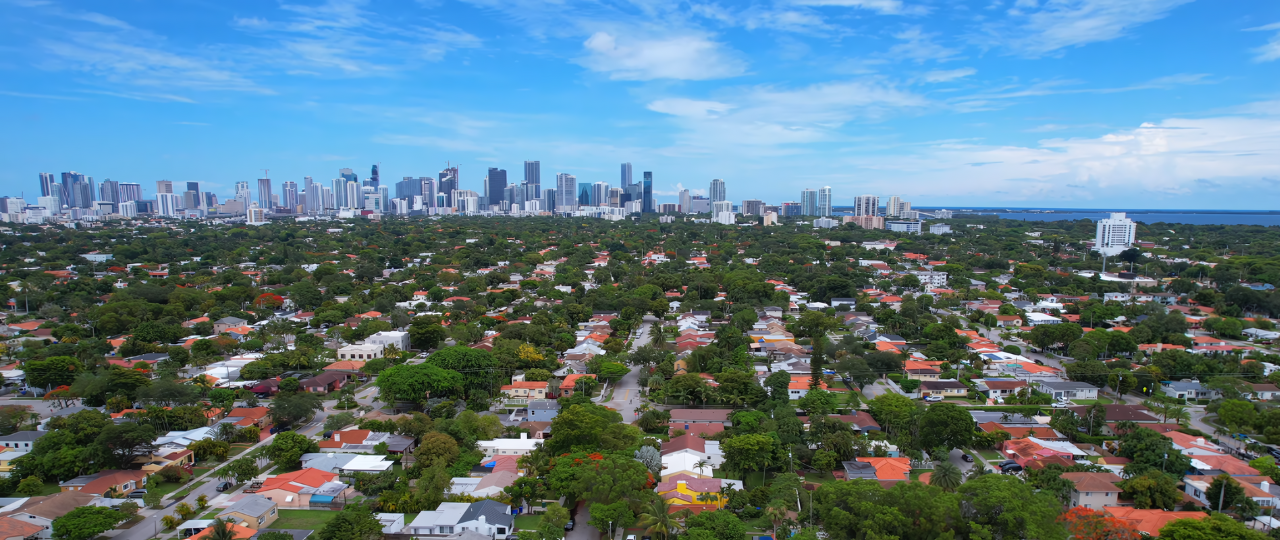
Shenandoah, Miami, Florida - EVERYTHING You Want to Know
Join us on this virtual expedition across all the magnificent layers of Shenandoah! We pro...
.png)
The Ultimate Guide to Miami-Dade's Top 25 Gated Communities for Single-Family Homes
Discover Miami's top gated communities in this essential guide for luxury home buyers...


Miami's BEST Restaurants in EVERY Neighborhood
Check out the absolute BEST restaurants in every neighborhood of Miami, including the best...
Selling Your Home?
Who are we?
We are the ALL IN Miami Group out of Miami.
We are Colombian, Filipino, Cuban, German, Japanese, French, Indian, Syrian, and American.
We are Christian, Hindu, and Jewish.
We are many, but we are one.
We sell luxury homes in Miami, Florida.
Although some of our clients are celebrities, athletes, and people you read about online, we also help young adults find their first place to rent when they are ready to live on their own.
First-time buyers?
All the time!
No matter what your situation or price range is, we feel truly blessed and honored to play such a big part in your life.