



Who Lives in Homestead? (It's Not Who You Think!)

Amit Bhuta
I use non-traditional marketing to inspire the most motivated buyers to pay the max for Miami luxury homes...
I use non-traditional marketing to inspire the most motivated buyers to pay the max for Miami luxury homes...
Why does Homestead feel like a whole trip, even when it’s technically still Miami?
You start thinking about traffic, distance, and whether anything out there is even worth the drive, so most people decide against it before they even get in the car.
But if you really think about it, the difference between buyers who end up in Homestead and the rest is that they don’t treat the drive like something to complain about.
Instead, they see it as part of the routine, and an adventure that leads to the lifestyle they need and the experiences they'll share with their loved ones.
To them, the extra space, slower pace, and breathing room at the end of it make that drive feel a lot like a trade they’re willing to make.
And maybe, after this, you will, too.
Here are the six types of buyers you’ll meet in Homestead.
 (20).png?w=1140)
1) The “I’ll Take the Drive if I Get That Backyard” Crew
They know the decision is final the moment they see the yard.
Typically in their late 20s to early 40s, this group already looked at places closer to the city where outdoor space felt more like a suggestion than something usable.
They have seen the balconies, the shared amenities, and the tiny patches of grass, and none of it felt like what they actually had in mind.
Then they get to Homestead and realize they can have a real backyard, one you can actually use without planning around other people.
They go for single-family homes with enough outdoor space to host, relax, or not feel boxed in.
The drive stops feeling like a drawback pretty quickly once they picture what they get in return.
For them, the trade is simple — they will take a little more time on the road if it means they finally have room to live the way they want.
 (21).png?w=1140)
2) The “First-Time, No Compromises” Club
They came into this thinking they would have to settle, and they are slowly realizing they don't have to.
Most of them are in their mid-20s to mid-30s, buying their first home, and trying to make a decision that won't be a temporary fix.
They have already been told to “start small” or “just get in the market,” but that advice never really sat right with them.
They want something that feels like a home from day one, not something they will inevitably outgrow.
In Homestead, they find newer townhomes and single-family houses that check more boxes than they expected at their price point.
They are not after perfection, but they are also not interested in compromising on everything.
For them, this is not just a first step — it's the start of a journey that they feel good about.
 (23).png?w=1140)
3) The “Why Is This Cheaper Than Everything Else?” Crowd
They approach everything with a bit of skepticism at first.
Usually in their late 20s to 40s, these buyers have seen enough listings across Miami to know when something feels off compared to the rest of the market.
When they first look at Homestead, the prices do not quite line up with what they have been seeing elsewhere.
They expect a catch, something hidden that explains the difference.
But the more they look, the more they realize the value is not coming from something amiss but something different.
They go for well-priced single-family homes or townhomes that have more space and better layouts than they expected for the budget.
For them, the doubt turns into curiosity, and curiosity turns into a serious option — and they're sold.
 (24).png?w=1140)
4) Mr. / Ms. “I Need Space, Not a Balcony”
They are done pretending that a tiny outdoor area is enough.
In their late 20s to 40s, they're a group that has lived in condos or tighter spaces where everything's a little too close together.
They have tried making it work, but eventually it starts to feel limiting.
They want room to move, room to breathe, and not to hear everything happening next door.
Homestead gives them that exact setting without forcing them into a completely different lifestyle.
They look for single-family homes with open layouts, larger lots, and enough separation from neighbors to feel comfortable.
They are not asking for anything extreme — just a space that truly offers space.
 (26).png?w=1140)
5) The “We’re Slowing Things Down a Bit” Type
They are not trying to leave everything behind; they just do not want to keep up with the same pace anymore.
Now in their 30s to 50s, they have already experienced busier parts of Miami where everything felt fast, crowded, and constantly on.
At first, that energy was exciting and everything they had ever dreamed of.
Eventually, it became exhausting.
Homestead gives them a version of life that's more manageable without feeling disconnected.
They go for single-family homes in quieter communities where things are a little more spread out and less reactive.
They are still connected, still social, but on their own terms.
For them, it is not about slowing down completely, but choosing when to.
 (25).png?w=1140)
6) The “Give It a Few Years” Mindset
Usually in their late 20s to 40s, the "Give It A Few Years" Mindset is always thinking one step ahead.
They approach buying with a longer timeline in mind, even if they plan to live there themselves, paying attention to growth, development, and how areas change over time.
Homestead stands out because it still has room to evolve.
They see the new communities, the ongoing development, and the gradual shift happening in the area.
They go for newer builds or well-located homes that they believe will benefit from that growth in the coming years.
They are not expecting everything to be fully built out today.
They are betting on where it is going, and they are comfortable being early to it.
SO… WHO IS HOMESTEAD REALLY FOR?
Those who already know exactly what they’re giving up — and are still okay with it
Homestead is the best option for buyers who have already done the mental math before even stepping into a showing.
They have looked at homes closer to the city, felt the limitations, and accepted that getting everything they want requires a trade.
They are usually in their late 20s to 40s, and they are not walking in hoping the distance magically feels shorter.
They already know it does not.
What matters is that what they get at the end of that drive is worth repeating every day — more space, newer homes, and a setup that actually lets them relax when they get home instead of feeling like they need to leave again.
They are not trying to win on location.
They're already winning in life with that big house and family-ready surroundings.
WHO MIGHT NOT LOVE IT?
Those who notice the drive first, and everything else second
Homestead can be a tough adjustment for buyers who immediately feel the distance before anything else has a chance to register.
They are usually the ones who check the map first, calculate the commute, and already feel tired thinking about it.
Even if the home checks every box, that initial reaction does not really go away.
It shows up in daily decisions, quick plans that only pretend to be quick, and even what should be effortless errands that feel like they need to be planned.
For buyers who rely on being close to everything, it's a lifetime of constant dread.
And if the distance already feels like a problem before moving in, it rarely turns into something they grow to enjoy later.
THE PART THAT MATTERS
Why Homestead works for the people who choose it
More often than not, the decision to live in Homestead is already made before anything else needs to convince you.
The people who choose it are not hoping the drive will feel shorter or that the distance will stop mattering.
They already know it is there, and they have already decided it is worth it, and that shift changes how the place feels once you actually live in it.
Instead of focusing on how far it is, they start noticing how much more they get to come home to.
The space feels usable, the house feels complete, and there is less of that constant urge to leave just to feel comfortable.
Daily routines adjust naturally because the payoff stays consistent.
You leave knowing exactly what you are coming back to, and that makes the drive feel less like an inconvenience and more like part of the routine you chose.
Homestead doesn't want to be another Miami clone.
It's unique in its own way, and the right buyers will find every twist and turn of this journey exciting.
%20(17).png)
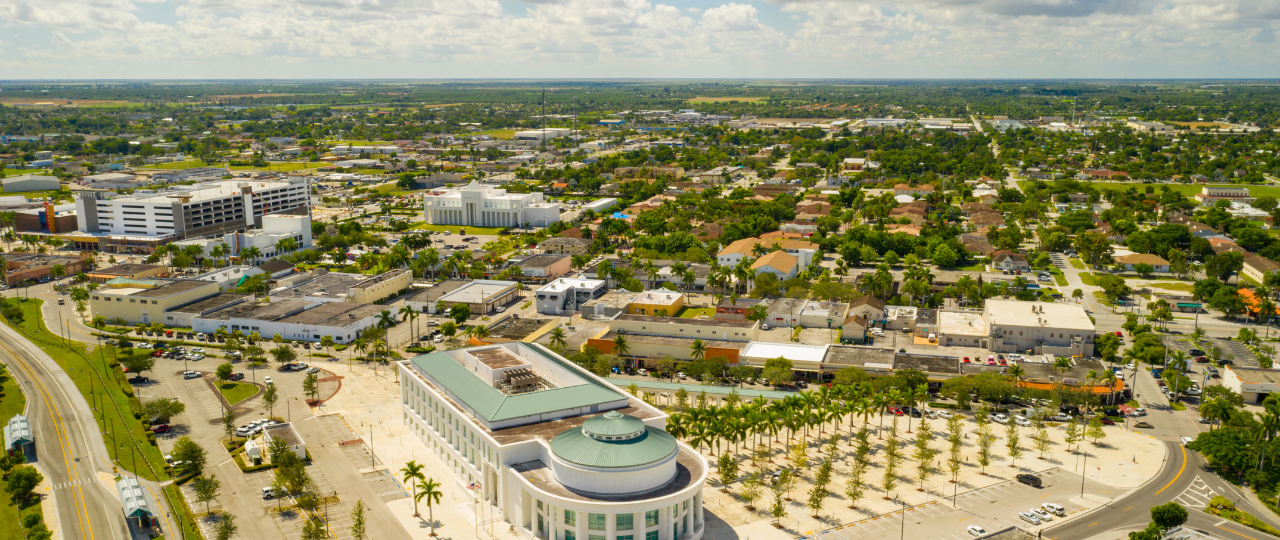
Homestead, Miami, Florida - EVERYTHING You Want to Know
Join us as we embark on a virtual journey across the BEST of Homestead and everything else...
.png)
The Ultimate Guide to Miami-Dade's Top 25 Gated Communities for Single-Family Homes
Discover Miami's top gated communities in this essential guide for luxury home buyers...


Miami's BEST Restaurants in EVERY Neighborhood
Check out the absolute BEST restaurants in every neighborhood of Miami, including the best...
Selling Your Home?
Who are we?
We are the ALL IN Miami Group out of Miami.
We are Colombian, Filipino, Cuban, German, Japanese, French, Indian, Syrian, and American.
We are Christian, Hindu, and Jewish.
We are many, but we are one.
We sell luxury homes in Miami, Florida.
Although some of our clients are celebrities, athletes, and people you read about online, we also help young adults find their first place to rent when they are ready to live on their own.
First-time buyers?
All the time!
No matter what your situation or price range is, we feel truly blessed and honored to play such a big part in your life.