



Who Lives in Coconut Grove? (It's Not Who You Think!)

Amit Bhuta
I use non-traditional marketing to inspire the most motivated buyers to pay the max for Miami luxury homes...
I use non-traditional marketing to inspire the most motivated buyers to pay the max for Miami luxury homes...
For years, Coconut Grove has been marketed as lush, bohemian, waterfront, and a little artsy, set in a quieter pocket just outside the heart of Miami.
It’s not wrong, but it’s incomplete.
That version of Coconut Grove every real estate agent has been talking about has evolved.
Yes, the canopy roads, bayfront parks, and walkable village center are still the pride of this community, and now they sit alongside luxury new developments, private enclaves, top-tier schools, and a level of privacy that’s getting harder to find this close to the city.
It’s one of the few places where you can still have space, shade, and a slower pace without giving up proximity to Brickell, Coral Gables, or the waterfront lifestyle that defines South Florida.
That shift is exactly why Coconut Grove’s buyer pool has changed.
Today, it attracts a mix of very different people who all arrived at the same conclusion: this lifestyle fits better than the alternatives.
Maybe after this, so will you.
Here are the five types of buyers you’ll meet in Coconut Grove.
.png?w=1140)
1) The “I’m Done With Brickell” Crowd
Typically between 30 and 50, this group comprises professionals, founders, and dual-income households who have already completed the high-rise phase and are no longer interested in repeating it.
They are not priced out of Brickell — they are opting out.
What pushed them to Coconut Grove is not one big moment, but a series of small realizations: the noise never really stops, the pace does not slow down, and even at home, it still feels like they are in the middle of everything.
Coconut Grove gives them a different baseline — tree-lined streets, quieter mornings, and a sense that home is separate from the rest of the city rather than layered on top of it.
They prefer renovated single-family homes, townhomes tucked into residential pockets, or low-rise boutique condos that offer privacy without sacrificing design.
Square footage matters more to them, but so does outdoor space — even if it is just a shaded patio that feels removed from everything else.
For this group, this is less about upgrading their property and more about recalibrating their day-to-day.
 (1).png?w=1140)
2) The Glass-to-Grove Movers
Usually between 35 and 60, these buyers come from newer, design-forward condos — often in Brickell, Edgewater, or even out-of-state urban markets — who still care about aesthetics, but want their environment to feel less manufactured.
They are not giving up modern living, but they sure want to change the backdrop.
They are drawn to Coconut Grove because it offers a version of Miami that feels layered instead of polished.
Here, they are privy to mature landscaping, irregular lot lines, and homes with character — things that cannot be replicated in a new tower, no matter how high-end the finishes are.
This group often gravitates toward newer luxury condos like Mr. C Residences or The Fairchild, as well as fully remodeled homes that blend contemporary interiors with tropical exteriors.
They want clean lines with context—design that feels intentional to its surroundings—and they are willing to trade vertical convenience for something more grounded, even if it means driving a bit more or giving up immediate walk-down access to everything.
 (2).png?w=1140)
3) The Legacy-in-the-Making Buyers
Often between 40 and 65, these buyers are thinking long-term from the moment they enter the market, so they're less about “where do we want to live right now” and more about “where do we want to stay.”
They are typically families or established professionals who see Coconut Grove as one of the few neighborhoods in Miami that still supports long-term ownership — not just financially, but structurally.
They love that there are actual neighborhoods in this neighborhood, not just buildings.
Oh, and schools play a role in their decision, but so does stability.
These people want a place where routines can settle, kids can grow up, and the home itself can hold value as an asset and as something more personal.
They usually target larger single-family homes, often on quiet interior streets, with enough space to grow into over time, so lot size, layout, and long-term livability matter more than finishes that can be changed later.
To them, Coconut Grove is not a short-term move but a decision they expect to live with for years.
 (3).png?w=1140)
4) The Off-Grid-in-the-City Buyers
Typically between 35 and 65, these Coconut Grove residents value something that is becoming harder to define but easy to recognize when you see it: privacy that does not feel forced.
They are not trying to disappear, but they don't want to be constantly seen.
Coconut Grove works for them because it allows for a quieter kind of presence—homes set back from the street, dense landscaping, gated entries, and streets that don’t funnel traffic all come together to create a sense of separation without isolation.
They are often business owners, executives, or public-facing professionals who prefer to keep their personal lives contained, even while staying connected to the rest of Miami.
They tend to go for larger estates, waterfront homes, or properties within gated or semi-hidden enclaves, where visibility is low and control over their environment is high.
For them, the appeal is not just the house — it is how little of it the outside world gets to see.
 (4).png?w=1140)
5) The “This Is the Miami I Actually Want” Buyers
Often in their late twenties to mid-forties, this group didn’t land in Coconut Grove by accident — they chose it from the start.
They are drawn to this version of Miami that feels more livable than performative — that they can walk to cafés, parks, and marinas without being surrounded by constant noise.
Yes, they appreciate that the area has energy, but it is not overwhelming or curated for attention.
This group tends to include creatives, remote professionals, and younger buyers who prioritize lifestyle over maximum square footage or status signaling, typically preferring condos near the village center, smaller homes, or townhomes that allow them to stay connected to the walkable core while still having a sense of retreat.
For them, Coconut Grove is a slice of Miami that is easier to settle into — and easier to stay in.
SO… WHO IS COCONUT GROVE REALLY FOR?
Those who value space, privacy, and a more grounded version of Miami living
Coconut Grove works best for buyers who are no longer trying to keep up with Miami’s pace and are more interested in setting their own.
This is a neighborhood for people who value space in more ways than one, including physical space at home, breathing room in their schedules, and a noticeable drop in background noise that does not require noise-canceling headphones to fix.
It tends to attract buyers who still want access to Brickell, Coral Gables, and the waterfront, but do not want to live directly inside the chaos that comes with them.
They enjoy going into the city when they want to, and leaving just as easily when they are done, without feeling like they brought the entire city back home with them.
It also appeals to buyers who think long-term and are not planning their next move before they have even unpacked.
They care about established streets, homes that feel like they belong to a neighborhood, and surroundings that do not feel like they are constantly being replaced or redeveloped every other year.
Schools, walkability within the village core, and the ability to have a quieter home environment without giving up location all factor into that decision in a very real way.
At the same time, Coconut Grove attracts people who are particular about how their home actually feels at the end of the day.
They notice the difference between a house tucked behind trees and one facing a busy road, and that difference matters more to them than having everything five steps away at all times.
This is not about having every option at your doorstep.
It is about having the right options nearby, and the freedom to enjoy them on your own terms, without the constant pressure to keep up.
WHO MIGHT NOT LOVE IT?
People who want constant access, a faster pace, and everything within immediate reach
Coconut Grove may not work as well for buyers who want to be in the center of everything at all times and prefer a lifestyle where convenience means stepping out of an elevator and immediately having options in every direction.
This tends to include buyers who thrive in high-rise environments, where density, energy, and constant activity are part of the appeal.
If your ideal routine depends on having restaurants, gyms, cafés, and social spaces all within the same block, Coconut Grove may feel a little too spread out for your liking.
Even though the village center is walkable, the overall neighborhood still requires a level of movement and planning that more centralized areas do not.
It may also feel slower than expected for buyers used to a more fast-paced, high-visibility lifestyle with something always happening just outside their door.
For some, that shift feels like a relief.
For others, it can feel like things are missing.
Buyers who prioritize brand-new high-rise living with expansive amenity decks, skyline views, and full-service convenience may also find the Grove’s mix of older homes, low-rise buildings, and more understated luxury less aligned with what they are looking for.
There is design and luxury, but it tends to be more subtle, integrated, and not always immediately visible from the street or from a listing photo.
If what you are looking for is constant stimulation, instant access, and a lifestyle that keeps you in the middle of everything, other parts of Miami will fit that preference.
THE PART THAT MATTERS
Why Coconut Grove works for the people who choose it
Coconut Grove gives people what most of Miami takes away: space, privacy, and a break from the constant need to keep up.
The buyers who choose it are not looking for more noise or more options packed into one block.
They are looking for a home that feels like a place to rest at the end of the day, not an extension of everything happening outside.
Here, you can still go into Brickell, Coral Gables, or the waterfront whenever you want, but you are not living in the middle of it 24/7.
That difference may sound small on paper, but it changes everything once you experience it.
The homes in Coconut Grove follow the same logic.
Whether it is a house hidden behind trees, a waterfront property, or a low-rise condo near the village, the priority is not how much attention it gets, but how it feels to live in it.
There is a quiet confidence in Coconut Grove that does not rely on extravagance, newness, or constant evolution to prove its value.
And that is exactly why people stay.
Once you get used to coming home to something calmer, more private, and a little more removed from the noise, it becomes very hard to convince yourself to trade that back for convenience and constant activity.
Indeed, Coconut Grove does a few things really well, and for the people who choose it, that is more than enough.
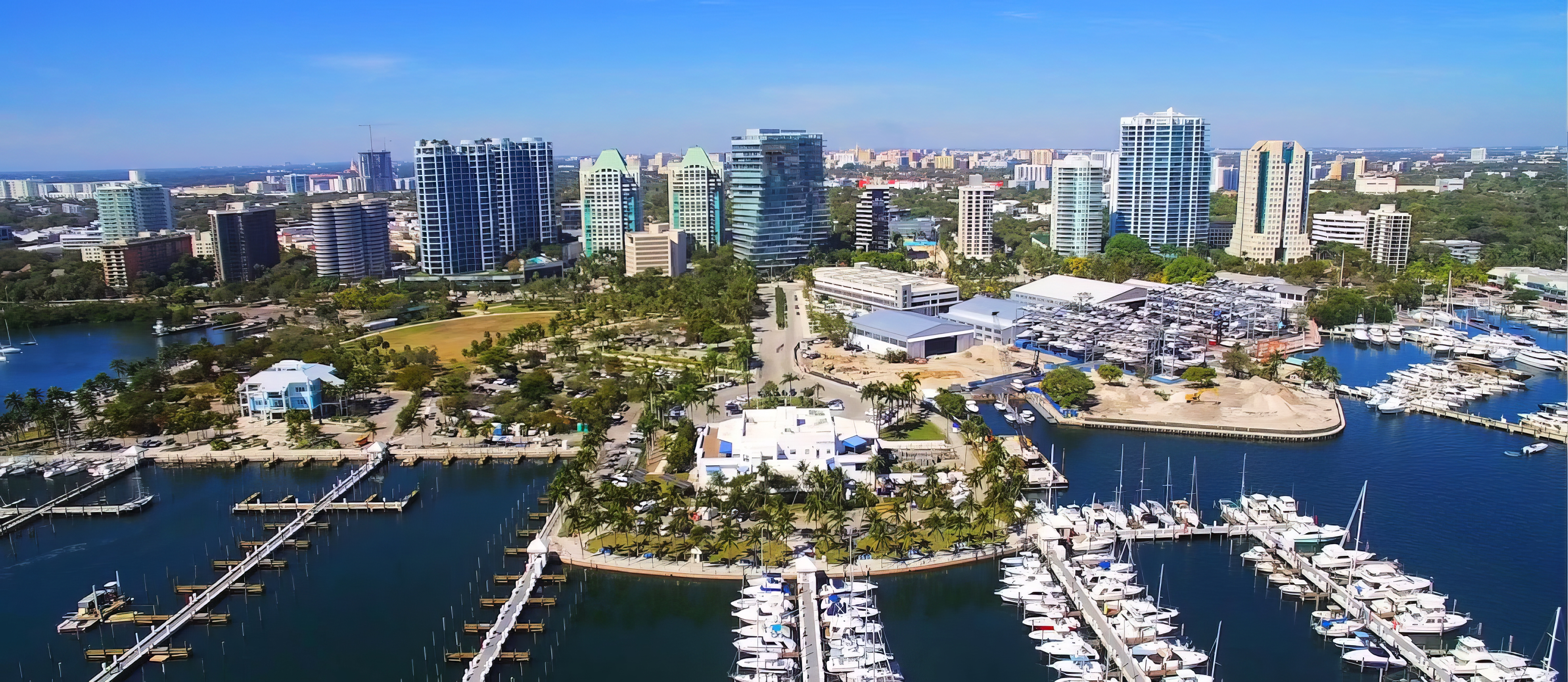
Coconut Grove, Miami, Florida - EVERYTHING You Want to Know
Spoil your eyes, minds, and hearts with a virtual tour along the captivating corners of Mi...
.png)
The Ultimate Guide to Miami-Dade's Top 25 Gated Communities for Single-Family Homes
Discover Miami's top gated communities in this essential guide for luxury home buyers...


Miami's BEST Restaurants in EVERY Neighborhood
Check out the absolute BEST restaurants in every neighborhood of Miami, including the best...
Selling Your Home?
Who are we?
We are the ALL IN Miami Group out of Miami.
We are Colombian, Filipino, Cuban, German, Japanese, French, Indian, Syrian, and American.
We are Christian, Hindu, and Jewish.
We are many, but we are one.
We sell luxury homes in Miami, Florida.
Although some of our clients are celebrities, athletes, and people you read about online, we also help young adults find their first place to rent when they are ready to live on their own.
First-time buyers?
All the time!
No matter what your situation or price range is, we feel truly blessed and honored to play such a big part in your life.