



Who Lives in Biscayne Park? (It's Not Who You Think!)

Amit Bhuta
I use non-traditional marketing to inspire the most motivated buyers to pay the max for Miami luxury homes...
I use non-traditional marketing to inspire the most motivated buyers to pay the max for Miami luxury homes...
Biscayne Park has trees, space, and peaceful streets — but is that really enough to choose it?
There’s no skyline, waterfront, lively restaurants, or events to keep you on your toes—just green archways, leafy nooks, and enough bird species to rival a wildlife sanctuary (oh, and it is one, by the way).
Yes, it’s gorgeous, but why prefer it to louder, better-known places you’ll pass before reaching Biscayne Park?
For a specific group of buyers, what’s “not enough” from the outside is exactly what they’ve been trying to find.
In Biscayne Park, they enjoy days without traffic, crowds, or constant options — just space, privacy, and a sense of control over how they actually live.
And if you value the same pace and trade-offs, you’d probably agree, too.
Here are the five types of buyers you’ll meet in Biscayne Park.
 (17).png?w=1140)
1) The “Don’t Build Near Me” Crowd
Usually in their late 40s to 70s, this buyer has already experienced what density looks like up close — and decided they’re done with it.
They’re not chasing walkability, new construction, or anything labeled “up-and-coming.”
What they want is distance — between homes, neighbors, and between themselves and whatever development is happening elsewhere.
They chose Biscayne Park because it doesn’t try to squeeze more in.
Here, the lots are larger, the streets aren’t designed for throughput, and the tree canopy creates a natural buffer that newer neighborhoods can’t replicate.
You’ll often find them drawn to older single-family homes on oversized lots, sometimes mid-century or early Florida-style properties, where the land and separation are the main selling points.
They’re not in Biscayne Park to upgrade their lifestyle.
They’re here to protect it.
 (18).png?w=1140)
2) Space Seekers
Typically in their 30s to early 50s, these buyers hit a point where square footage and outdoor space start mattering more than proximity to everything.
Some are growing families, others want breathing room—but all of them have realized that not every “house” feels like one once you live in it.
Biscayne Park offers what they’ve been missing: usable yards, homes that aren’t stacked tightly together, and a layout that allows life to spread out a bit.
They’re often drawn to 3–4 bedroom single-family homes with decent lot depth, where there’s space for kids, pets, or the possibility of not hearing your neighbor’s phone call through the wall.
They’re not chasing acreage for the sake of it.
What they want is enough space for their home to finally feel like their own.
 (19).png?w=1140)
3) The “I’ll Commute, Thanks” Professionals
Usually late 20s to early 40s, this group could afford to live closer to the action but chooses not to.
They work in areas like Downtown, Brickell, or nearby commercial hubs, and instead of prioritizing proximity, they optimize for what happens after the workday ends.
For them, Biscayne Park offers a clear separation between work and home.
It’s close enough to major routes to stay connected, but far enough to avoid feeling like they never left the city.
They often go for smaller single-family homes or renovated older properties—something manageable, character-driven, and not part of a high-density development.
They’ve done the busy-living phase.
This is the correction.
 (20).png?w=1140)
4) Creative Homeowners
Often in their 30s to 50s, these buyers don’t respond well to uniformity.
They’re the ones walking into a perfectly finished new build and immediately thinking about what they’d change.
Cookie-cutter doesn’t interest them—and neither does paying a premium for something that looks like everything else.
Biscayne Park gives them room to interpret a home, not just occupy it.
Here, the housing stock is varied, comprising older builds, different layouts, and architectural inconsistencies, which means opportunity.
They’re drawn to properties they can renovate, expand, or personalize over time, especially on lots that allow flexibility.
They don’t need everything done for them.
They’d rather shape it themselves.
 (21).png?w=1140)
5) The “We’re Staying Put” Households
Ranging from late 30s to 60s and beyond, this group isn’t buying with an exit strategy in mind.
Some are multi-generational households, others are simply done moving, but all of them are thinking long-term, which changes how they evaluate a neighborhood.
Biscayne Park appeals because it’s stable, low-turnover, and not constantly reinventing itself.
It’s the type of neighborhood where neighbors recognize each other, the environment doesn’t shift every few years, and settling in doesn’t feel temporary.
They typically go for well-maintained single-family homes with enough space to grow into—or stay in comfortably for decades.
They’re not asking what the neighborhood will become.
They’re asking if it will still feel right years from now—and for them, it does.
SO… WHO IS BISCAYNE PARK REALLY FOR?
Those who don’t need their neighborhood to perform for them
Biscayne Park works for people who have stopped measuring a location by how much it offers and started paying attention to how it feels to live in every day.
It attracts buyers who don’t need constant stimulation, don’t rely on nearby commercial strips to define their routine, and don’t mind driving a few extra minutes if it means coming home to something calmer, quieter, and more their own.
It’s for those who value space not as a luxury, but as a baseline, and those who prefer streets that aren’t used as shortcuts, homes that aren’t packed tightly together, and surroundings that don’t feel like they’re in a constant state of change.
The tree canopy, the lack of overdevelopment, the absence of noise — it’s not a compromise to them, but the whole point.
And maybe more than anything, it works for people who choose something that doesn’t immediately make sense to everyone else — because once you give it a chance and experience Biscayne Park for yourself, it'll make sense to you as you go along.
WHO MIGHT NOT LOVE IT?
Those who want more happening around them—and sooner
Biscayne Park won’t work for buyers who expect their neighborhood to do more of the lifting.
If your ideal setup involves walking out the door and having cafés, restaurants, or activities within a few blocks, this isn’t where you’ll find it.
There’s no built-in lifestyle in Biscayne Park — you have to go out and get it.
It also falls short for those who associate value with newness and uniformity.
Here, the homes vary, the streets aren’t polished in that master-planned way, and not everything feels curated or updated.
If you want something turnkey, visually consistent, and immediately impressive, you’ll likely feel more comfortable elsewhere.
And for buyers who thrive on energy—who like being in the middle of movement, surrounded by options, with something always going on—Biscayne Park can feel too still.
Too quiet. Even limiting.
Because what it offers is intentional, but only if that’s what you’re looking for.
THE PART THAT MATTERS
Why Biscayne Park works for the people who choose it
Biscayne Park only works if you’ve already decided what you don’t need.
By the time buyers decide to live in this community, they’ve usually crossed off a long list—walkability, new construction, constant activity, and anything that comes with being in the middle of it all.
Not because they couldn’t have it, but because they don’t want to deal with what comes with it.
What they’re choosing instead is control.
Control over how close the next house sits to theirs, how much traffic passes through their street, or whether their environment changes every few years, or stays relatively the same.
In Biscayne Park, those things aren’t upsells.
They’re built into how the neighborhood operates.
The homes follow that same pattern — no uniform layouts, no single architectural direction, no expectation that everything needs to look finished all at once.
You’re not buying into a polished version of living but into something you can shape, adjust, and keep without feeling boxed in.
It’s not the obvious choice.
But for the people who end up in Biscayne Park, it’s the one that eliminates the most friction — and that’s what makes it stick.
-topaz-upscale-4x-2.jpeg)
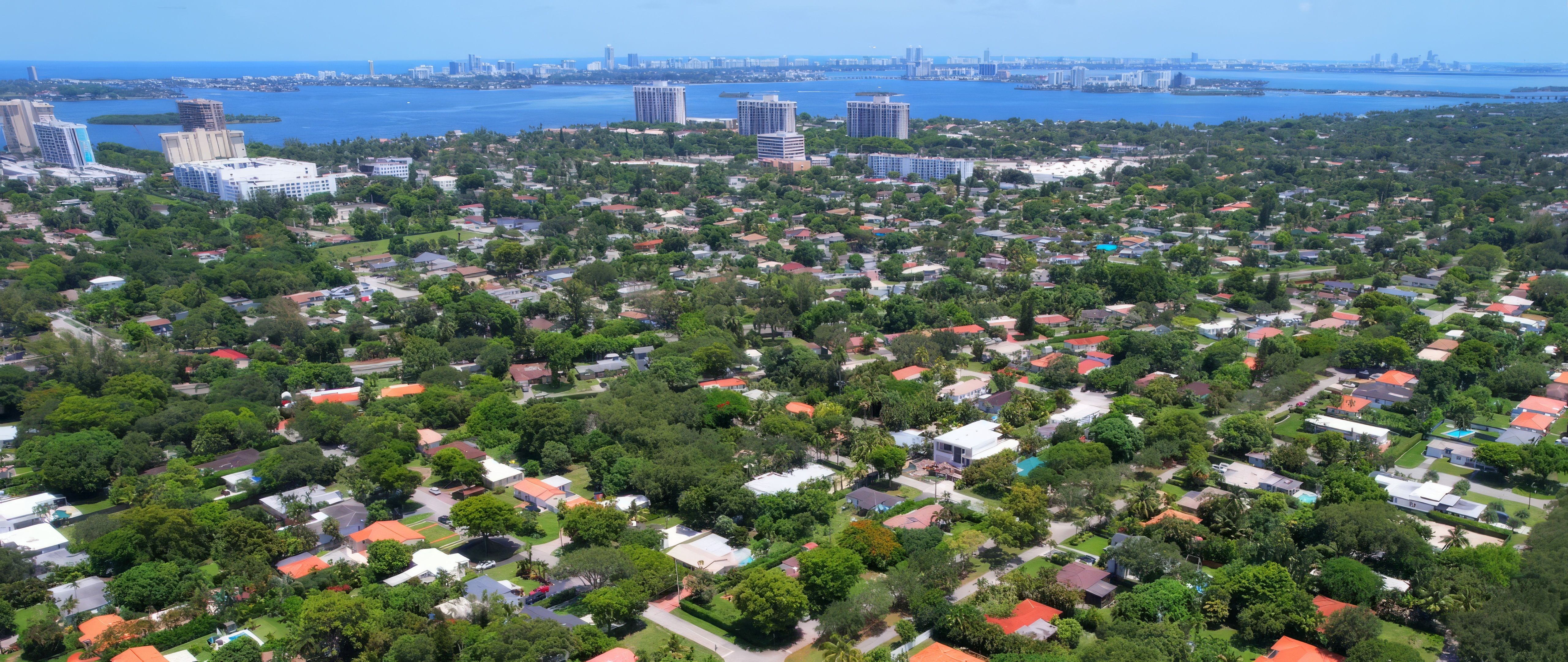
Biscayne Park, Miami, Florida - EVERYTHING You Want to Know
Welcome to your unofficial walkthrough — a peek into Biscayne Park's pulse,...
.png)
The Ultimate Guide to Miami-Dade's Top 25 Gated Communities for Single-Family Homes
Discover Miami's top gated communities in this essential guide for luxury home buyers...

Miami's BEST Restaurants in EVERY Neighborhood
Check out the absolute BEST restaurants in every neighborhood of Miami, including the best...
Selling Your Home?
Who are we?
We are the ALL IN Miami Group out of Miami.
We are Colombian, Filipino, Cuban, German, Japanese, French, Indian, Syrian, and American.
We are Christian, Hindu, and Jewish.
We are many, but we are one.
We sell luxury homes in Miami, Florida.
Although some of our clients are celebrities, athletes, and people you read about online, we also help young adults find their first place to rent when they are ready to live on their own.
First-time buyers?
All the time!
No matter what your situation or price range is, we feel truly blessed and honored to play such a big part in your life.