



What Nobody Tells You About Living on the Venetian Islands

Amit Bhuta
I use non-traditional marketing to inspire the most motivated buyers to pay the max for Miami luxury homes...
I use non-traditional marketing to inspire the most motivated buyers to pay the max for Miami luxury homes...
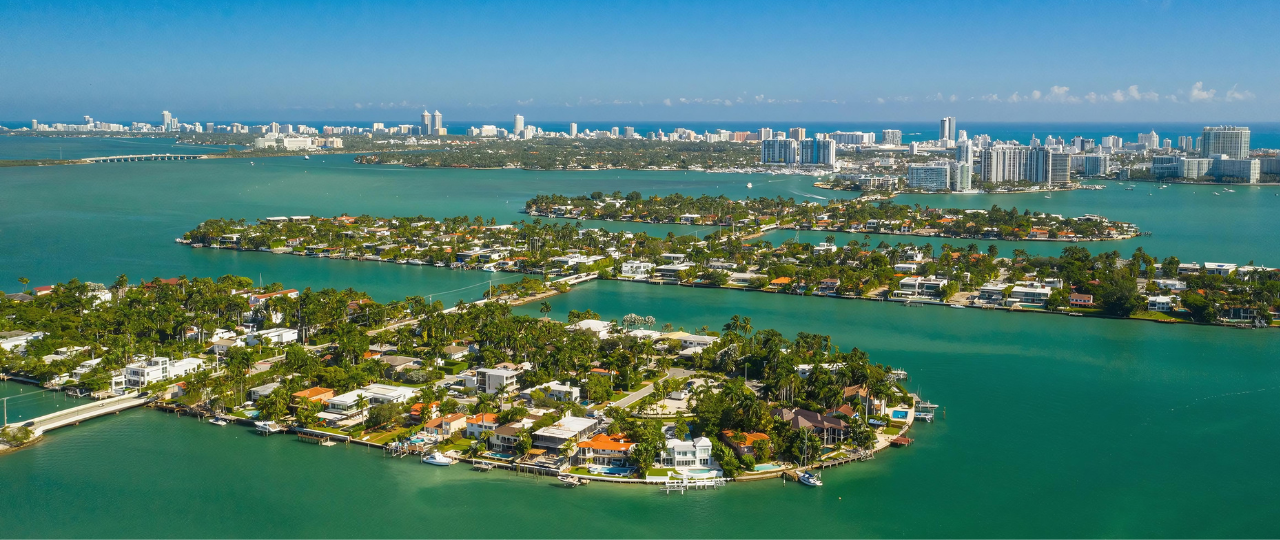
Six islands, one causeway, zero backup plans — this is island living on the Venetian Islands.
And with those water views, laid-back pace, and prestigious location, it's giving "vacation," not to mention it's also aggressively Instagram-friendly from dusk 'til dawn.
Indeed, getting a home on the Venetian Islands can be one of your best life-changing decisions, especially if you want to feel like you've escaped the mainland without actually leaving it.
But paradise, it turns out, has a toll attached, and we mean that literally and figuratively.
Here are five things nobody tells you about living on the Venetian Islands.
 (14).png?w=1140)
1) Six Islands, Two Zip Codes, Zero Consistency
The Venetian Islands look like one elegant necklace until you check the municipal boundary.
Biscayne Island and San Marco Island fall within the City of Miami, while San Marino, Di Lido, Rivo Alto, and Belle Isle belong to Miami Beach.
While it can't be seen from the water, this dividing line becomes remarkably visible during permits, city services, construction rules, parking procedures, or neighborhood projects.
A house on San Marco may send its renovation paperwork to Miami, while a similar house one bridge away answers to Miami Beach.
The island chain also changes character as it moves east, with quiet single-family streets giving way to Belle Isle’s condos, park, hotel traffic, and closer connection to South Beach.
Even neighborhood representation is divided, since the Miami Beach homeowners association covers San Marino, Di Lido, and Rivo Alto, while Belle Isle has its own residents association.
The name “Venetian Islands” therefore tells you where to point the drone, but not which rulebook comes with the property.
Before assuming that a neighbor’s approved project proves yours will be equally simple, check whether that neighbor reports to the same city.
Six islands may share one causeway and one ZIP code, but administrative harmony was apparently not included in the original master plan.
 (15).png?w=1140)
2) It's Not a Driveway. It's a Toll Road With Landscaping.
The Venetian Causeway is a county-operated public route with two-way traffic between mainland Miami, the islands, and Miami Beach through a four-lane toll plaza.
Current two-axle rates are $3.25 with SunPass and $6.50 through Toll-by-Plate, because even a scenic neighborhood can send an invoice.
Eligible property owners can receive unlimited passage through a free annual owner plan, but the plan still requires proof of ownership, vehicle documents, an active SunPass, and yearly renewal paperwork.
Renters and other qualifying residents can use the annual commuter plan, which currently costs $120 per vehicle.
The causeway also serves cyclists, runners, walkers, delivery drivers, visitors, contractors, and anyone using it as the attractive route between two cities.
That public access gives the neighborhood energy, but it means Venetian Way won't have the vibe of a private lane reserved for homeowners and tasteful convertibles.
Properties facing the main road may see and hear far more activity than homes positioned deeper along the residential sides.
A movable bridge can add another surprise by turning a quick departure into an unplanned waterfront viewing session.
The Venetian Causeway is beautiful, useful, and very public, which is a longer description than what “private island living” usually receives.
 (16).png?w=1140)
3) Ready for a Decade of Detours You Didn't Sign Up For?
The bridges have reached the age when “historic charm” and “structural concern” share the same sentence.
The causeway contains twelve bridges built in 1927, and Miami-Dade plans to replace eleven of them, including the eastern movable bridge.
The county describes the structures as moderately to severely deteriorated after decades of repairs, hurricanes, saltwater exposure, and service far beyond their original fifty-year design life.
As of July 2026, final design was expected to wrap up during the summer, with construction advertising to follow after permit coordination.
A final start date and complete construction schedule have not yet been published, so nobody can honestly pinpoint the peaceful ending on a calendar.
The plan calls for temporary bridges and open lanes so traffic will not be completely blocked during the work.
“Open” does not necessarily mean “quick,” especially when eleven bridges, utility relocations, marine work, and limited roadway space must cooperate.
The replacement bridges are planned to be sixteen feet wider, with more room for vehicles, cyclists, and pedestrians and greater vertical clearance over the water.
Those improvements should make the finished causeway safer and more resilient, but reaching that finish line may lead to equipment, shifting lanes, temporary structures, and new routes.
The Venetian Islands are preparing for a renovation where the construction site is also the road home.
 (17).png?w=1140)
4) Open Bay or Narrow Channel — Did Your Realtor Mention Which?
A waterfront listing can say “Biscayne Bay” with the confidence of someone skipping several follow-up questions.
An open-bay property may offer wider views, stronger wind, more direct exposure, and a front-row seat to passing marine traffic.
A house facing a narrower channel may provide calmer-looking water and closer opposite shorelines, but the view, privacy, sunlight, and boat route can be very different.
Then there are interior homes, which receive the island address and causeway access without inheriting a seawall in the backyard.
Boat owners also need to examine dock configuration, water depth, turning space, wake conditions, and the fixed bridges standing between the property and the intended destination.
Miami-Dade’s replacement plan includes increased bridge clearances, which is useful confirmation that boat height and bridge geometry are not imaginary concerns invented by surveyors.
A dock that looks perfect for sunset photos may not suit the vessel you plan to place beside it.
Seawalls and docks also bring structural inspections, marine contractors, and environmental permitting into what began as a conversation about lounge chairs.
Permit history matters because waterfront additions cannot always be treated as harmless backyard upgrades completed during a determined weekend.
On the Venetian Islands, “waterfront” is the beginning of the description, not the part where everyone can stop asking questions.
 (18).png?w=1140)
5) The Bay Giveth, But The Bay Also Floodeth
Biscayne Bay is generous with sunsets, but it's committed to following up paperwork.
The Venetian Islands sit low within a coastal setting where tidal conditions, heavy rain, lot elevation, drainage, and seawall height can all influence how water behaves around a property.
Flood risk needs to be checked by the address because the neighborhood name cannot reveal the home’s finished-floor elevation or its official FEMA designation.
Miami Beach advises property owners to know their flood zone and consider an elevation certificate, noting that 93 percent of buildings citywide are within a FEMA Special Flood Hazard Area.
An elevation certificate helps show how the structure sits relative to the mapped flood level, which is far more useful than asking whether the street “usually looks dry.”
The inspection should also account for the location of the electrical panels, generators, air-conditioning equipment, garages, and lower-level rooms.
Public infrastructure helps, and the Miami Beach islands have received drainage, pump, seawall, utility, and roadway work over the years.
However, those improvements do not replace property-specific questions about previous water intrusion, insurance premiums, flood deductibles, seawall condition, and drainage after intense rainfall.
The bay supplies the scenery, but elevation, insurance, and engineering decide how confidently you can enjoy it.
WHO GETS THE MOST OUT OF LIVING ON THE VENETIAN ISLANDS?
People who enjoy a little ceremony between home and the rest of Miami
The Venetian Islands make arriving home feel like crossing a small stage, complete with bay views, palms, cyclists, and the occasional raised drawbridge refusing to rush the finale.
That daily approach gives the neighborhood a sense of separation without placing it hours away from dinner, work, or civilization.
Downtown Miami waits at one end, Miami Beach waits at the other, and Biscayne Bay handles the scenery in between.
The side streets offer a quieter residential setting than the causeway suggests, especially once the runners, convertibles, and delivery vans continue toward somebody else’s island.
Waterfront homes can turn boating, paddleboarding, and sunset watching into ordinary weekday activities rather than special plans.
Interior properties skip the private seawall while keeping the same island roads, breezes, and location between two busy parts of the city.
Belle Isle brings condos, a park, and more foot traffic, while the western islands offer a more house-lined version of the chain.
That variety gives the Venetian Islands several personalities instead of forcing every address into one luxury-island costume.
The area also suits anyone who considers marine maintenance, toll registration, and bridge delays reasonable supporting characters in an otherwise excellent setting.
Here, perfection is not the appeal, because perfection would probably have fewer traffic cones and much worse sunsets.
The Venetian Islands work for people who understand that the road home may occasionally test their patience, then immediately apologize with a view across the bay.
WHO MAY WANT TO KEEP LOOKING?
Anyone whose quick errands must remain quick
The Venetian Islands have one main road, and that road knows it has leverage.
Leaving home means joining the causeway, where toll equipment, cyclists, bridge openings, construction plans, and traffic can all request a brief meeting.
Therefore, a forgotten carton of milk can become less of an errand and more of a commitment to the journey.
Homes beside Venetian Way may also hear and see more activity than the phrase “island living” initially brings to mind.
The public causeway carries commuters, visitors, runners, workers, and drivers who are enjoying the scenery without paying a waterfront mortgage.
Direct-waterfront properties add another set of responsibilities involving docks, seawalls, salt exposure, marine permits, insurance, and repairs that rarely come with cheerful estimates.
Open-bay lots offer broader views but face more wind and exposure, while channel-front homes exchange some of that openness for closer shorelines and different boating conditions.
Flood elevation, drainage, equipment placement, and prior water intrusion must be checked house by house, because the bay does not issue the same report card to every lot.
Future bridge replacement will improve the route, but the construction period may introduce lane changes, temporary structures, and detours with their own creative instincts.
The Venetian Islands are poorly matched to anyone seeking a private, maintenance-free hideaway where infrastructure stays in the background.
The scenery may look effortless, but the neighborhood runs on engineering, paperwork, and one very important road.
AN HONEST TAKEAWAY
What living on the Venetian Islands really comes down to
The Venetian Islands are a beautiful argument between escape and access.
They sit in the middle of Biscayne Bay as though they have left the city behind, yet every bridge points directly back toward it.
That tension creates the neighborhood’s charm: the water opens the view while the causeway keeps daily life connected to Miami and Miami Beach.
It also creates complications, because the same narrow route that brings you home also carries everyone else across the island chain.
The waterfront can provide docks, boats, breezes, and sunsets, but it also brings seawalls, salt, permits, flood questions, and contractors who know exactly what “island price” means.
The six islands aren't identical copies, since the city line, housing mix, traffic level, and relationship with the water change along the route.
A Belle Isle condo, an interior San Marco house, and an open-bay estate may share the Venetian name while offering three very different Tuesdays.
The upcoming bridge work adds another chapter of better infrastructure after a period nobody will describe as decorative.
These issues prevent the setting from being mistaken for a permanent vacation advertisement.
The Venetian Islands offer a rare place between two cities, provided you accept that the price of being surrounded by water includes allowing bridges, tides, tolls, and seawalls to have the spotlight once in a while.
%20(69).png)
Venetian Islands, Miami, Florida - EVERYTHING You Want to Know
Join us on this virtual ride into the rich core of the Venetian Islands. This guide will h...
.png)
The Ultimate Guide to Miami-Dade's Top 25 Gated Communities for Single-Family Homes
Discover Miami's top gated communities in this essential guide for luxury home buyers...


Miami's BEST Restaurants in EVERY Neighborhood
Check out the absolute BEST restaurants in every neighborhood of Miami, including the best...
Selling Your Home?
Who are we?
We are the ALL IN Miami Group out of Miami.
We are Colombian, Filipino, Cuban, German, Japanese, French, Indian, Syrian, and American.
We are Christian, Hindu, and Jewish.
We are many, but we are one.
We sell luxury homes in Miami, Florida.
Although some of our clients are celebrities, athletes, and people you read about online, we also help young adults find their first place to rent when they are ready to live on their own.
First-time buyers?
All the time!
No matter what your situation or price range is, we feel truly blessed and honored to play such a big part in your life.