



What Nobody Tells You About Living on The Roads

Amit Bhuta
I use non-traditional marketing to inspire the most motivated buyers to pay the max for Miami luxury homes...
I use non-traditional marketing to inspire the most motivated buyers to pay the max for Miami luxury homes...
Miami has microclimates, and The Roads might be the strangest one on the map — geographically dead center, yet culturally its own separate country.
It sits close enough to Brickell to borrow the skyline views, but far removed that it's on its own unhurried schedule entirely.
The canopy of trees, the historic homes, the sense that Miami used to look like this everywhere before it didn't — all of that holds up, which isn't typical for a neighborhood built on nostalgia.
But what you don't know is that The Roads runs on a very specific, slightly odd groove.
It's not written down anywhere, and nobody explains it to you in advance.
You just have to live with it, the way you do with Miami humidity.
Here are five things nobody tells you about living on The Roads.
 (56).png?w=1140)
1) The Roundabout Has the Right of Way—and the Last Laugh
Some neighborhoods welcome newcomers with a sign, but The Roads will hand them a geometry quiz.
The neighborhood was designed in 1922 with wide streets, landscaped medians, and traffic circles meant to support a more pleasant, pedestrian-friendly setting.
Its roads run roughly 45 degrees away from Miami’s usual grid because apparently north, south, east, and west weren't bringing enough excitement to the commute.
Street numbers can change abruptly at the neighborhood’s edges, and Coral Way performs one especially memorable turn before switching from Southwest 3rd Avenue to Southwest 22nd Street.
The roundabouts add greenery and slow the pace, but they also reveal which drivers understand yielding and which ones prefer interpretive dance.
The odd layout discourages some motorists from using the neighborhood as a shortcut, which helps protect the character of its interior streets.
That benefit comes with the occasional missed turn, accidental loop, and GPS instruction delivered with the confidence of someone who has never visited Miami.
Delivery drivers may call from a nearby intersection while both parties stare at different roads bearing suspiciously similar numbers.
Residents eventually learn the pattern, the useful cut-throughs, and which traffic circle regularly attracts someone determined to invent a third lane.
The City of Miami has also pursued traffic-calming work in this pocket, including speed-control features and new roadway markings, which is why the street design remains an active neighborhood concern rather than a charming historical footnote.
The Roads may confuse newcomers, but the confusion is part of what prevents the neighborhood from becoming a straight-line racetrack to somewhere else.
 (57).png?w=1140)
2) Brickell Is Right There, Taunting Your Walking Shoes
The Brickell skyline plays a cruel little trick by looking close enough to touch and refusing to move any nearer when the humidity strikes.
The Roads sits directly west of Brickell and close to Downtown Miami, yet it has remained far more residential than the high-rise districts beside it.
Brickell and Vizcaya Metrorail stations serve opposite ends of the neighborhood, while the free Miami Trolley travels along Coral Way.
Those connections provide useful alternatives for commuting, events, and trips where parking in Brickell sounds like an expensive scavenger hunt.
The catch is that most neighborhood businesses are along Coral Way rather than being spread evenly through the residential streets.
“Close to Brickell” therefore means quick access to its offices, restaurants, shopping, and nightlife, not that every home comes with a café downstairs and a sushi counter across the lobby.
A property near the northeastern edge may make the urban core easier to reach on foot than a house deeper inside or farther south.
Walking can work for selected trips, but distance, traffic crossings, rain, and Miami’s summer air may quickly turn a pleasant plan into a rideshare request.
Cars remain useful for groceries, school runs, and errands that involve anything heavier than optimism.
That separation is part of The Roads’ appeal because the neighborhood gets access to Brickell without copying its towers, crowds, elevators, and competitive valet situation.
Brickell is nearby enough to visit often, but The Roads keeps just enough distance, so your walking shoes negotiate their terms first.
 (58).png?w=1140)
3) Your 1920s Bungalow May Wake Up Beside a Glass Box
The Roads' architectural dress code was either lost in the mail or ignored with impressive commitment.
Much of its older housing stock dates from the 1920s through the 1940s, including Spanish-style cottages and other early Miami homes with details newer construction rarely bothers to imitate.
The same neighborhood now includes extensively renovated houses, contemporary estates, new construction, and properties marketed mainly for their redevelopment potential.
One house may have arched openings, modest proportions, and eighty years of stories, while the next has double-height glass and enough recessed lighting to guide aircraft.
Older character can be wonderful, but it may have dated plumbing, electrical work, windows, roofs, additions, or repairs completed during several different eras of building standards.
A fancy kitchen does not confirm that the systems behind the walls received the same invitation to join the current century.
Renovations also vary in quality, so permits and records matter more than a seller’s enthusiastic use of the word “updated.”
Newer construction may resolve some age-related concerns while introducing a much larger footprint, a taller profile, and a visual relationship with neighboring homes that can best be described as awkward brunch seating.
Redevelopment is governed by the City of Miami’s zoning and permitting rules, not by a neighborhood-wide design committee requiring every new house to complement the bungalow next door.
Central location and valuable lots keep the pressure to expand, rebuild, and maximize square footage very much alive.
The Roads preserves old Miami charm, but it does not promise that it will be the view from every bedroom window.
 (59).png?w=1140)
4) The Rules Come From City Hall, Not Karen’s Clipboard
The good news is that The Roads does not come with one giant master HOA reviewing every mailbox, curtain, and emotionally adventurous shade of front-door paint.
Its civic association is membership-based and open to adult residents and residential property owners who pay dues, rather than functioning as an automatic neighborhood-wide association attached to every home.
The group’s stated purpose focuses on safety, security, and the community's social welfare.
Its documented work has included traffic calming, tree replacement, school concerns, short-term rental issues, and other matters affecting the neighborhood as a whole.
That gives The Roads an organized local voice without turning the civic association into a mandatory architectural tribunal.
The association can advocate, share information, gather neighbors, and push public agencies, but it is not the office issuing permission slips for every private home decision.
Construction, redevelopment, land use, and many exterior changes instead fall under the City of Miami’s zoning code, permitting system, and enforcement process.
City Hall may not inspect the exact beige content of a mailbox, but it has considerably stronger opinions about setbacks, additions, demolitions, and unpermitted work.
The absence of one strict master HOA allows more freedom, although it also helps explain why neighboring properties can make wildly different design choices.
A civic association can encourage consistency and protect community interests, but it cannot guarantee that every homeowner shares the same definition of tasteful.
Karen’s clipboard may be missing, but City Hall has several hundred pages of rules and no shortage of forms.
 (60).png?w=1140)
5) Quiet Street or Traffic Soundtrack? Check the Block
A peaceful Sunday showing can commit fraud without saying a single untrue word.
The Roads contains leafy residential streets, landscaped circles, and calm interior pockets, but it is also framed and crossed by routes carrying far more traffic than a single visit suggests.
Southwest 12th Avenue forms the western edge, Coral Way cuts diagonally through part of the area, and Interstate 95 runs beside and through the eastern side.
The neighborhood also contains several schools, which can give certain blocks a predictable morning-and-afternoon performance involving cars, backpacks, and one parent stopped exactly where nobody should stop.
Homes closer to those campuses may experience more pickup traffic and parking pressure than properties several streets away.
Addresses near Coral Way can gain faster access to shops, services, buses, and the trolley while hearing more of the activity that makes those conveniences possible.
A detached house on a quiet interior road may deliver a different routine from a property near apartments, redevelopment sites, commercial edges, or major intersections.
Street width, driveway space, nearby construction, tree cover, and the location of the nearest roundabout can change how private or busy a block seems.
Even traffic-calming features can shift the experience because one block benefits from slower vehicles while another receives the drivers rerouting around them.
The useful test is to come during weekday rush hour, school dismissal, a weekend evening, and any time when the listing agent is not controlling the soundtrack.
The Roads has plenty of quiet streets, but the exact block decides whether the background music is birds, basketballs, brake lights, or somebody’s concrete mixer.
WHO GETS THE MOST OUT OF LIVING ON THE ROADS?
Those who want central Miami access without living inside a wall of glass
The Roads pulls off a useful Miami trick by sitting beside the action without inviting all of it onto the front lawn.
Brickell, Downtown, Coral Way, Metrorail, and major highways remain close, yet much of the neighborhood still looks and sounds like a place where people own garden hoses.
That contrast gives The Roads more breathing room than the high-rise districts nearby without sending daily life deep into the suburbs.
The diagonal streets, leafy medians, and traffic circles also give the area an identity that cannot be mistaken for another numbered grid with better marketing.
Its older bungalows and Mediterranean homes bring warmth and detail, while newer builds keep the streets from turning into an architectural museum with no new exhibits.
The absence of a mandatory neighborhood-wide HOA allows properties to develop more individual personality, including a few personalities that may require a moment of silence.
The Roads also works well when neighborhood character matters more than shared pools, guarded entrances, and clubhouses with suspiciously complicated reservation systems.
Some blocks provide quiet residential surroundings while still keeping restaurants, offices, transit, and city life within a practical drive or occasional walk.
The location can shorten trips across central Miami, provided the chosen block does not place school traffic, Coral Way, or an ambitious concrete project directly outside the bedroom.
The strongest version of The Roads combines an interior street, a well-maintained house, useful parking, and enough distance from the busiest edges to keep the car horns as guest performers.
The Roads gives the most back when the goal is an established neighborhood with city access, visual character, and fewer elevators between the groceries and the kitchen.
WHO MAY WANT TO KEEP LOOKING?
Anyone who wants matching houses, silent streets, and every errand within two blocks
The Roads does not promise consistency, and it makes no apology for it.
A small 1920s bungalow can sit beside a towering contemporary house from a luxury architecture competition.
That mix brings character, but it can frustrate anyone who wants every roofline, setback, and front yard to follow one calm visual plan.
Older homes also bring inspection questions involving plumbing, electrical work, roofs, windows, additions, drainage, and renovations completed by several generations of optimism.
New construction avoids some age concerns, although it can introduce construction noise, blocked sidewalks, delivery trucks, and a neighboring project that celebrates sunrise with power tools.
The neighborhood’s central location does not make every address equally walkable, because most shops and services cluster along the edges rather than inside every residential pocket.
Brickell may appear nearby on the map, but summer rain, traffic crossings, and distance can turn a dinner walk into a transportation review meeting.
Block selection carries unusual weight on The Roads because traffic, parking, school activity, apartments, redevelopment, and road noise can change within a few turns.
The voluntary civic association can advocate for the neighborhood, but it cannot provide the uniform enforcement or private services of a traditional master HOA.
That freedom is useful until the house next door chooses an exterior design best described as “Miami money discovered rectangles.”
The Roads may disappoint when you demand newness, uniformity, guaranteed quiet, effortless walking, and a neighborhood rulebook ready to settle every disagreement before breakfast.
AN HONEST TAKEAWAY
What living on The Roads really comes down to
The Roads is what happens when an old residential neighborhood refuses to become Brickell’s overflow closet.
It remains close to Miami’s dense urban core while protecting a street-level identity built around houses, trees, medians, and roads that reject basic geometry.
That independence gives the neighborhood charm, but it also creates plenty of variation from one property and block to the next.
The vintage housing adds history and visual detail, while redevelopment keeps changing the scale, price, and skyline of ordinary residential streets.
No master HOA smooths those differences into an approved neighborhood look, so The Roads develops house by house rather than from a single design manual.
The location offers strong access to central Miami, although proximity should not be confused with stepping outside and finding every errand waiting on the corner.
The quieter interior blocks can provide a welcome break from nearby towers and traffic, while the edges may feature a much louder version of the same address.
That makes timing and observation unusually important, because a peaceful midday visit cannot explain school dismissal, rush hour, weekend parking, or the neighbor’s construction schedule.
The Roads asks for more homework than its charming streets suggest, especially when an older home, a busy block, or a major renovation enters the picture.
In exchange, it offers central Miami living with yards, architectural variety, and enough neighborhood oddness to prevent the place from becoming forgettable.
To those who choose character over consistency and city access over the fantasy that being near Brickell means walking there in dinner shoes, The Roads may be for you.
%20(65).png)
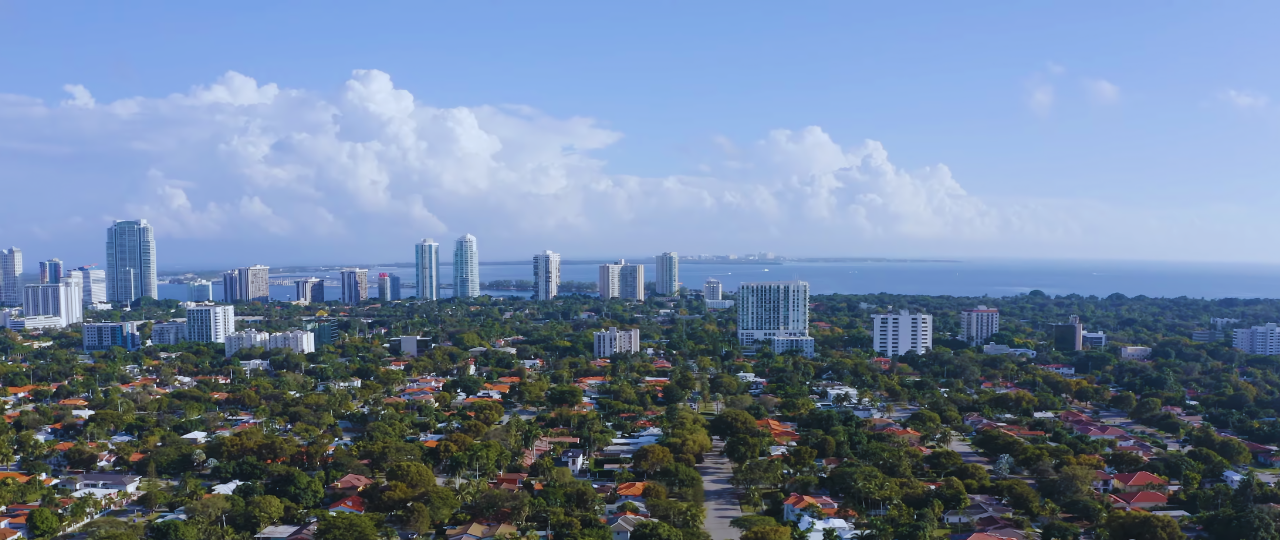
The Roads, Miami, Florida - EVERYTHING You Want to Know
Enjoy this virtual journey across the BEST of The Roads, from everything you WANT and NEED...
.png)
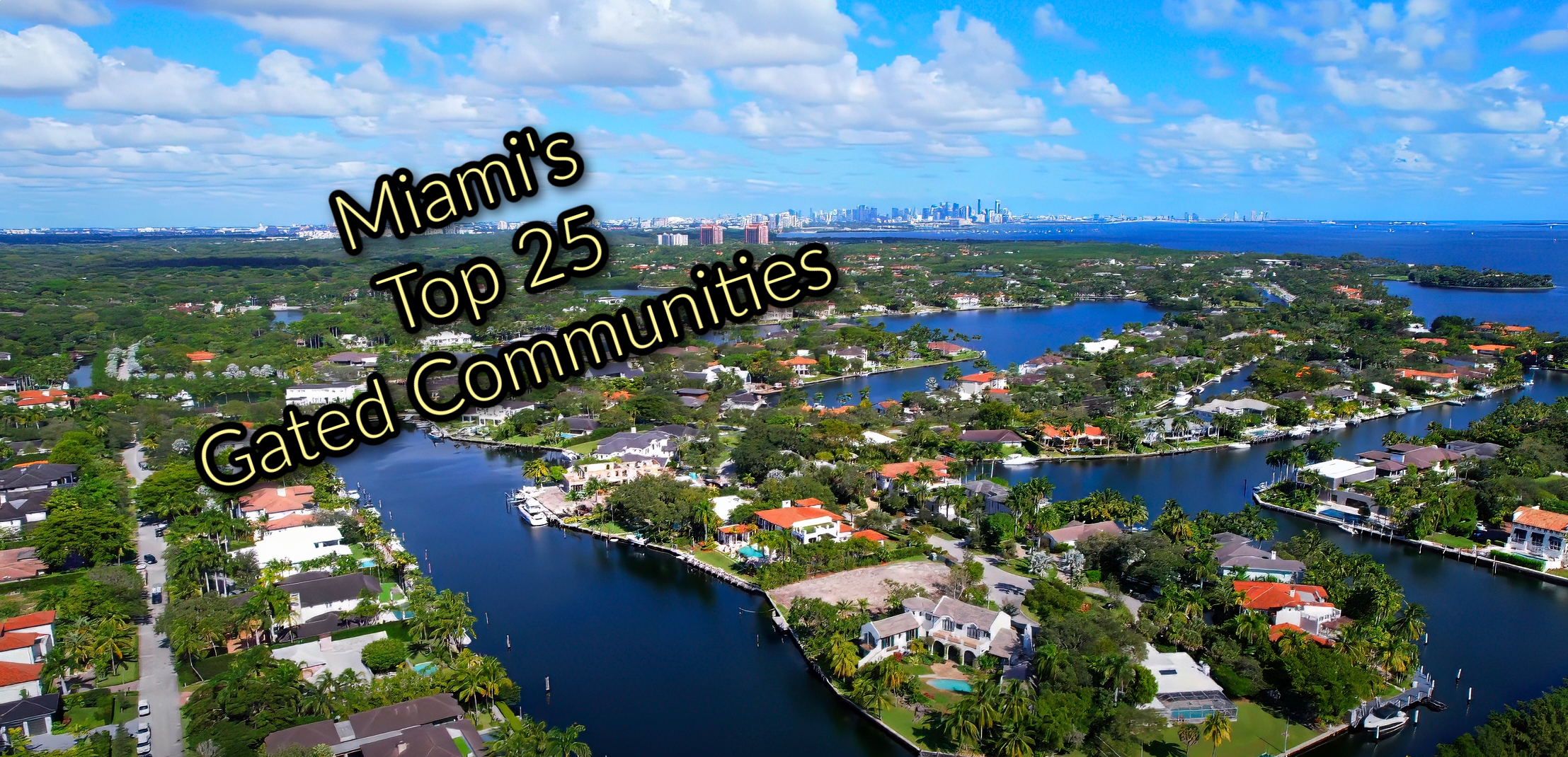
The Ultimate Guide to Miami-Dade's Top 25 Gated Communities for Single-Family Homes
Discover Miami's top gated communities in this essential guide for luxury home buyers...

Miami's BEST Restaurants in EVERY Neighborhood
Check out the absolute BEST restaurants in every neighborhood of Miami, including the best...
Selling Your Home?
Who are we?
We are the ALL IN Miami Group out of Miami.
We are Colombian, Filipino, Cuban, German, Japanese, French, Indian, Syrian, and American.
We are Christian, Hindu, and Jewish.
We are many, but we are one.
We sell luxury homes in Miami, Florida.
Although some of our clients are celebrities, athletes, and people you read about online, we also help young adults find their first place to rent when they are ready to live on their own.
First-time buyers?
All the time!
No matter what your situation or price range is, we feel truly blessed and honored to play such a big part in your life.