



What Nobody Tells You About Living in West Little River

Amit Bhuta
I use non-traditional marketing to inspire the most motivated buyers to pay the max for Miami luxury homes...
I use non-traditional marketing to inspire the most motivated buyers to pay the max for Miami luxury homes...
Living in West Little River is like finding a parking spot near the entrance on a weekend sale — unexpected and almost too good to advertise.
It has a central location, established homes, and a cultural mix of Black, Caribbean, Latino, and immigrant influences that refuses to fit into a tidy description, and none of it requires reorganizing your life around beach traffic.
Much of Miami stays within reach too, with highways and transit close enough for work, errands, or the occasional escape from your own side of town.
Its residential streets offer more breathing room than denser areas, and long-standing local businesses give the neighborhood a personality you can't fake.
Best of all, nobody's really caught onto the hype yet, which sounds like a win until you realize that's exactly the downside.
You see, no hype also means no warning, so one street can look nothing like the next, an affordable house can come with a renovation mystery attached, and "future redevelopment" has a way of walking in with blueprints under its arm.
West Little River gives you plenty of reasons to look closer, which is fortunate, because it’s where the real story begins.
Here are six things nobody tells you about living in West Little River.
 (8).png?w=1140)
1) No Mayor, No City Hall, Just Miami-Dade on Speed Dial
West Little River has a Miami address, a defined community name, and enough residents to seem like it has its own city government.
It does not.
The area is unincorporated, which means Miami-Dade County handles the services, rules, zoning decisions, and public responsibilities that a city would normally manage.
There is no West Little River mayor cutting ribbons, no local city commission debating trash pickup, and no municipal building where everyone knows which counter can solve the problem.
Questions about permits, code enforcement, roads, parks, drainage, and land use often lead back to a county department whose phone menu has clearly survived several administrations.
The setup is not necessarily worse, but it is less personal than living in a small municipality with local officials and service departments.
West Little River also has an unusual history, since there are areas which were once annexed by Miami before returning to county control during an earlier chapter of South Florida’s growth.
Discussions about creating a new municipality have continued through the North Central Dade incorporation process, so the government story is not completely settled.
For now, the neighborhood is considered a recognizable community without the legal machinery that usually comes with one.
However, you must learn to acknowledge that “Call the city” is not a complete plan unless someone remembers there is no city to call.
 (9).png?w=1140)
2) Central on the Map, But Not Necessarily on the Clock
The map gives West Little River an impressive sales pitch before traffic sneaks in to respond.
I-95, major north-south avenues, Metrorail stations, bus routes, and several employment areas are closer to West Little River than many outer suburbs.
That central position can make trips to Downtown Miami, Miami International Airport, Hialeah, North Miami, and other parts of the county more manageable.
The important word is “can,” because South Florida travel times have never shown much respect for straight-line distance.
A rail station may be nearby but not comfortably walkable from a particular street, especially when the route includes wide roads, missing shade, awkward crossings, or a bus connection that requires good timing and emotional maturity.
Driving can solve the first-mile problem, but it introduces traffic, parking, and the familiar mystery of how a short route developed a forty-minute personality.
The neighborhood’s location remains a real advantage, particularly for households traveling in different directions rather than commuting exclusively to one distant job center.
It also offers more transportation options than communities where every trip begins with a long drive before reaching civilization.
The mistake is assuming that 'central' means quick.
West Little River shortens the map, but the clock reserves the right to negotiate.
 (10).png?w=1140)
3) It's Affordable Until the Inspector Starts Talking
A lower asking price can make West Little River look like one of the few places where Miami homeownership has finally seen the light at the end of the tunnel.
The neighborhood contains many established single-family homes, including properties built long enough ago to have survived several remodeling trends and at least one questionable preference for mirrored walls.
That age can offer larger lots, solid construction, mature trees, and layouts with more personality than a brand-new box.
It can also produce roofs nearing replacement, older electrical systems, aging plumbing, patched additions, and repairs completed by someone whose main qualification may have been owning a ladder.
Some homes have been expanded or divided over the years, which makes permit records just as important as fresh paint and attractive flooring.
A renovated kitchen does not confirm that the work behind the walls received the same attention as the cabinet handles.
Insurance companies may also care about roof age, wiring, plumbing, openings, and prior claims long before they admire the backsplash.
None of this means the housing stock is poor, because condition can change dramatically from one property to the next.
It means affordability should be measured after the inspection, permit search, insurance quote, and repair estimates.
The listing price gets people through the door, but the inspector usually introduces the full cast.
 (11).png?w=1140)
4) The Neighborhood Vibe Doesn't Travel Past Your Corner
West Little River can change its tone before the car has finished making a right turn.
One block may have tidy lawns, quiet porches, mature trees, and the peaceful soundtrack of someone washing a car on Saturday morning.
The next may sit beside a busy avenue, commercial property, transit activity, truck traffic, vacant land, or a business that gets deliveries before sunrise.
Sidewalks, lighting, road condition, parking habits, traffic noise, and property upkeep are not evenly distributed across the area, making broad descriptions such as “quiet,” “busy,” “improving,” or “rough” far less useful than seeing the exact street at several hours of the day.
A calm weekday morning does not reveal Friday-night traffic, weekend activity, school pickup congestion, or what happens when nearby businesses open.
The surroundings may also change over time because redevelopment efforts along major corridors could bring new housing, businesses, road work, and denser construction.
Those improvements may add services and investment while also introducing noise, traffic, and a very long relationship with orange construction barriers.
Therefore, West Little River should be evaluated one corner at a time rather than judged as one uniform neighborhood.
Here, the most accurate neighborhood review may begin with, “Turn left, because this block is completely different.”
 (13).png?w=1140)
5) Ask Ten Neighbors, Get Ten Different Backstories
West Little River does not fit inside a cultural label, no matter how confidently an old neighborhood guide tries to assign one.
Its roots are tied deeply to Black Miami, and that history remains visible in churches, families, businesses, and community institutions that have served the area for generations.
Caribbean migration added Haitian, Jamaican, Bahamian, and other island influences to the neighborhood’s language, food, music, faith, and everyday routines.
Latin American families have also reshaped the area, bringing Spanish into stores, homes, workplaces, and conversations that can switch languages halfway through a sentence without permission.
Many households include relatives born in different countries, children raised in Miami, and grandparents who still consider every family decision open for review.
The result is a community where two neighboring homes may have entirely different immigration stories, traditions, languages, and opinions about what qualifies as a proper Sunday meal.
This mix gives West Little River more cultural depth than its residential streets reveal at first glance.
It also means the neighborhood’s identity continues to change rather than remaining frozen in the version someone remembers from twenty years ago.
No single group owns the entire story, and no demographic statistic can explain what happens from one household to the next.
West Little River is less a neat cultural category and more a long-running family reunion where several branches are still introducing themselves.
 (12).png?w=1140)
6) The Upgrade You Can't See From the Street
Some of West Little River’s most important improvements come with no granite countertops, dramatic reveal, or ribbon-cutting photo worth posting.
They are happening underground.
Parts of the community have relied on septic systems, and Miami-Dade has been expanding sanitary sewer infrastructure in selected areas through new mains and pump-station work.
That upgrade can improve long-term service, water quality, and resilience, but it also brings construction, excavation, road closures, and questions about when individual properties can connect.
A house can look perfectly packaged while the utility situation beneath the yard remains more complicated than the landscaping suggests.
Connection status should therefore be confirmed by address instead of assumed from the neighborhood name or the presence of a sewer cover somewhere down the street.
Drainage is also important because heavy rain, shallow groundwater, canals, and low-lying roads can create water problems far from the coast.
Flood zone information, past street flooding, septic history, sewer availability, and future connection costs all belong in the property research.
These details are easy to ignore because none of them appear in the listing photos beside the staged dining table.
West Little River’s biggest home improvement project may be the one taking place beneath everyone’s tires.
WHO GETS THE MOST OUT OF LIVING IN WEST LITTLE RIVER?
People who value access, cultural depth, and practicality
West Little River's goal is to make most of Miami easier to reach.
Its location places major roads, transit connections, job centers, shops, and long-established communities within a tighter part of the map than many outer suburbs can offer.
That advantage matters in a county where crossing three neighborhoods can somehow require water, snacks, and a fully charged phone.
West Little River also guarantees something Miami’s newer developments cannot order from a contractor: a community identity built over generations.
Black Miami history, Caribbean traditions, Latin American influence, immigrant businesses, churches, and multilingual households are all present in the same neighborhood without blending into a tidy marketing slogan.
The housing adds another practical layer because single-family homes are at prices below those in many better-known parts of Miami-Dade.
Some streets also offer mature trees, larger yards, and homes with enough space to accommodate real life rather than a carefully folded version of it.
West Little River makes room for households that need access in several directions, especially when work, family, school, and errands are scattered across the county.
It also works best when a neighborhood is expected to be useful every day.
The strongest parts of West Little River are rarely announced with decorative signs or matching planters.
They show up through location, community ties, cultural range, and the possibility of securing more house without moving to the edge of civilization.
WHO MAY WANT TO KEEP LOOKING?
Anyone who expects consistency on every street
The first mistake is assuming West Little River repeats itself from block to block.
A quiet row of homes can give way to a busy avenue, a commercial property, a transit stop, an industrial use, or a vacant parcel with several future possibilities.
That sharp variation can make one address calm and another noisy even when both listings proudly use the same neighborhood name.
West Little River also carries an older housing stock that may include additions, repairs, converted spaces, and renovations completed across several decades.
Some of that work can be solid and properly documented, while some may inspire an inspector to remove their glasses and begin a very serious conversation.
The area’s central location also does not produce automatic walkability, because rail stations, buses, and shops may still require wide-road crossings or an extra ride from the house.
Sewer availability, septic history, drainage, insurance concerns, and flood exposure add another set of questions that cannot be answered by admiring the front lawn.
Major corridors may continue changing through new housing, business investment, road projects, and denser development.
Those changes may improve the area while also bringing construction noise, heavier traffic, and a new building where an empty lot once minded its own business.
West Little River can be rewarding, but it is not designed for anyone who prefers a neighborhood that reveals the entire plot in the opening scene.
AN HONEST TAKEAWAY
What living in West Little River really comes down to
West Little River is a neighborhood of conditional sentences.
The location is central, but the trip depends on when you travel.
The housing can be more attainable, but the final cost depends on what the inspection uncovers.
The street may be peaceful, but the next corner may have an entirely different schedule and volume setting.
The area has deep history, but its identity continues to expand through Black, Caribbean, Latino, and immigrant communities.
Public improvements may strengthen the neighborhood, but construction and redevelopment can change the view, traffic, and pace along the way.
Those conditions make West Little River a place where the exact address says more than the neighborhood name.
Its value comes from access, cultural richness, established homes, and proximity to much of Miami without the glossy price tag attached to trendier areas.
Its challenge is that every advantage has a follow-up question, and West Little River expects that question to be asked before closing day.
It truly comes down to finding the block where the location, house condition, surroundings, and plans finally agree with each other.
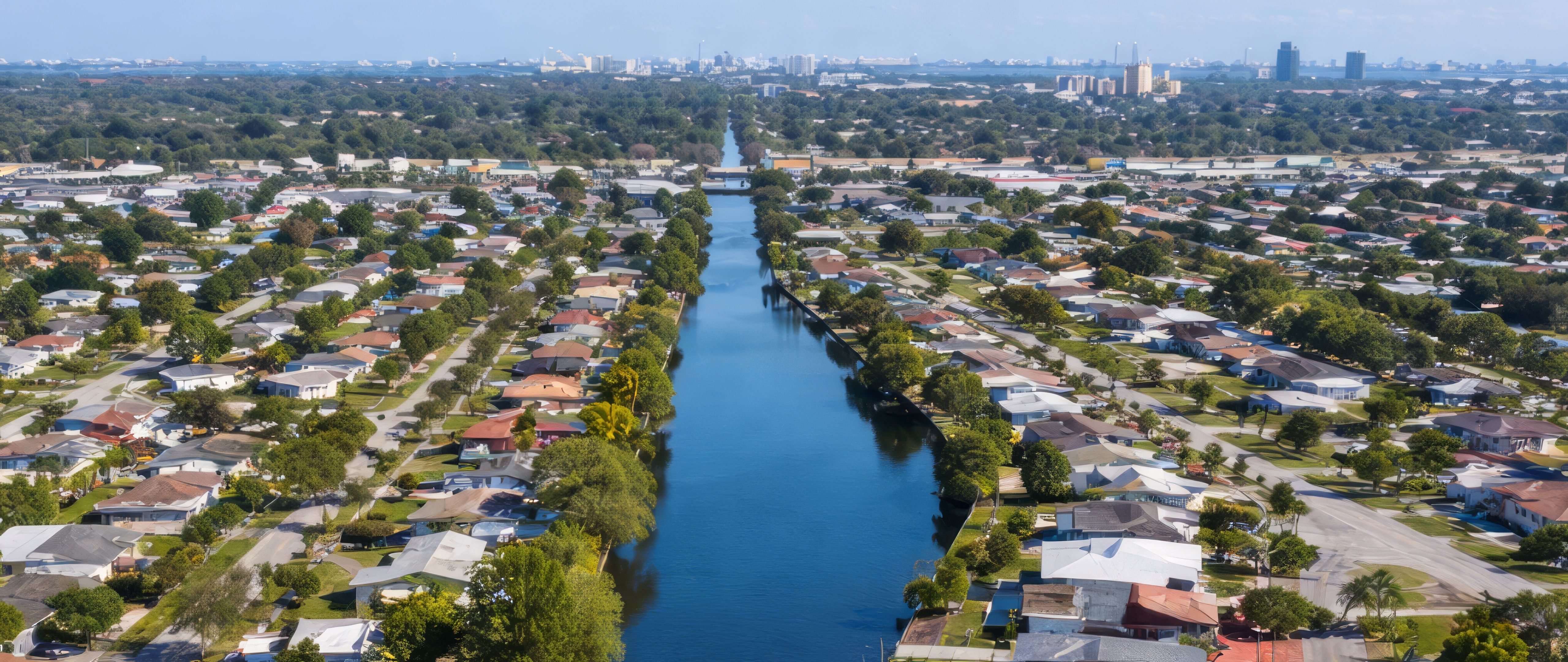
West Little River, Miami, Florida - EVERYTHING You Want to Know
Grab your go-to snack, cue up a playlist that fits the vibe, and get ready to explore ever...
.png)
The Ultimate Guide to Miami-Dade's Top 25 Gated Communities for Single-Family Homes
Discover Miami's top gated communities in this essential guide for luxury home buyers...


Miami's BEST Restaurants in EVERY Neighborhood
Check out the absolute BEST restaurants in every neighborhood of Miami, including the best...
Selling Your Home?
Who are we?
We are the ALL IN Miami Group out of Miami.
We are Colombian, Filipino, Cuban, German, Japanese, French, Indian, Syrian, and American.
We are Christian, Hindu, and Jewish.
We are many, but we are one.
We sell luxury homes in Miami, Florida.
Although some of our clients are celebrities, athletes, and people you read about online, we also help young adults find their first place to rent when they are ready to live on their own.
First-time buyers?
All the time!
No matter what your situation or price range is, we feel truly blessed and honored to play such a big part in your life.