



What Nobody Tells You About Living in Tara

Amit Bhuta
I use non-traditional marketing to inspire the most motivated buyers to pay the max for Miami luxury homes...
I use non-traditional marketing to inspire the most motivated buyers to pay the max for Miami luxury homes...
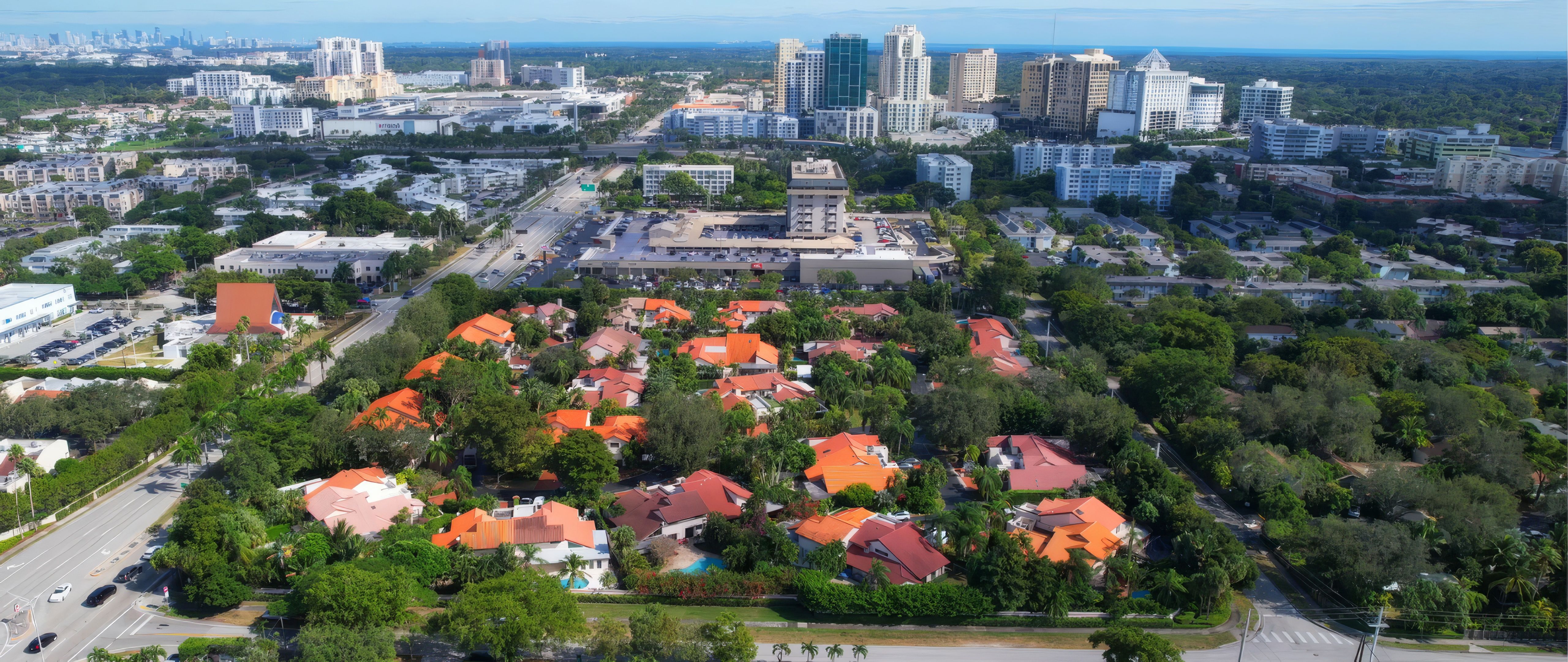
Guard-gated, tucked behind walls thick enough to keep out both hurricanes and nosy Zillow scrollers, Tara sounds like a Kendall community that realtors dream about at night.
It has Mediterranean villas with private pools, twenty-two-foot ceilings, and lush landscaping that suspiciously looks like it's been photoshopped — but it's real, and so is the price tag that comes with it.
So, it's not surprising when everyone assumes that life in Tara is like a permanent vacation, minus the flight and the HOA fee.
You picture yourself sipping coffee by your own pool while your neighbor's gardener silently judges your weed situation.
But peel back that Mediterranean stucco and gated mystique, and Tara has its own quirks that will never cross anyone's imagination.
Some of them are wonderful, some of them will make you laugh, and one of them might make you double-check your gate code — twice.
Here are six things nobody tells you about living in Tara.
 (36).png?w=1140)
1) Behind the Gate, Everybody's In Everybody's Business
A gate is excellent at stopping random cars and terrible at making roughly forty households invisible to one another.
Tara is a walled, guard-gated enclave with only about forty two-story residences, so the community is on a much more intimate scale than most people picture when they hear “Kendall neighborhood.”
You will learn which cars belong there, which dog has declared war on delivery drivers, and which contractor has been parked outside the same house long enough to qualify for mail.
That familiarity can be comforting because unusual activity is more noticeable, familiar faces become genuinely familiar, and residents are less likely to spend years wondering who lives three doors down.
It also means your new roof, visiting relatives, landscaping experiment, and mysteriously frequent furniture deliveries may become part of the community’s unofficial news cycle before you finish carrying the boxes inside.
Nobody needs to be aggressively nosy for this to happen because a small collection of streets naturally gives people fewer places to disappear.
Association decisions can carry more emotional weight as well, since discussions about security, landscaping, repairs, rules, and spending involve a compact group rather than hundreds of anonymous owners.
The same neighbor who supports your exterior update may also remember the exact argument from the previous time someone requested one, complete with dates, witnesses, and a dramatic retelling near the mailbox.
For buyers who appreciate familiarity, accountability, and a stronger sense of who shares the gate, that closeness can be one of Tara’s best features.
For anyone whose dream neighborhood involves entering the garage unnoticed and emerging three fiscal quarters later, Tara may require more social camouflage.
 (37).png?w=1140)
2) It's Not a Townhome, It's a Flex
Search Tara on three real estate websites and the homes may change species before your eyes.
One page may call the property a townhome, another a villa or cluster home, and the next may classify the same address as a single-family residence.
The confusion comes from homes that participate in a shared gated community while offering far more private space and architectural independence than the word “townhome” usually suggests.
Tara’s residences were developed between 1982 and 1989, and published community information categorizes many of them as approximately 2,320 and 4,180 square feet, with garages, driveways, tall ceilings, private terraces, flexible rooms, and private pools at selected homes.
That is not the standard starter townhome where opening the oven blocks access to the refrigerator and the guest room doubles as a generous closet.
Some Tara properties offer main-level bedrooms, loft offices, multiple living areas, vaulted ceilings, substantial outdoor entertaining space, and enough square footage to lose both your phone and a family member.
The label matters less than understanding the exact property because the legal structure, insurance setup, maintenance boundaries, financing treatment, and association obligations may not match what a buyer assumed from a search filter.
A villa-sized floor plan does not automatically provide single-family freedom, and a townhome label does not automatically mean the association handles every exterior component.
Buyers should evaluate the residence as its own combination of house, lot, shared community, and governing documents rather than a letting dropdown menu explain the purchase.
Tara’s biggest housing flex is that it can provide much of the scale and privacy of a traditional suburban home without placing every residence on an isolated oversized lot.
However, buyers must read beyond the property category, as the listing website may be having an identity crisis, but the mortgage company and insurance carrier will still expect precise answers.
 (38).png?w=1140)
3) The Gate Lies About What's Outside It
Tara is as quiet as can be in the middle of a busy city like Kendall.
Inside, the landscaping, enclosed streets, Mediterranean architecture, and controlled entrance create a sheltered residential atmosphere that can seem far removed from the busier parts of eastern Kendall.
Then the gate opens, and Kendall Drive clears its throat.
Tara sits near Dadeland Mall, Whole Foods, Baptist Hospital, US-1, State Road 826, and the wider Dadeland commercial district, which gives residents quick access to errands, medical services, dining, shopping, and major transportation routes.
This means the convenience comes with traffic lights, merging lanes, crowded intersections, delivery vehicles, commuter patterns, and the familiar Miami experience of watching a short distance become a personal journey.
Dadeland South also provides access to Metrorail and bus connections, including the southern end of the Metrorail system and expanding regional transit service.
That proximity gives residents more transportation options than many suburban Kendall communities.
However, Tara itself remains a gated residential enclave rather than a front-door urban district built around walking to everything.
You may be near restaurants, stores, trains, and major roads without wanting to approach all of them on foot while carrying groceries in July.
This creates Tara’s central location bargain: the home can offer a private retreat, but daily life still unfolds within one of Miami-Dade’s active commercial and transportation zones.
Residents can come home to quieter streets without surrendering easy access to the outside world, provided they accept that the outside world may be waiting at the intersection with three turn lanes and no patience.
The gate offers separation, not teleportation, which is worth remembering before assuming that the peaceful experience represents every minute of the commute.
 (39).png?w=1140)
4) Your HOA Fee Covers Less Than You Think
The monthly HOA payment is not a magical subscription that turns a 1980s villa into somebody else’s problem.
Recent Tara listings reported monthly association fees of approximately $550 and $595, but the number alone does not reveal the exact division of financial responsibility between the association and the homeowner.
The fee helps support the shared environment that makes Tara recognizable, including the controlled entrance, community operations, common-area maintenance, and the overall presentation buyers notice when they enter.
It does not automatically mean the association replaces your air-conditioning system, repairs your private pool, updates your windows, pays for every roof problem, or sends someone over because the upstairs shower has begun auditioning as a downstairs water feature.
Those responsibilities depend on the declaration, maintenance provisions, insurance structure, association budget, reserves, and any rules attached to the individual property.
A listing may summarize the community as gated and provide a monthly fee while leaving the most expensive ownership questions buried inside documents that are considerably less glamorous than the listing photos.
Buyers should confirm who maintains the roof, exterior walls, landscaping within the lot, fences, driveways, patios, drainage components, and any shared structural elements before estimating the real monthly cost.
They should also review the association’s financial health because a pleasant entrance and trimmed hedges cannot tell whether reserves are adequate or whether a future project could lead to a special assessment.
Private pools deserve their own line in the budget, since selected Tara homes have them and pool ownership does not become free merely because the water is visible from a vaulted living room.
The HOA can preserve order, security, and community appearance while the homeowner remains responsible for a meaningful list of expensive components.
Tara can offer less exterior chaos than a completely unregulated neighborhood, but “less chaos” and “maintenance-free” are not roommates.
 (41).png?w=1140)
5) Same Decade, Wildly Different Midlife Crises
Tara was built in a decade, but its homes have spent the years since making independent life choices.
Community records place construction primarily between 1982 and 1989, meaning these residences are now old enough to have original features, replacement features, replacements of replacements, and at least one renovation everyone has politely agreed not to discuss.
One property may have impact glass, a newer roof, renovated bathrooms, updated mechanical systems, modern flooring, and a saltwater pool.
Another may have older electrical components, aging tile-and-flat roof sections, original plumbing elements, older air conditioners, storm shutters, and a kitchen that's stuck in 1986.
Shared architecture and similar construction dates can make Tara appear more uniform than it is, especially when mature landscaping and coordinated exteriors soften the differences from the street.
The inspection report is where the individual biographies begin.
Buyers should investigate roof age and permit history, impact protection, electrical service and panels, plumbing materials, HVAC age, skylights, drainage, pool equipment, previous additions, moisture history, and whether renovations were properly permitted.
Insurance documentation deserves equal attention because two neighboring homes can produce very different premiums and underwriting outcomes when one has comprehensive wind protection, and the other has a collection of shutters requiring three adults, a ladder, and family counseling.
A beautifully renovated interior can also distract from expensive systems that have not received the same makeover, since quartz countertops are notoriously unwilling to repair plumbing behind the wall.
The reverse can be true as well, with a cosmetically dated home hiding a strong roof, updated infrastructure, and far fewer urgent projects than the fashionable listing down the street.
Tara buyers are not choosing between “old” and “new” homes so much as choosing between forty years of different maintenance decisions.
The smartest purchase is not automatically the prettiest house during the showing, but the one whose midlife crisis has already been documented, permitted, inspected, and paid for.
 (41).png?w=1140)
6) The Last Sale Price Means Almost Nothing
In Tara, the latest closing is not the neighborhood’s final answer but an expensive opinion with an address attached.
Recent sales show why a single comparable can create more confusion than clarity.
A 1,994-square-foot home built in 1987 sold for $1.1 million in 2026, a 2,246-square-foot home built in 1985 sold for $1.285 million, and a renovated 2,593-square-foot property with a private pool sold for $1.55 million.
Those prices do not form a neat staircase because the homes differ in square footage, floor plan, lot placement, ceiling height, renovation level, pool configuration, storm protection, condition, and architectural scale.
In a community with roughly forty residences, there may not be enough recent sales to produce a tidy stack of nearly identical comparisons.
One unusually renovated property can become the sale everyone mentions, even when the house next door would require several hundred thousand dollars and a patient contractor to resemble it.
Price per square foot can help organize the conversation, yet can't explain why a home has a main-level primary suite, another has a larger lot, another includes a pool, and another has spent four decades avoiding meaningful updates.
The most recent sale can also influence seller expectations long before it proves that buyers will pay the same amount for a less impressive property.
This is how one beautiful closing becomes neighborhood folklore, followed by three owners saying, “Mine is basically the same,” while standing in kitchens from entirely different presidential administrations.
A useful Tara valuation needs to compare the physical home, renovation quality, insurable condition, private outdoor space, lot characteristics, and timing of the sale rather than borrowing a price from whichever address closed most recently.
Thin inventory can benefit sellers when the right buyer has few alternatives, but also lengthen the process when the home is unusual, dated, or priced according to a neighbor’s renovation budget.
Buyers should treat each sale as a case study rather than a commandment, and sellers should remember that rarity creates opportunity without eliminating scrutiny.
The last sale price means something, but in Tara, it rarely gets to speak without several footnotes and at least one pool inspection.
WHO GETS THE MOST OUT OF LIVING IN TARA?
Those who want a house-sized home without the full suburban production
Tara makes its strongest case through its generous interiors, private outdoor space, and a guarded setting that does not require moving far from Dadeland.
Its homes offer the square footage, garages, vaulted ceilings, flexible rooms, and occasional private pools often associated with detached houses, only within a much smaller residential pocket.
That setup works especially well for households that have outgrown a standard townhome but do not want a huge yard turning every Saturday into an unpaid landscaping internship.
Tara also rewards anyone who values a quieter space without giving up quick access to hospitals, stores, restaurants, major roads, and rail connections.
The community is tucked away enough to create a clear break from the surrounding activity, even though Kendall Drive remains close enough to ruin any fantasy of countryside silence.
Its small scale also gives the neighborhood more order and familiarity than a larger development where half the cars look suspicious simply because nobody recognizes anybody.
Tara can be especially appealing when gated privacy matters more than shared amenities, since the main attraction is the residential setting rather than a long list of pools, gyms, clubhouses, and rooms nobody remembers how to reserve.
The architecture also gives the community more personality than rows of newer homes designed by someone who discovered beige and refused to recover.
For households willing to inspect carefully, compare individual properties, and accept that no two homes have aged the same way, Tara offers plenty of room to find something distinctive.
It is particularly well suited to anyone who wants convenience nearby but prefers not to live directly above it, beside it, or close enough to hear a restaurant’s closing playlist.
Tara delivers the most value when the goal is a substantial home in a compact gated enclave, not a maintenance-free condo disguised with extra bedrooms.
WHO MAY WANT TO KEEP LOOKING?
Anyone who wants predictable costs, total privacy, and a truly walkable routine
Tara is not suited for a wish list that includes effortless ownership, complete anonymity, and the ability to handle daily errands without checking traffic first.
The monthly HOA fee supports the shared setting, but not without the cost of maintaining a large older home with its own roof concerns, air-conditioning systems, plumbing, windows, pool equipment, or dramatic mystery leak.
Anyone expecting the association to handle every exterior problem may discover that the guardhouse protects the entrance, not the household budget.
The community’s small size can also feel unusually visible because new projects, regular visitors, and repeated contractor appearances are harder to overlook when there are only about forty homes.
Tara offers privacy from the wider area, but it cannot promise invisibility once something interesting happens near the driveway.
The location presents another possible mismatch because nearby shopping, hospitals, restaurants, Metrorail, and major roads do not automatically create a pleasant walking environment.
Most routines will still depend heavily on a car, particularly when heat, rain, large intersections, and grocery bags begin working together as a team.
Anyone seeking a broad amenity package may also find Tara too focused on homes and landscaping, with fewer communal distractions than many newer gated developments.
The housing stock requires patience as well, since a beautifully updated kitchen may share an address with aging systems that were not invited into the renovation budget.
Price comparisons can be equally frustrating because the small number of sales and wide differences between homes make quick neighborhood averages less useful.
Tara is not the easiest choice for anyone who wants simple numbers, uniform properties, low social visibility, and a community that resembles a resort with houses attached.
AN HONEST TAKEAWAY
What living in Tara really comes down to
Tara is a contradiction with a guardhouse.
It feels secluded without being remote, spacious without being sprawling, and luxe without being new enough to escape the consequences of time.
The gate creates a convincing sense of separation, but Kendall Drive, Dadeland, traffic, errands, and the rest of Miami-Dade resume their regular programming the moment it opens.
Inside that boundary, Tara offers substantial homes with real architectural character, private outdoor areas, garages, tall ceilings, and layouts that refuse to behave like ordinary townhouses.
It also asks owners to understand exactly what belongs to the association, what belongs to the individual property, and what belongs to the growing pile of receipts in the kitchen drawer.
The neighborhood’s age is not automatically a weakness, because many homes have received meaningful upgrades and can offer more personality than newer construction.
The problem is that the quality of renovation varies widely, and matching façades do not guarantee matching roofs, windows, plumbing, insurance costs, or future repair schedules.
Its small size adds warmth, order, and familiarity, although it also removes some of the anonymity that larger neighborhoods provide for free.
The same limited scale makes every listing and sale look important, even when the property being compared has a different layout, pool, condition, lot, or renovation budget.
Tara offers a rare middle ground between a traditional suburban house and a conventional attached community, but that middle ground comes with rules, maintenance, traffic, and unusually specific due diligence.
Here, life is all about enjoying the calm behind the gate while remaining fully aware that the house, the HOA, and the outside world all keep separate tabs.
-topaz-enhance-4x-3.jpeg)
Tara, Miami, Florida - EVERYTHING You Want to Know
Grab your treat and something to sip, and join us on a virtual journey you won't dare...
.png)
The Ultimate Guide to Miami-Dade's Top 25 Gated Communities for Single-Family Homes
Discover Miami's top gated communities in this essential guide for luxury home buyers...


Miami's BEST Restaurants in EVERY Neighborhood
Check out the absolute BEST restaurants in every neighborhood of Miami, including the best...
Selling Your Home?
Who are we?
We are the ALL IN Miami Group out of Miami.
We are Colombian, Filipino, Cuban, German, Japanese, French, Indian, Syrian, and American.
We are Christian, Hindu, and Jewish.
We are many, but we are one.
We sell luxury homes in Miami, Florida.
Although some of our clients are celebrities, athletes, and people you read about online, we also help young adults find their first place to rent when they are ready to live on their own.
First-time buyers?
All the time!
No matter what your situation or price range is, we feel truly blessed and honored to play such a big part in your life.