



What Nobody Tells You About Living in Overtown

Amit Bhuta
I use non-traditional marketing to inspire the most motivated buyers to pay the max for Miami luxury homes...
I use non-traditional marketing to inspire the most motivated buyers to pay the max for Miami luxury homes...
Overtown has been called historic, overlooked, troubled, promising, and “the next big thing,” all too many times, sometimes even before lunch.
And it has every right to be — this is Miami's historic “Harlem of the South."
Only a few neighborhoods combine deep Black history, recognizable cultural landmarks, strong rail access, soul-food institutions, and immediate proximity to Downtown.
On top of that, new housing and public projects have added optimism, making Overtown a neighborhood where the past has finally met its comeback.
The thing is, comebacks are easier in movies where nobody pauses the montage to discuss rent increases, highway construction, awkward pedestrian crossings, or who remains for the final scene.
Yes, Overtown is changing, but the direction, speed, and benefits of that change depend heavily on the block beneath your feet.
Here are six things nobody tells you about living in Overtown.
 (65).png?w=1140)
1) The Lyric Still Has Star Power; the Rest of the Block Maintains A Strict Bedtime
The Lyric Theater has hosted enough legends to give an ordinary building an ego.
Its stage welcomed performers including Louis Armstrong, Billie Holiday, Count Basie, Josephine Baker, and Nat King Cole during Overtown’s years as Miami’s “Little Broadway.”
That history gives Overtown a cultural weight most neighborhoods would need several museums and a very determined marketing team to recreate.
The restored theater, Black Archives, historic churches, murals, restaurants, tours, and community events still keep that legacy visible.
What they do not create is a nonstop entertainment strip with music spilling from every doorway seven nights a week.
The cultural activity is spread across landmarks, scheduled performances, food destinations, tours, and special events rather than a continuous nightlife district.
Some evenings may bring a performance, festival, or packed dining room.
Other evenings bring quiet sidewalks, closed doors, and a reminder that historical importance does not require everyone to stay awake until two.
That can disappoint anyone expecting the old jazz-era energy to operate on demand like a streaming service.
Overtown’s legacy is still powerful, but it's in chapters rather than one endless party scene, and choosing Overtown means respecting its history without expecting Cab Calloway to improve every Tuesday night.
 (66).png?w=1140)
2) I-95 Took a Shortcut Through the Neighborhood
Most neighborhoods have a highway nearby.
Overtown has highways that helped rewrite the neighborhood’s entire floor plan.
The construction of major expressways through the area displaced thousands of residents and broke apart streets, homes, businesses, and social connections that had once supported a thriving Black community.
That history remains visible because concrete columns, elevated lanes, underpasses, noise, and awkward crossings are still part of the present-day landscape.
Two places can appear close on a map while the highway between them turns a simple walk into a small civil-engineering assignment.
The ongoing I-395 project promises wider spans, improved crossings, public space, and a Heritage Trail intended to reconnect communities once divided by the roadway.
Until those improvements are complete, construction brings its own collection of closures, equipment, detours, dust, and signs that seem written for people who already missed the turn.
The highway also changes the mood from block to block, especially where homes sit near ramps, elevated structures, or heavy traffic.
A peaceful unit can still have an approach route that sounds as though the entire county is driving past the bedroom.
This is why the exact building position matters almost as much as the distance to Downtown.
In Overtown, I-95 is not something mentioned briefly in the history section and then left in the past.
 (67).png?w=1140)
3) You Get the Skyline, the Sirens, and Someone Else’s Event Traffic
Downtown Miami does not understand the concept of keeping its business to itself.
Overtown sits beside MiamiCentral, government offices, major venues, Miami Worldcenter, new towers, and the crowded machinery of the urban core, placing jobs, concerts, restaurants, trains, games, and major city destinations within an unusually compact radius.
It can also send road closures, sirens, delivery trucks, construction crews, rideshares, and confused eventgoers drifting into nearby streets.
A quiet residential evening may change because thousands of people have tickets to something happening several blocks away.
Parking becomes especially creative when drivers begin treating every curb as a personal suggestion.
The skyline can look impressive from the window while the street below conducts a completely unrelated argument involving horns.
New development strengthens the connection between Overtown and the surrounding urban core, particularly along the neighborhood’s eastern edge.
Atlantic Square opened in June 2026 with 616 apartments and ground-floor retail beside major transit and Downtown destinations; growth that brings useful housing and activity, but also adds more people, vehicles, deliveries, and construction to an area that was never waiting for company.
Living in Overtown means getting Downtown’s advantages at close range and occasionally receiving its noise without ordering it.
 (68).png?w=1140)
4) You Can Reach Downtown Faster Than the Grocery Store
Overtown’s transit map deserves applause, although the errands may require a separate review.
The Historic Overtown/Lyric Theatre Metrorail Station connects with multiple bus routes, MiamiCentral, Brightline, and Tri-Rail services.
That makes work, school, the airport, regional rail, and large parts of urban Miami reachable without needing the wheel.
The station’s location beside Downtown is a genuine advantage rather than a brochure exaggeration.
The problem starts when the destination is not a major transit hub but toothpaste, dinner ingredients, medication, or one ordinary household item needed immediately.
Essential places are not arranged evenly around every residential block simply because the train is nearby.
Highways, rail lines, construction zones, heat, traffic, and gaps between businesses can make a short walk unpleasant or strangely indirect.
A route can technically be walkable while still inspiring a rideshare search halfway through.
The exact address matters because a building may sit conveniently near transit and daily services, while another may require an extra bus, a longer walk, or a car trip.
Overtown can support a low-car routine when home, work, and regular destinations line up with the available network.
The train solves distance, but it has yet to develop the ability to notice that the refrigerator is empty.
 (69).png?w=1140)
5) The Glow-Up Looks Great Until the Old Neighbors Check the Price
A neighborhood comeback is wonderful until someone asks who received an invitation.
Overtown is seeing real investment with new housing, retail space, public projects, restorations, and transit-oriented development rather than promises that exist only in glossy renderings.
Atlantic Square alone added 616 apartments in June 2026, including 320 workforce units and 40 affordable residences, along with commercial space near the Metrorail station.
Those additions can bring more homes, customers, lighting, services, and activity to previously underused land.
They can also increase attention, rents, property values, and pressure on the households and businesses already trying to remain in the neighborhood.
Overtown has heard the word “revitalization” enough times to know that it sometimes arrives carrying a luxury brochure.
The hard question is not whether new development should happen, but whether improvement can happen without treating longtime community members as temporary occupants of their own history.
Workforce and affordable units matter, but the labels still require income rules, applications, availability, and rents that make sense for real local households.
The city’s Overtown Community Oversight Board exists partly to address housing, jobs, development, education, and cultural preservation because these changes affect much more than the skyline.
Overtown’s comeback will mean far more when the people who carried the neighborhood through its hardest years can afford to see how the story turns out.
 (70).png?w=1140)
6) The Headlines Know Overtown Less Than the Corner Store Does
Overtown has spent decades being introduced by people who only visited through a headline.
One version describes a glorious Black entertainment district filled with famous performers, thriving businesses, and cultural power.
Another reduces the neighborhood to poverty, crime, displacement, and decline.
Both contain history, but neither can explain what happens on every current street.
Overtown still contains churches, family networks, resident groups, cultural organizations, housing communities, schools, small businesses, and people whose knowledge of the neighborhood extends beyond the latest project announcement.
The city maintains an Overtown Community Oversight Board that specifically includes housing, employment, business growth, education, preservation, and major neighborhood changes.
That civic structure does not erase the need to research safety, lighting, building conditions, nearby land use, and activity around a particular address.
It does show that Overtown is an active community rather than an empty redevelopment canvas waiting for outsiders to discover it.
The block-by-block differences are real, especially between older residential areas, highway edges, transit-oriented projects, vacant parcels, and streets closer to Downtown.
A corner store, church, or longtime neighbor will often understand those differences better than someone repeating a reputation from ten years ago.
Living in Overtown requires enough openness to question the headlines and enough common sense to investigate the street for yourself.
WHO GETS THE MOST OUT OF LIVING IN OVERTOWN?
Those who like their history close and their Downtown even closer
Overtown puts a remarkable amount of Miami within a few train stops, short drives, and occasionally noisy blocks.
Downtown, MiamiCentral, government offices, entertainment venues, and major job centers sit close enough to become part of the weekly routine rather than a special trip.
That closeness carries real weight when crossing half the county every morning sounds like an unpaid internship.
Metrorail can handle many longer trips, while nearby bus and trolley routes add options when the destination cooperates.
Overtown also offers something newer districts cannot create by installing murals and naming a cocktail after a local musician.
Its Black history lives through the Lyric Theater, churches, food businesses, community groups, and families that remember the neighborhood before the skyline began crowding the view.
The area makes more sense when a neighborhood with memory sounds better than one assembled around a leasing office and matching lounge furniture.
Different blocks offer very different versions of Overtown, so choosing the address carefully can uncover quieter streets, stronger transit access, or easier links to Downtown.
The noise and construction become less annoying when the location saves meaningful time elsewhere in the day.
Overtown does not offer a neat little bubble separated from Miami’s messier habits.
It offers history, movement, and central access with personality to make an ordinary commute pass a theater where Billie Holiday once performed.
WHO MAY WANT TO KEEP LOOKING?
Those who want peace to be more than a lucky time slot
Overtown rarely promises the same mood from breakfast through bedtime.
A calm morning can give way to highway noise, rail activity, sirens, construction equipment, or traffic from an event nobody in the household planned to attend.
It's a type of unpredictability that can become tiring when home is supposed to provide silence rather than free updates on Downtown’s schedule.
Everyday errands may also require more planning than the location suggests.
The train can reach major destinations quickly, yet groceries, medicine, and dinner ingredients may involve a longer walk, another connection, or a car trip that seems rude given how close everything looks.
The streets are not visually consistent either.
Restored landmarks, new apartments, older housing, vacant parcels, highway columns, and construction fencing can appear within the same short drive.
Overtown’s redevelopment adds promise, but it also means more cranes, rent changes, temporary closures, and questions about what the neighborhood will cost once the dust clears.
Its famous jazz history may create the wrong expectation too, since most nights do not have live music or a legend entering through the side door.
Overtown asks for patience with noise, uneven blocks, and a neighborhood identity being edited in public.
When quiet, effortless errands, and a predictable streetscape matter more than central access, the location may stop looking like such a clever shortcut.
AN HONEST TAKEAWAY
What living in Overtown really comes down to
Overtown carries more history than many Miami neighborhoods carry parking spaces.
That history is not displayed neatly in a museum and then put away after closing.
It sits beside highways, train tracks, new apartment buildings, longtime churches, soul-food kitchens, and blocks waiting for the next round of investment.
The result is a neighborhood where pride and frustration often share the same address.
Downtown access can shorten a commute while traffic will lengthen the trip home.
New construction can fill empty land while making longtime households wonder whether they will still recognize the rent.
The Lyric Theater can hold the memory of jazz royalty while the surrounding streets settle into an ordinary weeknight.
None of these contradictions cancel out one another.
Instead, they explain why Overtown cannot be reduced to a comeback story, a warning label, or a history tour with convenient parking.
The neighborhood offers culture, access, and deep community roots, but it also requires careful block research and honest tolerance for noise and change.
Living in Overtown comes down to whether being close to Miami’s history and future is worth hearing both being built outside.
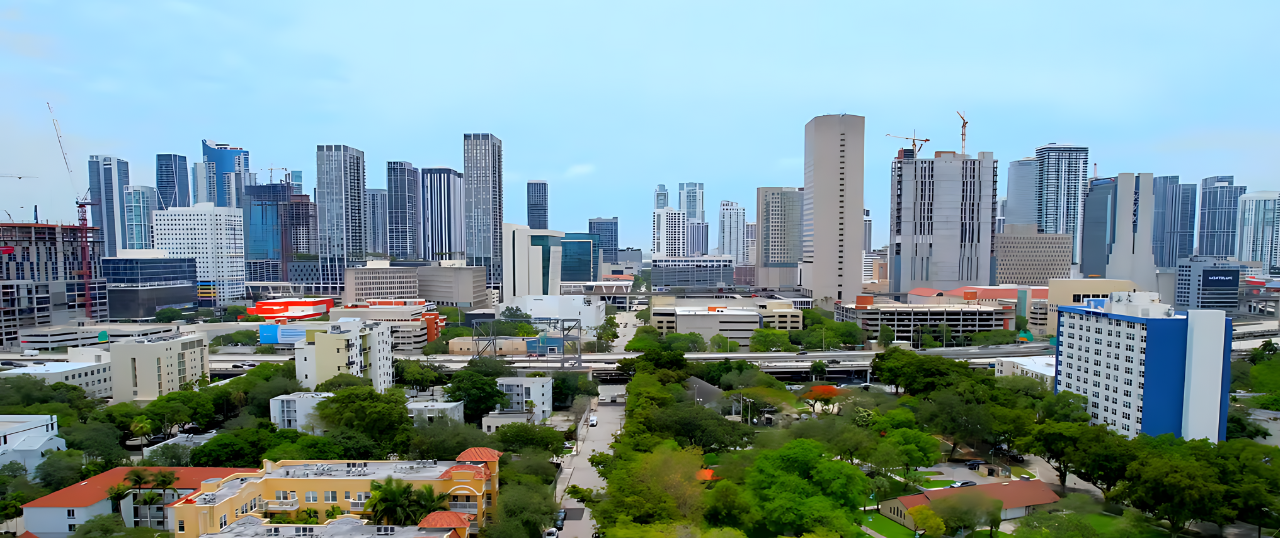%20(40).png)
Overtown, Miami, Florida - EVERYTHING You Want to Know
Jump at this rare chance to solve the charming puzzle that is Historic Overtown. By, the e...
.png)
The Ultimate Guide to Miami-Dade's Top 25 Gated Communities for Single-Family Homes
Discover Miami's top gated communities in this essential guide for luxury home buyers...


Miami's BEST Restaurants in EVERY Neighborhood
Check out the absolute BEST restaurants in every neighborhood of Miami, including the best...
Selling Your Home?
Who are we?
We are the ALL IN Miami Group out of Miami.
We are Colombian, Filipino, Cuban, German, Japanese, French, Indian, Syrian, and American.
We are Christian, Hindu, and Jewish.
We are many, but we are one.
We sell luxury homes in Miami, Florida.
Although some of our clients are celebrities, athletes, and people you read about online, we also help young adults find their first place to rent when they are ready to live on their own.
First-time buyers?
All the time!
No matter what your situation or price range is, we feel truly blessed and honored to play such a big part in your life.