



What Nobody Tells You About Living in Hialeah

Amit Bhuta
I use non-traditional marketing to inspire the most motivated buyers to pay the max for Miami luxury homes...
I use non-traditional marketing to inspire the most motivated buyers to pay the max for Miami luxury homes...
Hialeah is the portrait of "family-friendly" in Miami.
It has culture you can hear, food you can smell from the parking lot, businesses that know their regulars, parks, schools, homes, apartments, and a rhythm that makes the city feel completely awake and energized before some neighborhoods have even found their matching yoga set.
It's practical, familiar, lively, and deeply connected to Cuban and Hispanic life.
Here, you know you can get your errands done, feed everyone, even argue about the best frita, and still find time to fix something with tape.
But a city with this much life also comes with several things happening at once.
And believe us, traffic, density, older homes, rising costs, parking battles, and daily noise all have their own opinions, and they're not afraid to show it.
Here are six things nobody tells you about living in Hialeah.
 (29).png?w=1140)
1) Hialeah Speaks Fluent Family Group Chat
Hialeah introduces itself with a voice note, a cafecito, three opinions, and someone asking why you did not answer sooner.
It's what makes the city so recognizable.
Hialeah has a cultural identity that does not need a marketing department to explain it.
Spanish is everywhere.
Cuban influence is everywhere.
Family routines, local humor, food traditions, small businesses, and neighborhood familiarity are woven into daily life in a way that can feel immediate and deeply personal.
This is not a place where culture sits in a decorative corner for visitors to admire.
It organizes the day, decides where people eat, how neighbors talk, how errands unfold, how relatives stay connected, and why a simple question can become a full conversation with witnesses.
This strong identity is a major part of Hialeah’s appeal.
It can offer the comfort of hearing your language, knowing the rhythm, recognizing the food, and understanding the social shortcuts that make life easier.
But that same intensity can surprise people who expect a quieter, more neutral version of suburban Miami.
Hialeah is the opposite.
It has volume, memory, personality, and a very clear sense of itself.
The city does not whisper, and frankly, it would probably find whispering a hard task.
 (30).png?w=1140)
2) The Bakery May Know Your Schedule Before You Do
In Hialeah, convenience does not always arrive wearing a sleek logo.
Sometimes it's in the form of a bakery line that moves faster than your morning thoughts.
The city is packed with places people use constantly.
Bakeries, restaurants, pharmacies, clinics, schools, shops, repair places, supermarkets, banks, salons, and plazas are part of the everyday landscape, making Hialeah extremely functional.
Daily life has many of the pieces people need close by, and the city knows how to serve regular routines, instead of pretending every outing needs to be curated for a weekend guide.
You can get breakfast, run errands, pick up medicine, grab dinner, handle an appointment, and buy something you did not plan to buy because the plaza had ideas.
It is one of the reasons Hialeah feels practical for families, older adults, workers, and anyone who wants daily life to happen near home.
But convenience can come with its own little comedy.
One stop can become four.
A quick visit can turn into a parking-lot strategy session.
Someone will know a better place, a cheaper place, or a place where their cousin goes.
Hialeah makes errands easier by putting so much nearby, but it also makes errands social, crowded, opinionated, and occasionally longer than the original mission deserved.
The city is useful, but it is rarely sterile.
Even a bakery run can come with plot development.
 (31).png?w=1140)
3) The Parking Lots Deserve Their Own Warning Label
Hialeah has movement, and then Hialeah has parking-lot movement, which deserves its own driver’s education course.
The city is busy in a very specific way.
Roads fill quickly.
Plazas stay active.
School traffic builds.
Medical offices, restaurants, shopping centers, and apartment areas all create their own mini weather systems of cars, pedestrians, delivery trucks, and people reversing with great confidence.
This is where the daily energy of Hialeah becomes less charming and more aerobic.
A simple errand can involve circling, waiting, signaling, negotiating, and wondering whether everyone else received different traffic laws in the mail.
That does not erase its creature comforts, but it can explain the cost of having so much life packed into active corridors.
Density keeps Hialeah useful, but it also keeps it busy.
The same plazas that make it easy to find food, services, and shops can also test your patience before you even get inside.
Parking can feel like a small competition where the prize is being five minutes late instead of twelve.
Traffic can turn a short drive into a personality assessment.
The city works best when people understand that moving through Hialeah is part of the lifestyle, not a small footnote at the bottom of the brochure.
The turn signal may be on, but so is everyone’s survival instinct.
 (32).png?w=1140)
4) Affordable Compared To What, Exactly?
Hialeah often gets placed in the “more affordable than the glamorous parts of Miami” category, and it's pretty understandable.
Compared with waterfront neighborhoods, luxury towers, and areas where the lobby smells like expensive decisions, Hialeah can look more realistic.
The city offers homes, condos, apartments, and rentals in a place that still connects people to Miami-Dade.
Hialeah can make staying close to family, work, culture, schools, and services seem more possible than in places where the price tag needs its own chair.
But “more possible” is not the same as easy.
Hialeah is not frozen in an old affordability story.
Housing demand, rent pressure, home prices, insurance, maintenance, and competition have all changed the conversation.
People who still imagine Hialeah as an automatic bargain may get surprised fast.
The city may be less expensive than some famous Miami neighborhoods, but it is not handing out discounts with every pastelito.
Buyers and renters need clear expectations.
The question is not whether Hialeah is cheaper than the most dramatic parts of the county — it's whether the home, building, commute, parking setup, condition, and monthly costs make sense together.
Hialeah can still be practical.
It just no longer wants to be treated like Miami forgot to charge.
 (33).png?w=1140)
5) Do Not Judge Hialeah From One Street
Hialeah is too large and too varied to be understood from one block, one plaza, or one loud comment from someone who drove through once in 2014.
The city changes quickly from area to area.
One pocket may feel residential and family-heavy.
Another may feel more commercial, denser, older, louder, or more apartment-oriented.
Some homes are well cared for.
Some properties need updates.
Some buildings offer convenience but limited parking.
Some streets feel manageable until the wrong hour arrives and everyone suddenly has somewhere urgent to be.
This is one of the most important realities of Hialeah.
The city is not one uniform experience.
It has single-family neighborhoods, condos, apartments, older homes, additions, shopping corridors, industrial edges, school zones, parks, and busy roads all operating within the same larger identity, which makes the exact location significant.
A listing can say Hialeah, but the daily life behind that listing depends on the street, parking, nearby uses, building condition, commute route, and surrounding blocks.
So, visit at different times.
Check the parking.
Notice the noise.
Look at the building systems.
Ask about permits, maintenance, insurance, and rules.
Drive the actual routes.
Hialeah rewards people who understand the city at street level.
One block may explain the appeal.
Another may explain the warning label.
Both can be true.
 (34).png?w=1140)
6) Parks, Buses, Libraries, And Real-Life Backup Plans
Hialeah is often talked about in terms of food, traffic, culture, and jokes, but the city also has a practical public side that deserves more attention.
Parks matter.
Libraries matter.
Pools, recreation programs, transit options, public facilities, senior services, and city resources all help make the city more functional.
Hialeah is not just a collection of plazas and apartments held together by cafecito.
It has infrastructure that supports daily life.
For families, older adults, students, workers, and people without unlimited car flexibility, those services can change the experience of living in the city.
A nearby park can become the place where kids burn energy before the living room becomes a wrestling venue.
A library can be a study spot, a resource center, or a quiet escape when the house is doing too much.
Transit can help connect certain routines, even if Hialeah remains heavily car-dependent for many daily needs.
These are not flashy features.
They are backup plans.
They are the ordinary systems that keep a city livable when life gets busy, expensive, crowded, or complicated.
Hialeah may be loud and dense, but it is not without support.
The city has layers of public usefulness under all the noise.
Sometimes the most underrated amenity is not the trendiest restaurant.
Sometimes it is the bus, the park, the library, and the place where real life has somewhere to go when the apartment gets too full, and everyone needs a reset.
WHO GETS THE MOST OUT OF LIVING IN HIALEAH?
Those who understand that Hialeah runs more like a daily-life headquarters than a postcard
Hialeah does not waste time pretending to be delicate.
The city has errands to run, coffee to pour, family plans to rearrange, traffic to survive, and at least six people ready to explain where the better bakery is.
Its charm is not polished into silence.
It is busy, useful, loud, familiar, and vibing even before other places have finished pretending they meditate.
Hialeah provides a strong support system for daily life.
There are bakeries, clinics, schools, parks, restaurants, small businesses, shopping plazas, repair shops, apartment buildings, single-family homes, and family networks packed into a city that knows how people really move through a week.
It's a practical rhythm where a morning can involve cafecito, a pharmacy stop, a school drop-off, a quick grocery run, and a conversation with someone who somehow knows your cousin.
Hialeah brings culture and convenience to the same address.
It gives Spanish the microphone.
It gives food, family, work, errands, and neighborhood familiarity enough room to overlap until the day becomes loud but strangely efficient.
Hialeah is especially strong when life needs access to people and services more than scenery.
The city does not need a beach view to prove it matters.
It proves it by being useful before noon.
It is the Miami-Dade city that can feed you, fix your tire, get your prescription, point you toward a park, argue about parking, and still remind you that someone’s abuela makes it better.
WHO MAY WANT TO KEEP LOOKING?
Anyone who needs quiet, easy parking and soft background energy
Hialeah does not fade politely into the background.
It has volume and movement.
It has plazas where every parking space comes with a small negotiation.
The city can be incredibly convenient, but convenience often arrives with activity attached.
A grocery run may include traffic.
A bakery stop may require patience.
A doctor’s appointment may involve a parking lot where everyone suddenly becomes a strategist.
A short drive may become a whole chapter with blinkers, brake lights, and one driver who appears to be inventing a new lane from personal confidence alone.
Hialeah gives access to many everyday things, but it does not always deliver them gently.
The city can feel crowded, noisy, dense, and overstimulating if the expectation is a softer residential pace.
Its housing can also surprise people who assume the whole city is automatically affordable or easy to figure out.
Hialeah has older homes, condos, apartments, additions, busy corridors, quieter pockets, and buildings with very different maintenance realities.
One street may feel convenient and family-oriented.
Another may feel packed, loud, parking-challenged, or more commercial than expected.
Hialeah is too big to judge by a single impression, and the city rewards people who check the exact block, the building, the parking setup, the commute, the noise, and the property condition before letting a good pastelito make executive decisions.
Hialeah can be practical, funny, familiar, and full of life.
It is not always calm.
It is not always simple.
It is not for anyone who wants Miami-Dade convenience without Miami-Dade volume.
AN HONEST TAKEAWAY
What living in Hialeah really comes down to
Hialeah’s usefulness outweighs its intensity.
It is one of those places that makes more sense when judged by a regular Tuesday than by a glossy neighborhood description.
The city is not trying to seduce anyone with quiet streets, perfect branding, or a curated little lifestyle mood.
It is too busy being needed.
It feeds people.
It moves people.
It houses people.
It annoys people.
It helps people get things done.
It makes culture feel present instead of packaged.
It turns errands into contact sports, but at least there is probably good food nearby when the game is over.
That is the honest heart of Hialeah.
It can be crowded, noisy, dense, and chaotic in ways that test your patience.
It can also feel familiar, resourceful, funny, hardworking, and deeply connected to the people who know its rhythm.
The city has its flaws, and it does not hide them very well.
Parking is not shy.
Traffic has confidence.
Housing costs have increased.
Some blocks need closer homework than others.
But Hialeah also has an identity that cannot be manufactured.
It has language, food, family networks, civic services, small businesses, public spaces, and a practical daily usefulness that many prettier places would love to borrow for a weekend.
Hialeah is not the quietest answer.
It is not the easiest answer.
It is the answer with cafecito in one hand, a receipt in the other, and three errands left before dinner.
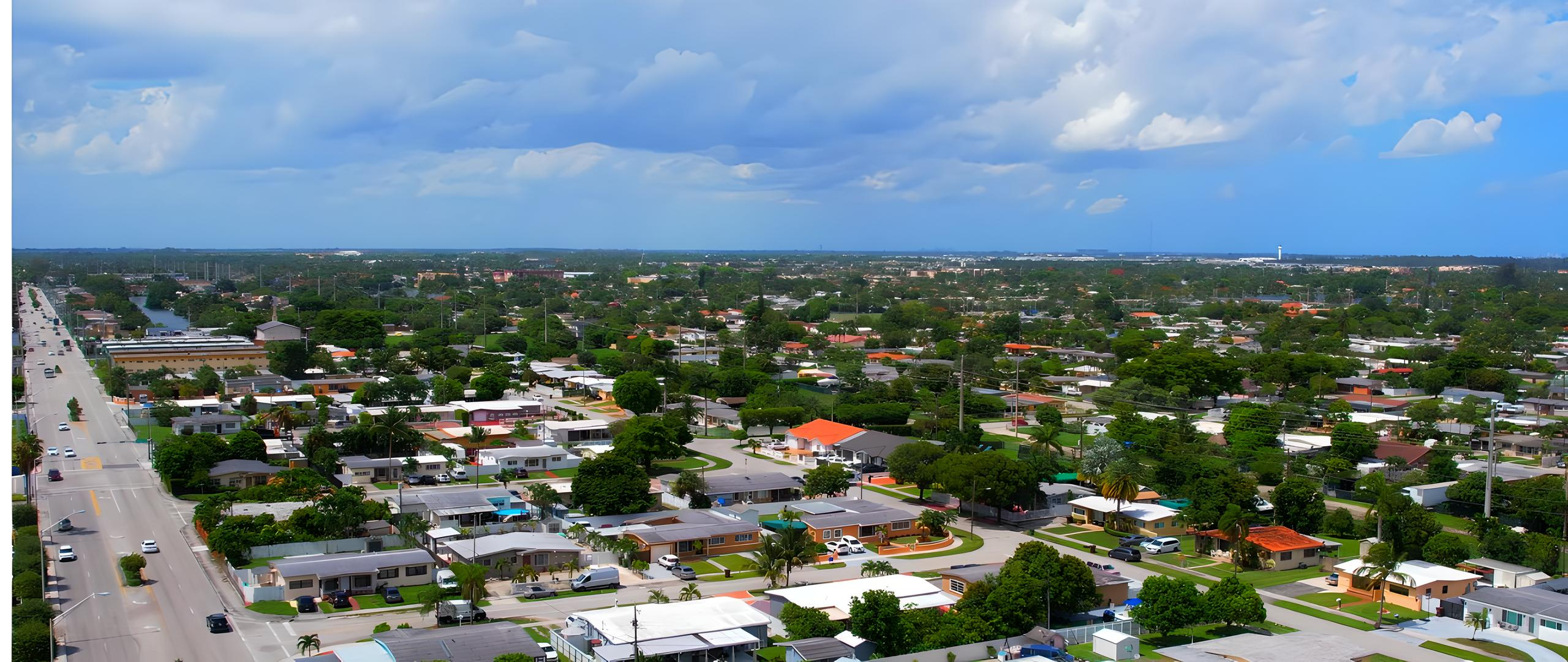%20(15)-fotor-20240523131058.png)
Hialeah, Miami, Florida - EVERYTHING You Want to Know
Buckle up and join us for an unrivaled virtual journey across the BEST of Hialeah! After s...
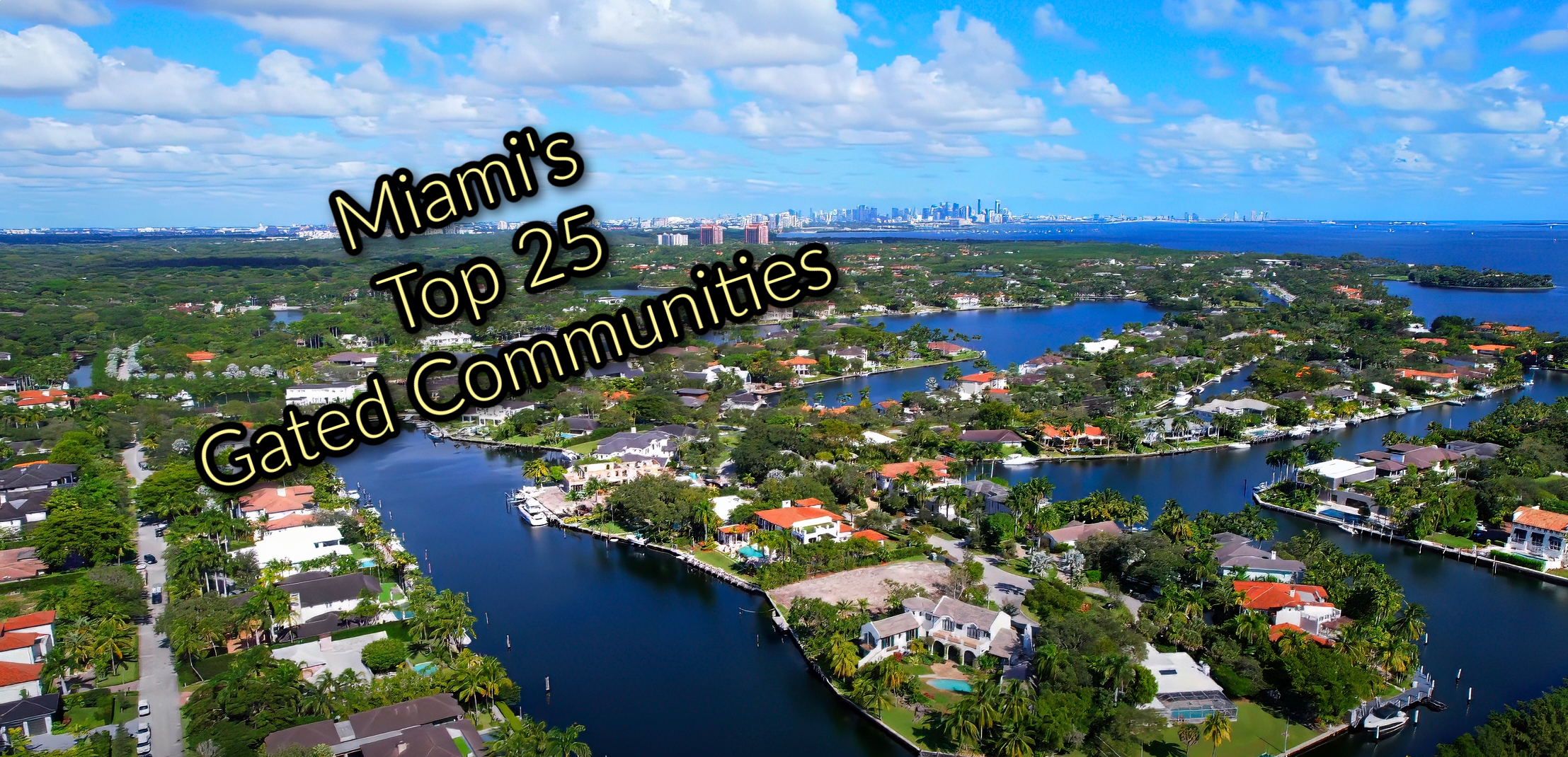.png)
The Ultimate Guide to Miami-Dade's Top 25 Gated Communities for Single-Family Homes
Discover Miami's top gated communities in this essential guide for luxury home buyers...


Miami's BEST Restaurants in EVERY Neighborhood
Check out the absolute BEST restaurants in every neighborhood of Miami, including the best...
Selling Your Home?
Who are we?
We are the ALL IN Miami Group out of Miami.
We are Colombian, Filipino, Cuban, German, Japanese, French, Indian, Syrian, and American.
We are Christian, Hindu, and Jewish.
We are many, but we are one.
We sell luxury homes in Miami, Florida.
Although some of our clients are celebrities, athletes, and people you read about online, we also help young adults find their first place to rent when they are ready to live on their own.
First-time buyers?
All the time!
No matter what your situation or price range is, we feel truly blessed and honored to play such a big part in your life.