



What Nobody Tells You About Living in the Design District

Amit Bhuta
I use non-traditional marketing to inspire the most motivated buyers to pay the max for Miami luxury homes...
I use non-traditional marketing to inspire the most motivated buyers to pay the max for Miami luxury homes...
The Design District dresses up, turns on the lights, calls the architect, books the chef, installs the public art, and then convinces everyone that walking past a handbag display counts as culture.
You don't need to see it in history books to know that, sometimes, it does.
It's one of Miami’s most recognizable pockets for luxury shopping, design, art, galleries, high-end dining, and the particular thrill of seeing a building and wondering whether it is a store, a museum, or a very confident spaceship.
But all that will start moving from headline to backdrop when you start hunting for a permanent parking spot.
Then, you'll realize that living in the Design District is not the same as visiting it with sunglasses, lunch plans, and a phone battery that will last you through its public art.
That is where the fantasy stops posing, and the daily logistics walk into the frame.
Can a neighborhood built to be admired also feel convenient to live in?
Here are seven things nobody tells you about living in the Design District.
 (8).png?w=1140)
1) You Do Not Live in the Design District. You Co-Star in It.
There are places where you can disappear into the background, buy oat milk in peace, and let your outfit make no public statements.
The Design District is not one of those places.
This neighborhood has a strong sense of presentation, and it does not turn that off because someone nearby is trying to take out the trash.
The buildings are sculptural, the storefronts are sophisticated, the public art is placed with intention, and the sidewalks often carry the energy of people who came prepared to be seen.
Living in the Design District means regularly being surrounded by design, fashion, restaurants, galleries, and visual drama.
It can make an ordinary afternoon feel sharper and more interesting than it would in a quieter residential pocket.
But it also means the neighborhood does not always feel like a private home base.
It's more often a destination that happens to have residents living inside the frame.
Visitors come to browse, shop, dine, take photos, attend events, and look around as if the entire district agreed to be part of the itinerary.
That can be fun, especially if you enjoy the motion and people-watching.
It can also make daily life less anonymous than expected.
The Design District gives you plenty to look at.
It may also occasionally remind you that other people came to look at it, too.
 (9).png?w=1140)
2) You May Pass Three Luxury Handbags Before Finding Toothpaste
The Design District can make the simplest errand feel like it wandered into the wrong tax bracket.
It's just how it is living near so much luxury retail.
The neighborhood is packed with fashion houses, design showrooms, jewelry boutiques, galleries, restaurants, and storefronts that look expensive even before a salesperson says hello.
It makes the Design District exciting, stylish, and visually rich.
It also means the retail mix does not always revolve around practical life.
You may find a designer bag, a statement chair, a watch, a gallery piece, and a restaurant reservation before finding the boring little things that keep a normal household functioning.
Sure, the Design District is excellent at special-occasion energy, but it is less focused on the unglamorous daily errands that do not photograph well.
Life in this pocket can make luxury feel familiar, which is both amusing and slightly dangerous.
Window-shopping becomes part of the scenery.
So does the subtle reminder that a neighborhood can be walkable and still not solve your toothpaste problem.
The glamour is real.
The practical errands may still require a short trip elsewhere, because apparently a couture pharmacy is not yet in season.
 (10).png?w=1140)
3) Walkable Does Not Always Mean Low-Maintenance
The Design District is walkable, so you can move through it on foot and have plenty to look at, but it does not mean every walk is effortless.
This is a compact, visitor-friendly area with shops, restaurants, galleries, valet stations, parking garages, events, and people arriving with very specific plans.
Some visit for dinner.
Some visit for shopping.
Some visit for art.
Some want to take one photo and block an entire walkway with the confidence of a film crew.
It gives the neighborhood energy, but it also adds friction.
Walking to dinner may be easy.
Navigating around valet activity, weekend crowds, photo stops, construction pockets, delivery vehicles, and event traffic can make the same walk feel more choreographed than casual.
The Design District does not have the same walking rhythm as a sleepy residential village.
It has movement, style, pauses, arrivals, departures, and several people deciding whether a wall is Instagrammable enough.
For people who want simple, quiet, practical walking, it may require adjustment.
The neighborhood lets you walk.
It just may expect you to share the sidewalk with a performer.
 (11).png?w=1140)
4) The Art Is Everywhere, and Yes, Some of It May Judge Your Outfit
In the Design District, culture does not wait behind a velvet rope.
It shows up on buildings, plazas, storefronts, courtyards, galleries, museums, installations, and architectural details that refuse to be a background.
That is one of the best things about the neighborhood.
You do not need to plan a formal museum day to be surrounded by creativity.
The art and design are woven into the experience of moving through the district.
A normal walk can involve sculpture, public installations, striking facades, gallery windows, and buildings committed to being remembered.
But the cultural atmosphere in this district is curated and highly produced.
It is not messy creative chaos, nor is it paint-splattered studio energy spilling onto the curb.
The Design District presents culture with lighting, spacing, branding, and a sense of control.
That makes it beautiful and accessible, but it also gives the area a more composed personality.
The creativity is real, but it is dressed for the reservation.
Living in this pocket means getting daily access to art and design, which can make the neighborhood feel intelligent, stylish, and visually alive.
It also means the creativity may feel more like a gallery opening than a neighborhood jam session.
Even the weirdness has good posture.
 (12).png?w=1140)
5) Dinner Is Easy. A Normal Weeknight Meal Is the Challenge.
The Design District knows how to feed people who have made plans.
It has serious restaurants, luxe dining rooms, chef-driven menus, cocktail spots, and enough fancy energy to make a random Wednesday wonder whether it should put on earrings.
It's a major perk living near trendy restaurants because you can make social plans easier and more exciting.
You are not stuck choosing between the same three places every time someone asks where to eat.
The neighborhood offers options with atmosphere, design, service, and a sense that dinner can become part of the experience.
But daily eating is not the same as destination dining.
Sometimes you do not want a beautiful meal.
Sometimes you want something quick, casual, affordable, and emotionally uncomplicated because the day has already asked enough from you.
That is where the Design District can feel more selective.
It excels at planned meals but may be less generous when the assignment is a simple dinner in comfortable clothes with no dramatic receipt at the end.
The food scene is a strength, but it has a personality.
It is wonderful when you want the night to have a little polish.
It is less helpful when your only goal is to eat something normal before your laundry develops legal rights.
 (13).png?w=1140)
6) Your Real Life May Borrow Wi-Fi From the Neighborhoods Next Door
The Design District is compact enough that daily life may naturally spill into surrounding areas.
It is part of how the location works.
Wynwood, Midtown, Buena Vista, Edgewater, and other nearby pockets help shape the practical rhythm around the district.
You may go in one direction for groceries.
You may go somewhere else for a casual meal.
You may head nearby for nightlife, services, fitness, errands, or the less glamorous tasks that do not need a sculptural facade.
The Design District is powerful, but it is not a complete little universe for every daily need.
Its identity is focused on fashion, design, art, architecture, dining, and destination retail.
That gives it character, but it also means nearby neighborhoods often help carry the regular-life load.
Living in the Design District can feel very connected because so many different Miami pockets are close.
It can also make the Design District feel more like a brilliant central stage than a self-contained village.
Your address may be in the Design District.
Your weekly routine may have supporting cast members all around it.
That is fine, as long as everyone gets credited properly.
 (14).png?w=1140)
7) The Design District Is Still Learning How to Be Someone’s Regular Tuesday
The Design District became famous as a destination first before being someone's address.
Its reputation was built in luxury shopping, design showrooms, public art, architecture, restaurants, galleries, and a visual identity that makes visitors slow down and point at things.
Residential life is growing, but the neighborhood’s public personality is still heavily shaped by visitors from elsewhere.
The area is exciting, recognizable, and full of amenities that make it feel urban and elevated.
At the same time, it doesn't have the same long-settled residential texture as neighborhoods where daily life has been the main story for decades.
There are fewer signals of ordinary domestic routine.
There is less of that soft, homey neighborhood layering that comes from schools, corner habits, longtime residents, casual services, and places that exist mainly because someone nearby needed them again and again.
Yes, the Design District is moving toward residential depth, especially as new housing and mixed-use projects expand that side of the neighborhood.
But for now, living here still means accepting that the district is better known for attracting attention than absorbing everyday life.
That can be thrilling.
It can also make the neighborhood feel unfinished in a human way, as if the outfit is perfect but the junk drawer has not been installed yet.
The Design District knows how to host.
It is still building the muscle memory of being home.
WHO GETS THE MOST OUT OF LIVING IN THE DESIGN DISTRICT?
Those who like the Design District at full brightness
The Design District is easiest to enjoy when its glamour is treated as part of the neighborhood’s daily weather.
This is a place where even the background is stylish.
The buildings have personality.
The storefronts have confidence.
The restaurants have lighting that makes tap water turn into Evian.
The public art shows up in places where another neighborhood might have settled for a beige wall and called it a day.
Living in the Design District means the ordinary backdrop is rarely ordinary.
A walk can pass sculpture, fashion houses, galleries, cafés, design showrooms, and enough architectural drama to make a parking garage wonder if it should have tried harder.
That energy should feel inspiring rather than exhausting to the perfect resident.
It rewards a life that enjoys movement, visual detail, strong dining options, easy people-watching, and a setting that never fully slips into sweatpants.
The Design District can't be a sleepy residential pocket with one cute bakery and a bench where everyone's favorite pigeon hangs out.
It is more public, more styled, more commercial, and more self-aware than that.
That can be a gift when the home does not need to hide from the city.
It can make everyday life feel plugged into Miami’s creative and cultural current without requiring a full production every time the front door opens.
The trick is accepting that the Design District brings its own spotlight.
It is not the softest place to live, but it can be one of the most visually alive.
And you can bet that the Design District gives daily life a better scenery than most errands deserve.
WHO MAY WANT TO KEEP LOOKING?
Anyone who needs the showroom lights turned down
The Design District can be thrilling until the same exciting qualities start asking for space in daily life.
As a destination, the area is easy to love.
There is art to admire, food to plan around, shops to wander through, and streets that make people slow down because something nearby is probably expensive, sculptural, or both.
As a home base, the district asks for more patience.
Visitors are moving through the area.
There are valet stands and parking garages.
There are event nights, shopping traffic, restaurant crowds, photo stops, construction shifts, and the steady reminder that the neighborhood is not only serving the people who live there.
That makes the Design District a very specific place to live.
It may not satisfy someone who wants a peaceful, more domestic neighborhood with practical stores, softer blocks, easy routines, and fewer moments where a normal errand crosses paths with someone dressed for a launch party.
The Design District is excellent at spectacle, but it is still building the deeper residential texture that makes a place feel effortlessly lived in.
There are daily conveniences nearby, but the district itself does not always center on the simple parts of home life.
Sometimes the thing you need is not another beautiful restaurant.
Sometimes it is a pharmacy, an easy grocery run, a calm sidewalk, or a dinner that does not require checking the menu as if you're reviewing a contract.
The Design District shines brightest when its energy feels welcome.
When that same energy starts to feel like extra noise, the address may become less romantic because not every home needs to double as a front-row seat.
AN HONEST TAKEAWAY
What living in the Design District really comes down to
The Design District is easiest to love when its spotlight feels energizing instead of exhausting.
This neighborhood has art in the open, fashion in the windows, architecture in every direction, restaurants with serious reputations, and a street-level confidence that makes plain buildings look like they arrived without a reservation.
That is what makes it magnetic, and it's definitely not pretending it's humble.
You're looking at a fancy, creative, high-design pocket where walking around can feel entertaining before anything even happens.
But the same presentation that makes the district memorable also shapes the everyday experience.
The Design District is not a neighborhood where home life fully separates from visitor life.
The shops, restaurants, events, galleries, parking patterns, and outside attention are part of the setting.
The glamour does not disappear when someone starts living in it.
It simply becomes the backdrop to normal things like errands, weeknights, deliveries, groceries, and deciding whether dinner needs to be exciting or just edible.
The Design District is not just beautiful.
It is active.
It is curated.
It is compact.
It is still becoming more residential.
It can make everyday life feel sharper, brighter, and more connected to Miami’s creative side.
It can also make home feel less private and less simple than some people expect.
The Design District is best understood as a neighborhood with a strong personality, not a neutral place to park your life.
It is stylish, impressive, restless, and still learning how to turn all that attention into a full-time home rhythm.
For others, it may be too much outfit for an average Tuesday.
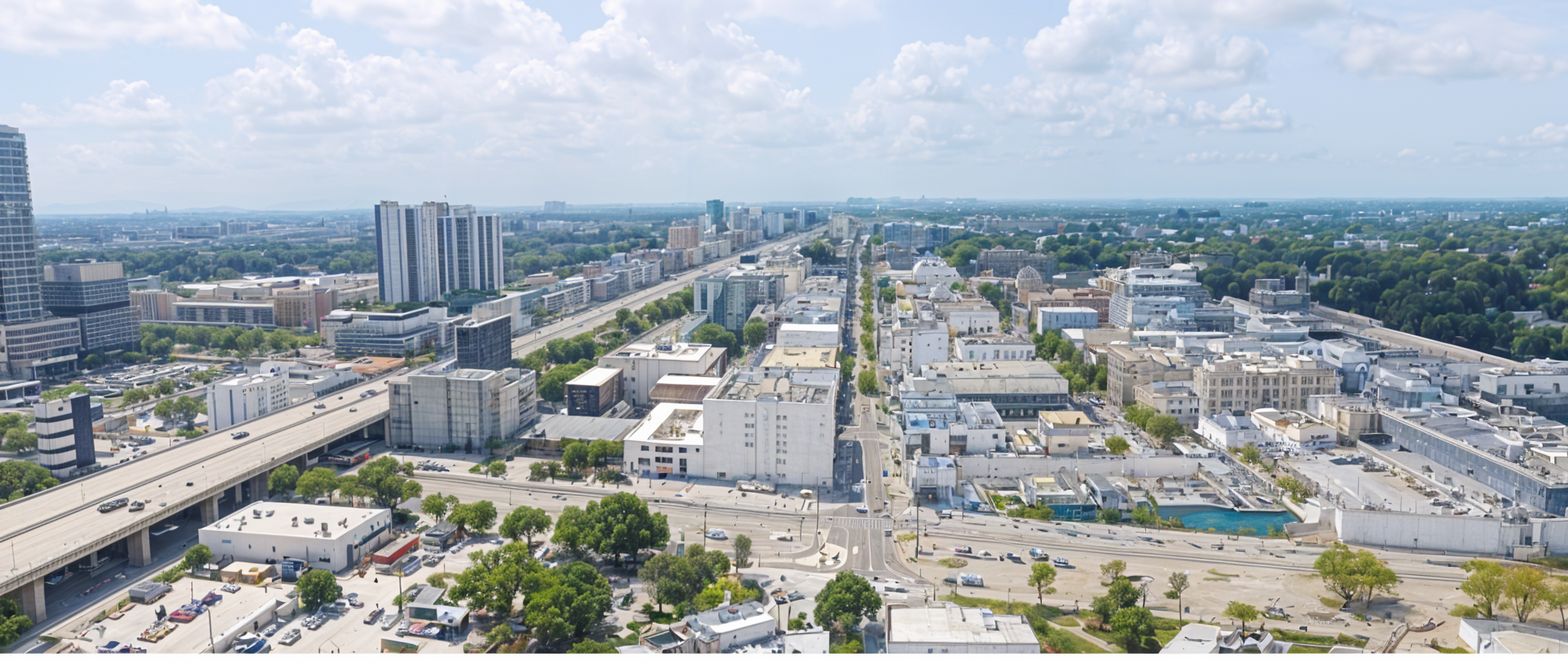
Design District, Miami, Florida - EVERYTHING You Want to Know
Buckle up and join our unmatched virtual journey through the BEST of the Miami Design Dis...
.png)
The Ultimate Guide to Miami-Dade's Top 25 Gated Communities for Single-Family Homes
Discover Miami's top gated communities in this essential guide for luxury home buyers...


Miami's BEST Restaurants in EVERY Neighborhood
Check out the absolute BEST restaurants in every neighborhood of Miami, including the best...
Selling Your Home?
Who are we?
We are the ALL IN Miami Group out of Miami.
We are Colombian, Filipino, Cuban, German, Japanese, French, Indian, Syrian, and American.
We are Christian, Hindu, and Jewish.
We are many, but we are one.
We sell luxury homes in Miami, Florida.
Although some of our clients are celebrities, athletes, and people you read about online, we also help young adults find their first place to rent when they are ready to live on their own.
First-time buyers?
All the time!
No matter what your situation or price range is, we feel truly blessed and honored to play such a big part in your life.