



What Nobody Tells You About Living in Country Walk

Amit Bhuta
I use non-traditional marketing to inspire the most motivated buyers to pay the max for Miami luxury homes...
I use non-traditional marketing to inspire the most motivated buyers to pay the max for Miami luxury homes...
When it comes to space, structure, and suburban family life that you can easily picture, Country Walk is many people's answer.
Here, there are homes with yards, lakes, playgrounds, community amenities, courts, and a more residential vibe than in most busier parts of Miami-Dade.
Even school mornings, pool days, dog walks, and weekend errands seem easier to organize.
That said, the calmer setup comes with details buyers should not skip.
The rules have weight.
The distance adds up.
The home condition matters.
And you may find that this suburban rhythm may not match every season of your life.
Here are six things nobody tells you about living in Country Walk.
 (7).png?w=1140)
1) The Neighborhood Comes With Rules, Not Just Roses by the Mailbox
In Country Walk, the tidy front lawns don't just exist because everyone collectively woke up with excellent curb-appeal discipline.
The neighborhood has structure, and it's part of what many buyers are paying for.
The planned-community setup helps create a more consistent residential environment, which can be comforting if you are coming from a place where every other house seemed to be making its own legal and architectural decisions.
There is comfort in knowing that the neighborhood has standards.
There is also reality in knowing that standards arrive with paperwork.
Exterior changes, landscaping, paint choices, parking habits, additions, and other home-related decisions may come with rules, approvals, or guidelines that are not optional just because your Pinterest board is emotionally persuasive.
For some homeowners, that is a relief because it protects the aesthetic and community order.
For others, it may feel restrictive, especially if they are used to making decisions without asking anyone who owns a clipboard.
Country Walk works best for people who like benefiting from order and are honest about the trade-off.
You are not just buying a house in Country Walk.
You are buying into a system that helps keep the neighborhood organized, which is lovely until your fence color develops a committee.
 (8).png?w=1140)
2) The Amenities Are Great Until You Realize Everyone Else Got the Same Brochure
A pool, playground, splash pad, courts, clubhouse, and neighborhood gathering spaces sound wonderful because they are wonderful.
Country Walk gives residents built-in amenities that make suburban life easier to imagine.
Kids have places to play.
Adults have places to gather.
Weekends can involve swimming, sports, birthday parties, walks, or the very ambitious plan of letting the children get tired before they destroy the living room.
It's a real perk, but the part buyers sometimes forget is that shared amenities are "shared" by design.
The pool will not be your private resort.
The courts may have other people with the same fitness goals and better scheduling discipline.
The playground may become part of your family’s routine so quickly that your child starts acting like they manage the facility.
For families and social households, that can be part of the fun.
For buyers who want peace, privacy, and minimal interaction, the amenity culture may feel more active than expected.
Country Walk’s amenities add value, but also make the neighborhood more communal.
That is great when you want a built-in activity.
It is less magical when you want the benefits of community without having to remember anyone’s name at the splash pad.
 (9).png?w=1140)
3) You Get More Room, but Your Car Becomes a Family Member
Extra space has a way of winning arguments before they even begin.
In Country Walk, the promise of yards, garages, wider residential streets, and a more suburban layout can feel like a major upgrade for people tired of squeezing life into tighter Miami spaces.
There is room for kids to grow.
There is room for pets to roam.
There is room for sports gear, holiday bins, Costco overflow, and that one mystery box nobody has opened since the last move, but everyone is afraid to throw away.
That space is valuable, and it also comes with a very car-centered routine.
Country Walk is not the neighborhood where you casually stroll out for every errand, every dinner plan, or every quick, last-minute thing you forgot because the group chat distracted you.
Most of life in Country Walk depends on driving.
School runs, grocery trips, work commutes, practices, appointments, and social plans usually involve getting in the car and accepting whatever mood traffic has chosen that day.
For many residents, that is a fair trade for more space and a calmer residential setting.
For others, the distance can start to feel expensive in time, energy, and gas.
Country Walk gives you breathing room, but it does not hand you a teleporter.
Here, the car becomes less of a vehicle and more of a household coworker with cupholders.
 (10).png?w=1140)
4) The Kid-Friendly Energy Is Strong Enough to Need Its Own Snack Schedule
Country Walk is a place where you can build family routines almost instantly.
You can picture school mornings, after-school activities, pool days, park time, playdates, and children needing snacks every seven minutes despite having just eaten.
It feels built for households that want a more residential rhythm and a community where kids are part of the normal background music.
For parents, there is comfort in living somewhere that understands strollers, scooters, backpacks, sports bags, birthday balloons, and the emotional importance of a nearby playground.
The area can support the daily machinery of family life without making every routine feel like a logistical punishment.
But Country Walk may feel very tied to a certain season of life.
If your life revolves around nightlife, spontaneous city plans, walkable dining, or a more adult social scene, the neighborhood may feel more peaceful than you expected.
If you do not have children or no longer want your surroundings shaped by school calendars and weekend sports, the charm may not land the same way.
Country Walk is not wrong for being family-centered.
It just knows its audience very clearly, and that audience usually has sunscreen in three different bags.
 (11).png?w=1140)
5) Hurricane Andrew Is Not Just Old Neighborhood Lore
Some neighborhoods have a history that's on a plaque.
Country Walk has a history that still belongs in the buyer conversation.
Hurricane Andrew is a major part of the area’s story, and it should not be treated like a random fact someone mentions between the kitchen and the backyard.
The community was severely damaged during the storm, and much of what buyers see today is tied to rebuilding, recovery, repairs, and later improvements.
That does not mean every home should be viewed with suspicion.
It means buyers should know which questions matter.
The construction year, roof age, window protection, and insurance details all matter.
Permits, additions, maintenance records, and past improvements deserve more attention than the staged fruit bowl on the counter.
Country Walk may have rebuilt and moved forward, but storm history is still part of responsible due diligence in South Florida.
A pretty house can still need careful review.
A well-kept home can still have insurance considerations.
A charming backyard can still sit under a roof that deserves a direct question, not a polite nod.
In this neighborhood, smart buyers respect the past without being scared by it.
They just know better than letting fresh paint do all the talking.
 (12).png?w=1140)
6) The Price Looks Reasonable Until the Suburban Add-Ons Start Waving
Country Walk can look more approachable than some of Miami-Dade’s pricier family-oriented areas, and it's one reason buyers put it on the list.
The neighborhood offers space, amenities, structure, and a residential setting without automatically jumping into the most expensive suburban conversations nearby.
And it sounds promising until the full cost picture walks in holding a folder.
A home price is only one part of the decision.
HOA fees, insurance, maintenance, roof condition, updates, commuting costs, repairs, and the usual South Florida surprise expenses all matter.
A property may seem like a smart value compared with another neighborhood, but the real question is whether you can still afford the monthly and long-term costs after the first number stops looking cute.
That is especially important in a community where buyers may be choosing older homes, larger homes, or properties with shared neighborhood expenses.
Country Walk can offer real value for people who want suburban comfort and community amenities.
It is just not the place to assume that “more reasonable than somewhere else” means easy on the wallet.
Miami has a special talent for turning fine print into a full-body workout.
The best buyers in Country Walk look at the whole package, not just the listing price.
That is how it becomes a smart choice instead of a budget surprise, with a friendly neighborhood name.
WHO GETS THE MOST OUT OF LIVING IN COUNTRY WALK?
Those who want the neighborhood to help carry out the routine
You'll understand how Country Walk works when daily life already has a lot of moving pieces.
The neighborhood is built around the practical machinery of suburban living, not around pretending every weekend needs a reservation, an outfit, and valet validation.
There are homes with room for backpacks, bikes, pets, groceries, sports gear, strollers, holiday bins, and the mysterious household item that keeps moving from garage shelf to garage shelf without ever being used.
Some amenities give the week more options without needing to leave the community every time someone needs to burn energy.
There are streets, lakes, courts, playgrounds, and shared spaces that make family routines easier to picture and easier to repeat.
Country Walk is at its strongest when the neighborhood becomes part of the household schedule.
A swim can happen without turning into a whole production.
A walk can happen without needing a destination.
A child can have places to go that are not just the sofa, the tablet, or the kitchen pantry for the fifth snack investigation of the hour.
Country Walk gives structure to a life that already has enough chaos packed into the calendar.
The HOA, the amenities, and the residential layout all work together to create a community that expects routines, rules, and shared spaces to matter.
That can be very comforting when the goal is not to chase city energy every day.
It can be especially useful when the home needs to feel organized, familiar, and ready for the ordinary parts of life that take the most time.
Country Walk does not try to be the most exciting part of Miami-Dade.
It tries to make the regular parts of life easier to manage.
For the right household, that is not boring.
That is oxygen with a clubhouse.
WHO MAY WANT TO KEEP LOOKING?
Anyone who wants a quieter home base without joining the unofficial carpool economy
Country Walk is not designed for people who want quiet residential living without the driving that often comes with it.
The neighborhood gives you space, structure, amenities, and a calmer suburban rhythm, but it also makes the car a very active member of the household.
The grocery run usually means driving.
The school routine usually means driving.
The weekend plan usually means checking who needs to go where, who has practice, who forgot something, and why the car has become a second living room with cupholders.
It'll fit when the goal is more room, more order, and more family-friendly structure.
It can feel limiting when someone wants the calm of the suburbs but still wants restaurants, nightlife, errands, and everyday plans close enough without a full transportation strategy.
Country Walk also comes with a more managed neighborhood experience.
The order is part of the appeal, but that order comes from rules, shared expectations, and a community structure that keeps things from turning into driveway chaos with palm trees.
That can be reassuring, but also feel too controlled for someone who wants more freedom in how the home looks, how weekends unfold, or how close city energy sits to the front door.
Country Walk is not a bad match for people who want peace, but it may be to those who want quiet without distance, structure without rules, and suburban space without the daily driving calendar.
Some neighborhoods let you be spontaneous.
Country Walk asks whether everyone has snacks, water bottles, and enough gas first.
AN HONEST TAKEAWAY
What living in Country Walk really comes down to
Country Walk is not a shortcut to simple suburban living.
It is a neighborhood choice with a rulebook, a routine, a history, and a very clear personality.
The appeal is real.
The homes can offer more room.
The amenities can make everyday life easier.
The streets can feel more residential than many busier parts of Miami-Dade.
The community can offer families, pets, and busy households a setting that supports ordinary life, that doesn't make every errand feel like a competitive event.
But Country Walk also asks for honesty.
The HOA matters.
The driving matters.
The storm history matters.
The home condition matters.
The shared amenities matter.
The distance from Miami’s more active core matters.
None of those details ruins the neighborhood.
They simply make the fit more specific.
Country Walk is for a life that wants space, structure, and a community rhythm more than constant motion.
It works when the planned feeling is a relief instead of a restriction.
It works when the amenities will be used, the drive is acceptable, and the house has been looked at with more than hopeful eyes and a tape measure.
Living in Country Walk comes down to whether the neighborhood’s version of calm matches your version of home.
Yes, it can give you the yard, the pool, the playground, the lake, and the family-friendly rhythm.
It just expects you to read the fine print before you start naming the patio furniture.
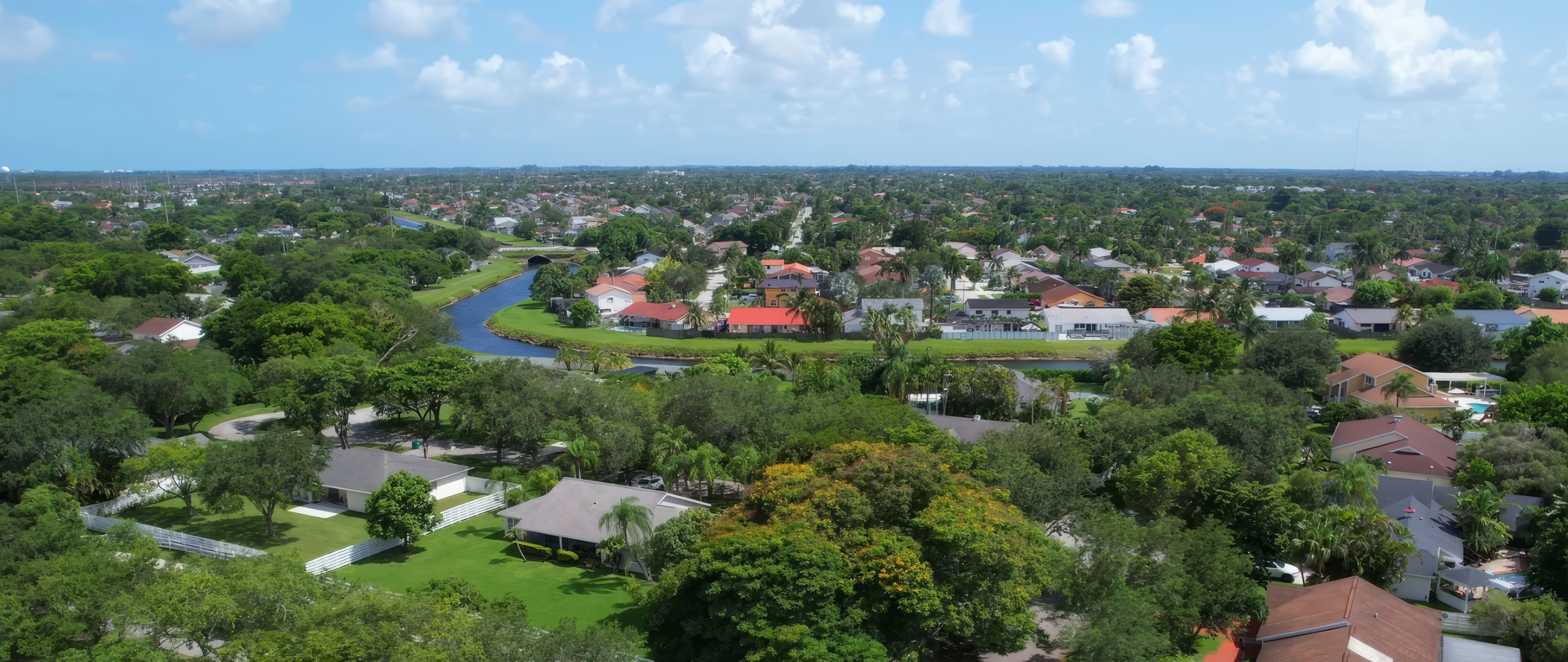
Country Walk, Miami, Florida - EVERYTHING You Want to Know
Settle in, maybe grab a cup of coffee or your favorite snack. It's going to be a fun ...
.png)
The Ultimate Guide to Miami-Dade's Top 25 Gated Communities for Single-Family Homes
Discover Miami's top gated communities in this essential guide for luxury home buyers...


Miami's BEST Restaurants in EVERY Neighborhood
Check out the absolute BEST restaurants in every neighborhood of Miami, including the best...
Selling Your Home?
Who are we?
We are the ALL IN Miami Group out of Miami.
We are Colombian, Filipino, Cuban, German, Japanese, French, Indian, Syrian, and American.
We are Christian, Hindu, and Jewish.
We are many, but we are one.
We sell luxury homes in Miami, Florida.
Although some of our clients are celebrities, athletes, and people you read about online, we also help young adults find their first place to rent when they are ready to live on their own.
First-time buyers?
All the time!
No matter what your situation or price range is, we feel truly blessed and honored to play such a big part in your life.