



What Daily Life Looks Like on The Roads

Amit Bhuta
I use non-traditional marketing to inspire the most motivated buyers to pay the max for Miami luxury homes...
I use non-traditional marketing to inspire the most motivated buyers to pay the max for Miami luxury homes...
The banyan trees in The Roads have grown alongside the neighborhood for generations, and judging by their enormous roots, they're not going anywhere anytime soon.
In fact, their sprawling branches shade older homes, landscaped medians, and diagonal streets that have been doing things their own way since the 1920s.
The same goes for The Roads itself.
Just minutes from Brickell's towering skyline, this Miami neighborhood has kept much of its original charm, including its unusual intersections that can still make newcomers question their sense of direction.
Coral Way has changed, too, with longtime bakeries and international grocery stores sharing the area with newer specialty shops and food businesses.
That diversity extends beyond the storefronts, as Latin American influences shape much of the neighborhood's everyday life while Saint Sophia Greek Orthodox Cathedral keeps another set of cultural traditions alive.
The different businesses, backgrounds, and interests sharing these streets prove there's more to The Roads than its historic houses and leafy surroundings.
Needless to say, the trees may have put down roots long ago, but the neighborhood around them grows in its own interesting ways.
Here’s what a typical day is like on The Roads.
The Forty-Five-Degree Wayfinder
 (80).png?w=1140)
Early Morning — The Corner That Breaks the Grid
A street sign says one thing, the road curves somewhere unexpected, and suddenly those perfectly reasonable directions aren't so helpful anymore.
He's seen this happen plenty of times in The Roads, where the streets sit at unusual angles compared with Miami's familiar grid.
As a pedestrian wayfinding consultant, he's putting together a neighborhood guide to help newcomers navigate the area without taking unnecessary detours.
His morning begins at one of those confusing intersections, where he studies the crossing points and identifies landmarks that would make his directions easier to follow.
The Roads was designed this way in the 1920s, partly to discourage drivers from cutting through its residential streets.
It's a clever idea, but he suspects the original planners didn't think about people trying to follow a map on their phones a century later.
 (81).png?w=1140)
Late Morning — A Shady Route Isn't Always Easy
Those enormous banyan trees along Coral Way make an excellent first impression, especially when the Miami sun isn't being particularly generous.
Their branches provide welcome shade over the landscaped median and surrounding sidewalks, but he's interested in more than the scenery.
Following the SW 3rd Avenue corridor, he checks where pedestrians can cross safely and whether the sidewalks connect naturally to nearby streets and businesses.
He also marks useful landmarks in his notebook, knowing that telling someone to turn near a familiar storefront is often easier than explaining an unusual intersection.
The wide boulevard gives this part of The Roads its recognizable character, but navigating it still requires paying attention to traffic and designated crossings.
By the time he finishes this section of his guide, he's found several ways to make the route clearer without suggesting that anyone take a shortcut through someone's front yard.
 (82).png?w=1140)
Afternoon — The New-Ramp Walkthrough
A recently improved crossing gives him something new to examine, and this time he isn't searching for a confusing street sign.
Florida's Department of Transportation has completed roadway improvements in Coral Way, including sidewalks, pedestrian ramps, and other street features.
He visits part of the updated corridor to see how the changes connect with the routes he's been documenting.
A smoother sidewalk and a properly marked crossing might seem like small improvements, but they make a difference for someone pushing a stroller, using a mobility aid, or simply trying to reach the opposite side.
He compares his earlier notes with the completed work and makes a few changes to his guide.
The neighborhood's historic design may be part of its charm, but that doesn't mean its pedestrian facilities have to remain stuck in the 1920s.
 (83).png?w=1140)
Evening — Could You Find SW 22nd Street?
His friend has lived in Miami for years, making them a perfect candidate for testing his new neighborhood map.
He spreads the guide across a table in his Roads apartment and asks his friend to explain how they'd follow a particular route.
Everything goes smoothly until they reach SW 12th Avenue, where Coral Way changes direction and continues from SW 3rd Avenue as SW 22nd Street.
His friend pauses, checks the map again, and asks why a road would change its name while still being the same route.
It's a reasonable question, and he realizes his guide warrants a clearer explanation.
They spend the next few minutes adjusting the directions, replacing confusing street references with landmarks and more helpful descriptions.
At least he's discovered the problem before handing the guide to someone who might spend half their afternoon looking for a street that seems to have disappeared.
The Wagyu Label Skeptic
 (84).png?w=1140)
Early Morning — The Marinade Gets a Challenger
Her family has been making a particular beef marinade for years, and changing the recipe would probably raise a few eyebrows.
Still, she's curious whether a premium steak needs all those familiar ingredients to taste good.
A new butcher shop has opened in The Roads, giving her the perfect excuse to organize a small tasting with two friends.
She pulls out her recipe notebook, checks what she already has in the kitchen, and writes down the ingredients she'll need.
Her plan is simple: prepare a familiar family favorite alongside a premium cut cooked with minimal seasoning, then see what everyone prefers.
She isn't trying to start a culinary argument, although she knows better than to tell her relatives she's questioning the family marinade.
 (85).png?w=1140)
Late Morning — The Marbling Conversation
A steak with enough marbling can look impressive behind a butcher's glass counter, but she'd prefer to know what she's paying for.
At Lomelo's Meat Market on SW 18th Terrace, she takes a closer look at the premium beef available.
The market celebrated its grand opening in October 2026 and offers American, Australian, and Japanese Wagyu, along with prime cuts and other meats.
She asks the butcher about the differences in marbling, flavor, and recommended cooking methods before deciding which cuts would suit her experiment.
The conversation also gives her a better understanding of why certain steaks cost considerably more than the beef she usually buys.
Eventually, she selects two small portions, deciding that three people don't need an entire refrigerator full of Wagyu to settle a friendly debate.
 (86).png?w=1140)
Afternoon — A Cachito Before the Main Course
The meat is safely in her refrigerator, but she's not ready to spend the rest of the afternoon cooking.
Instead, she stops at Vakita Bakery on SW 3rd Avenue, where the display includes Venezuelan cachitos, tequeños, empanadas, and other Latin American favorites.
She orders a ham cachito for herself and picks up a few pastries to share with her friends later.
The bakery's menu reminds her how much food culture can change from one Latin American country to another, even when familiar ingredients show up in different forms.
It's also a convenient reminder that Coral Way isn't limited to one national cuisine, with longstanding neighborhood favorites sharing the area with newer businesses.
She heads home with her pastries, giving herself enough time to prepare everything before her guests arrive.
 (87).png?w=1140)
Evening — Nobody Sees the Labels
Two plates of steak are waiting on the table, and her friends have strict instructions not to ask which one costs more.
She's prepared small portions using the methods she planned earlier, keeping the seasonings and cooking details in mind as she serves them.
The three friends compare each sample's flavor and texture, offering confident opinions as the tasting continues.
One prefers the familiar preparation, while another appreciates its richness.
When she finally reveals what they're eating, the discussion turns to whether the price difference is worth it for an ordinary dinner.
Nobody reaches a unanimous verdict, but they agree that personal taste matters more than an impressive label.
She considers the evening a success, especially since the experiment was fun, nobody went hungry, and there's still enough room for the pastries she bought earlier.
The Byzantine Footwork Coach
 (89).png?w=1140)
Early Morning — Six Steps and One Loose Hem
One loose thread has delayed her entire morning, which is impressive considering how small it is.
She checks a traditional Greek folk-dance costume at her home in The Roads when she notices that part of the hem needs repairing.
As a volunteer with Saint Sophia's dance community, she knows that costumes are an important part of cultural performances, even though the dancing itself takes considerably more practice.
She collects her sewing supplies and carefully fixes the loose stitching before putting the outfit away.
Next, she reviews notes for a dance sequence she'll help demonstrate during an upcoming practice.
The steps are familiar, but teaching them to someone else requires more patience than performing them herself, especially when everyone has a different opinion about which foot moves first.
 (88).png?w=1140)
Late Morning — Mosaics Before Music
Saint Sophia Greek Orthodox Cathedral stands out on SW 3rd Avenue, and its colorful interior offers visitors even more to appreciate.
She stops by during the cathedral's weekday visiting hours, taking a moment to admire its Byzantine-inspired architecture and religious artwork.
The parish dates back to 1927 and has served Miami's Greek Orthodox community through generations of changes in the surrounding area.
For her, the cathedral is more than an impressive building, since it also connects her to the traditions she shares through folk dancing.
Its dance ministry includes several youth groups that learn regional dances from different parts of Greece, inspiring younger participants to connect with their cultural heritage.
She leaves the quiet interior with her music notes ready, looking forward to helping the group practice later.
 (90).png?w=1140)
Afternoon — From Crete to Thraki in Eight Counts
Getting the steps right is one challenge, but convincing a whole group to move together is another.
During a scheduled practice with Saint Sophia's youth dance program, she helps demonstrate a sequence drawn from traditional Greek folk dancing.
The ministry teaches dances associated with different regions, including Crete in the south and Thraki in northern Greece.
She counts the rhythm aloud, demonstrates the footwork, and watches the participants try the movements as a group.
A few dancers understand the sequence immediately, while others need another demonstration before everything starts coming together.
She adjusts the pace and encourages them to concentrate on the rhythm rather than worrying about every little mistake.
Once the group finds its timing, the difference is noticeable, and she's reminded why preserving these traditions is as much about learning together as it is about performing.
 (91).png?w=1140)
Evening — Pita, Feta, and a Very Full Aisle
Oriental Bakery & Grocery has served the Coral Way area for decades, and its packed shelves give her plenty to browse.
After finishing her volunteer commitments, she visits the market at 1760 SW 3rd Avenue to pick up feta, pita bread, and a few other ingredients for home.
The family-owned shop carries a variety of Middle Eastern and Mediterranean groceries, including imported cheeses, olives, spices, and prepared foods.
She checks the cheese selection before heading to the bread, occasionally stopping to look at products she hasn't tried before.
It's a small place compared with a supermarket, but that packed assortment is part of what makes the visit worthwhile.
The market also reflects another side of The Roads' cultural mix, where different food traditions have found a home along the same commercial corridor.
With her shopping finished, she heads back toward the residential streets, ready to call it a day before another task somehow finds its way onto her schedule.
THE BIGGER PICTURE OF LIFE ON THE ROADS
What do these three different routines tell us about The Roads?
The Roads has always been a little different from the Miami neighborhoods surrounding it, but its unusual street layout is only part of the story.
Planned in the 1920s, its wide roads, landscaped medians, and diagonal intersections were intended to give residents something more pleasant than another busy city grid.
More than a century later, the enormous banyan trees and older houses still reflect that original vision, even as Brickell's skyline continues to grow nearby.
That proximity brings convenience and opportunities, but it also means The Roads constantly deals with traffic, development pressure, and the occasional driver who searches for a faster route.
And while its unusual intersections can frustrate newcomers, they also help distinguish the neighborhood from places where every street looks much the same.
Coral Way adds another dimension, bringing commercial activity into a community that might otherwise be known mainly for its residential charm.
Longtime businesses share the corridor with newer shops, giving residents familiar places to return to while introducing choices that weren't available a few years ago.
Sure, new businesses can bring excitement, but rising costs and changing commercial needs may also challenge the smaller establishments that helped shape the neighborhood.
The cultural mix deserves just as much attention, since Latin American influences are prominent without being the only traditions represented.
Saint Sophia and the area's international markets show how different communities have contributed to the neighborhood's identity over generations.
For residents, that variety can make everyday life more interesting, although busy crossings, parking, and the cost of living so close to central Miami can complicate even simple plans.
Preserving The Roads doesn't mean refusing every new development or expecting the neighborhood to look exactly as it did in the 1920s.
It's making room for improvements while protecting the trees, local businesses, and established communities that give these streets their character.
Those banyan roots have had a century to grow, and the people who've built their lives around them deserve room to keep growing, too.
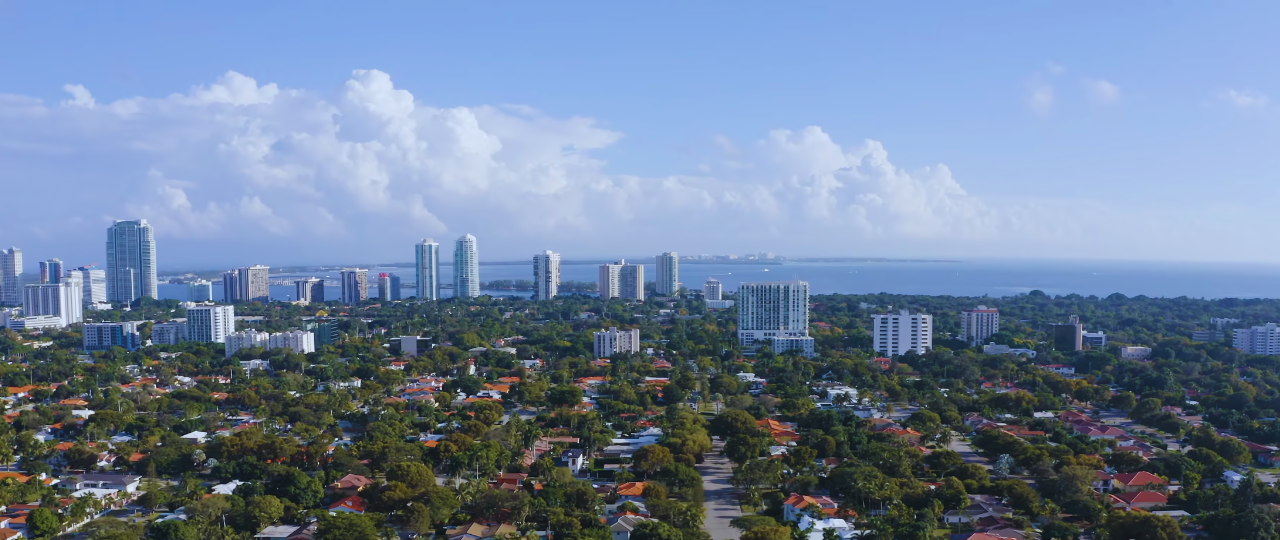
The Roads, Miami, Florida - EVERYTHING You Want to Know
Enjoy this virtual journey across the BEST of The Roads, from everything you WANT and NEED...
The Ultimate Guide to Miami-Dade's Top 25 Gated Communities for Single-Family Homes
Discover Miami's top gated communities in this essential guide for luxury home buyers...

Miami's BEST Restaurants in EVERY Neighborhood
Check out the absolute BEST restaurants in every neighborhood of Miami, including the best...
Selling Your Home?
Who are we?
We are the ALL IN Miami Group out of Miami.
We are Colombian, Filipino, Cuban, German, Japanese, French, Indian, Syrian, and American.
We are Christian, Hindu, and Jewish.
We are many, but we are one.
We sell luxury homes in Miami, Florida.
Although some of our clients are celebrities, athletes, and people you read about online, we also help young adults find their first place to rent when they are ready to live on their own.
First-time buyers?
All the time!
No matter what your situation or price range is, we feel truly blessed and honored to play such a big part in your life.