



What Daily Life Looks Like in North Miami

Amit Bhuta
I use non-traditional marketing to inspire the most motivated buyers to pay the max for Miami luxury homes...
I use non-traditional marketing to inspire the most motivated buyers to pay the max for Miami luxury homes...
North Miami residents could probably make a decent living if they earned a dollar every time someone confused their city with North Miami Beach.
But once that little geography lesson is over, you'll find plenty more to discover about this culturally diverse corner of Miami-Dade County.
Here, Haitian Creole, Spanish, and English are part of everyday conversations, and neighborhood businesses, family traditions, and community connections mean a great deal.
And while Downtown has its own creative crowd, the eastern side of the city offers a quieter setting with green spaces and views of Biscayne Bay.
It's a unique mix of people with different backgrounds, jobs, and priorities, so don't expect everyone to have the same idea of a perfect day.
Some spend their time helping the community, others build careers, and many are simply trying to enjoy their free time without thinking about Monday's responsibilities.
Of course, North Miami has its share of traffic, expenses, and everyday frustrations, but you bet there's plenty of personality beyond the usual hustle.
Here’s what a typical day is like in North Miami.
The Kreyòl Community Connector
 (29).png?w=1140)
Morning – The Pantry Does More Than Stock Shelves
At Sunkist Grove Community Center, our resident has learned that a conversation in someone's preferred language can make a difficult morning a little easier.
As a Haitian-American community outreach worker, she volunteers at the NoMi Food Pantry, where residents can receive groceries and other food essentials when their household budgets need some help.
The pantry provides fresh produce, dairy products, protein, and shelf-stable foods, with registration for participating households.
She's one of the bilingual volunteers who can help with scheduling and answering basic questions in Haitian Creole or English, making the process easier for people who aren't comfortable communicating in both languages.
Of course, the work also involves organizing supplies, checking information, and handling the little administrative tasks that keep everything running.
North Miami has a large Haitian-American population, and for many residents, having someone who understands their language and cultural background can make community services more approachable.
After her volunteer shift finishes, she's helped several people navigate their appointments and has a few errands of her own to take care of.
 (28).png?w=1140)
Midday – The Bus Fare Is Exactly Zero
Getting around North Miami doesn't always require a car, which is good news for anyone who would rather spend their money on something other than another tank of gas.
After leaving the community center, our resident catches the NoMi Express, the city's free trolley service that connects residential areas to local businesses, parks, and other destinations.
The system runs four routes during the week, giving residents another option for traveling around a city where not every destination is within walking distance.
She checks the schedule before heading to the stop, knowing that free transportation still requires a little patience and planning.
Along the way, she passes familiar streets, shops, and neighborhoods where Haitian Creole, Spanish, and English are part of daily conversations.
As someone involved in community outreach, she appreciates having a transportation option to help residents who don't drive or have access to a vehicle throughout the day.
The ride also gives her a chance to catch up on a few messages before continuing with her afternoon plans.
 (30).png?w=1140)
Afternoon – A Garden in the Middle of a Food Desert
Fresh vegetables shouldn't require a complicated shopping trip, but accessing affordable produce can be a challenge in some parts of North Miami.
It's why our resident is interested in the community garden at Clyde W. Judson Jr. Community Center on NW 16th Avenue.
The city created the garden with support from an age-friendly grant, turning an outdoor space into an area for growing vegetables, herbs, and fruit trees.
Its first planting involved participants from the NoMi Golden Silver Senior Program, including one gardener who was more than 100 years old.
Our resident stops by the community center to check on the project and see how the raised planting beds fit into the neighborhood's broader efforts to improve access to healthy food.
Having spent her morning helping at the food pantry, she understands how useful projects like this can be, especially when fresh groceries are expensive or hard to reach.
The garden won't replace the supermarket, but it offers another way for neighbors to learn about growing food and making better use of the spaces around them.
She leaves thinking about how even a relatively small project can start an important conversation about what a community needs.
 (31).png?w=1140)
Early Evening – Who Put Griot on a Pizza?
After a day spent helping people and keeping up with community projects, our resident is ready to enjoy something that requires absolutely no paperwork.
She meets a friend at 1804 Pizza on NE 6th Court, where the menu features traditional pizza with Haitian flavors.
Instead of sticking to pepperoni and cheese, customers can order pizzas topped with ingredients such as griot, oxtail, or other Haitian favorites.
The restaurant's name also pays tribute to 1804, when Haiti declared its independence, giving the business a connection to the cultural heritage significant to North Miami.
Our resident orders a griot pizza to share, and the two friends settle into a conversation about work, family updates, and whatever else happened during the week.
It's a welcome break from her usual responsibilities, especially when the biggest decision involves choosing another slice.
By the time they finish eating, she's ready to head home, pleased to have ended a busy day with good company and a familiar taste of home served in a completely different way.
The Biscayne Bay Field Scientist
 (32).png?w=1140)
Early Morning – His Classroom Has a Coastline
Most people heading to work don't need to think about water quality, seagrass habitats, or what fish are doing beneath the surface of Biscayne Bay.
For our resident, a marine ecology graduate researcher at Florida International University's Biscayne Bay Campus, those questions are part of the job.
The campus sits along the water in eastern North Miami, giving students and scientists access to an environment that supports research into coastal ecosystems.
He begins his morning near the shoreline, observing environmental conditions and collecting the information needed for his current research project.
Depending on the day's assignment, that might involve noting water conditions, checking field equipment, or preparing observations for later analysis.
The setting is certainly beautiful, but fieldwork in South Florida also means dealing with heat, humidity, and mosquitoes that seem convinced they're part of the research team.
Still, he enjoys working somewhere that allows him to study the natural environment without traveling far from the city.
With his morning observations finished, he heads back inside to see what the information might reveal.
 (33).png?w=1140)
Late Morning – The Mangroves Don't Write Their Own Reports
Collecting information outside is only half the work, and our resident knows the other half usually involves a computer screen and a growing collection of spreadsheets.
He returns to the Santos Seascape Ecology Lab at FIU, where researchers study how marine habitats and aquatic species interact.
The laboratory focuses on environments such as mangroves, seagrass beds, and coral reefs, including how habitat changes can affect the animals that depend on them.
Today, he's organizing observations from his fieldwork and comparing them with information gathered during earlier research sessions.
He also discusses the results with fellow researchers, trying to understand whether the patterns they're seeing match their expectations.
Some questions have straightforward answers, while others lead to more data collection, additional analysis, and the occasional realization that a perfectly reasonable theory needs another look.
It's detailed work, but the findings can help them better understand South Florida's coastal environments and the challenges they face.
After spending most of the morning reviewing information, he's ready to get outside again and see how another part of North Miami handles its relationship with water.
 (34).png?w=1140)
Afternoon – A Park That Welcomes Rainwater
A park designed to collect floodwater might sound strange, especially in a city where people usually want rainwater to disappear as quickly as possible.
But that's precisely what makes Good Neighbor Stormwater Park on NE 144th Street worth a closer look.
The city transformed a flood-prone vacant lot into a public space that can temporarily hold stormwater, helping reduce flooding risks for nearby properties.
Its design includes a retention area and an art installation with markers that help show how water levels change.
Our resident visits the park to see how the project combines neighborhood infrastructure and heavy rainfall management.
As someone studying environmental systems, he's interested in how a relatively small piece of land can serve a practical purpose beyond simply providing open space.
The park also shows why North Miami has to think carefully about flooding, especially as South Florida continues dealing with rising seas and increasingly challenging drainage conditions.
He takes a few notes and photographs before moving on, interested in how the city's environmental decisions extend beyond the university campus.
 (35).png?w=1140)
Late Afternoon – The Forest Has Horses, Too
After spending the day around laboratories and stormwater infrastructure, our resident finishes his afternoon somewhere with considerably more trees.
Enchanted Forest Elaine Gordon Park on NE 135th Street offers a different side of North Miami, with approximately 22 acres of subtropical vegetation near Arch Creek.
The park includes walking paths, a butterfly garden, and natural areas where visitors can observe some of South Florida's native plant life.
Our resident enjoys exploring the wooded surroundings, zeroing in on the vegetation and wildlife that share space with the city's residential neighborhoods.
You'll also find an equestrian area associated with the park, which might surprise someone who doesn't expect to encounter horses in the middle of North Miami.
Unlike the controlled environment of a research laboratory, this visit lets him appreciate nature without having to record every observation.
He takes his time along the paths, enjoying the shade and a change of scenery before heading home.
It's a pleasant reminder that even in a busy urbanized city, there are places where the trees get considerably more attention than the traffic.
The Day-Shift Record Hunter
 (36).png?w=1140)
Early Morning – Engines First, Music Later
Saturday mornings at an auto repair shop rarely begin with someone announcing that their car is running perfectly.
Our resident, an automotive technician in his late 40s, is already preparing for another shift at General Auto Repair & Tire Specialists on NE 123rd Street.
The shop handles everyday vehicle problems, including brake repairs, tire services, maintenance, and engine diagnostics.
He checks the day's appointments, inspects the vehicle, and figures out which repairs need immediate attention.
Usually, there's someone worried about a strange noise, a warning light, or an air-conditioning system that picked the hottest day of the week to stop cooperating.
After years in the business, he's learned that listening carefully to customers is nearly as important as knowing what to do under the hood.
He enjoys solving mechanical problems, although he'd probably appreciate a Saturday when everyone remembered to maintain their cars before something went wrong.
Once his shorter weekend shift is finished, he trades his work clothes for something more comfortable and heads to downtown North Miami.
 (37).png?w=1140)
Early Afternoon – The Free Ticket Has a North Miami Address
Our resident enjoys music and visual art, but he doesn't need an expensive membership or a special occasion to spend an afternoon at a museum.
He heads to the Museum of Contemporary Art, better known as MOCA, on NE 125th Street, where North Miami residents can visit for free with proper identification.
The museum features contemporary artists and exhibitions that introduce visitors to different cultures, ideas, and approaches to making art.
During a new exhibition season, he explores Geoffrey Holder: Black Magic, a collection highlighting the Trinidadian performer, director, and artist's visual artwork.
Holder is widely recognized for his work in theater and film, but the exhibition allows visitors to see his paintings, drawings, and sculptures.
Our resident takes his time in the galleries, particularly interested in how music, movement, and visual art can influence one another.
He doesn't pretend to understand every piece on display, and he's perfectly comfortable admitting that some works leave him with more questions than answers.
Still, he enjoys having a museum in his own city, especially one that gives residents an easy opportunity to explore something outside their usual routine.
 (38).png?w=1140)
Late Afternoon – The Treasure Hunt Has a Vinyl Soundtrack
A few streets from the museum, our resident arrives at Found Sound Records on NE 123rd Street, where the afternoon's mission is flipping through stacks of vinyl.
The independent shop carries records across a wide range of genres, including jazz, funk, soul, rock, hip-hop, reggae, and Latin music.
He's been collecting records for years, and he loves finding albums that aren't always available in ordinary music stores.
Some visits are quick, while others turn into a serious examination of record sleeves, release dates, and whether a particular pressing deserves a place in his collection.
On Saturdays, the shop also hosts Above the Clouds Radio, a vinyl-focused broadcast that adds another interesting element to its music-loving community.
Our resident browses the bins, listens to what's playing, and occasionally exchanges recommendations with other collectors.
He eventually finds an album that catches his attention, although he's careful not to think too much about how many records are already waiting at home.
With his purchase safely tucked away, he heads back toward NE 125th Street for an evening of music without having to turn on his own record player.
 (39).png?w=1140)
Evening – The Room Is Small, but the Music Isn't
Luna Star Cafe isn't the place to visit if you're hoping to shout over the music while discussing everything that happened at work.
The intimate venue on NE 125th Street is known for live performances, giving musicians and their audiences a space to showcase their music.
Our resident arrives for a scheduled Saturday performance, finds a seat, and orders something to eat or drink before the show begins.
Depending on the evening, the program might feature folk, blues, jazz, acoustic music, or other performers who appreciate a smaller listening room.
He enjoys being close enough to notice the musicians' expressions and the little details that can get lost at larger concerts.
The café asks guests to keep conversations quiet during performances, which suits him just fine after a morning spent around engines and workshop noise.
Between songs, he exchanges a few comments with another music fan, and the conversation eventually turns toward favorite albums and artists worth discovering.
By the time the performance ends, he's ready to head home with a new record, a few music recommendations, and absolutely no intention of setting another alarm for work that evening.
THE BIGGER PICTURE OF LIFE IN NORTH MIAMI
What do these three different routines tell us about North Miami?
North Miami has spent a hundred years growing into a city where you can hear several languages in one shopping plaza and still discover a local business you never knew existed.
Its Haitian-American influence is especially important, but the community also includes people with roots across Latin America, the Caribbean, and many other parts of the world.
That diversity shows up in daily conversations, neighborhood businesses, and how residents build relationships across different backgrounds.
It's one of the city's greatest strengths, although sharing a community doesn't mean everyone experiences its opportunities or challenges equally.
For households managing tight budgets, rising expenses and transportation needs can make ordinary errands more complicated than they should be.
Public services and free transportation help address some of those challenges, but they don't eliminate the cost of housing, groceries, or getting to work across Miami-Dade County.
North Miami also faces concerns along its eastern side, where flooding, drainage, and coastal conditions make environmental planning increasingly important.
Those issues may not come up during every neighborhood conversation, but they influence how the city prepares for the future.
Meanwhile, the arts and independent businesses around NE 125th Street offer something that larger entertainment districts sometimes struggle to provide: places where local creativity can grow without needing a massive audience.
Keeping those spaces accessible matters, particularly as North Miami attracts new investment and considers what its next chapter should look like.
After all, development can bring better facilities and new opportunities, but those improvements mean more when existing residents can enjoy them too.
Sure, North Miami has plenty of room to grow, provided the city continues paying attention to the practical needs of the people who call it home.
And as North Miami celebrates its centennial, perhaps its most important achievement isn't simply how much it has changed, but how many different communities have helped shape it along the way.
The next hundred years will reveal whether the city can keep that shared history alive while making everyday life better for the people writing its future.
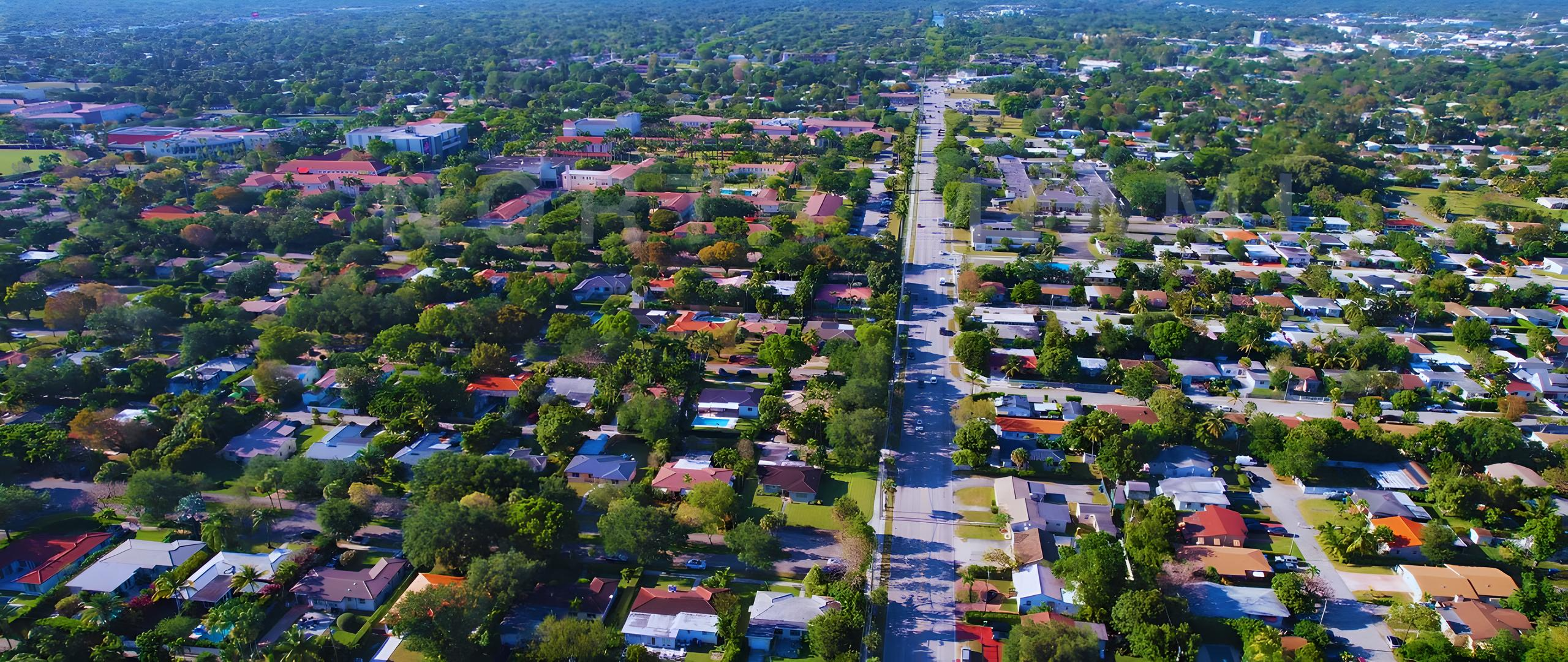
North Miami, Miami, Florida - EVERYTHING You Want to Know
Hop on this virtual journey across the best of North Miami. By the time you're throug...
The Ultimate Guide to Miami-Dade's Top 25 Gated Communities for Single-Family Homes
Discover Miami's top gated communities in this essential guide for luxury home buyers...


Miami's BEST Restaurants in EVERY Neighborhood
Check out the absolute BEST restaurants in every neighborhood of Miami, including the best...
Selling Your Home?
Who are we?
We are the ALL IN Miami Group out of Miami.
We are Colombian, Filipino, Cuban, German, Japanese, French, Indian, Syrian, and American.
We are Christian, Hindu, and Jewish.
We are many, but we are one.
We sell luxury homes in Miami, Florida.
Although some of our clients are celebrities, athletes, and people you read about online, we also help young adults find their first place to rent when they are ready to live on their own.
First-time buyers?
All the time!
No matter what your situation or price range is, we feel truly blessed and honored to play such a big part in your life.